

Israel could theoretically modernize its elections with electronic voting, automated counting or even smartphone ballots. But according to former election officials and researchers, the country’s stubbornly low-tech system may be one of its greatest democratic strengths.
“Technology is not suitable for every aspect of life, especially elections,” said Orly Adas, who served for 16 years as director general of Israel’s Central Elections Committee before stepping down in May. “The low-tech nature of elections is actually their strength. In most Western countries, people also vote with paper ballots.”
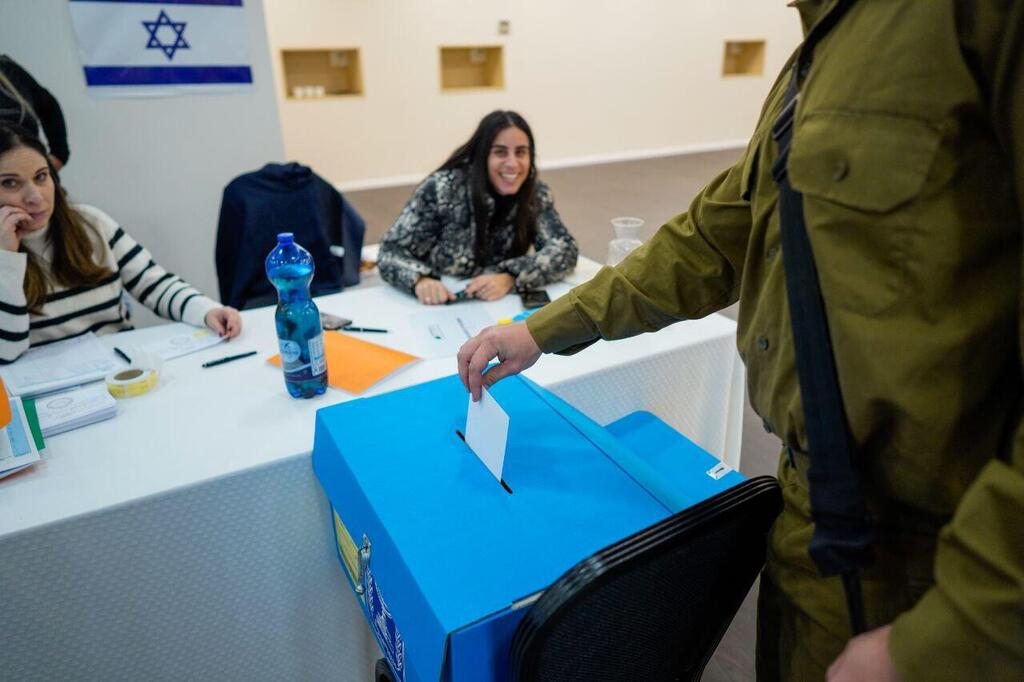
Adas argues that paper voting is not a sign of technological backwardness but a form of institutional resilience. “There is always the possibility of going back to the ballot if an examination or review is required. There is always a physical medium you can return to, inspect and prove.”
The question is becoming increasingly relevant as Israel approaches another election and technological tools make instant voting and counting technically feasible. Estonia already allows online voting, while parties elsewhere have experimented with digital primaries. But when it comes to national elections, convenience and speed are secondary to verification, documentation, secrecy and public trust.
The risks of technological voting systems have already been demonstrated elsewhere. The 2000 U.S. presidential election between George W. Bush and Al Gore was ultimately decided by the Supreme Court after disputed punch-card ballots in Florida led to demands for manual recounts. Two decades later, digital voting machines became a central target of conspiracy theories promoted by Donald Trump and his allies following the 2020 election, including false claims that machines had deleted or shifted millions of votes.
For Israeli experts, such cases illustrate not only the technical dangers of changing voting systems but the political consequences when voters lose confidence in how results are produced.
“The existing system in Israel allows the best possible oversight, reconstruction and ability to recount the ballots,” said Dr. Shahaf Zamir of Reichman University and the Hebrew University. “The manual paper-ballot system, when the ballots and all polling materials are preserved, provides the strongest form of oversight when someone challenges the results.”
Israel sits at the most conservative end of the voting-technology spectrum. Voters identify themselves at polling stations, select a party ballot behind a screen, place it inside an envelope and deposit it into a locked ballot box. After voting ends, the box is opened and ballots are counted manually by a committee that includes representatives of different political factions.
Ballots are counted at least twice, results are recorded in a signed protocol and all voting materials are transferred securely to regional election offices. Party lists can also send observers to monitor the count.
That process is slow compared with fully electronic systems, but its transparency is the point. If results are challenged, physical ballots still exist and can be counted again.
Many other Western democracies have reached similar conclusions. France uses paper ballots and manual counting. Britain and Canada require voters to mark paper ballots, which are then counted by hand. Germany also relies on paper and manual counting, with the process open to public observation.
Germany experimented with electronic voting machines in the early 2000s, but its Constitutional Court later ruled their use unconstitutional because citizens must be able to understand and monitor the essential stages of an election without specialized technical knowledge.
Japan remains even more heavily dependent on handwritten ballots in many elections. India, by contrast, uses standalone electronic voting machines but pairs them with printed paper records that allow limited manual verification.
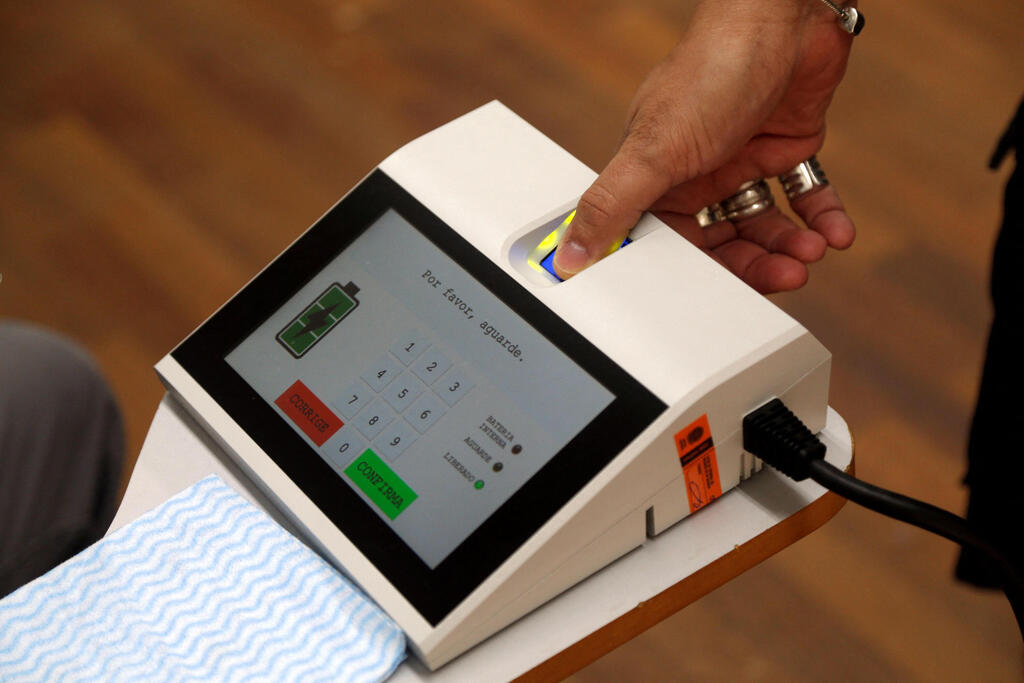
Electronic voting machine in Brazil
(Photo: AFP)
Brazil operates one of the world’s most technologically advanced election systems, using fully electronic voting without individual paper ballots. Machine integrity is tested through controlled audits and mock voting, but the system does not provide a physical ballot for every voter that can later be recounted.
Estonia goes further still. Since 2005, voters have been able to cast ballots remotely through a computer or smartphone using secure digital identification. Voters can change their ballot during the early-voting period, with only the final vote counted, partly as a safeguard against coercion. Today, around half of eligible Estonian voters use online voting.
For Israel, however, experts say remote digital voting would pose particularly serious risks.
Even highly secure online infrastructure can be targeted by cyberattacks, and increasingly capable AI systems can help attackers identify weaknesses and operate more quickly. An Israeli online election system would inevitably become an attractive target for hostile state-backed groups, including those linked to Iran.
“We all know how relevant cyber threats are today,” said Prof. Eran Vigoda-Gadot, a public administration and policy researcher at the University of Haifa. “The capabilities of hostile actors to disrupt systems are not insignificant. Nobody is prepared to take that risk.”
A successful cyberattack is only part of the danger. Even an allegation that a system had been compromised could be enough to undermine confidence in an election result.
Remote voting would also introduce other vulnerabilities, including coercion, blackmail, vote buying and impersonation. Unlike polling-station voting, authorities cannot fully control the environment in which a voter casts a ballot from home.
Adas points to another fundamental difference between paper and digital systems. Fraud involving paper ballots is generally local. Even if irregularities occur, they tend to be limited to individual polling stations and can be isolated, investigated and corrected.
A successful manipulation of centralized software, by contrast, could potentially affect results on a much broader scale.
“In a computerized system, an attempt to manipulate the result can create significant, system-wide damage,” she said. “And after such disruption, the original result cannot necessarily be reconstructed the way it can with a physical ballot.”
She recalled the 2019 election, when Naftali Bennett’s party fell about 1,400 votes short of the electoral threshold. Bennett requested an examination of 50 polling stations. Election officials retrieved all the relevant sacks containing counted ballots, rejected ballots, unused envelopes, polling committee records and appointment documents, then recounted every ballot.
No significant irregularities were found.
“If voting had been computerized, what ability would there have been to prove that?” Adas asked. “What ability would there have been to create trust in the system?”
That question is particularly important in a deeply polarized political environment. Even if electronic machines function perfectly, the mere possibility of interference could give a losing side grounds to claim manipulation, much as happened in the United States in 2020.
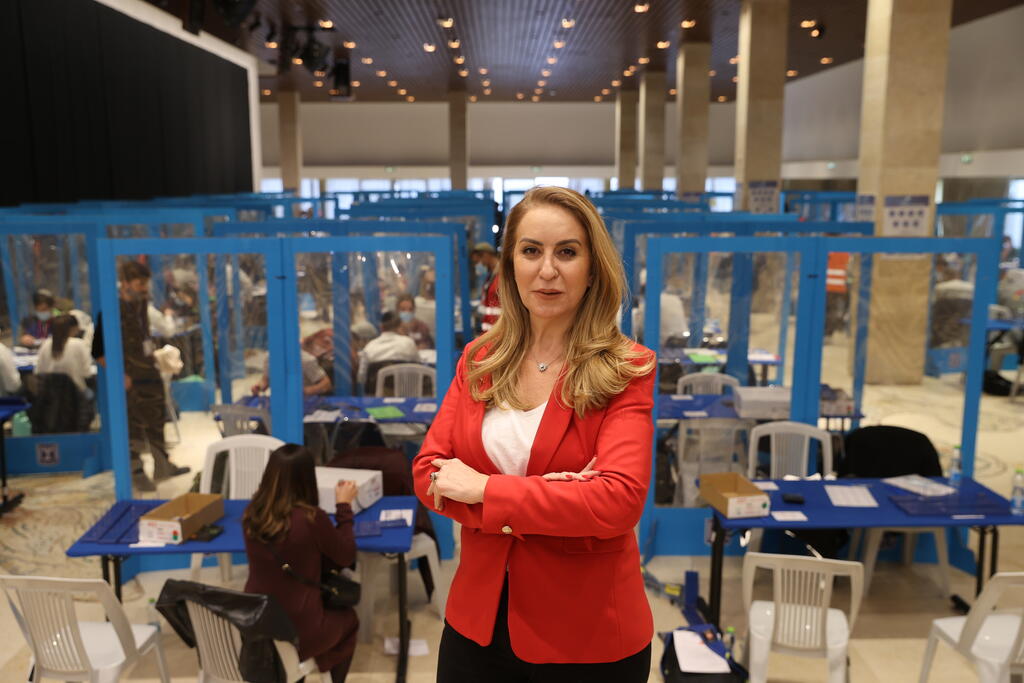
Orly Adas
(Photo: Alex Kolomoisky)
“The paper ballot is one of the things that creates public trust,” Adas said. “Secrecy and security are significant issues, and we cannot give them up simply in the name of progress so that we can say we vote electronically.”
That does not mean Israel’s election system will remain untouched by technology.
The Central Elections Committee has been developing computerized systems for the administrative side of elections rather than the act of voting itself. Adas said work carried out during her final years at the committee included designing a computerized voter registry that could eventually allow citizens to vote from any polling station in the country, eliminating the need for double-envelope ballots.
The committee has also been working on digitizing polling-station administration and entering vote-count results directly into a computerized protocol, potentially allowing results to be transmitted much more quickly.
Future stages could examine optical scanning or other methods to assist counting, but the fundamental principle remains cautious: digitize administrative processes where technology improves efficiency without sacrificing the physical evidence behind the vote.
“Elections are not something that can be done instantly,” Adas said. “These are significant changes to the system that require long-term examination and deep thought.”
For supporters of Israel’s current system, that caution is not resistance to progress. It is recognition that elections are different from most other services governments digitize.
A banking transaction can be reversed. An online form can be corrected. But when control of the government is at stake, even a small unexplained technological failure can become a crisis of legitimacy.
“We remain attached to the traditional system because the risk of moving to other methods is simply too great,” Vigoda-Gadot said. “At the decisive junction where power can change hands, we cannot risk giving machines even the smallest possibility of error, because afterward the legitimacy of the result can be challenged.”
Israel’s paper ballot system is not flawless. Mistakes, fraud attempts and administrative failures still occur. But its defenders argue that they are visible, localized and ultimately auditable.
In an era of AI, cyberwarfare and collapsing trust in institutions, that may be more valuable than instant results.