

It was a losing battle against the flames. Firefighters who arrived at the scene in the middle of the night could only try to stop the fire from spreading to the nearby gas station.
When the sun rose the next morning, the scale of the destruction became clear: Club A, the most exclusive members’ club in Tel Aviv in 1984, the place that for just 100 nights served as Israel’s center of power, nightlife and status, had been set on fire and burned to the ground.
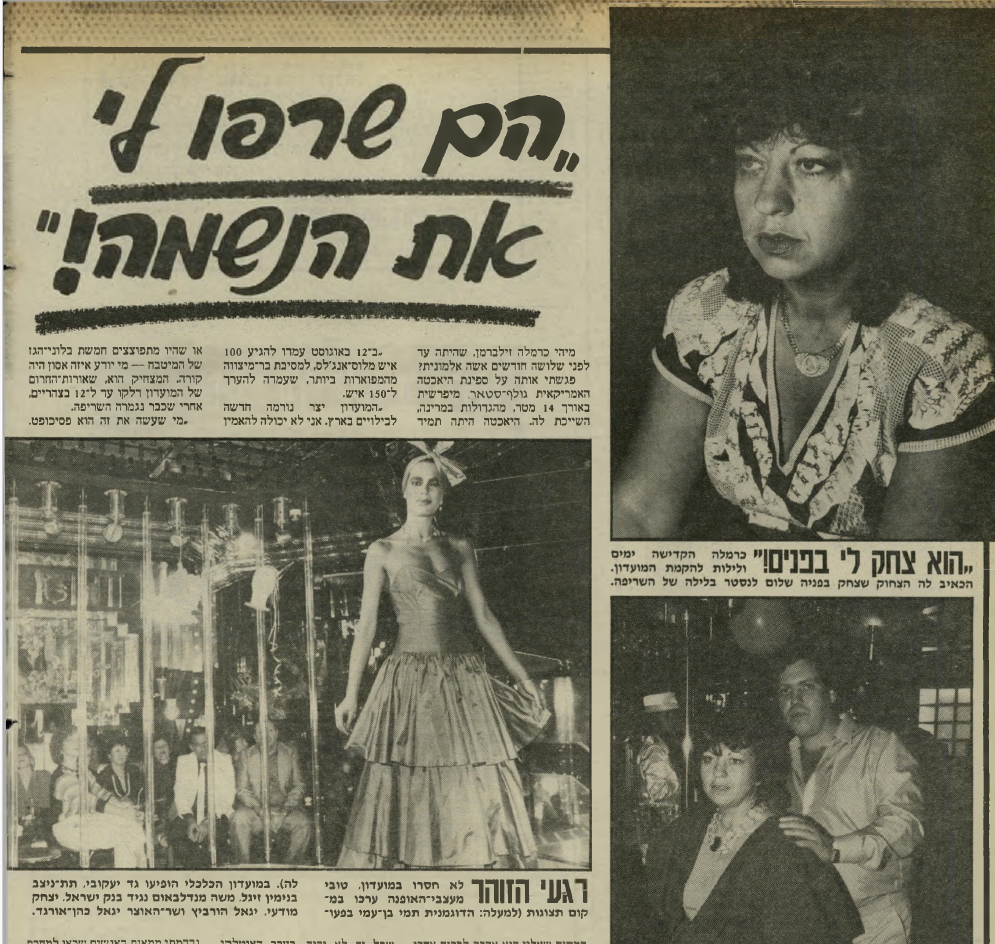
The millions of dollars invested in it went up in smoke. But to understand what really burned there, one has to go back more than 40 years.
The real upheaval
Israel in the 1980s was a country in the middle of a deep transformation, moving from a gray, centralized, socialist state toward a freer, more capitalist economy. That process brought shocks and economic crises, but it also created something entirely new: a wealthy class, and a new financial elite eager to display its power and buy assets cheaply.
Into that vacuum, hungry for glamour, sex appeal and status, stepped Club A, the vision of one woman: Carmela Zilberman.
The club was built in old north Tel Aviv, between HaYarkon and Ben Yehuda streets, and designed and furnished by prominent architect Yoram Raskin. It was an unapologetic display of nouveau riche ambition, spread across no fewer than five luxurious floors.
The first floor offered visitors a large, upscale Chinese restaurant. The second floor housed a roaring dance club. The third featured a technological novelty for those days: a computerized stock-market room. The fourth floor had a gym, while the fifth and top floor boasted a luxury rooftop lounge.
Entry into this temple of pleasure was for members only. Just 2,000 people passed strict admissions committees and paid astronomical membership fees for the right to walk through the door. Inside, the country’s who’s who mixed freely. It was the place where money and power could rub shoulders.
Government ministers and Knesset members from Likud and the Alignment, then Israel’s two dominant political camps, mingled with wealthy businesspeople, athletes and models. The club hosted events that now seem almost unimaginable: singing nights by businesswoman and former model Pnina Rosenblum, lectures by an “economic club” and glittering fashion shows attended by the wives of top political figures of the time, including Reuma Weizman and Lily Sharon, who arrived straight from a Likud Central Committee gathering at the Tel Aviv fairgrounds.
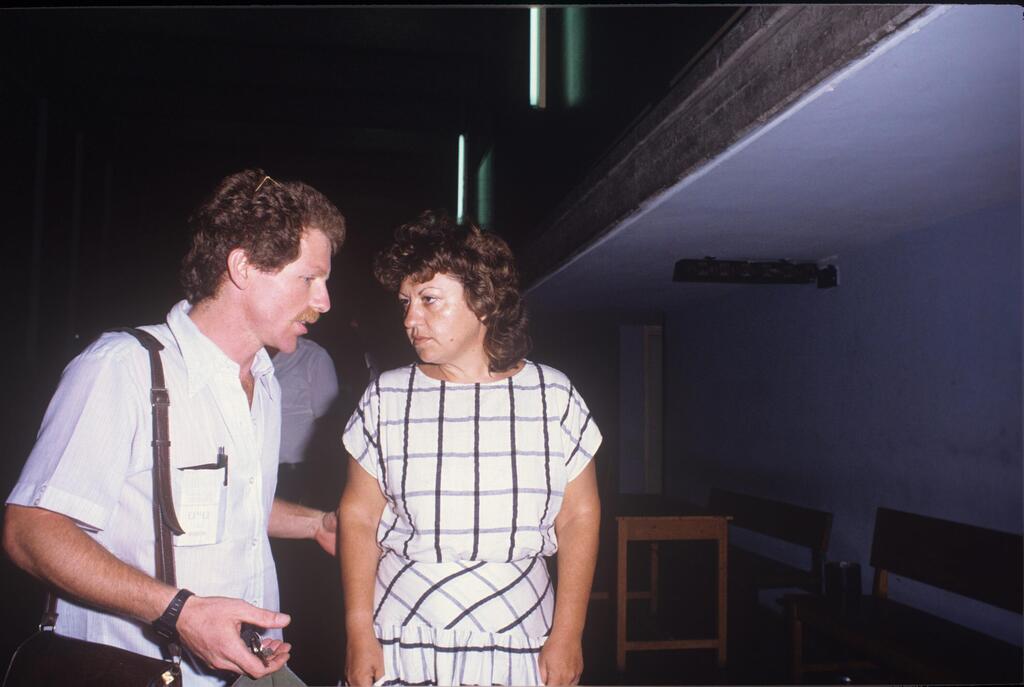
Carmela Zilberman
(Photo: Shaul Golan)
The club’s meteoric success cannot be separated from the warm embrace it received from the media, which turned it into a genuine object of public envy. Miri Zichroni, wife of well-known attorney Amnon Zichroni, handled the club’s public relations. The popular and influential weekly HaOlam HaZeh, for which Amnon Zichroni served as legal counsel, embraced Club A enthusiastically.
An unprecedented media blitz in the gossip columns erased the old, modest Tel Aviv atmosphere and turned the club into the center of a campy celebration that anyone who mattered wanted to join.
Then it all ended in flames.
Police suspected that although the club had enjoyed meteoric media success, it struggled to translate the buzz into financial profit. When the building burned down, the club’s owners, Carmela Zilberman and her brother Moshe Bitter, were arrested as the main suspects. The alleged motive was insurance money.
But despite spending many days in custody, no evidence was found against them. They were released, cleared of any wrongdoing and ultimately collected the insurance money for the building.
The person who was eventually convicted, and served three and a half years in prison for the arson, was someone else entirely: Yona Avizemer, an employee at the nearby parking lot.
Why did he burn down the club? That answer remains a mystery. He had no personal reason to do it. And if some unknown figure with an interest in the matter activated him from afar and gave the order, that person’s identity has never been revealed.