

Actor Ali Ali is tired of playing terrorists. He is a family man from Acre, a theater actor, a juggler and a high school drama teacher. He describes himself as a positive person who wants good. Yet again and again, he is cast as the bad guy, or, as they would say on Fauda, “a dog, son of a dog.”
In Magav, he played the head of an Arab crime organization. In Tahrir, he played a radical sheikh and leader of the Muslim Brotherhood. In the film The Hillula, he played a kidnapper from Gaza. Now, in the fifth season of Fauda, he was asked to play a Nukhba terrorist. This time, he says, it felt like too much.
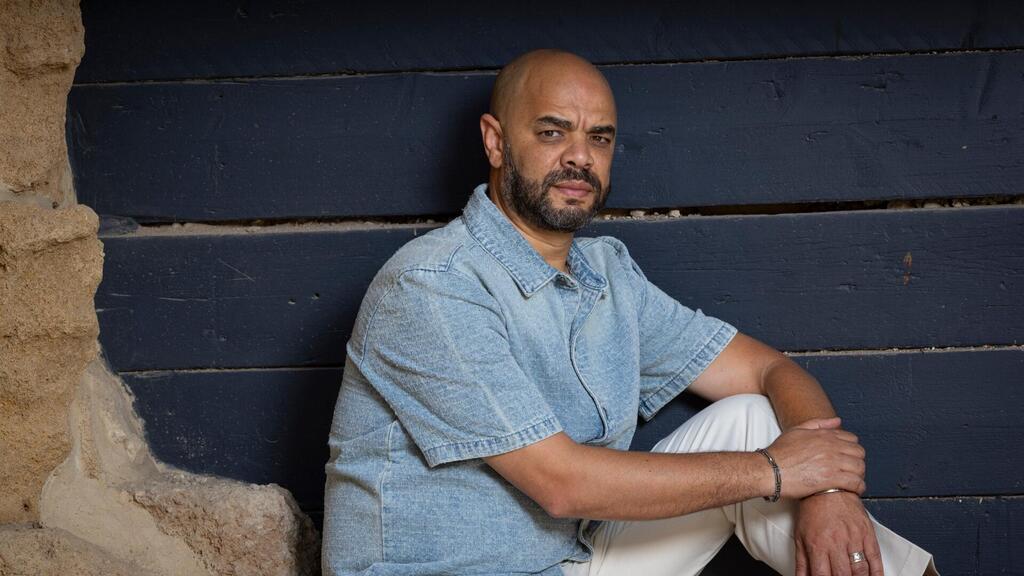
“It started well,” he recalls. “My agent told me they wanted me for the fifth season of Fauda and that I should choose a character and audition for it. I chose Salem, a bereaved father whose son was murdered in the Gaza border communities by Nukhba terrorists, and who wants revenge.”
And then what happened after the audition?
“They told me they wanted me for a bigger role. I asked, ‘A Nukhba man?’ They said yes. October 7 is still a fresh wound. I understood the weight of it. And also, since October 7, people look at me differently as an Arab living in Israel, as a kind of guilty person.”
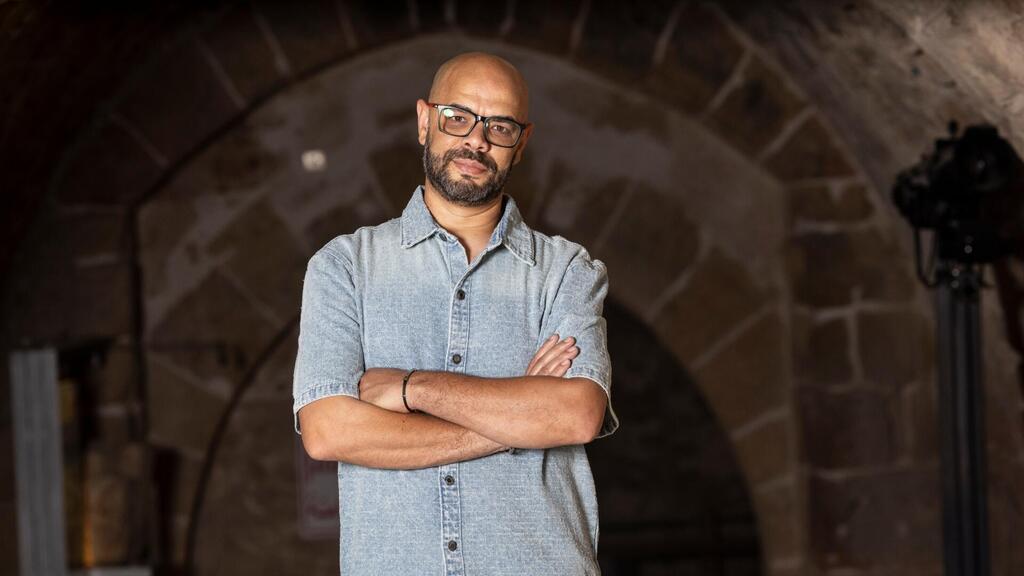
'October 7 is still a fresh wound '
(Photo: Gil Nehushtan)
How did you decide to take the role?
“I was upset, because enough, I’m tired of these roles. My face gives the impression of a scary person, the bad guy, and if people see you again and again in the same kind of role, the industry locks onto it. That’s it, that’s my typecast. I also asked myself whether they chose me because no one else wanted to play a Nukhba terrorist, or because I was good. I heard that many people refused out of fear they would be recognized in the street.”
After all that, it is surprising you agreed to play the arch-terrorist Abu Zahar.
“Because I’ve heard a lot of ‘no’ after auditions, I don’t say ‘no’ easily. My adviser, my wife Kifah, also made a face at first, but she said it was still Fauda and that it could lead somewhere very high. I came to the industry at an older age, and this is an opportunity that is hard to miss. In Fauda, all the Arabs are killed in the first or second episode,” he says sarcastically. “Here, it is a character with substance who develops over the episodes. My wife reminded me that I am the same Ali and that we are a home of peace.”
If you could choose, what would you want to play?
“My dream is to play a father who raises his children well, even if he gets into trouble here and there. I want a role that gives hope and inspiration.”
You are appearing in the new version of Givat Halfon Eina Ona. Maybe there is hope?
“My role is comic, but still, I play a Bedouin tracker who cons the army and steals to make money. Again, some kind of bad person.”
In the new season of Fauda, Doron and his team arrive in Marseille as they hunt for a dormant Hamas terror cell made up of Nukhba terrorists who massacred the family of Eli, played by Yaakov Zada Daniel, in the Gaza border area on October 7 and then reached France under the cover of being refugees from Gaza.
Ali plays Abu Zahar, the deputy to the supreme commander, a mix of cruelty and sharp intelligence. It is a strong performance by an actor who has appeared in recent years in a series of supporting roles on television and film, and now gets a chance to spread his wings.
He is not yet in a position, he says, where he can say whatever he wants on a production. But perhaps because he entered the industry later in life, as a mature 47-year-old man, he dared twice to push back on things that happened on set.
“Already in the preliminary meeting with the director, Omri Givon, I told him that if my character says verses from the Quran, they should send them to me. I have to make sure they are said correctly.”
Explain.
“I am a believing person who prays five times a day. If you take a verse from one place and a verse from another place and join them together, that is considered heresy.”
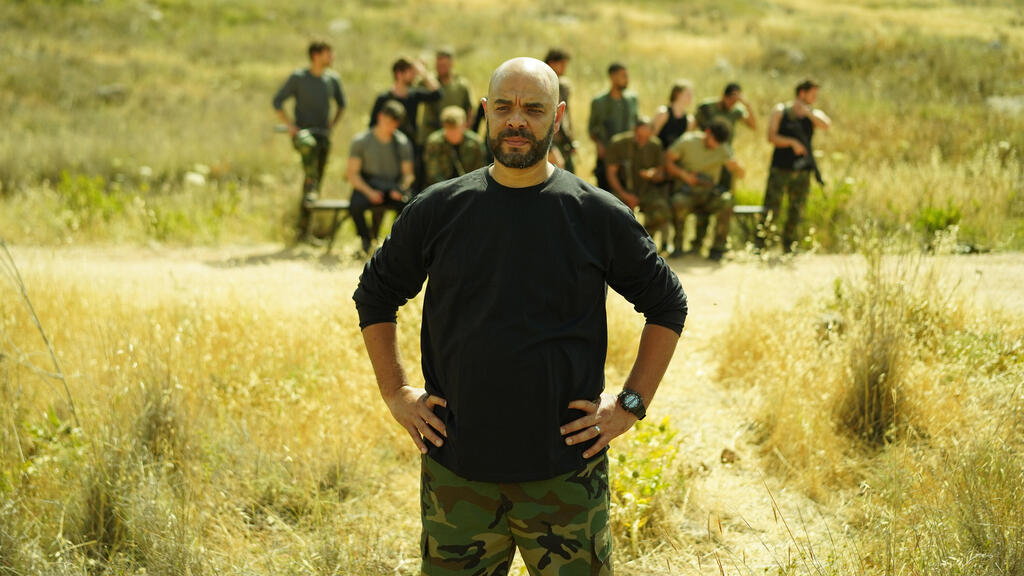
Ali Ali in the Fauda season 5
(Photo: Elia Spinopoulos, courtesy of Yes)
So you got the verses. What happened?
“With all due respect to Avi Issacharoff’s command of Arabic, he does not understand the small nuances of religion. They sent me two verses that had been joined together. I said, ‘Guys, I don’t want to say any verse from the Quran at all. Anything connected to religion, move it aside.’”
That takes courage.
“My community will not leave me alone if I present Islam incorrectly. As it is, people think Islam is only murder and blood. I don’t want to shoot myself in the foot. Let people in my community criticize me for the acting, not for an incorrect quotation.”
The second time Ali showed similar nerve was when he corrected the Arabic of the lead actors.
“My first scene was with Lior Raz and Yaakov. We decided to rehearse the text, and then I hear Lior and Yaakov making a mistake in the diction of a word. Now, who am I to come and say how people should or shouldn’t speak? I didn’t know how they would take it. I gathered confidence and told them, ‘Guys, say it the way I’m telling you.’”
How did they react?
“They said, ‘Of course, if there is a mistake, say so.’ I decided that only if there were very jarring things, I would try to make it more accurate.”
Did you hear mistakes in previous seasons?
“There were times when, as a viewer, I said that if undercover soldiers spoke like that, they would be exposed immediately. Palestinians are not stupid. When Idan Amedi says to a stranger who approaches him in the market, ‘What, ya habibi?’ that is the wrong choice. It comes off as condescending toward Arabness, as if Arabs always say ‘ya habibi.’ We would speak in such a familiar way only after we had really gotten to know someone.”
Because the new season of Fauda deals with the events of October 7, it is impossible not to speak with Ali about that cursed day.
“As an Arab Israeli, I was in severe distress, like the rest of the citizens of the State of Israel,” he says. “If I had been in that area, I’m not sure I would have come back alive. We must not forget that Arabs, Muslims, Christians and Druze were also in a terrible situation. They too were murdered and kidnapped. We all went through trauma. Missiles fired at our country also do not distinguish between a Jewish home and an Arab home. I have a 9-year-old daughter who, when she hears sirens, even if it is only on television, covers her ears. When my son is playing soccer downstairs and there is a siren, I run in panic to get him.”
What was it like in Acre that day?
“We drove at 2 a.m. on Friday night to Al-Aqsa Mosque, my family, my wife and children, together with my brother and his family. We went in for the dawn prayer. When we came out at 6:30, we did not see security personnel. It was strange. Where was everyone? Around 7, my mother called to check where we were. She said there were sirens, rockets from Gaza. My wife started scrolling on her phone, and we saw the pickup trucks in Sderot. When we got home, we went up quietly, and I told my wife to take the children and go to her parents in the Old City.”
Acre is very far from the area that was attacked.
“We live in a neighborhood with a Jewish majority and across from a synagogue, and I was afraid someone who knew Arabs lived there would come and want revenge. I stayed home to guard it. I locked the door.”
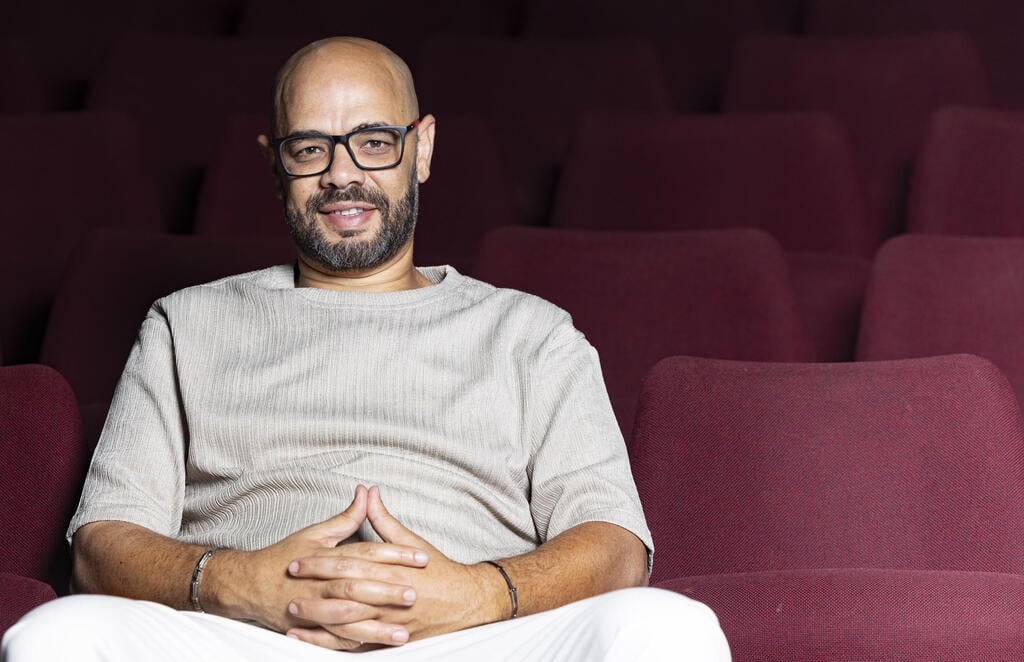
Ali Ali
(Photo: Gil Nehushtan)
That is a sad thing to describe.
“Very. I am a person who does not live in peace. Among Jews, I am an Arab, and as an Arab in the State of Israel, with an Israeli passport, in a significant part of the Arab world I am considered a traitor. My hands are tied. I can’t say anything. There is anger at both sides. Why did it have to be this way? Why didn’t we talk? Why didn’t we sit at the table? And if terrorists, sick people, entered so easily, why didn’t we protect the border? There is anger at the state that is supposed to protect its citizens. The Gazan civilians are also suffering from Hamas. It is like a cancer that spreads and spreads.”
Ali says the industry, too, sometimes made Arab actors feel like an unwanted presence. Four months after October 7, HOT held a festive event to present a viewing award to the cast of Border Police, but the Arab actors, including Ali, were not invited.
“We are part of the Israeli industry, and I don’t want to create a provocation, but if there were no Arabs in the series, there would be no series,” he says. “I expressed my disappointment then. Still, if HOT calls me to take part in a new series, I’ll come.”
Did you think about emigrating from this complicated reality?
“Of course. Until a few months ago, my wife and I were talking about immigrating to Sweden or Canada. My wife has a brother who fled to Canada during the war and got married there. Even there, they gave him trouble with papers because he is Arab. For now, we have dropped it, but maybe one day I’ll say, ‘That’s it, bye.’”
Ali was born and raised in Acre. He is married to Kifah, 45, a self-employed personal injury lawyer. They have known each other since childhood and have three children: Farid, 14, Yara, 11, and Hanin, 9.
His love of acting began early, even though he did not come from a particularly artistic home. His father was a maintenance manager at a chemical factory, and his mother was a homemaker who raised five children. Ali is the eldest.
“After I finished high school and was not accepted for national service in the fire department because I was skinny, kind of anemic, I started acting in the community theater in Acre,” he says. “I got my first role in a play. After that, a director came and exposed us to the world of juggling. I performed in street shows at the Acre theater, walking on stilts, juggling. The feeling that I wanted to do this, to be on stage, became even stronger.”
Ali became a regular actor at the Acre Theater.
“I worked as a gas station attendant, a security guard at the train, paved roads, arranged flowers in the Baha’i Gardens, worked in a bakery, worked as a porter, unloaded containers in factories. There is no job I didn’t do so that I could keep acting in the theater at the same time.”
How did your parents feel about you aiming for an acting career?
“It wasn’t easy for them. There were arguments, shouting: ‘Theater doesn’t bring money. How will you get married? How will you build a home?’ I went to study accounting courses, got a certificate and did not work in it for one day. I continued on my path. When a director told me, somewhere about 20 years ago, that there were not enough actors like me, I went to an Arab actors’ agent in Haifa.”
What does “actors like you” mean?
“Back then, Mohammad Bakri, Makram Khoury and Yussuf Abu-Warda dominated. There were no young characters. Or as that director put it, my particular face, the big nose, the bald head, there is a place for that. I got a respectable role in an Arabic-language series on Makan 33, Dr. Karaz, as a supermarket worker who is married to an Arab woman but in love with a Jewish woman. On set, I met Luna Mansour, who is a kind of relative. Her father and my mother grew up in the same building. She introduced me to my agent, and the rest is history.”
Even as acting became a larger part of his life, Ali still needed to make a living. In parallel, he teaches theater at an Arab high school in Haifa.
“During COVID, I decided to enroll for a bachelor’s degree in theater, and I have been teaching for five years already.”
How do the students react to seeing their teacher on screen?
“On screen, I am a tough person, I speak harshly, I hit, I pull out a gun. They are still children, and it confuses them.”
Do you also speak to them about crime in Arab society?
“That is what the final play I am writing for the students is about. They are going out into the world and will be exposed to difficult things. People don’t agree to employ Arabs, and not only because of language difficulties, but because of their Arabness. In the world of crime, they accept you. It is more money for less work and in less time, through extortion, drug dealing and arms trafficking. Maybe you will have a good day or two, a year or two, but you will be a hunted person, by your enemies, by law enforcement, by your conscience.”
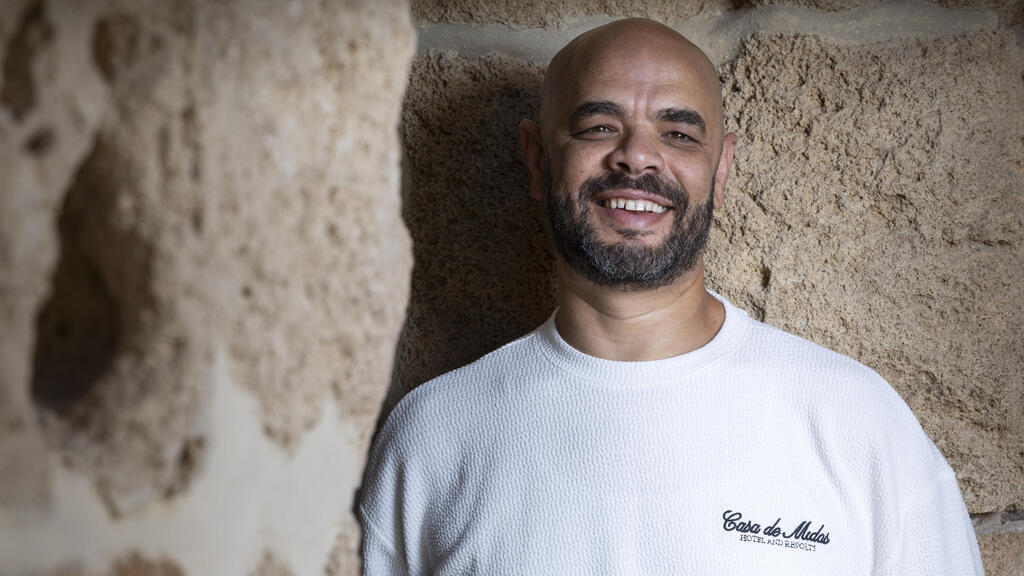
Ali Ali
(Photo: Gil Nehushtan)
The day after a Fauda premiere, he still has to get up and teach at school. How does one live with the gap between fame, if that is the word, and daily life?
“It is not simple. It means putting on a certain character for the premiere. My wife chooses my clothes. She comments to me: Don’t drink right now, don’t go out to smoke, don’t pick your teeth. She is my director there. The next day, I go teach, and after that I have my own children to pick up from school.”