

Every Sunday for more than two years, Shmuel Mor passed by the Rehabilitation Ward at Schneider Children's Medical Center on his way to his office a few floors below. He saw released hostages returning, families reuniting, heard the tears and shouts of joy. But his grandson, Eitan, was never among them. Still, Shmuel kept coming, week after week.
Then on Monday, October 13, 2025, after 738 days in captivity, the last 20 hostages held by Hamas in Gaza were freed. Eitan was one of them.
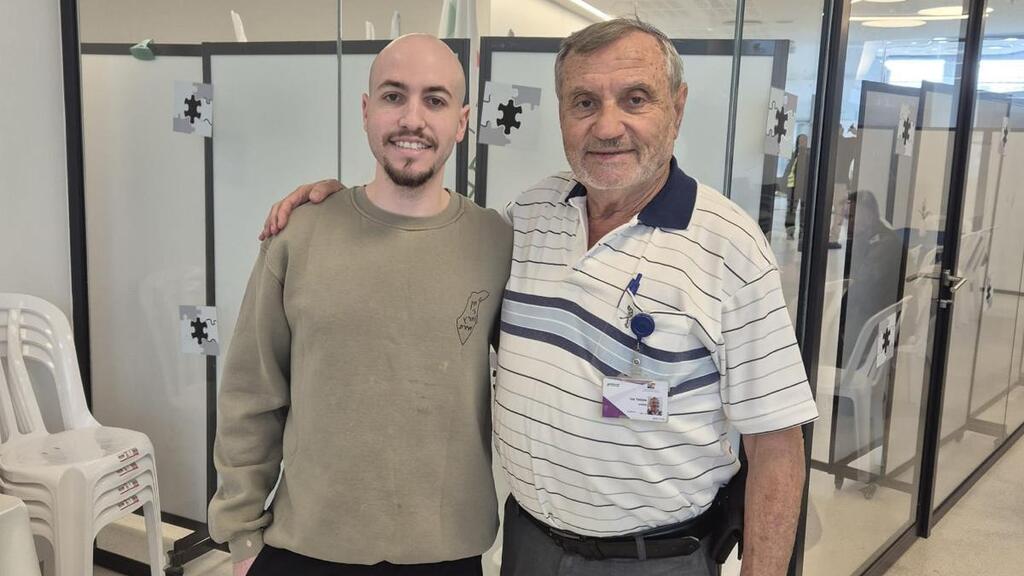
In the days that followed, one by one, the freed hostages left the hospital and returned home, beginning a long rehabilitation process on the path back to life. Eitan Mor, Evyatar David and Guy Gilboa Dalal were the last to remain in the ward. And on the day they were set to leave, the hospital hallways came to a standstill. Families, medical staff and volunteers gathered to say goodbye, waiting outside the hospital with Israeli flags and balloons.
Shmuel was there that day too. On the door to his office, next to the gift shop run by the “Our Children” nonprofit where he has volunteered for years, hung a photo of Eitan and the sentence that had finally come true: “Eitan Mor has come home.”
How is Eitan feeling?
“Eitan’s doing okay,” Shmuel says quietly, smiling shyly. “When I saw him, he was already laughing with his friends. His buddies come often, and the staff limits the number of visitors. We, the grandparents, wait on the sidelines. There are constant tests, psychologists and social workers from the welfare office.”
He pauses, smiling again. “The first week after he was released, I visited him just once. Every time I asked Tzvika (Eitan’s father) when we could come see him, he said, ‘Not now, he’s in a test, or his friends are here.’ I said, ‘Okay, we’re patient.’ But on the morning he was discharged from the hospital, I told them, ‘Whether you like it or not, I’m coming.’ And I did.”
Shmuel smiles when he speaks about his beloved grandson, and if you look closely, you can even see a glimmer in his eyes. Still, it’s hard to ignore the toll the past two years have taken on him — the deep worry, the uncertainty about Eitan’s fate and the faith that carried him and the rest of the family through: the belief that Eitan would return home alive.
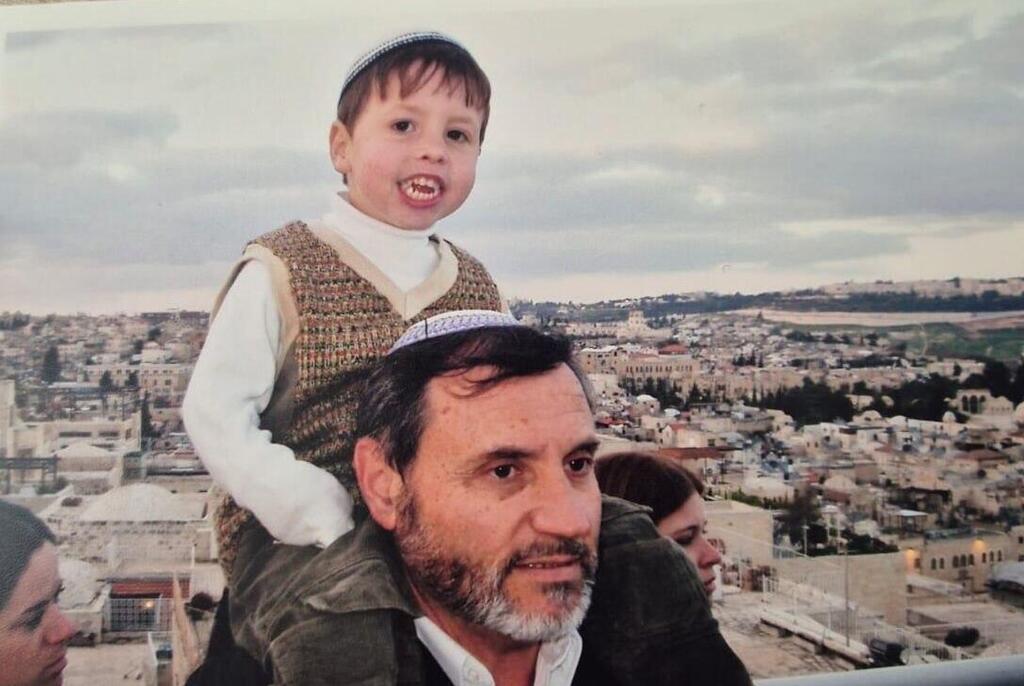
Eitan Mor as a child on Shmuel's shoulders
(Photo: Courtesy of the family)
“When Eitan was released, he was very thin and barely eating,” Shmuel says. “Today, he looks good, he eats, he smiles. But he still only whispers. Two weeks after he was freed, he was still whispering. Maybe it’s a habit, while in captivity, the terrorists told the hostages not to speak when the IDF was nearby.”
But behind those whispers lies a story of heroism. Eitan, who spent six hours rescuing the wounded at the Nova music festival before being kidnapped, showed extraordinary courage.
Six hours of heroism
On the morning of October 7, Eitan, 25, from Kiryat Arba, was working as a security guard at the Nova festival. From 6:30 a.m. until 12:30 p.m., he and his friend, Elyakim Libman, who was later killed, helped evacuate wounded revelers to the few remaining safe spots in what had become a battlefield.
Eitan and Elyakim could have escaped and saved themselves. Instead, they chose to stay and help until the very last moment.
“They found an abandoned ATV and used it to evacuate people to safer areas,” Shmuel recounts. “They saved lives. When the guards were told to flee because there were terrorists nearby, it was clear to them that they were staying — to do everything they could to save as many people as possible.”
“At one point, they came across two young women who’d been shot,” he continues, his voice cracking. “They placed one on the ATV, hid her under a pile of eucalyptus leaves in a nearby grove, and went back for the other. That’s when Eitan was taken. Meanwhile, Elyakim, who was a paramedic, managed to escape the terrorists and reach an ambulance to treat the wounded hiding there. The ambulance was hit by an RPG — no one inside survived.”
Do you know what happened to the girl they managed to hide?
“Yes,” Shmuel says. “She was found dead two days after the massacre. Elyakim’s father, who spent eight or nine months not knowing what had happened to his son, went back to the site with one of the security guards who survived. He remembered that his son had told him over the phone about a girl he and Eitan had managed to hide, and asked the guard about her. They searched and found Shira in the grove where Eitan and Elyakim had concealed her. She was buried on Mount Herzl.”
While Elyakim’s father, Eliyahu Libman — a former head of the Kiryat Arba council — was searching for his son and ultimately found Shira, Eitan was already in Hamas captivity.
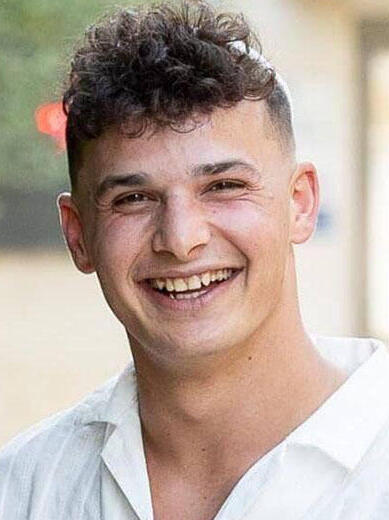 Elyakim Libman, murdered while trying to save wounded in Nova
“For 11 months, Eitan was completely alone,” Shmuel says, taking a deep breath. “He was moved between 30 and 40 different locations in the Gaza Strip; he doesn’t remember the exact number. No one can really grasp what it means to be alone, held captive, in unthinkable conditions, surrounded by armed, cruel terrorists. But this boy held on to faith.”
Throughout his captivity, Shmuel says, Eitan never stopped praying. “Every night, he would recite the Shema and give thanks for whatever good he had experienced that day — even when he was starving, even when he was beaten. Some people break. But he... he found comfort in faith.”
Did the family know Eitan had been at Nova?
“No. Before the holiday, Eitan called his parents to wish them a happy holiday. He said he was at his apartment in Jerusalem and had cooked a holiday meal. Apparently, he and his friend were called in overnight to reinforce the security team at the festival.”
In Kiryat Arba, Shmuel recounts, people didn’t realize the scale of what had happened near the Gaza border until late Saturday afternoon.
“There were no sirens, phones were off because of the holiday, and people continued dancing in the Simchat Torah celebrations as usual. They thought it was a localized terror incident, like in the past. No one imagined that terrorists had infiltrated communities, murdered thousands, raped and kidnapped hundreds of civilians into Gaza.”
Did Eitan contact anyone in the family that morning?
“He called my middle son, his uncle, and said, ‘Uncle, they’re shooting at us. I’m trying to call the police, but no one is answering.’ My son immediately understood how serious it was. He tried calling the police too, and anyone he could, but it was total chaos. He called Eitan again, but Eitan didn’t answer. So he sent out a message with Eitan’s photo and a phone number and posted it on social media, hoping someone from the party who had seen him could say what happened to him or where he might be.”
Meanwhile, at Eitan’s parents’ home in Kiryat Arba, his father, Tzvika, and mother, Efrat, had their phones turned off for the holiday. It wasn’t until Saturday night, when Tzvika returned from synagogue and turned his phone on, that he saw the messages and learned what had happened, and that Eitan had been at Nova and was now missing.
“He came home to find everyone crying,” Shmuel recalls quietly. “The preschool teacher of their youngest daughter had already taken the two little girls to her house so they wouldn’t be there in case the army came with news.”

The Mor family celebrates Eitan's birthday while he was being held captive by Hamas
(Photo: Courtesy of the family)
Then came ten days of complete uncertainty. “We had no idea if Eitan was alive or dead, if he was wounded or in hiding,” Shmuel says.
“His mother, Efrat, believed maybe he was still running or hiding somewhere. She couldn’t believe he’d been kidnapped,” he adds. “You have to understand — there were no videos of him being taken, no footage at all. Hamas didn’t publish anything, and no one had any idea what happened to him. Tzvika told Efrat, ‘I don’t want to hear a knock at the door.’”
Ten days later, Israeli military representatives arrived at the Mor family home in Kiryat Arba.
“They told them there was an indication that Eitan had been taken alive from the Nova site at 12:30 p.m. That’s when Tzvika finally breathed. He said, ‘At least now I know he’s alive.’”
From that moment, the family made a decision they believed would help them survive the long wait for Eitan’s return, without falling apart.
“In Tzvika and Efrat’s house, they didn’t allow daily life to collapse,” Shmuel says. “My son said, ‘If someone wants to cry, they can go to a room and cry, but in the living room, everything continues as normal. We can’t break. When Eitan comes back, we need to be strong for him.’”
Shmuel pauses. “We kept singing Shabbat songs, the kids came to visit, we celebrated the younger brother’s bar mitzvah, and another grandchild was even born during that time. Throughout those two years, no matter what we were doing or where we were, we never stopped mentioning Eitan, talking about him. We acted as if he was here with us — just stepped out for a moment, and would soon return.”
But not everyone in the family agreed with that approach. Shmuel’s daughter, Eitan’s aunt, stopped singing Shabbat songs the entire time he was in captivity.
“She’s a musician and always led the songs on Friday nights, but from the moment Eitan was kidnapped, she stopped singing and just whispered to herself, ‘Until Eitan comes back, I’m not singing.’ Sometimes she didn’t even join us at the meals. It was very hard for her.”
One of Eitan’s sisters also struggled to maintain her daily routine. “She withdrew. Didn’t go to her national service, didn’t work, nothing. She just stayed in her room and waited for Eitan to come back.”
And one of Eitan’s brothers found it hard to accept any celebration during those dark months.
“Whenever we celebrated a birthday or bar mitzvah, or when the new grandson was born and we had a brit milah, he would say angrily, ‘I don’t understand what you’re all so happy about. My brother is buried in the tunnels, and you’re celebrating?’”
It really does sound incredibly hard to carry on as if everything is normal when nothing is.
“It’s true, it wasn’t easy,” Shmuel says. “But we told ourselves — we have to keep living, so that when our Eitan returns, we’ll be whole and healthy in body and mind.”
Shmuel Mor, 75, is not the kind of person who sits at home. He served in the Israel Defense Forces for 26 years, finishing his career as deputy head of operations at the IDF headquarters in Tel Aviv. After retiring from active duty, he continued to serve in the reserves for another 14 years while working as head of human resources in the Ramat Gan municipality’s education department.
During his 22 years at the municipality, Shmuel was responsible for 1,600 employees. “My whole life I worked with people. That’s what I know — working with people,” he says.
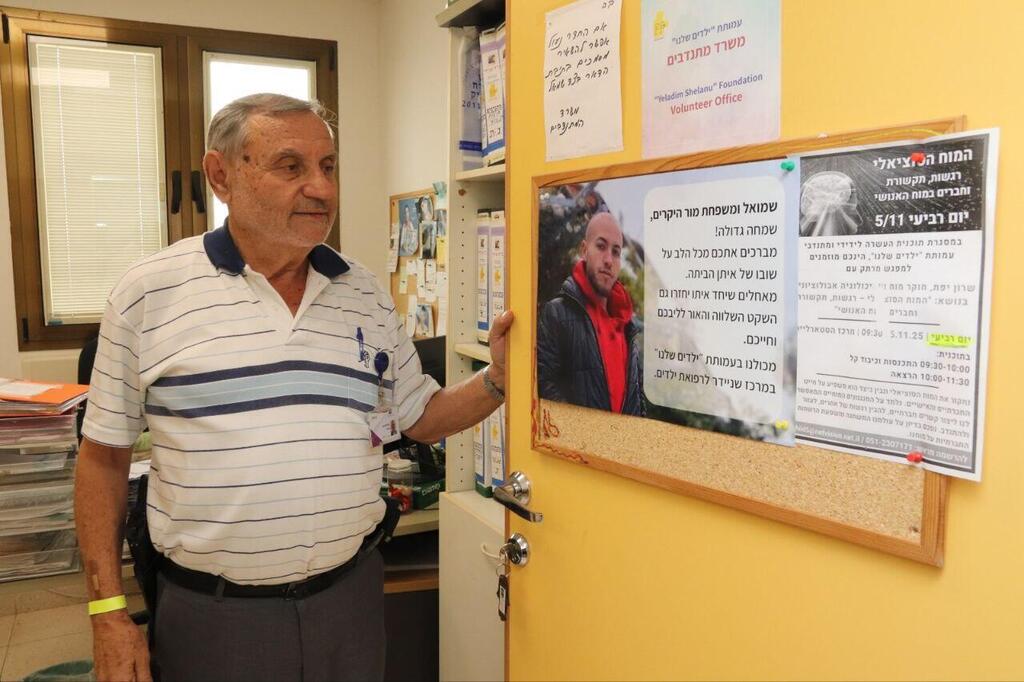
Shmuel next to the sign announcing Eitan's release from captivity
(Photo: Schneider Spokesperson)
Decades of work, overseeing thousands, and then came retirement. But Shmuel didn’t slow down. “My whole life, I was on the receiving end. When I turned 68, I decided it was time to give back.”
He began volunteering at Schneider Children’s Medical Center seven years ago and found a new home in “Our Children,” a nonprofit that has operated at Schneider since 1993. The organization, founded by the late Helen Schneider and Iris Langer, includes 450 volunteers who support hospitalized children — distributing gifts, organizing birthday parties, purchasing supplies for wards and helping medical staff, patients and their families.
“I walked into the office of Hilit Gilad, the organization’s director, and told her, ‘Give me something to do. I can’t sit at home.’ And since then — I’ve been here every week.” His main role is managing volunteer HR.
“When someone comes to volunteer, I open a file, input their details, and make sure they have all the necessary approvals. If anything’s missing — I take care of it. All the volunteers go through me.”
Even while Eitan was in captivity, Shmuel never stopped coming. “It gave me strength. I had a place to go, people to talk to, children to make smile.”
Hilit, the organization’s director, remembers those two years vividly. “We didn’t understand how he did it,” she says. “Week after week, he kept coming — as if nothing had happened. And every time a hostage was released from the rehab ward, we would tense up. We didn’t know how to approach him, what to say. But Shmuel, he was the one who gave us strength. He never stopped giving of himself, even when his heart was heavy.”
Next to his office is the organization’s gift shop — a project that has been running for 25 years, open 365 days a year. The room is filled with drawings and colorful notes made by the hospitalized children. On the shelves sit rows of small gifts waiting for their new owners.
Every morning, volunteers head out from the room to the various departments, delivering a small token of encouragement to each newly admitted child.
“It’s something small, but it brings a smile,” Shmuel explains.
Children also come in to pick out a gift themselves — before or after difficult procedures, or on their birthdays. “The children made drawings for Eitan while he was in captivity,” he says, emotionally. “They wrote ‘Come home soon,’ drew hearts. It was moving. Every time I looked at those drawings, they filled me with hope, and I would tell myself — one day he really will come back.”
“Don’t write my name,” says a mother who passes by. Later, it becomes clear that her son has been in and out of the hospital for the past nine months. “Just write that this organization is the air we breathe. Thanks to them, we survive the daily grind here.”
Shmuel smiles when he hears her. He knows exactly what she means. “This place strengthens everyone,” he says proudly.
In addition to volunteering at Schneider, he’s also active with the IDF Veterans Association in Bnei Brak — a national religious branch that organizes tours and lectures for religious retirees from across the country.
“I did it in the army and at the municipality too. I love traveling, guiding, organizing trips all over Israel.”
Did you keep that up during the past two years as well?
“Of course. Someone once asked me, ‘How did you keep going? Your grandson is in tunnels, and you’re volunteering?’ I answered without hesitation: ‘If I sit at home and stare at the walls, will that help anyone? Will it bring him back? It won’t help.’ We’re people of faith. We lived in hope that, with God’s help, we’d see him again. And here — we did.”
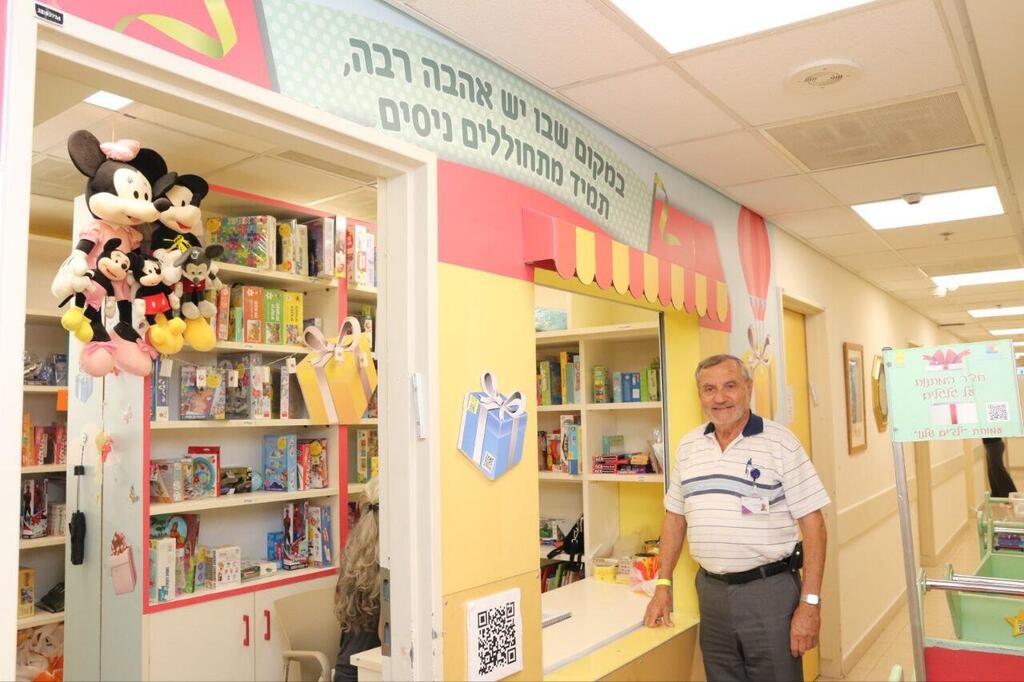
The association's gift shop
(Photo: Schneider Spokesperson)
He has 18 grandchildren and three great-grandchildren. “I can’t host everyone at once,” he laughs. “I’ve only got four rooms. When they come for Shabbat, they stay the whole weekend — they don’t just pop in and out. So everyone sleeps on mattresses in the living room. But it’s fine. Eitan loved coming here as a kid, and even after he grew up. We’ve always had a special bond.”
The family also has a tradition: at least twice a year, on Sukkot or Passover, the entire extended family goes on a vacation in northern Israel. All 150 of them, from the youngest to the oldest. Two years ago, just days before October 7, the whole family was on one such trip. In the middle of the vacation, Eitan received a call asking him to return to Jerusalem to help at the café where he worked.
“We took a photo with him and hugged him goodbye. That was the last time we saw him,” Shmuel recalls, his voice tightening. “This Sukkot, when we went back to the same hotel with the whole family, we got the message on Saturday night that he was coming home. I have no words to describe that moment.”
‘We’re all on one bus’
Eitan Mor's first meeting with his parents, Tzvika and Efrat
(Video: IDF Spokesperson)


Tzvika Mor, Eitan’s father, was one of the leading voices in the “Tikva Forum,” a group of hostage families that chose to act through prayer and faith in the military effort to bring about a full victory and the release of all hostages.
“Tzvika traveled all over the country,” Shmuel says. “There were Shabbat weekends when he would visit multiple communities to speak. In Petah Tikva alone, he spoke at four synagogues in one Shabbat. The same in Givat Shmuel, Kfar Saba and other places. He slept in people’s homes, ate with them and never stopped speaking about Eitan — and the path he and his wife, along with other families in the forum, chose to take in facing this tragedy.”
“Tzvika always said, ‘We need to think about the people of Israel, not just our own son. If we’re strong as a nation, our sons will come back too.’ He was the one who coined the phrase, ‘We’re all on one bus.’”
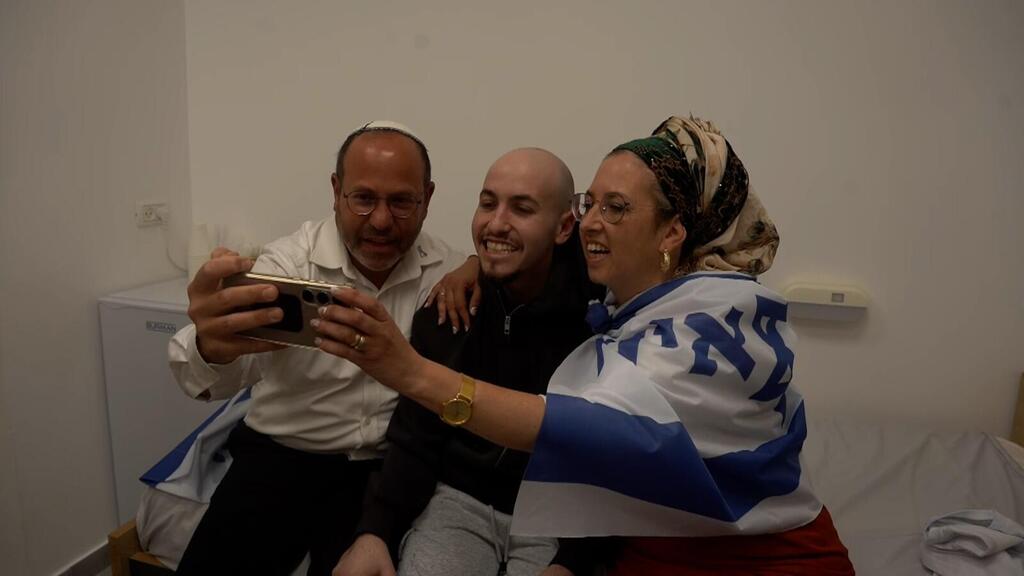
Eitan Mor's meeting with his parents
(Photo: IDF Spokesperson)
Not everyone agreed with the forum’s approach. Some criticized their decision not to protest, their opposition to a partial deal and especially their belief that only military force would bring the hostages home.
“Tzvika always said — if we make a deal and Hamas releases just ten hostages, what happens to the others? They won’t come back. In his view, force had to be used against the terrorists, we had to fight and win. He had complete faith that if we only looked out for ourselves, we’d fall apart. But if we focused on the nation, we’d grow stronger.”
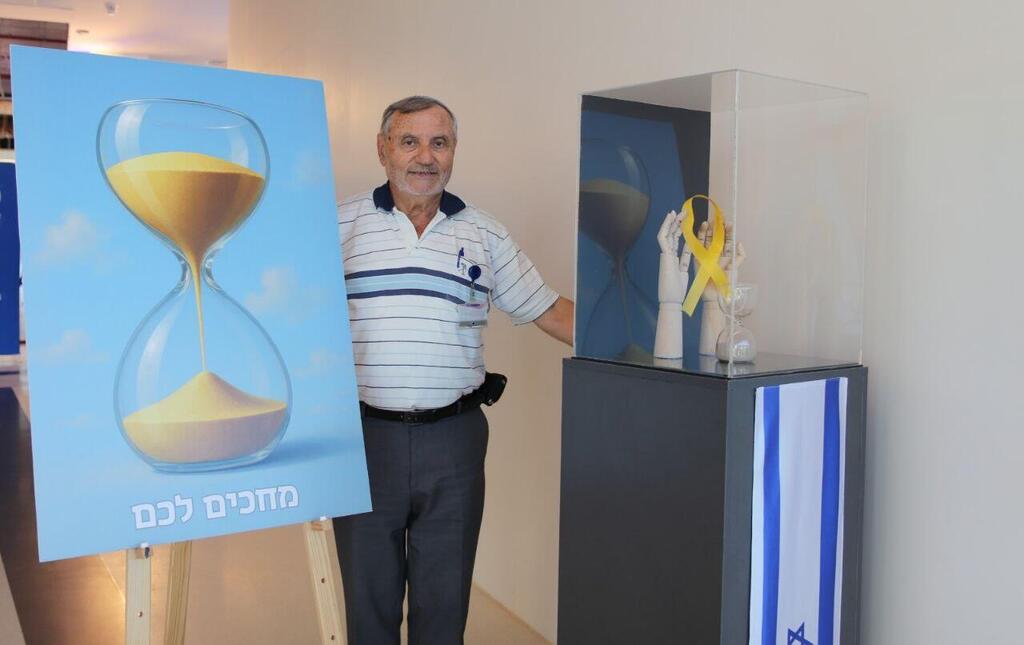
(Photo: Schneider Spokesperson)
When Eitan was released and his parents saw him for the first time at the Re’im base, the moment defied words.
“Tzvika... he broke down,” Shmuel recalls. “For two years, he held everything inside, and in that moment, it all came out. He didn’t need to speak, the tears spoke for him.”
And what was your first moment with Eitan like?
“We didn’t speak at all — I just looked at him. That moment gave me back the ability to breathe, after two years without air.”
First published: 09:16, 11.22.25