

U.S. President Donald Trump has invited all 20 former hostages released in October under the ceasefire deal he brokered to a meeting at the White House. While the Israeli Prime Minister’s Office decided that Israel would cover the flight costs, hostages’ families are angry about how the visit’s organization and conditions are being handled.
The Americans offered to send a special plane to collect the hostages and accompany them to the meeting, but the Prime Minister’s Office chose to lead the operation themselves — and decided not to allocate the prime minister's Wing of Zion plane, claiming it is used only by the country’s top leaders. Instead, they will fly on a commercial Arkia flight.
Gallery

US President Donald Trump will meet the former hostages at the White House
(Photo: Jose Luis Magana/AP)
The families fear that the long flight will adversely affect the health of the former hostages, and they feel that no comprehensive tests have been conducted on the subject, and no examination has been made of whether the travel conditions are appropriate for their relatives' condition after the long period in Hamas captivity in the Gaza Strip
After more than two years in captivity, many of the former hostages struggle with sitting for long hours on a plane or travelling for extended periods by bus, and with being in crowded environments. Among the families there is a widespread belief that the handling amounts not simply to insensitivity — but even to endangering their loved ones’ conditions.
The former hostages are expected to land in New York on Wednesday, with the delegation (including escorts) numbering about 70 persons. From there they will travel by minibuses to Washington — a journey of nearly five hours — and will hold talks in the U.S. Congress. On Thursday at 2 p.m. (9 p.m. Israel time), they will meet Trump at the White House, where Jared Kushner and Steve Witkoff, who led the hostages‑deal negotiations, are also expected to be present. On Friday they will travel back to New York, and on Saturday night they will fly home.
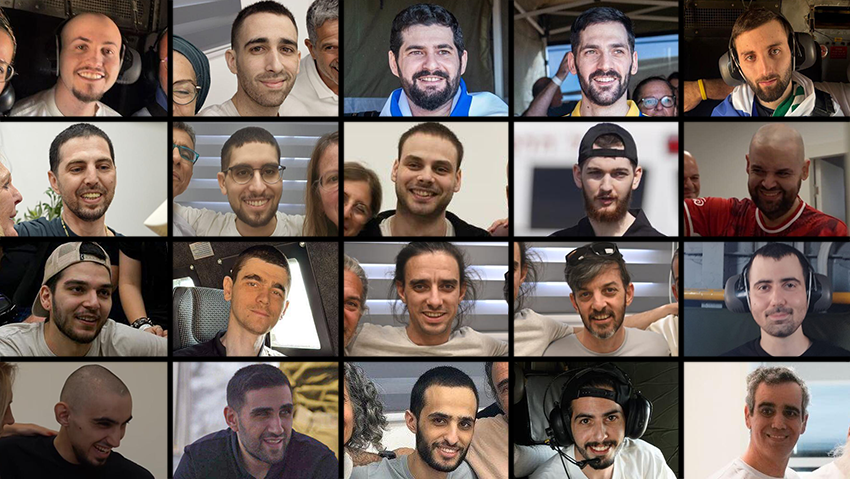
The 20 living hostages returned in the Trump-brokered deal in October
(Photo: IDF Spokesperson's Unit)
Trump had wanted to meet the hostages during his brief visit to Israel on the day they were freed from captivity, but due to hos short stay and the complex medical state of the 20 returnees, the meeting did not take place. For Trump, it has been important to him to meet them and mark the achievement , one of the major successes of his term so far. Yet, even now, a month after their release, the former hostages’ physical and psychological condition remains complex.
“There is a sense that the Hostages, Missing Persons and Returnees Directorate of the Prime Minister's Office is not considering the needs of the returnees and their triggers. Nothing is organized properly," a source familiar with the details added. "Some of the escorts are on standby, and the former hostages cannot fly alone. In addition, journalists were added to the flight without informing everyone. Some of the former hostages don’t want to fly because of this.”
The former hostages invited to the White House include: Eitan Mor, Gali Berman and his brother Ziv Berman, Alon Ohel, Omri Miran, Guy Gilboa‑Dalal, Matan Angrest, Yosef‐Chaim Ohana, Avinatan Or, Elkana Bohbot, Evyatar David, Ariel Cunio and his brother David Cunio, Segev Kalfon, Eitan Horn, Matan Zangauker, Nimrod Cohen, Rom Braslavsk, Bar Kupershtein and Maxim Harkin.
Professor Haggai Levin, head of the health unit at the Hostages and Missing Families Forum, said: “The former hostages and their families are in a complex rehabilitation process after more than two years of inhuman suffering, with damage to body and mind. The health system of the forum tracked and documented the harm of the captivity on the surviving hostages and their families, but no one can predict what the long‑term effects will be.”
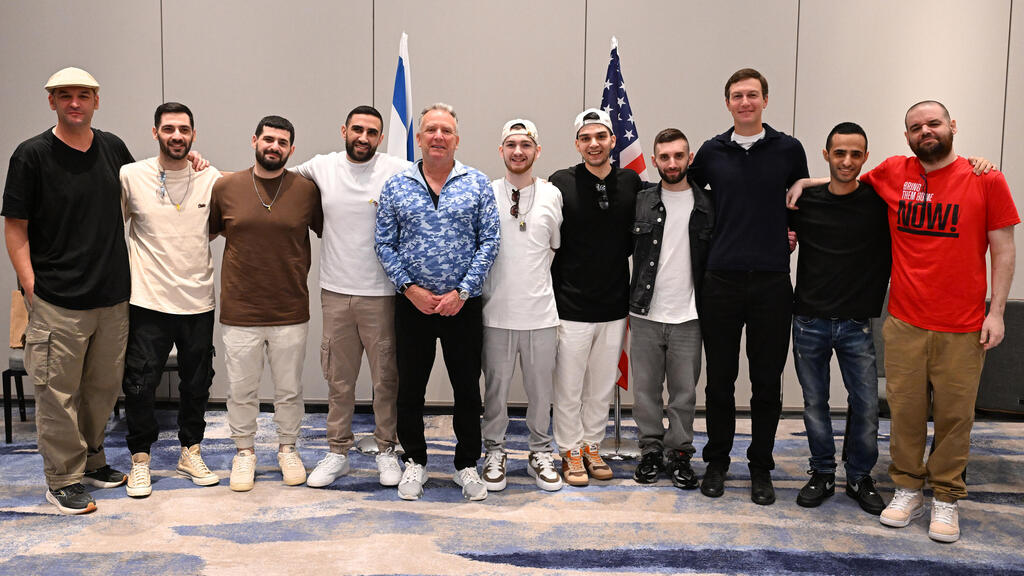
Former hostages meet with Jared Kushner and Steve Witkoff last month
(Photo: David Azguri/US Embassy)
He added: “There is importance in the public activity of the former hostages and their families for the return of the three remaining hostages. Nonetheless, it is vital that their autonomy and choice — which were denied them in the past — in what activities they will participate in, be preserved, with their needs placed at the center. To maintain trust and confidence, it is advisable to provide prior information on the conditions and planning, with full transparency, along with stability and avoidance of sudden changes in plans.”
Levin further said: “Of course in every travel plan — and certainly to a distant place — one must minimize physiological deficits, hassles, discomfort and privacy intrusion. In order to preserve their health, they must be provided with as comfortable conditions as possible. Sub‑optimal and stressful conditions may act as a trigger for them and lead to deterioration of their health status.”
The Hostages, Missing Persons and Returnees Directorate responded. “As with past delegations, the administration flies the former hostages and family members on regular commercial flights. Due to the importance of the issue — many efforts were made to carry out the flight on a tight schedule," according to the directorate.
“There was an attempt to provide a dedicated charter plane, but due to the short timeframe and air‑traffic constraints — it was not possible, and so Arkia is providing for the former hostages a premium class cabin separated from the rest of the passengers, a stay in a separate lounge before the flight, fast check‑in procedures and more. It should be noted that we are maximally considerate of the former hostages’ medical requirements and needs of the families, and the delegation is traveling with a medical team. The Wing of Zion plane is used only by the country’s top leaders.”