

A young couple with two children moved from a city to a communal settlement in northern Israel. For the move, they purchased a house built in the 1980s, characterized by arches and curves influenced by European design, and sought a major renovation and redesign. They turned to interior designer Livnat Cohen Marin, founder of "LCM Studio", to adapt the structure to their family needs.
“In the early years our studio worked mainly in Scandinavian and minimalist design, which is very popular in Israel, but over time, as part of a global design trend, we chose to offer a more unique interpretation and personal expression of each client’s individuality. To design unique homes, that tell a story of those who live in them,” Cohen Marin said. “In this house, designed in mid-century modern style, I chose to preserve a clean, modern shell while weaving in nostalgic touches that feel modern and always bring a smile. In both planning and design we used natural materials such as solid wood and stone, integrating them throughout the home in an organic, inviting way, alongside up-to-date materials such as plastic, metal and glass.”
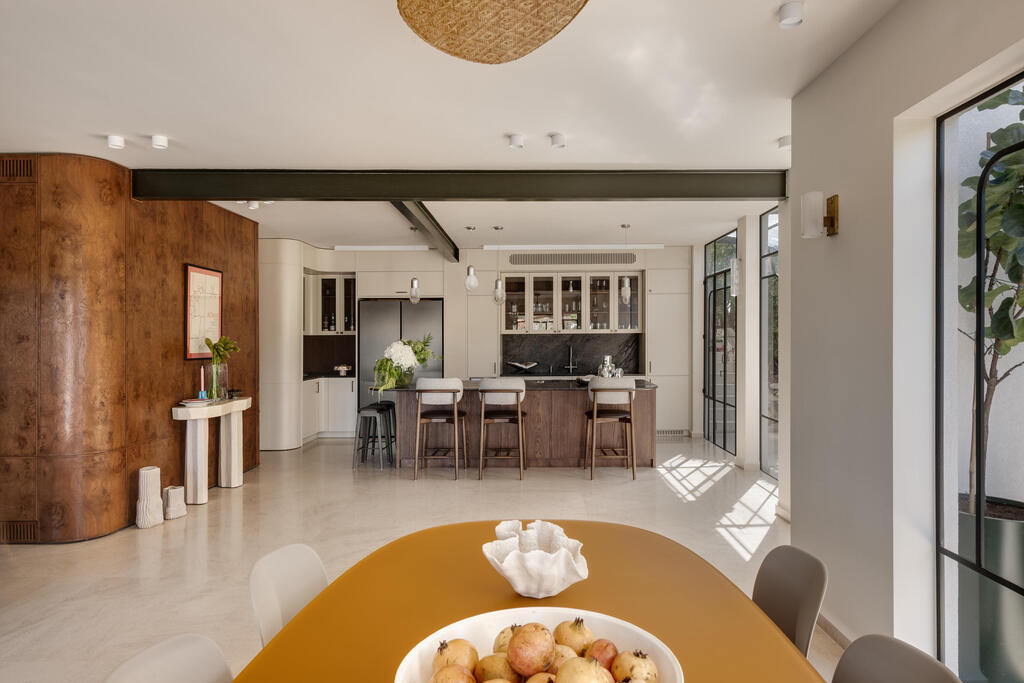
She added: “The design reflects the values of a style that developed in the mid-20th century and is free of unnecessary ornamentation, based on natural materials.”
The goal: to brighten the space
The house, which spans 240 square meters, is built on split levels, a popular façade in the 1980s. In addition to three levels, there is also an attic. The renovation focused on the ground floor and the third level only.
House in the north, design: Livnat Cohen Marin
(Photo: Oded Smadar)
The ground floor was clad in Crema de Moss stone, a material favored by the designer. “I love this stone for its soft texture and vitality, and for the precise connection it creates with iron elements. It has natural movement and flow, almost like waves formed in sand,” Cohen Marin said.
House in the north, design: Livnat Cohen Marin
(Photo: Oded Smadar)
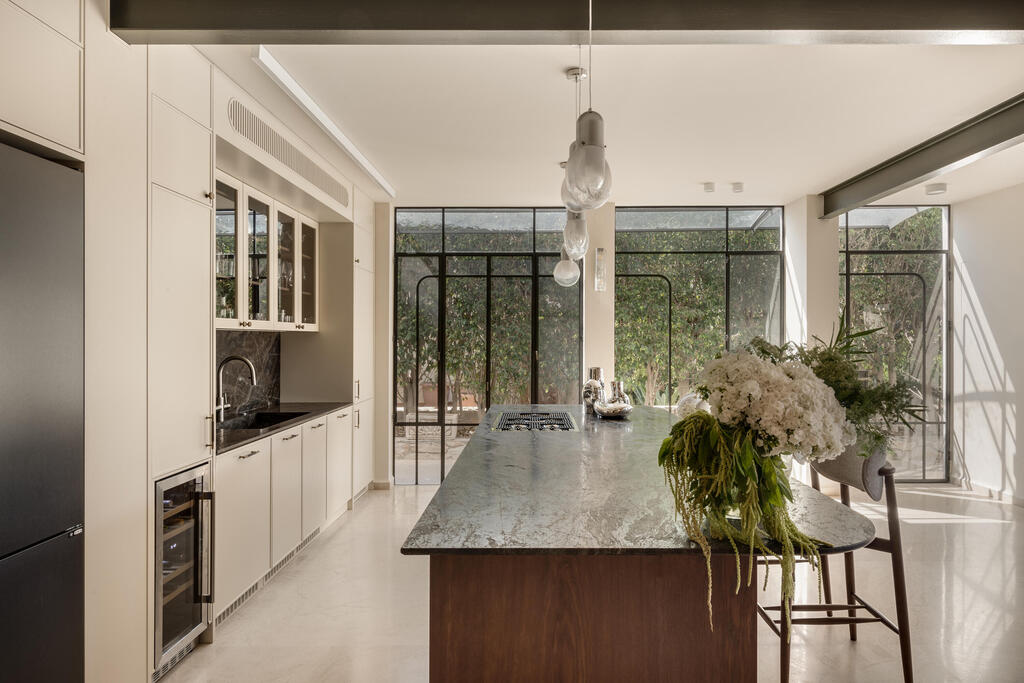
According to her, one of the main goals of the renovation was to make the home brighter. “The ceiling height is 2.75 meters and the house doesn’t get abundant natural light. The air exposure is northwest, so there is morning sun, but from early afternoon the house becomes dark, especially with neighboring homes blocking light,” she explained. “So we enlarged the entrance opening, turned the door into a glass door, and added floor-to-ceiling windows in the kitchen. The windows were custom designed and became a design element in themselves. Even with a green wall from the neighbors opposite, light still enters from above and the sides. It brightens the space, creates a sense of size, all without changing the ceiling height.”
The entrance was also redesigned. “It was very problematic, the result of additions made over the years without a comprehensive plan. We carried out a significant structural change in the building, completely demolishing the entrance area and removing about four columns and two supporting beams.”
Renovating the safe room
House in the north, design: Livnat Cohen Marin
(Photo: Oded Smadar)
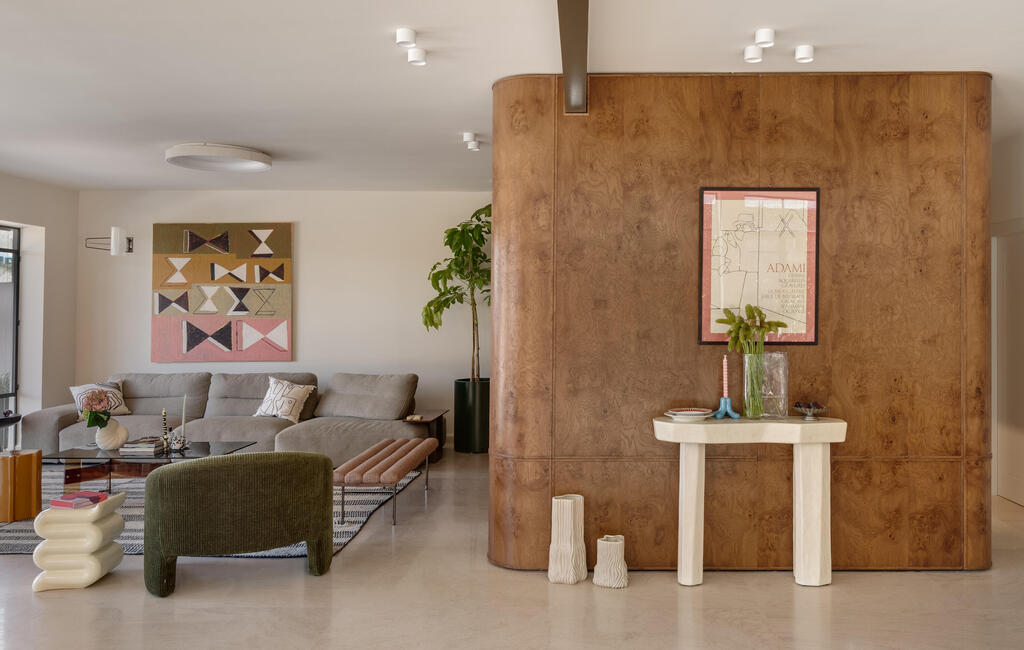
One of the most significant aspects of the renovation was dealing with the safe room. “It is a typical 1980s safe room, located in the middle of the house, and it was a challenging element for us to solve,” Cohen Marin said. “At the beginning of the design process I told the couple I didn’t understand its placement, but then the war broke out and the discussion took on new meaning. We considered removing it and building a new safe room on the upper floor, but the cost was too high, so in the end we decided to keep it.”
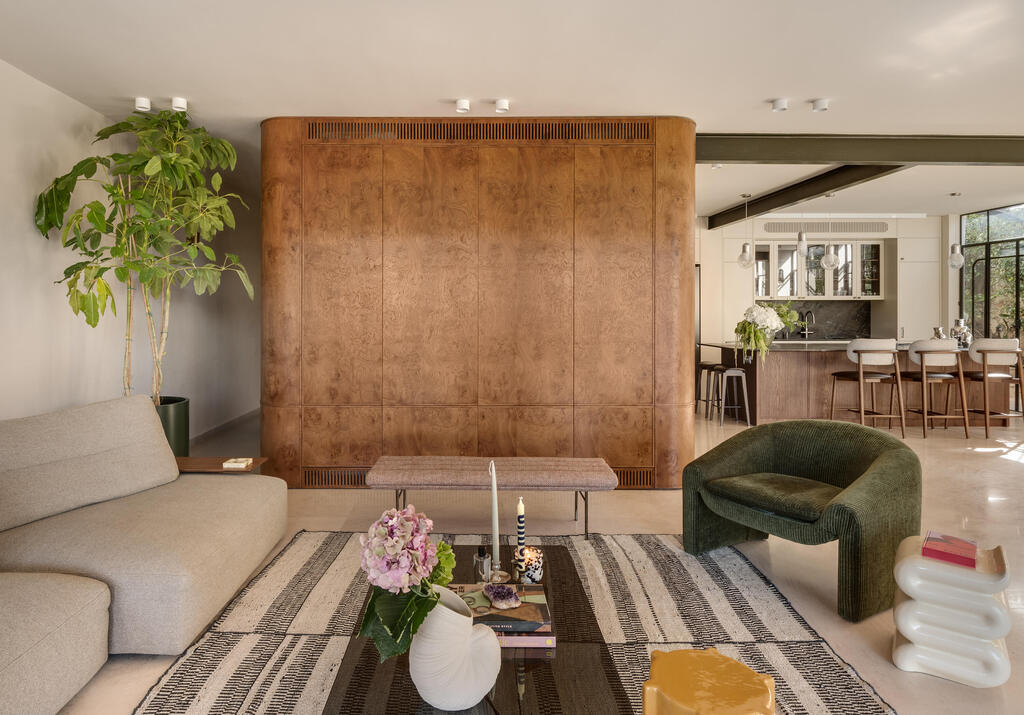
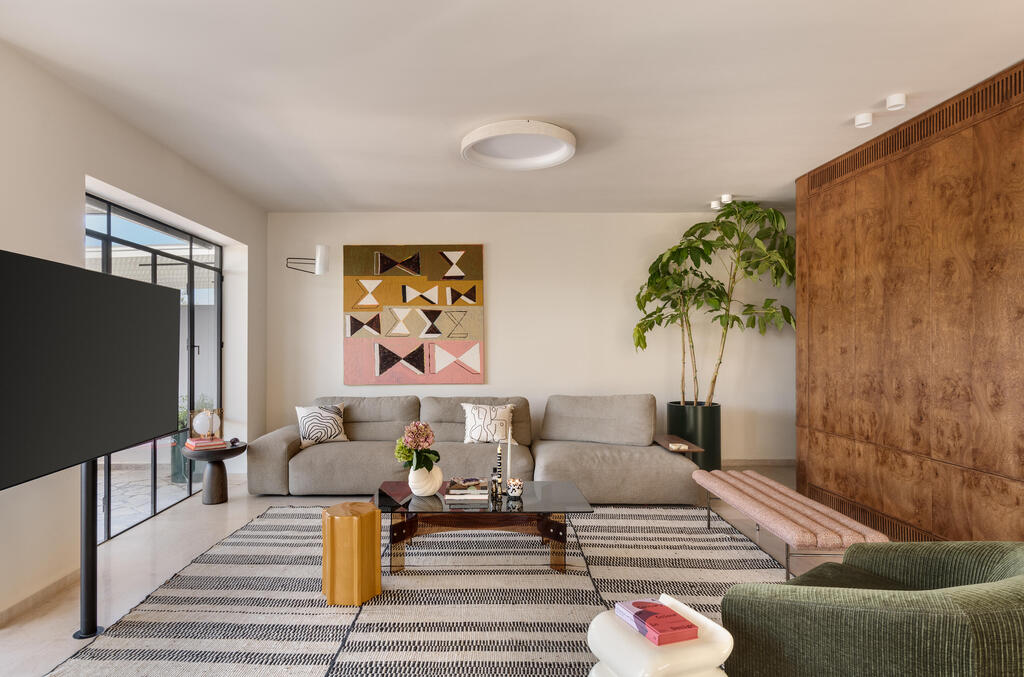
“It remained ‘stuck’ in the center of the house, so we decided to turn a limitation into an advantage. We clad it entirely in wood, integrated the main air-conditioning systems for the living and dining areas into it without lowering the ceiling. Even the safe room door was covered in carpentry so that when it is closed it blends completely into the design, and only when needed does the protected space open. The safe room was transformed from a structural element into a sculptural design feature within the home.”
House in the north, design: Livnat Cohen Marin
(Photo: Oded Smadar)
The arches became a central design element and influenced both the window design and architectural details. The safe room itself received rounded corners to avoid a heavy, dominant presence, and the connection between the concrete structure and wood cladding was left visible as part of the home’s material language.
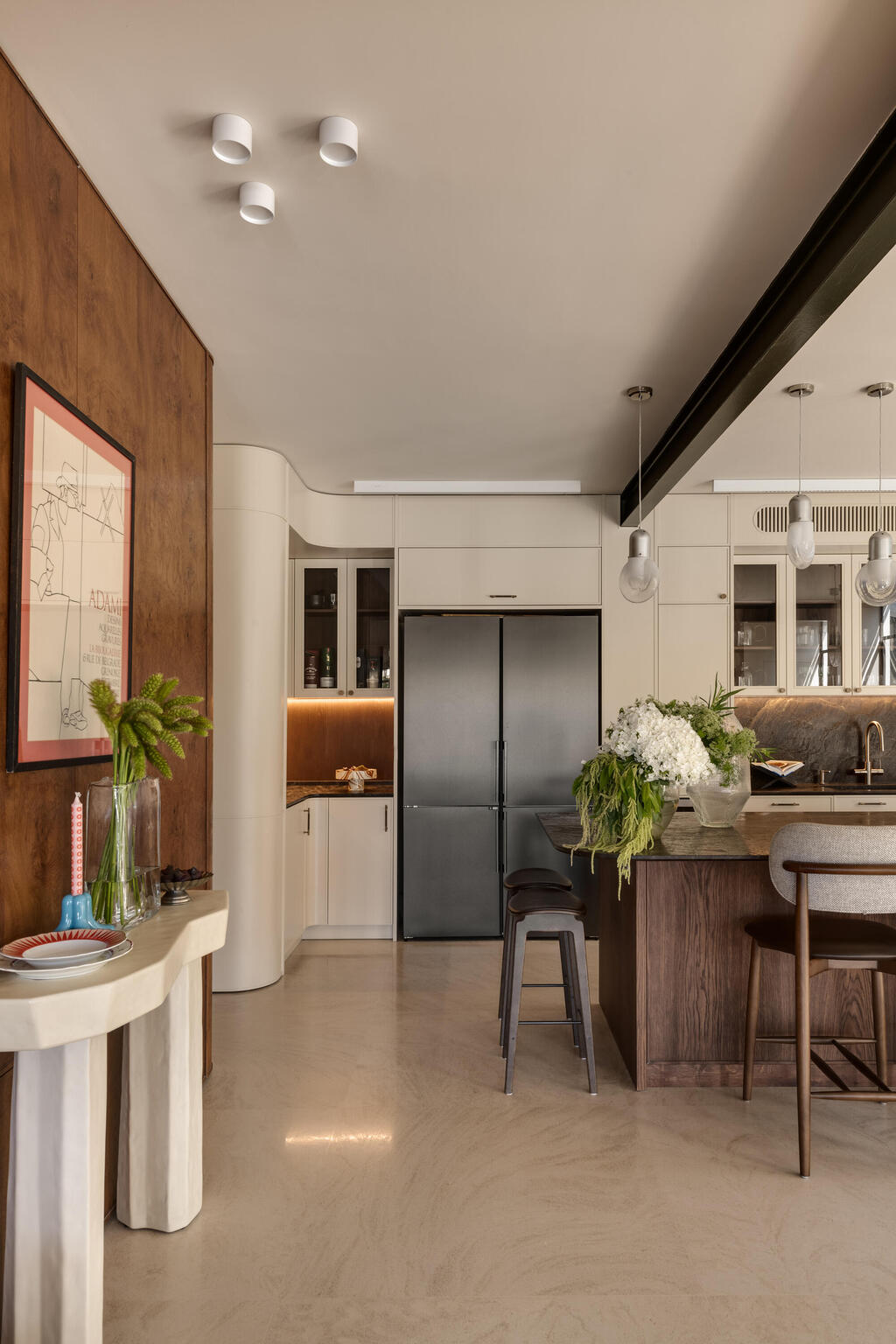
“We worked with the arches and gave the house its character through the main arch,” the designer said. “All the windows in a chocolate shade were custom developed in our studio and produced by ArtPro. They were inspired by French-Belgian design, with iron profiles and rounded edges, so each window stands on its own like a stained-glass piece, creating rhythm and presence throughout the house.”
House in the north, design: Livnat Cohen Marin
(Photo: Oded Smadar)
What is visible and what is hidden
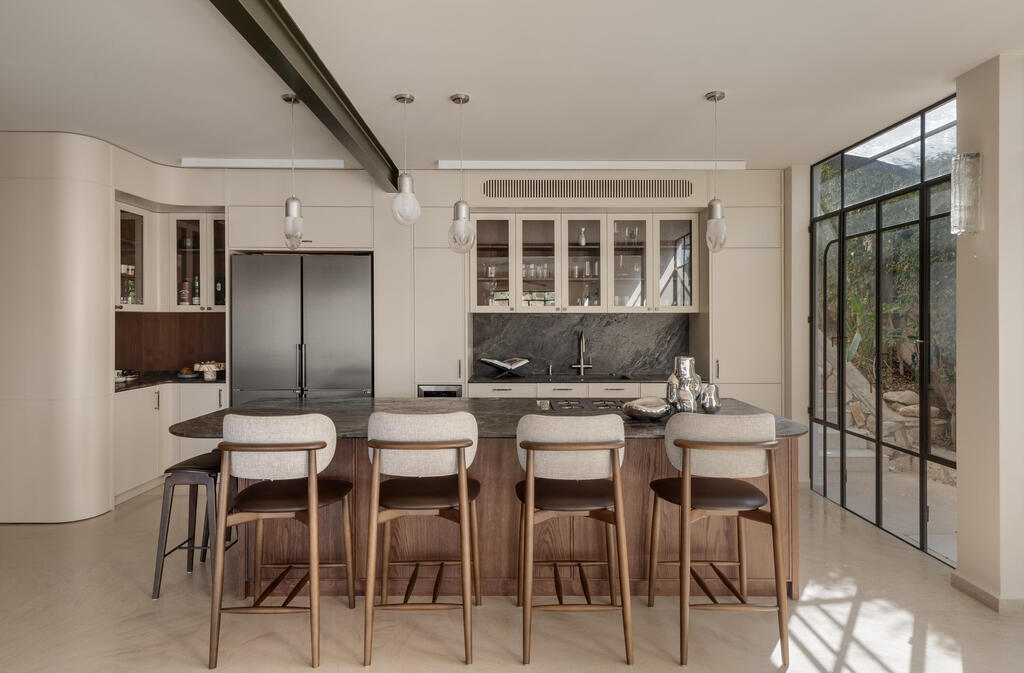
The large kitchen was designed to be open, with American inspiration. Its creamy color blends with the flooring and creates a sense of space. Countertops, integrated sinks and trough sinks in the primary bathroom suite were all designed in Cohen Marin’s studio, made of quartz stone with a Riven finish by Parvital. All work surfaces, sinks and cooktops are flush-mounted, creating a seamless, monolithic look.
Air-conditioning systems were carefully concealed above the cabinetry, with intake hidden under the base and structural reinforcements behind the stone surface to maintain a clean, open feel.
House in the north, design: Livnat Cohen Marin
(Photo: Oded Smadar)
The kitchen island includes seating designed for both older guests and lower stools for children. “The entire house is a combination of furniture from different brands,” the designer said. “I don’t believe in working with just one supplier. It is often harder to combine different brands while maintaining a cohesive language, but that is what gives the home its unique character.”
House in the north, design: Livnat Cohen Marin
(Photo: Oded Smadar)
Above the island hang lighting fixtures by Italian designer Carlo Nason, purchased secondhand from Vintouch by Avi Ben Ezra.
House in the north, design: Livnat Cohen Marin
(Photo: Oded Smadar)
Handcrafted details and Italian touch
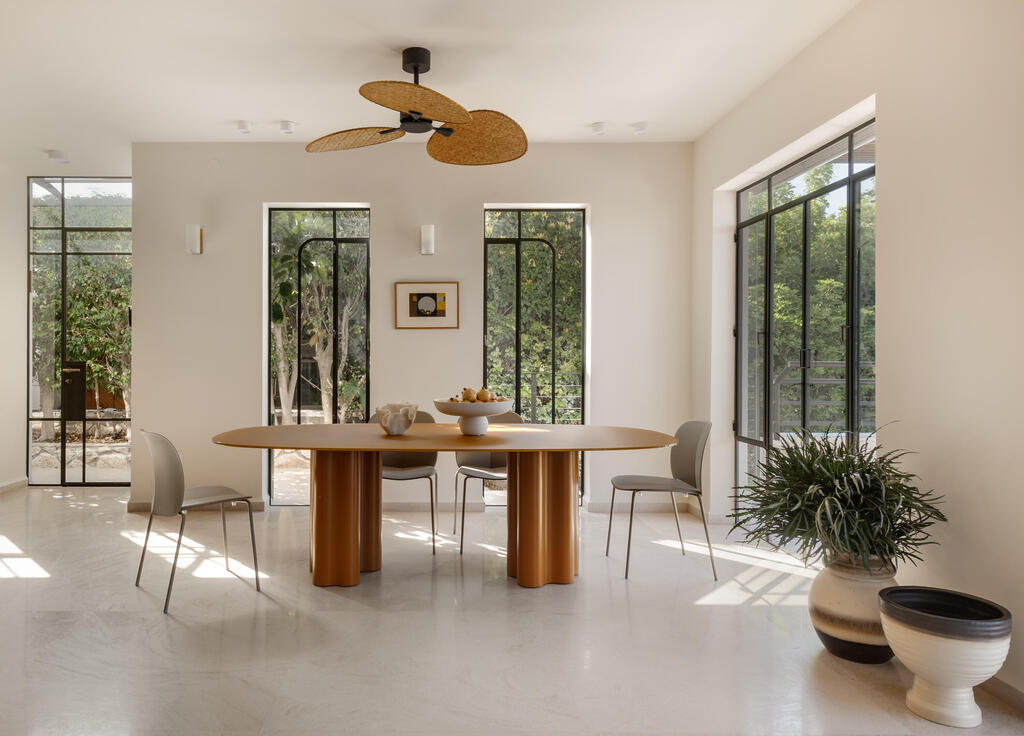
Next to the safe room stands a beige console with an original 1960s poster above it, featuring an invitation to a Paris exhibition by Italian artist Valerio Adami. Opposite is the dining area by Saba Italia, with sculptural amorphous legs that give it a distinct presence.
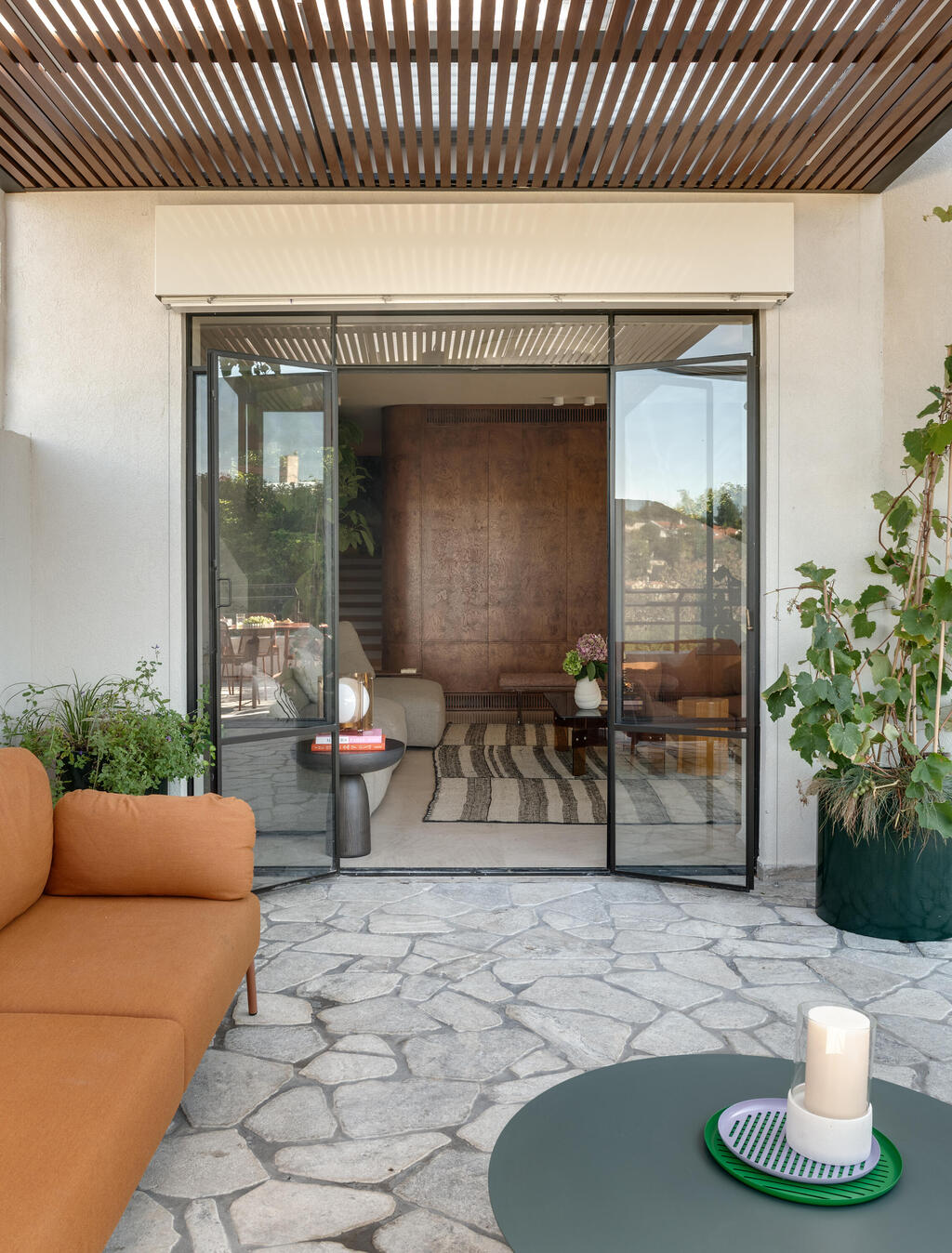
In the living room, the seating continues the same design language. The main sofa is modular and can be extended into a chaise. Next to it is a salmon-colored Saba Italia bench that went viral after the designer was photographed on it in high heels, receiving more than 20,000 views on Instagram.
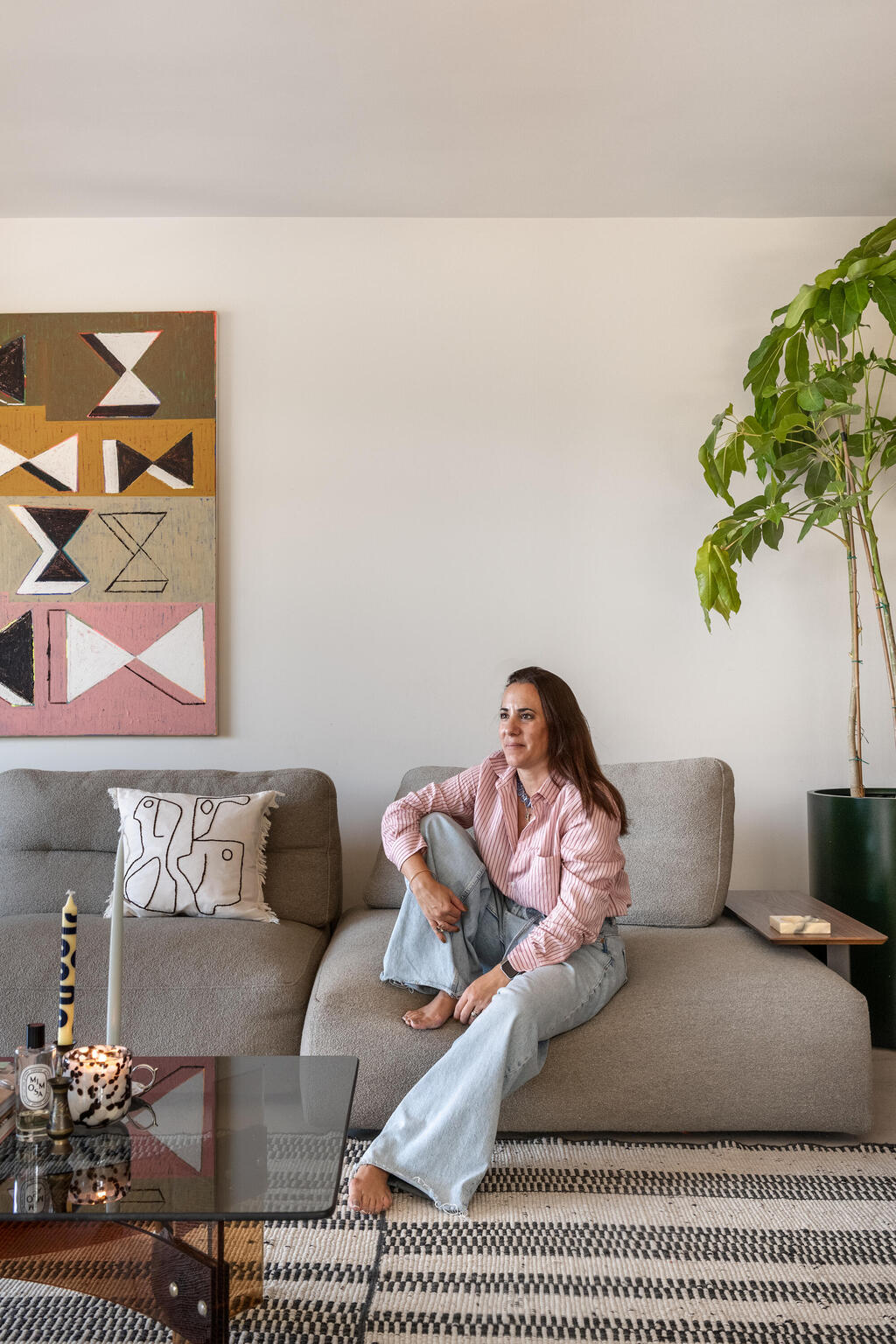
A nearby armchair is upholstered in deep olive corduroy by Bolia, echoing the main steel beam. A vintage 1970s Italian coffee table combines an amber plastic base with smoked glass. The artwork is by Jonathan Shelah, whose work explores geometric forms, color fields and line. The television is mounted on a rotating arm visible from different parts of the room. A handcrafted Golran rug completes the space, made over five months.
House in the north, design: Livnat Cohen Marin
(Photo: Oded Smadar)
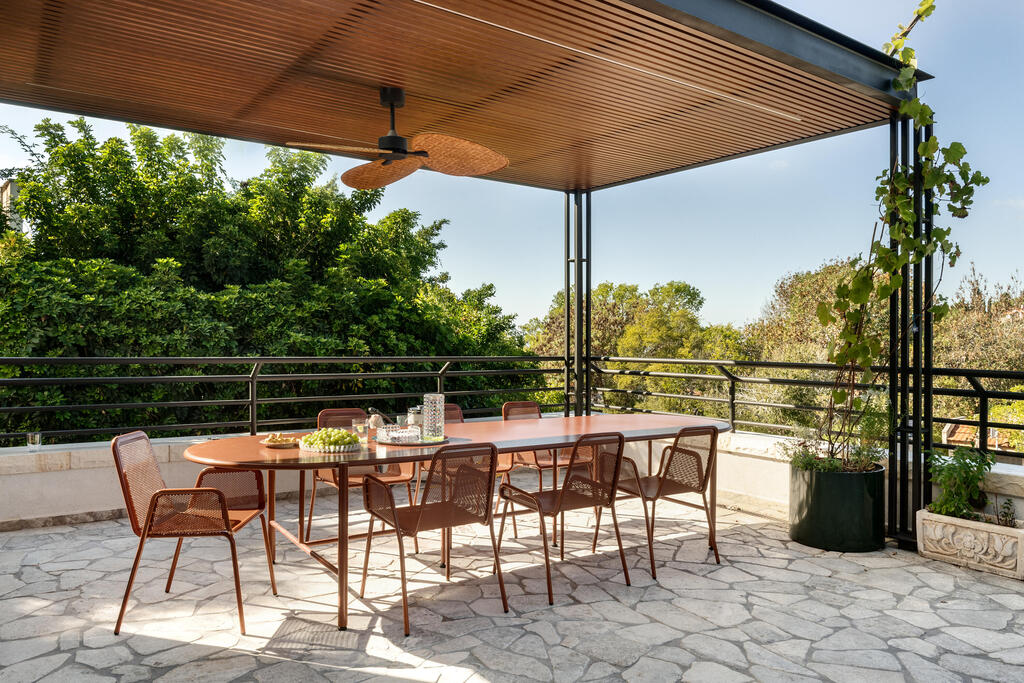
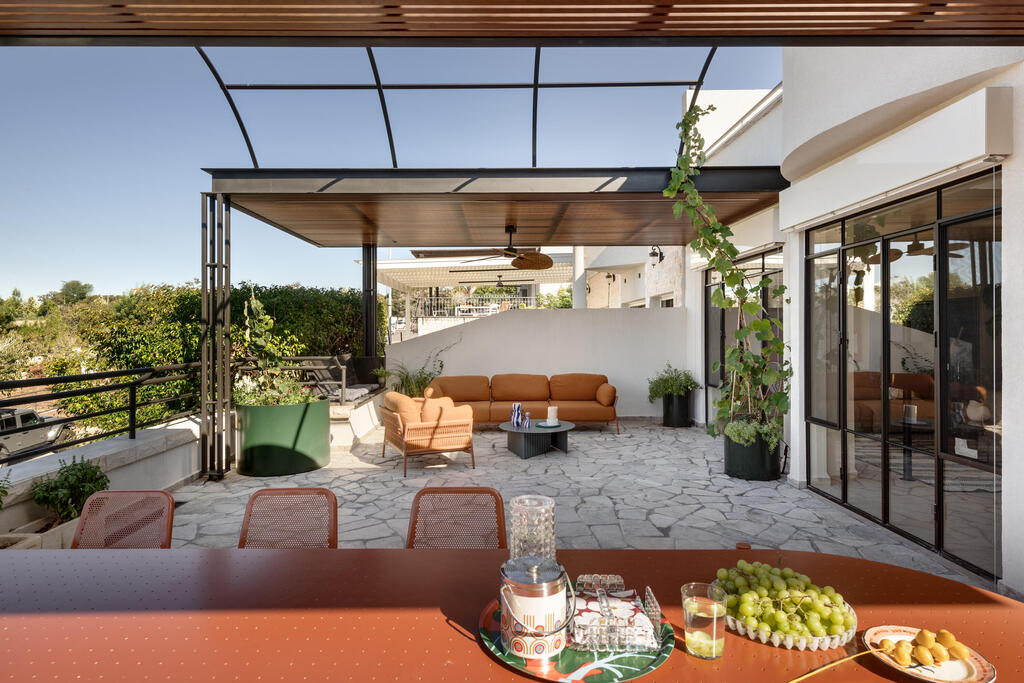
The living room opens to an 86-square-meter terrace with custom iron pergolas. Between them are open arches without roofing, allowing light to enter and supporting a future vine that will grow along them. At the edge are square columns that also serve drainage functions. The outdoor furniture was custom designed by Mikki Mann of Fe Studio and includes a 3.6-meter table and stackable weather-resistant chairs for daily use.
House in the north, design: Livnat Cohen Marin
(Photo: Oded Smadar)
House in the north, design: Livnat Cohen Marin
(Photo: Oded Smadar)
A zebra in the shower, an eggplant in the bedroom
Access to the upper primary suite is through a large glass door in a vanilla tone, echoing the main entrance below but creating a more panoramic, open feeling. “All windows in the house are framed in chocolate brown, but here we chose a cream tone to match the Crema de Moss stone and create a soft transition,” Cohen Marin said.
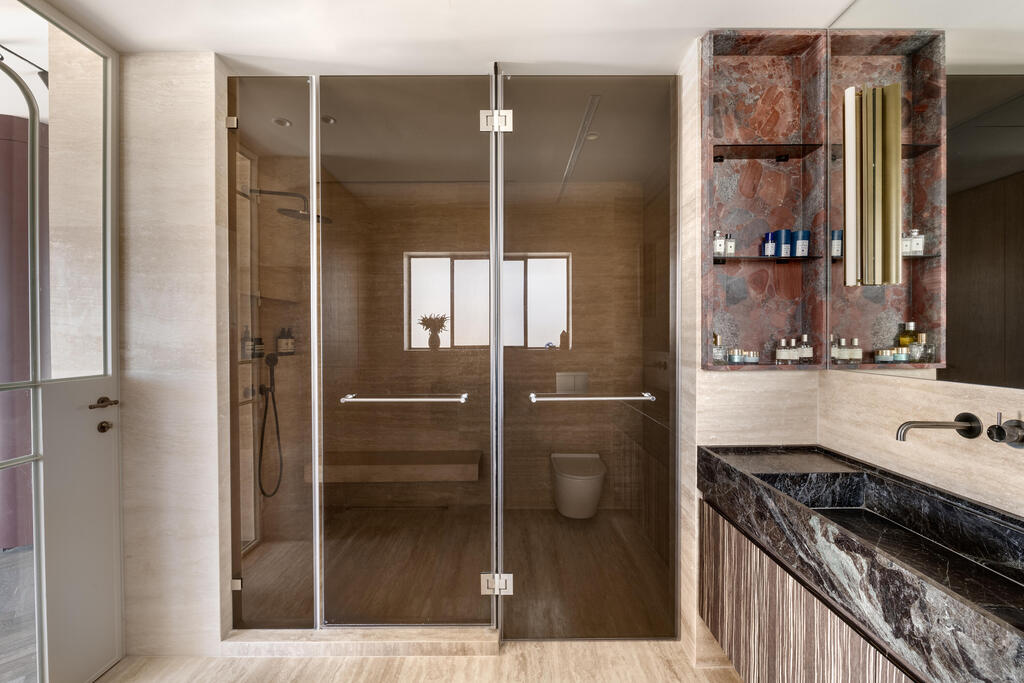
The bathroom is made of silver travertine stone, creating a warm atmosphere. It is divided into a toilet area and a shower using glass, with a spacious 150-by-150-centimeter shower. A suspended iron bench clad in stone includes lighting niches and drainage grooves.
House in the north, design: Livnat Cohen Marin
(Photo: Oded Smadar)
A smoked brown glass was selected after a long search for the right supplier. “The result is a dream bathroom, functional, warm and pleasant, combining aesthetics with comfort,” the designer said.
House in the north, design: Livnat Cohen Marin
(Photo: Oded Smadar)
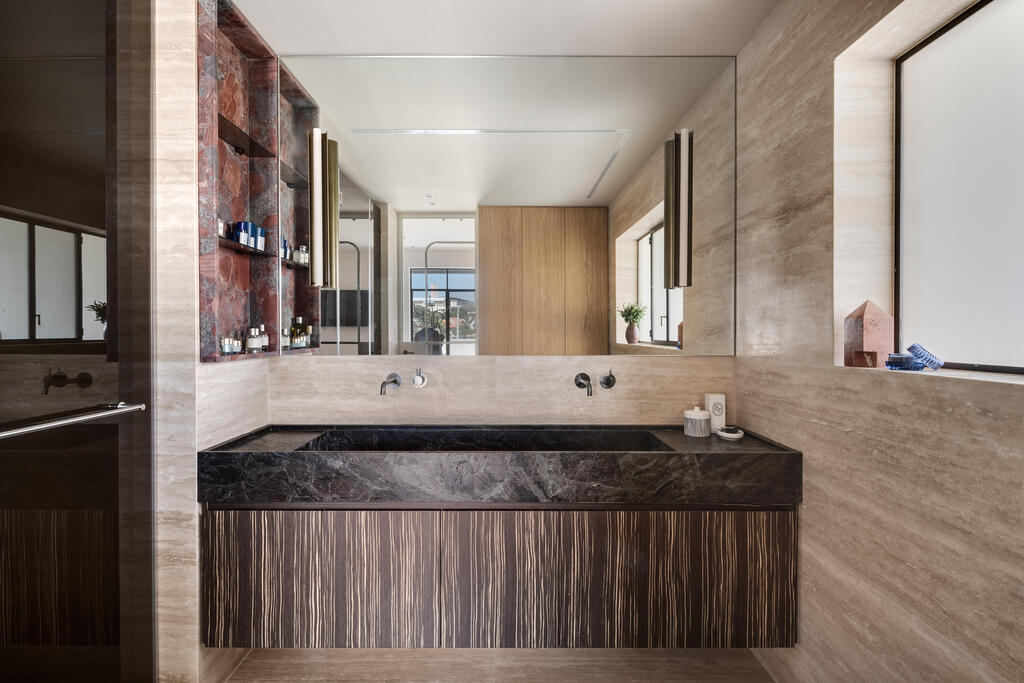
The vanity uses a trough sink similar to the kitchen, while a niche in Palladium Red stone adds depth. The cabinetry is in espresso-toned veneer with a zebra-like pattern, combining two types of wood for warmth and character.
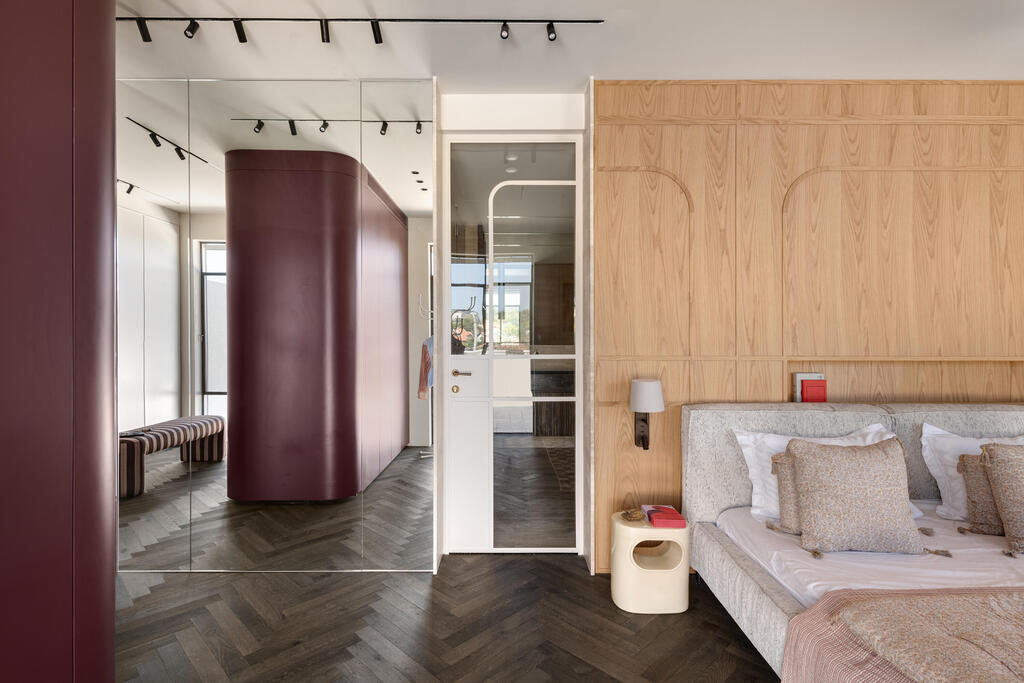
In the primary suite, the closet comes in an unusual eggplant-purple shade. “I often can’t explain my choices. It is very emotional and intuitive. I saw it and immediately knew it was the right color,” Cohen Marin said.
House in the north, design: Livnat Cohen Marin
(Photo: Oded Smadar)
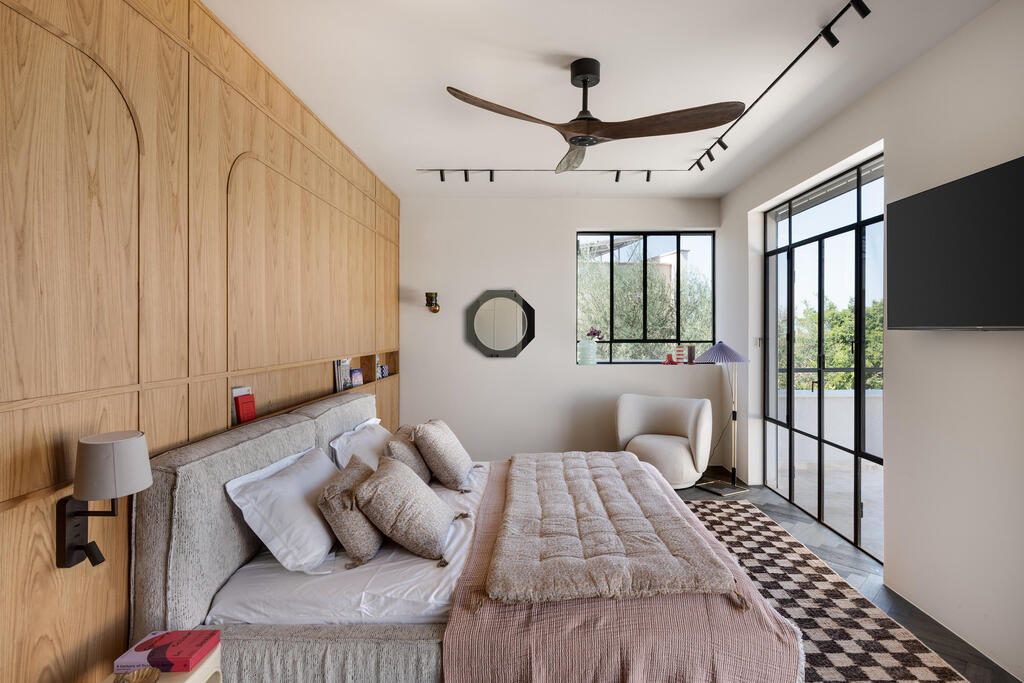
The flooring is smoked oak, creating continuity and texture. The bed’s headboard replaces a wall, connecting to cabinetry in the bathroom and creating storage niches.
House in the north, design: Livnat Cohen Marin
(Photo: Oded Smadar)
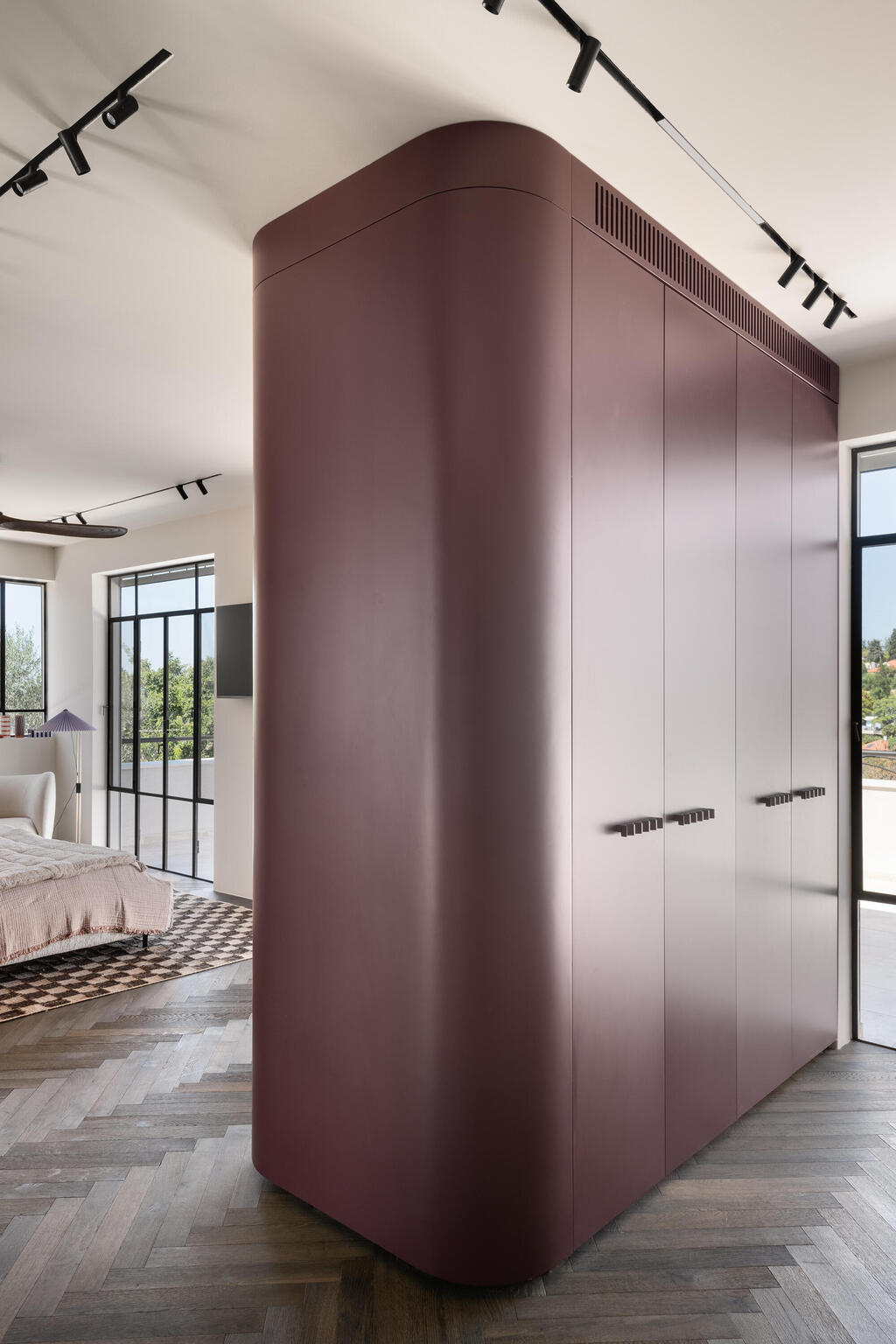
House in the north, design: Livnat Cohen Marin
(Photo: Oded Smadar)
“The small details, from the suspended bench to custom handles, were chosen carefully to combine function and aesthetics,” she added. “The textiles are by Blanc d’Ivoire, which I import from Paris with designer Gershon Tsur. The clothing rack is by Fritz Hansen.”
“The family is very satisfied. They say that when they travel and stay in hotels around the world, they always feel there is no place like home. For them, every morning in the house is like waking up inside a dream come true.”