

Reports Wednesday of drama aboard a flyDubai flight from Dubai to Tel Aviv, in which one pilot is suspected of stabbing his colleague and attempting to seize the aircraft, have revived one of civil aviation’s deepest fears: the possibility that the person entrusted with hundreds of lives could deliberately turn an aircraft into a weapon or a vehicle for suicide.
Such cases are statistically extremely rare, but aviation history shows they are not unprecedented. Investigators and airlines have often been reluctant to conclude definitively that a pilot deliberately killed passengers along with himself, particularly when motive cannot be proved. Yet a series of disasters, from the disappearance of Malaysia Airlines Flight MH370 to the Germanwings crash in the French Alps, has repeatedly raised precisely that possibility.
Aviation’s greatest mystery: Malaysia Airlines Flight MH370
The most famous and enduring mystery in modern aviation began on March 8, 2014, when a Malaysia Airlines Boeing 777 disappeared while flying from Kuala Lumpur to Beijing with 239 passengers and crew aboard.
Hundreds of millions of dollars were spent on vast searches across the Indian Ocean, but the aircraft has never been recovered in full. Only scattered pieces of wreckage were later found after washing ashore along the coast of East Africa.
Gallery
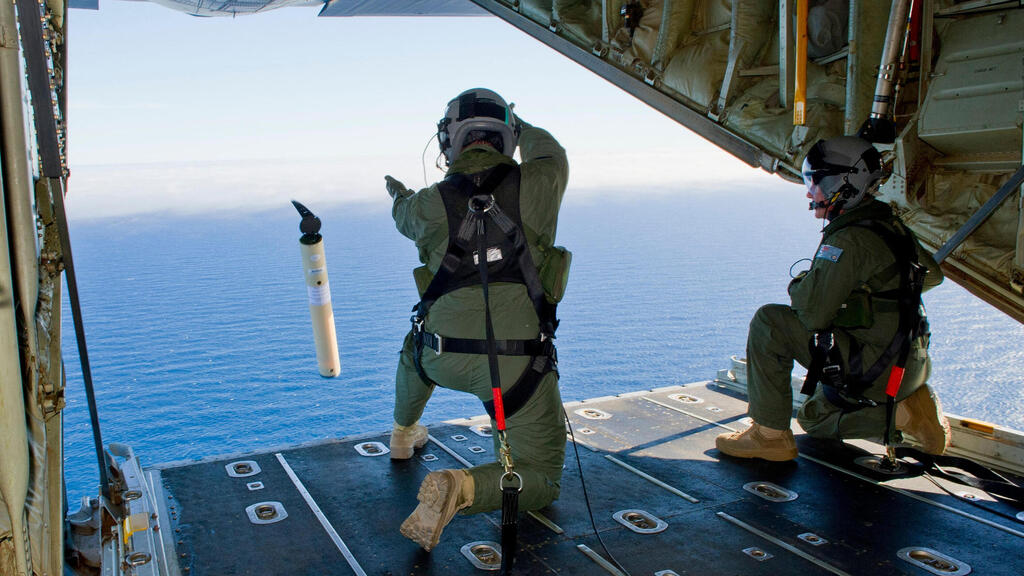
Search efforts for MH370 in 2014. Hundreds of millions of dollars were spent, but the aircraft was never fully recovered
(Photo: AFP PHOTO / AUSTRALIAN DEFENCE/LEADING SEAMAN JUSTIN BROWN)
Numerous theories have been proposed, ranging from catastrophic mechanical failure to hijacking and terrorism. Over the years, however, some aviation investigators and experts have increasingly argued that veteran captain Zaharie Ahmad Shah may have deliberately diverted and crashed the aircraft.
According to those theories, Shah remained in control until the aircraft’s final moments and may have been the only person aboard still conscious. Experts have suggested that cabin pressurization may have been disabled, incapacitating passengers and crew, while the younger co-pilot, Fariq Abdul Hamid, was also somehow prevented from intervening.
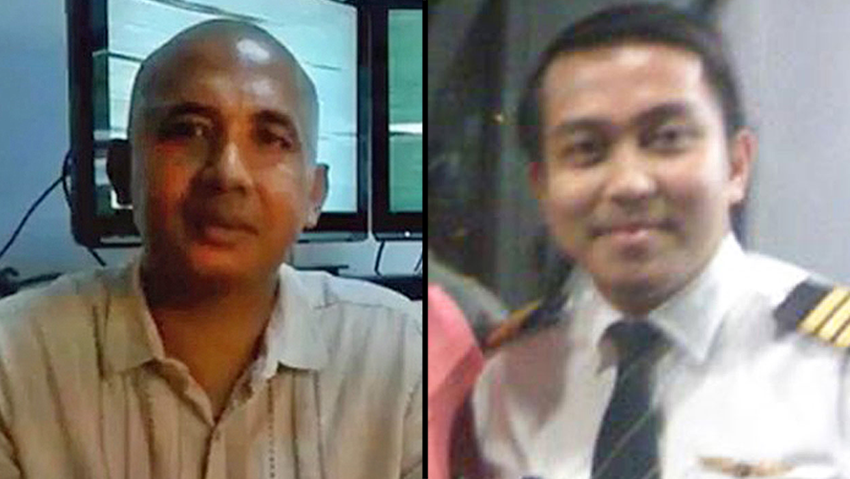
Captain Zaharie Ahmad Shah (left) and co-pilot Fariq Abdul Hamid, who were flying the Malaysian aircraft when it disappeared. Reports suggested Shah made a final ‘farewell flight’ over his hometown
Investigators also found that Shah had practiced a route over the southern Indian Ocean on his home flight simulator. During the real flight, the aircraft’s communications systems were disabled and the plane changed course, flying along boundaries between Malaysian and Thai airspace in a manner some experts believe was intended to reduce the chances of detection.
Analysis of the flight path has also led to speculation that the aircraft banked over Penang, Shah’s hometown, in what some have described as a possible final farewell. Reports later focused on difficulties in his personal life and his strong political support for an opposition leader who had been imprisoned, but no definitive motive has ever been established.
Germanwings Flight 9525: A deliberate descent into the Alps
If MH370 remains shrouded in uncertainty, the circumstances surrounding Germanwings Flight 9525 in March 2015 were far clearer.
German co-pilot Andreas Lubitz, 27, was alone in the cockpit after the captain stepped out during a flight from Barcelona to Düsseldorf. Investigators found that Lubitz locked the reinforced cockpit door and refused to let the captain return.

Andreas Lubitz
(Photo: AFP PHOTO / FOTO TEAM MUELLER)
For roughly 10 minutes, cockpit recordings captured the captain pounding on the door and attempting to force his way back inside as Lubitz reset the autopilot from a cruising altitude of about 11,500 meters to just 30 meters and directed the Airbus toward the French Alps.
The aircraft struck the mountainside, killing all 150 passengers and crew.
The cockpit voice recorder captured Lubitz breathing steadily until impact. The investigation later exposed serious questions over medical oversight. Lubitz had a history of severe depression that had interrupted his pilot training in 2008. In the months before the crash, he experienced vision problems, searched online for information about suicide and feared losing his job.
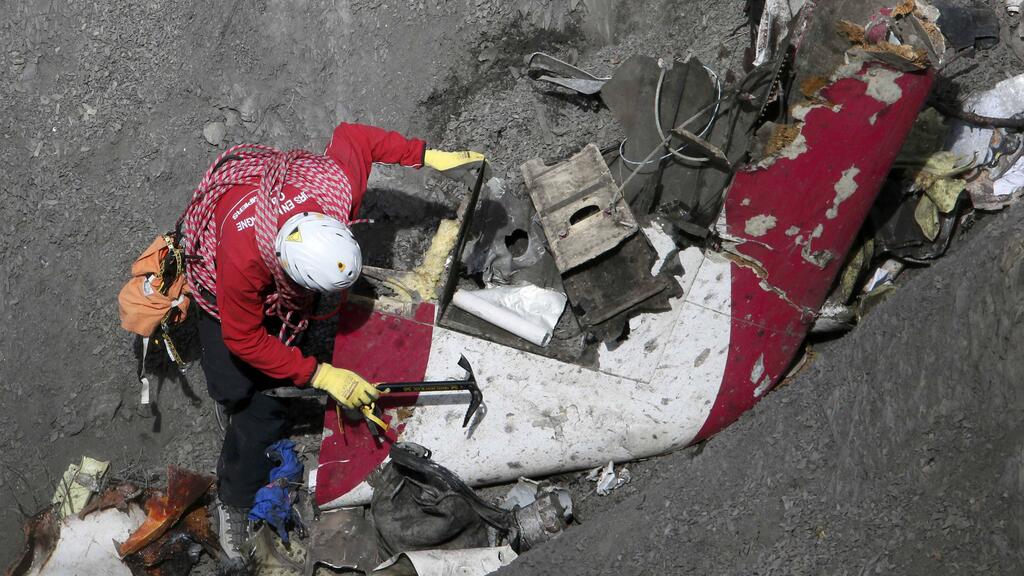
Debris being collected from the 2015 crash site in the French Alps
(Photo: Reuters)
Two weeks before the fatal flight, a doctor had reportedly recommended psychiatric hospitalization. Because of medical confidentiality and Lubitz’s failure to inform his employer, Lufthansa, the information did not reach the airline and he continued flying.
The disaster prompted major changes across the industry, including widespread adoption of rules requiring two people to remain in the cockpit at all times, although some of those measures were later revised.
China Eastern Flight MU5735 and the near-vertical dive
Seven years after Germanwings, the crash of China Eastern Airlines Flight MU5735 revived similar suspicions.
In March 2022, the Boeing 737-800 was flying domestically from Kunming to Guangzhou with 132 passengers and crew when it suddenly entered an extreme, almost vertical dive from roughly 29,000 feet.
Less than two minutes later, the aircraft struck mountainous terrain in Guangxi, leaving a deep crater. No one survived.

The 2022 crash site in China. Black-box data indicated someone deliberately sent the plane into a fatal dive and shut off the fuel switche
(Photo: Reuters)
Video from local security cameras showed the aircraft plunging almost nose-first toward the ground, immediately raising questions over whether the crash could have been caused by an ordinary technical malfunction.
According to reports citing U.S. officials involved in examining the flight recorders, control inputs appeared to have been deliberately made from the cockpit, forcing the aircraft into the dive.
Chinese authorities did not publish a final report formally declaring the crash a suicide. International reports later focused on one member of the cockpit crew, a former captain who had been demoted to co-pilot and was said to have suffered financial losses and serious personal and professional distress. The precise cause, however, has not been officially established as deliberate pilot action.
‘What did you do, shut off the engines?’: EgyptAir Flight 990
Another deeply disputed case occurred in October 1999, when EgyptAir Flight 990 crashed into the Atlantic Ocean off Massachusetts shortly after leaving New York’s JFK Airport.
All 217 passengers and crew were killed.
U.S. investigators concluded that relief first officer Gameel al-Batouti waited until the captain had left the cockpit, disconnected the autopilot, reduced engine power and pushed the Boeing 767 into a steep dive.
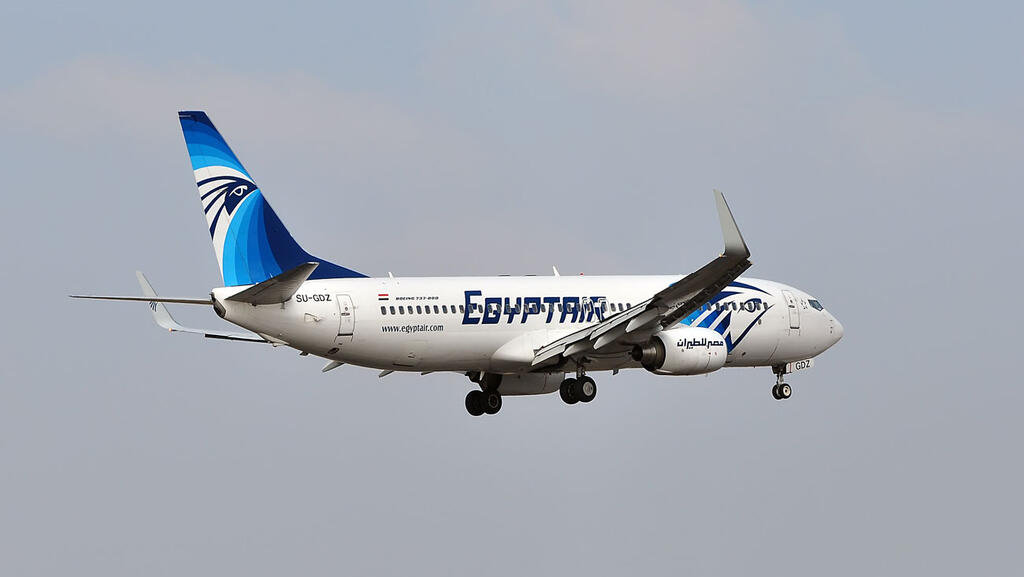
An EgyptAir plane. The captain asked the co-pilot: ‘What did you do, shut off the engines?’
(Photo: Shutterstock)
Cockpit recordings captured the captain returning and asking in alarm what had happened and whether the engines had been shut down. Al-Batouti was heard repeatedly saying that he was placing his trust in God.
American investigators concluded that al-Batouti’s control inputs caused the crash but stopped short of formally declaring that he intended to kill himself, saying his motives could not be determined.
Egyptian officials rejected the suicide theory and maintained for years that mechanical failure was responsible.
SilkAir Flight 185 and the Mozambique cockpit lockout
Similar disagreement followed the December 1997 crash of SilkAir Flight 185.
The Boeing 737 was traveling from Jakarta to Singapore when it plunged into a river in Indonesia at extremely high speed, killing all 104 people aboard.
A U.S. investigation concluded that the flight recorders had been deliberately disconnected and that the crash was the result of intentional actions by the captain, who was reportedly facing heavy financial losses of more than $1 million as well as disciplinary problems at work.

Divers recovering debris from the Musi River after the crash of SilkAir Flight 185
Indonesian authorities, however, did not formally classify the crash as suicide, leaving the case officially unresolved.
A similar sequence unfolded in November 2013 aboard a Mozambique Airlines flight bound for Angola.
The aircraft crashed in northern Namibia, killing 33 people. Investigators found that the captain had taken advantage of the co-pilot’s absence, locked himself inside the cockpit, ignored attempts to re-enter and disregarded aircraft warnings before directing the plane toward the ground.
Later reports said the captain had been undergoing serious personal and family difficulties, including marital problems and the death of his son about a year earlier.
Earlier cases: Royal Air Maroc and Japan Airlines
Suspected or confirmed deliberate crashes long predate the modern era of reinforced cockpit doors.
In August 1994, a Royal Air Maroc passenger aircraft crashed in Morocco’s Atlas Mountains shortly after taking off from Agadir, killing all 44 passengers and crew. Investigators concluded that the pilot had deliberately disconnected flight systems and directed the aircraft toward the ground.
In February 1982, a Japan Airlines flight crashed into Tokyo Bay while approaching Haneda Airport, killing 24 of the 174 people aboard.
Investigators found that the captain, who had serious psychiatric problems, deliberately activated reverse thrust during the approach in an attempt to crash the aircraft. The co-pilot and flight engineer physically struggled with him in the cockpit and tried to pull back on the controls, preventing an even greater loss of life.
The Qantas pilot who fought the urge to shut down his engines
Not every case ended in catastrophe.
One troubling case later reported by the Sydney Morning Herald involved a Qantas pilot who continued flying passenger aircraft for years despite telling colleagues about suicidal thoughts.
The pilot later said that during a flight to Singapore he experienced an overpowering urge to shut down the aircraft’s engines and had to use his left hand to physically restrain his right hand as it moved toward the controls.
He left the cockpit until the episode passed and later returned to his seat.
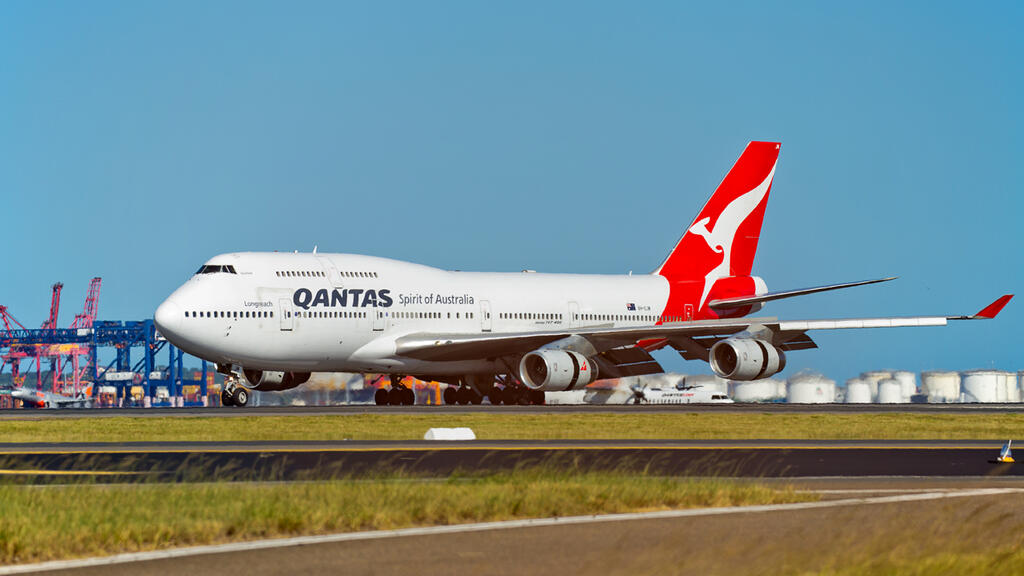
A Qantas aircraft. The pilot who told colleagues about his difficulties was deemed fit to fly and was only later diagnosed with anxiety and depression
(Photo: shutterstock)
Despite telling colleagues and being assessed by several doctors, he was initially considered fit to continue flying. He eventually retired in 1982 and was later diagnosed with severe obsessive-compulsive disorder, anxiety and depression.
The case highlighted one of aviation medicine’s most difficult dilemmas: how to identify a dangerous psychological crisis in a profession where pilots may fear that admitting symptoms could end their careers.
A study by the U.S. Federal Aviation Administration found that pilot suicide was exceptionally rare, accounting for about 0.3% of the fatal aviation accidents it examined between 2003 and 2012. The eight cases identified involved small private aircraft rather than commercial passenger flights.
The report nevertheless stressed that deliberate crashes are unusually difficult to predict and prevent, and that the true number may be undercounted because suicidal intent is often impossible to prove without clear evidence.