

Since October 7, tens of thousands of wounded men and women have become part of the Israeli landscape. Many are young people carrying visible and invisible scars from war.
They are around us in cafés, workplaces and public spaces, but the daily challenges they face often remain out of sight. Actions that feel obvious to most people can become complicated tasks. Look at them, and you see us.
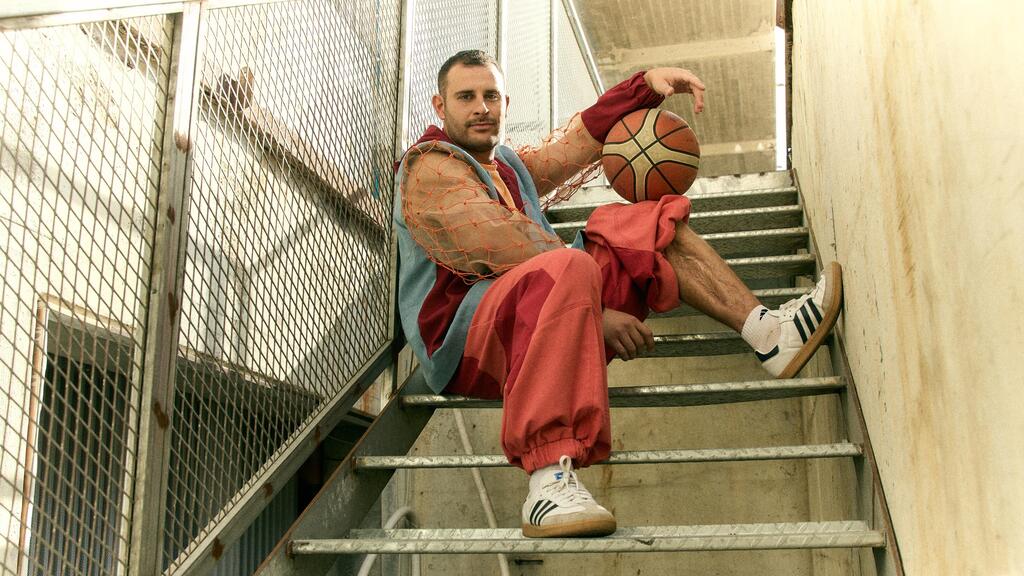
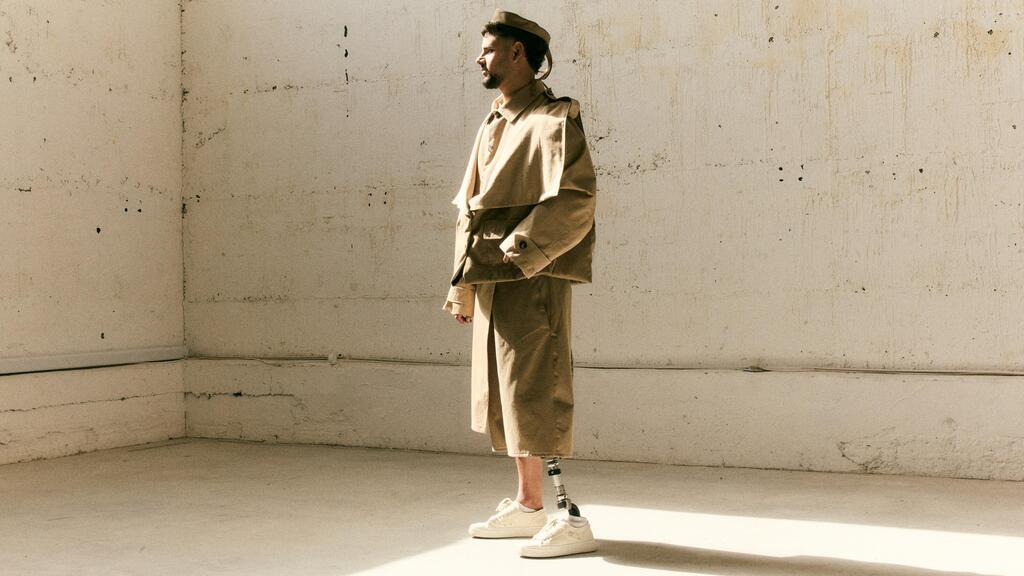
Shalev Biton in a design by Daria Furman
(Photo: Michal Sharon)
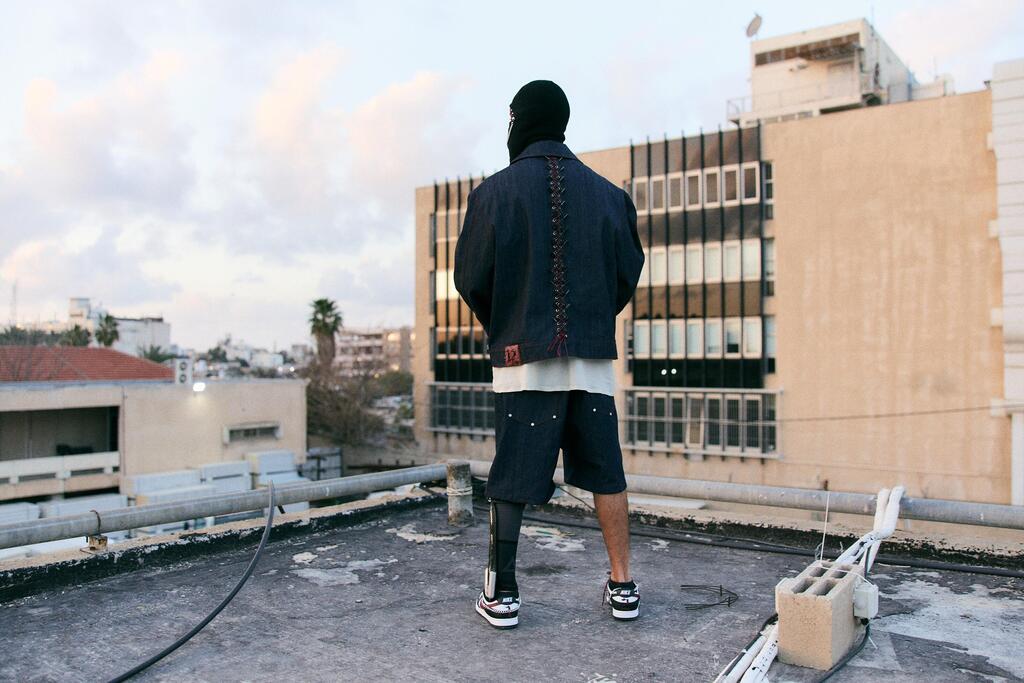
Raz Bar in a design by Ofek Nachmani
(Photo: Michal Sharon)
A special project at Shenkar College, titled Morphoza, brought together students of fashion design and visual communication with soldiers wounded in the ongoing war, including amputees and others coping with severe or invisible injuries. The project produced personalized clothing systems adapted to the soldiers’ bodies and physical changes.
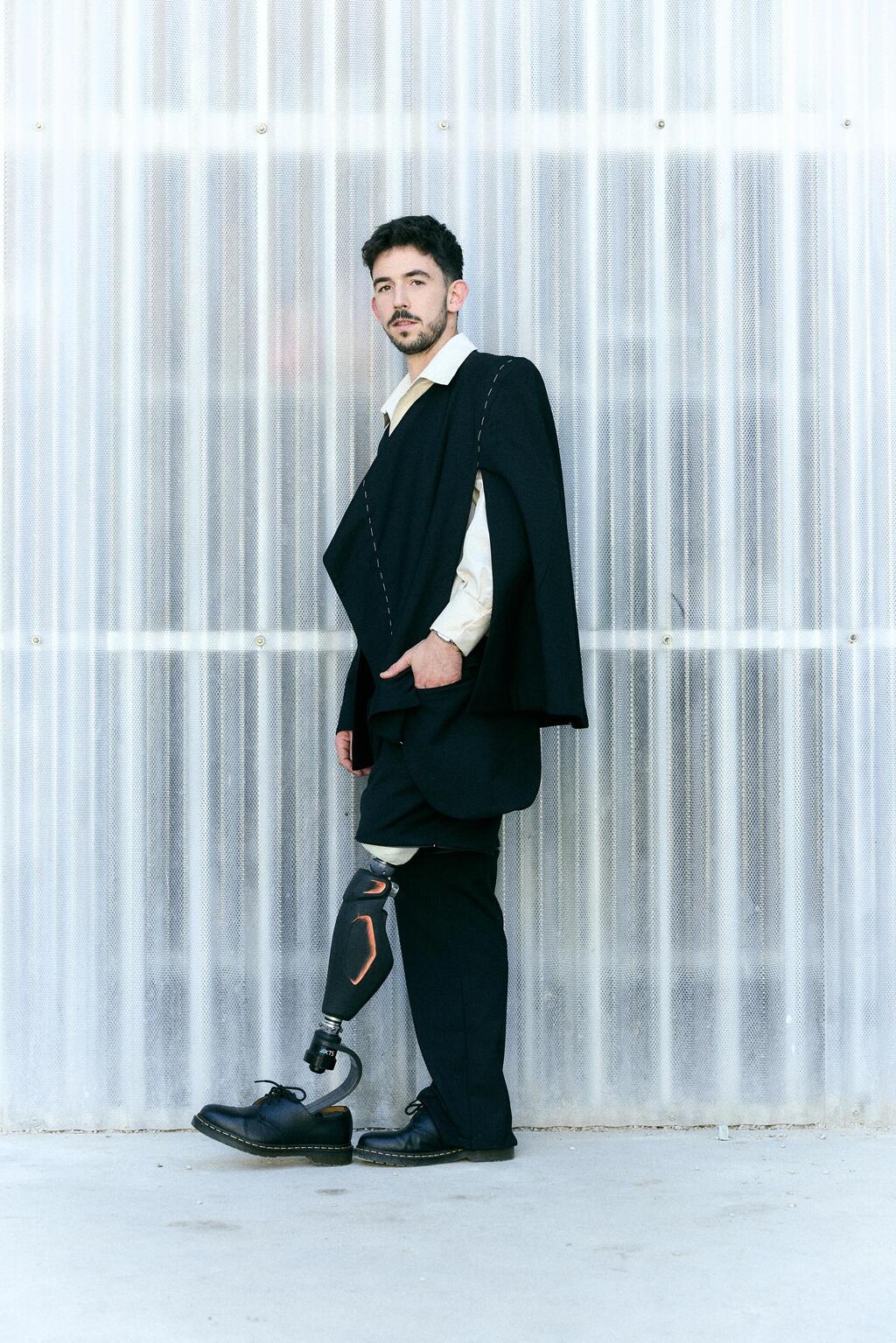
Omri Rozenblit in a design by Shelly Ziv
(Photo: Michal Sharon)
Developed through a series of meetings in the course Good Intentions, led by Maya Arazi, Tamar Mani and Helen Sophrin, the designs seek not only to make daily life easier, but also to give a sense of belonging, confidence and personal expression to people who refuse to define themselves only through their injuries.
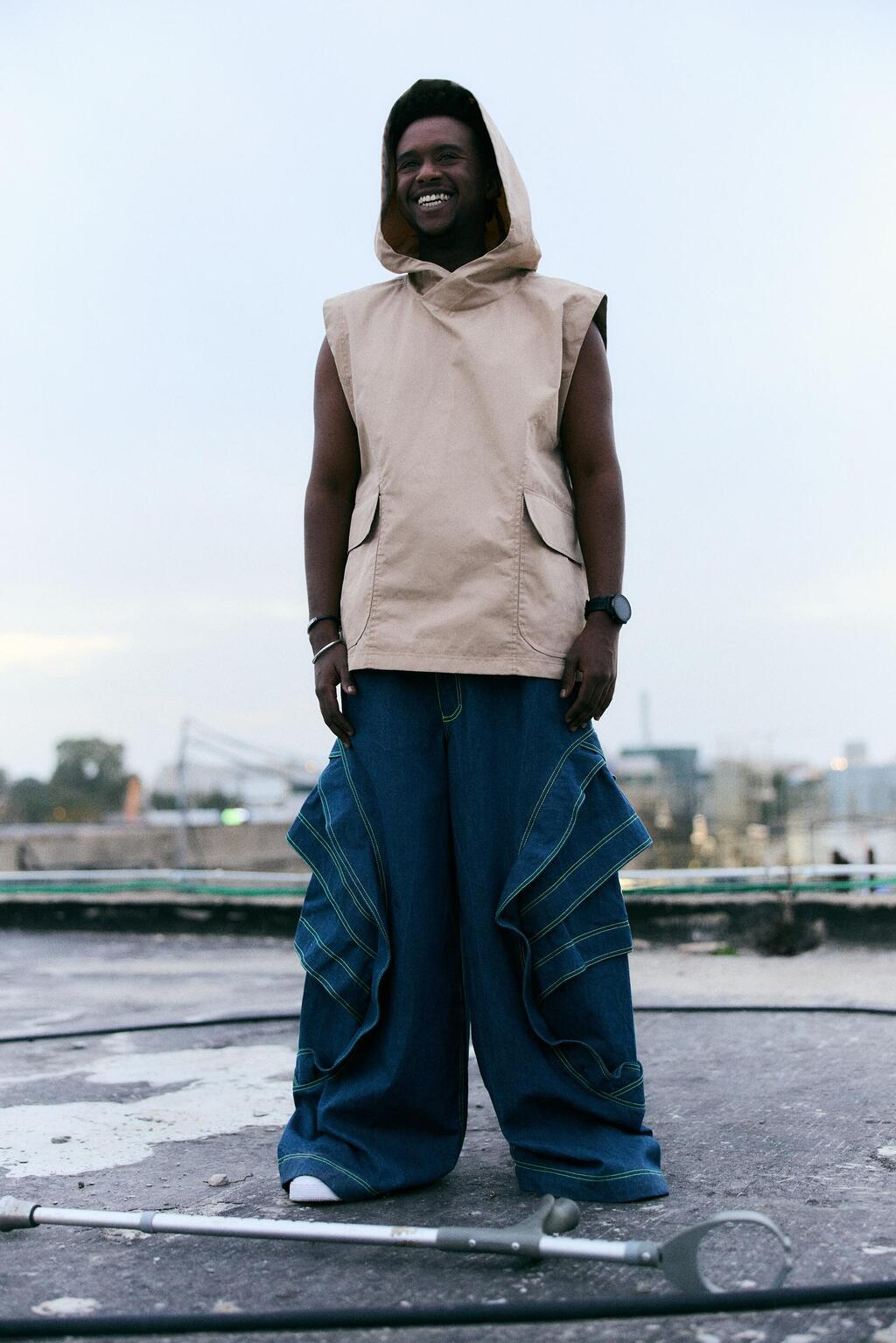
Liav Elmo in a design by Lee Kaminker
(Photo: Michal Sharon)
Each student designed two functional and fashionable outfits, with an emphasis on combining accessibility, usability and the personal story behind each wound.
The project’s final products will later be presented in a festive fashion show at Bialik Square in Tel Aviv, in cooperation with the Tel Aviv-Yafo Municipality.
'I am proud of my scars'
Wearing a black balaclava because of his classified role and a denim short-suit, fighter Raz Bar, 34, is one of the participants in the project. Bar was seriously wounded on October 7 during the battle for Kibbutz Be’eri.
He suffers from a complex nerve injury and shrapnel wounds across much of his body, especially in his pelvis and spine, and is now undergoing rehabilitation.
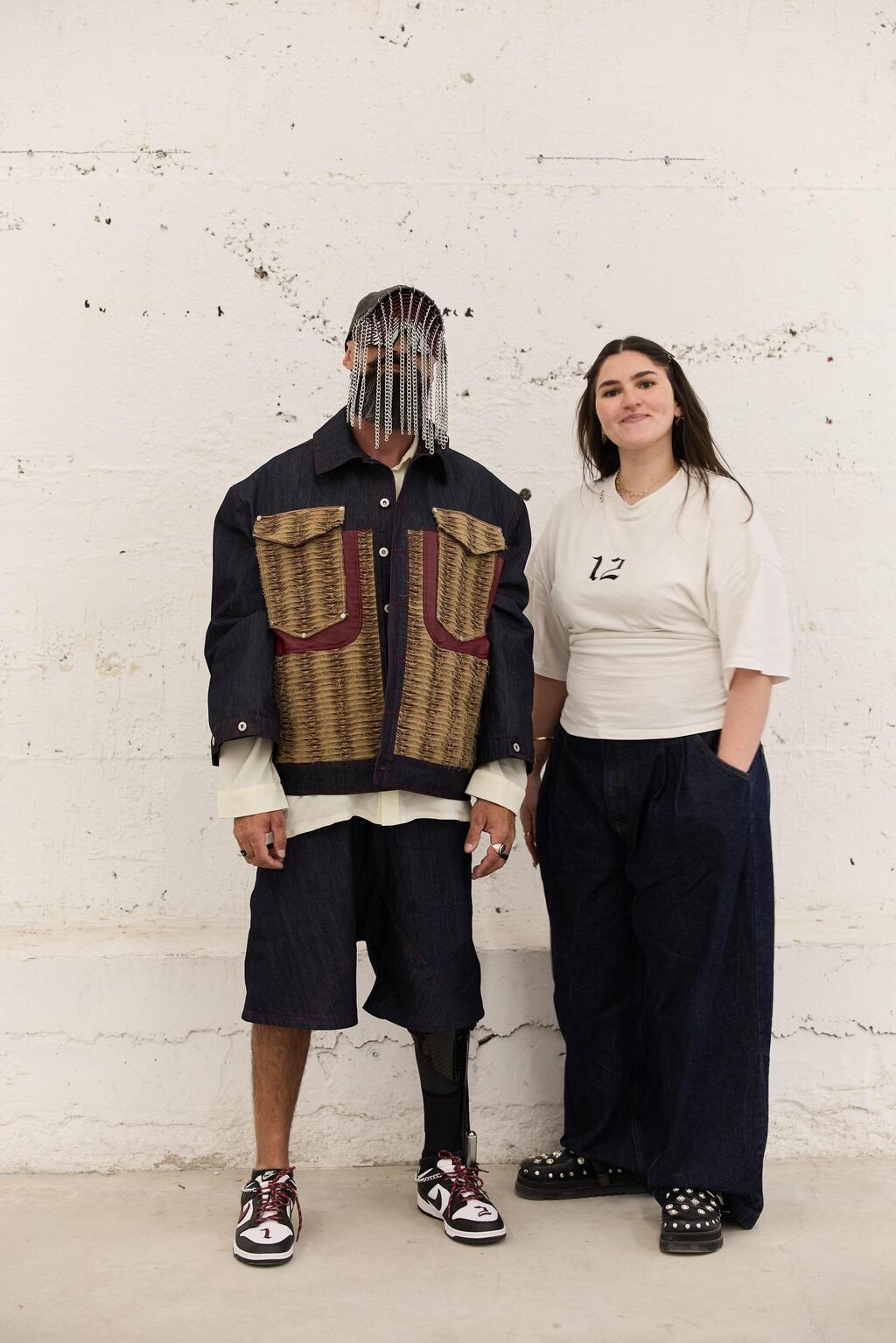
Raz Bar in a design by Ofek Nachmani
(Photo: Michal Sharon)
He was invited to join the project during one of his rehabilitation days at Ichilov Hospital in Tel Aviv. Unlike visible injuries, Bar’s wound is partly hidden.
“It is a half-invisible injury,” he told ynet. “People who see me do not see the injury, but they also do not understand what I am dealing with. Although my leg is covered with a medical device, the injury is caused by nerve disconnection in the spine. Aside from my pelvis, which exploded into pieces, everything exists anatomically.”
Bar was paired with student Ofek Nachmani, who created two outfits for him that expose his injured leg.
“Since October 7, I have been serving in the reserves, and meeting the wounded soldiers in the course was very challenging for me,” Nachmani said. “I felt exposed in front of Raz, and he did in front of me. The project we created together deals with the question of exposure, including the nerve injury, which is less visible from the outside.”
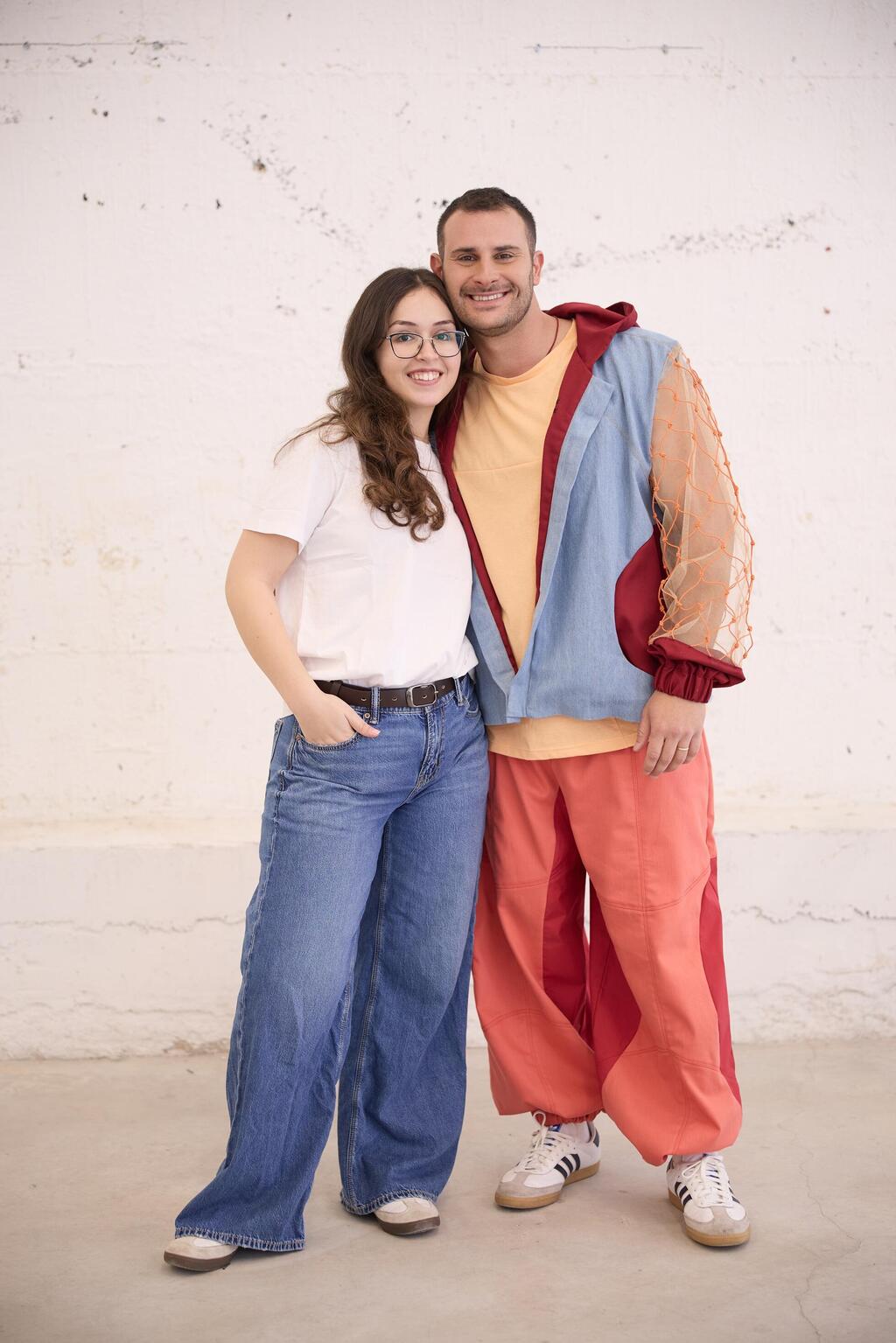
Alon Hindi in a design by Tamara Zarviv
(Photo: Michal Sharon)
Another participant is Alon Hindi, 29, a major in the Paratroopers Reconnaissance Unit, who was wounded about two years ago by an explosive device in Khan Younis. Hindi underwent a complex reconstruction process for his right hand and left leg and deals with impaired function, loss of sensation and pain from those injuries.
Today, he combines a demanding physical rehabilitation routine with training for an Ironman competition and sees sport as a way of life. He says he still struggles to buy clothes with buttons, including jeans, because of nerve damage.
Beyond creating a dynamic garment made of breathable fabrics and designed to suit Hindi’s character, the challenge for student Tamara Zarviv was how to proudly display the scars on his body.
She designed a jacket with transparent sleeves and mesh layers inspired by the structure of a basketball hoop, a tribute to his deep connection to the game.
“I am proud of my scars. Truly proud of them,” Hindi said. “But at the same time, I have to ‘protect’ them, because I am not allowed to be exposed to the sun.”
“For him, it is like a tattoo,” Zarviv added.
Commemorating friends whose stories were cut short
The world of fashion was foreign to both men, as it was to other wounded soldiers who took part in the project. But its importance, they say, lies in representing war wounds in public space.
“People are afraid to approach wounded guys, and they are very interested, for example, in hearing about the sensations as well as asking questions about the injury itself,” Hindi said. “They are embarrassed and hesitant to approach, but there is no reason to feel that way. Maybe they are afraid of saying the wrong thing.”
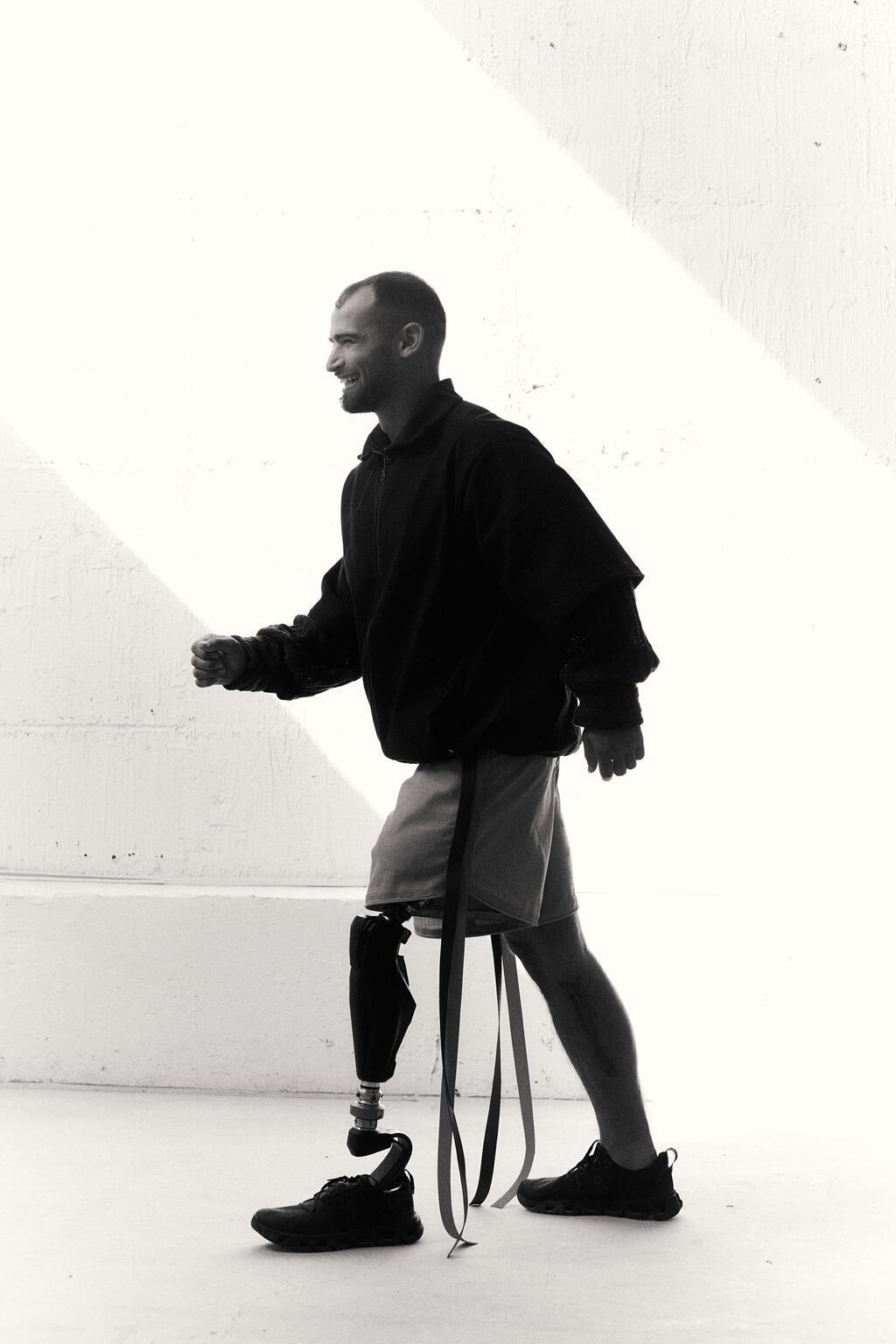
Adi Timor in a design by Tair Gabay
(Photo: Michal Sharon)
Bar and Hindi both chose to use the clothing to commemorate friends who were killed in battle. At Hindi’s request, Zarviv embroidered the names of six of his friends on the left lining of the jacket.
“Memory, for me, is the most important thing,” Hindi said. “I am alive and can tell the story of my injury a million and one times. It will give morale and motivation and everything else, but their story was cut short. As long as I can publish their names and their stories of heroism, that is commemoration.”
“The names of the fallen were embroidered next to the heart,” Zarviv said. “It is something he carries with him and only he sees, but there is also the possibility of opening the jacket and showing it with pride.”
Zarviv said she created another tribute to Hindi’s friends in the tank top beneath the jacket. “It is built from six parts, each one symbolizing another friend. There is a hidden meaning in it that was important to me.”
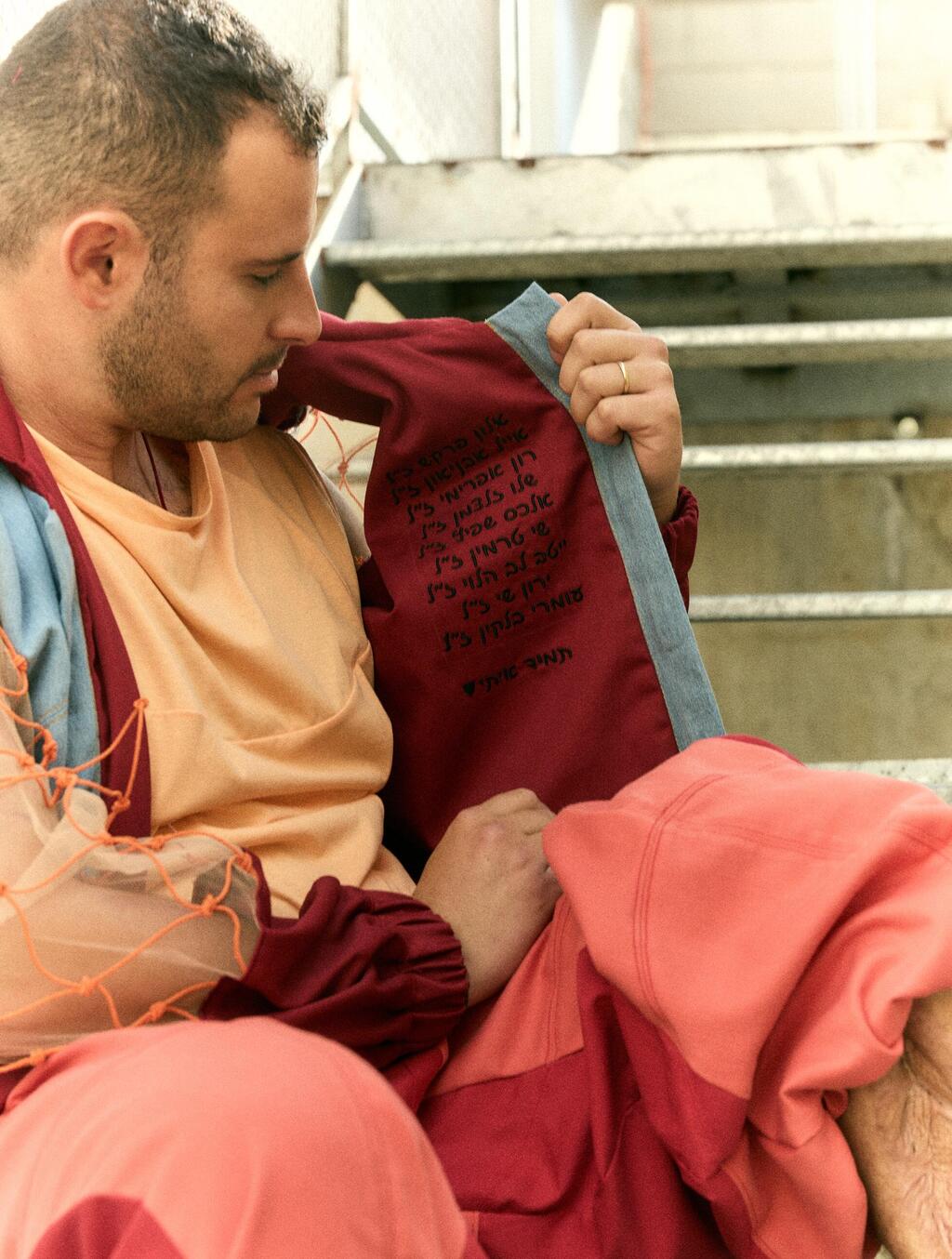
‘The names of the fallen were embroidered next to the heart.’ Alon Hindi in a design by Tamara Zarviv
(Photo: Michal Sharon)
The number 12, peeking out from the back of the denim jacket Nachmani designed for Bar, also refers to friends he lost in less than a year.
“No matter what I do in life, they are always with me,” Bar said. “Ofek understood my need to commemorate them and put it into the project in a smart and gentle way.”
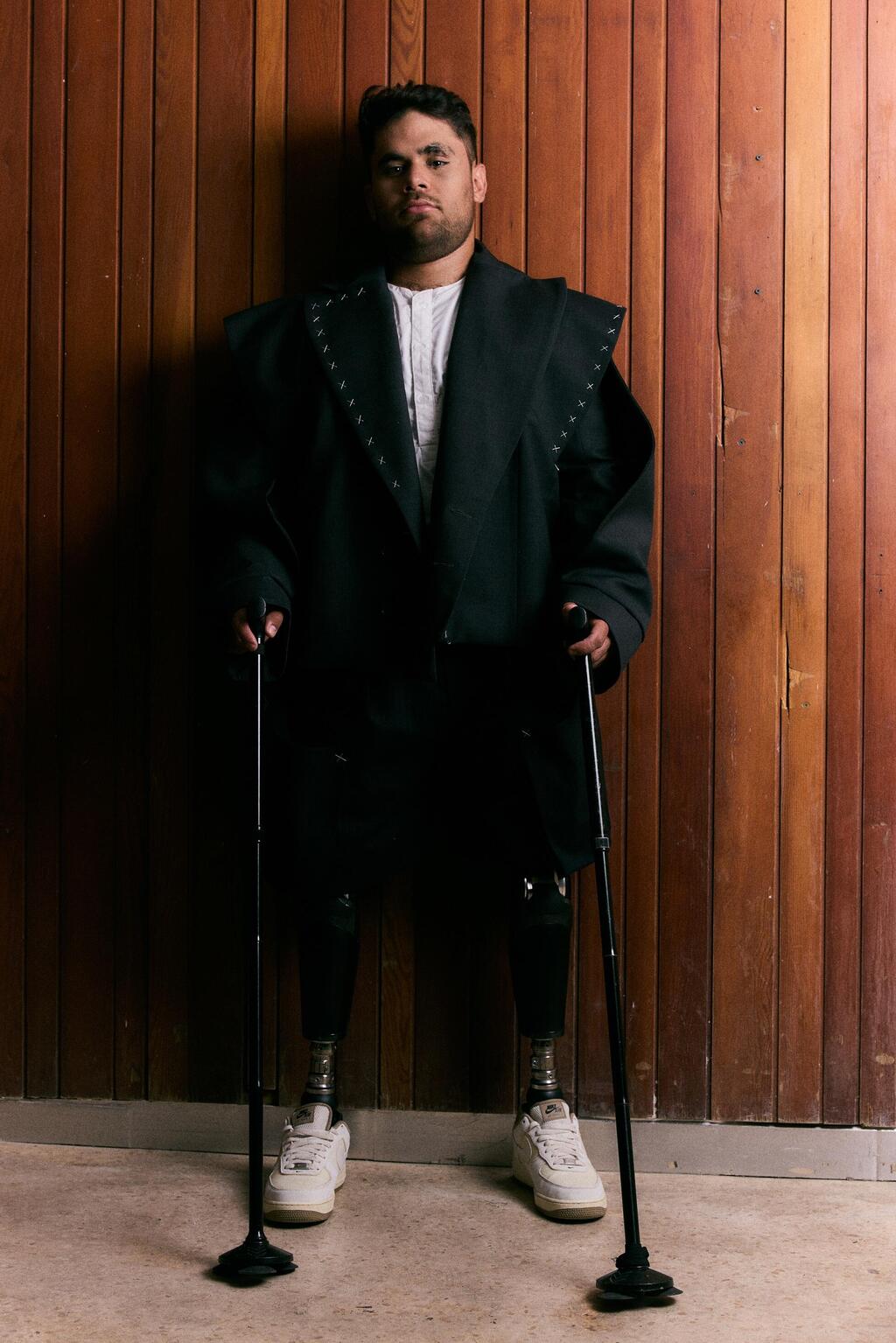
Amitai Argaman in a design by Adel Bouhata
(Photo: Michal Sharon)
More than a paired project between a wounded soldier and a designer, and more than a journey of commemoration for friends killed in battle, the project and the images published around it point to a stretching of the boundaries of beauty, part of the diversification the fashion world has undergone over the past decade and a half.
But they also point to the unbearable ease with which war has become part of daily life for tens of thousands of newly wounded Israelis, in body and in mind. Do the participants see the project as a broader statement about who deserves to be seen and represented?
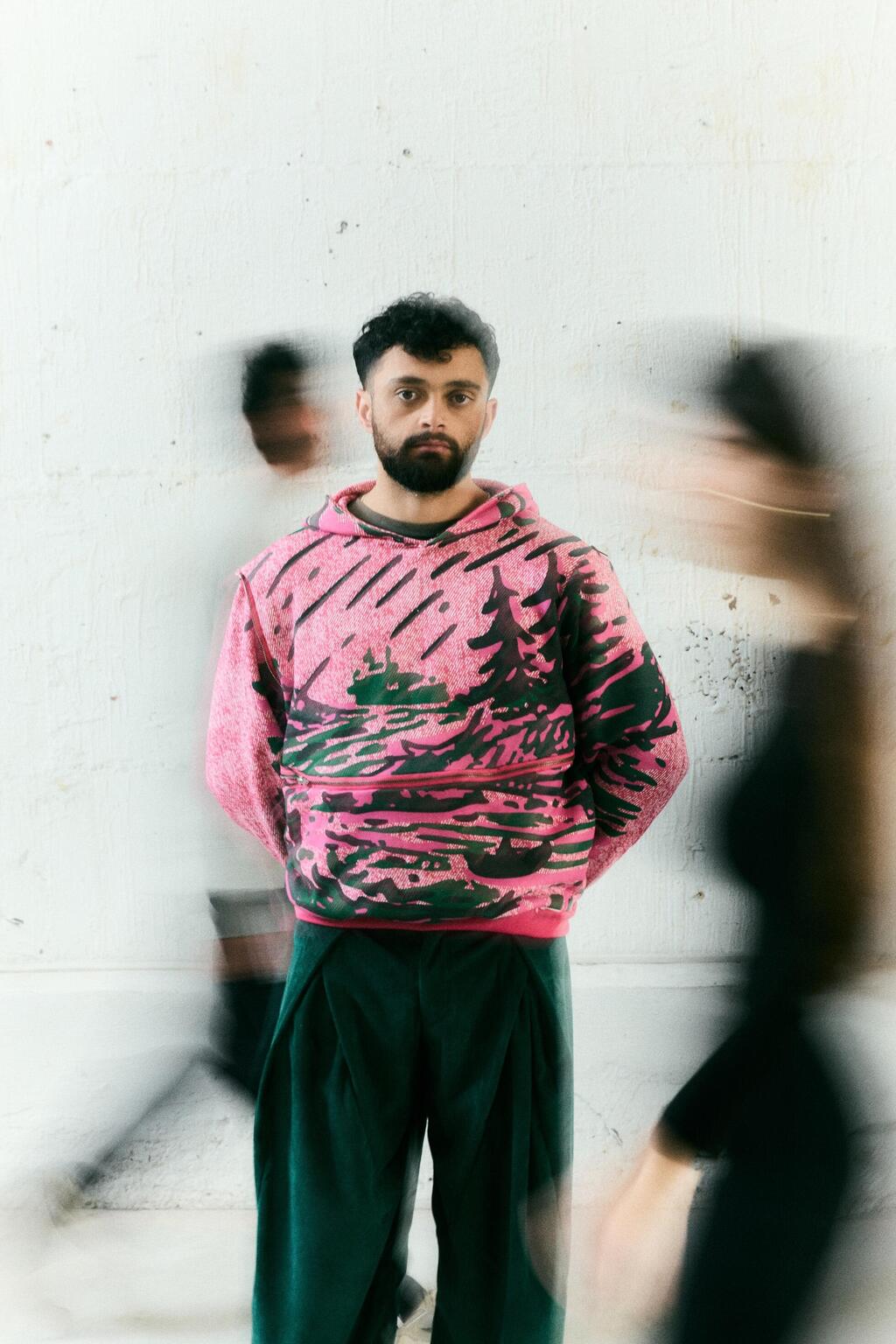
Tani Baghel in a design by Mika Ben David
(Photo: Michal Sharon)
“In the most superficial sense, but also the most values-based one, if I see a brand that puts people wounded in body and soul at the forefront, that is the best marketing trick there is,” Hindi said. Renoir, for example, was a pioneer in this context when it launched the 2024 campaign “I Didn’t Lose, I Gave.”
“This is the population that needs the attention and the help,” Hindi said. “I will buy the brand, even if I don’t like the clothes. In our country, this has to become part of the daily conversation. Do you know how many wounded people there are since October 7? About 20,000 people physically wounded and tens of thousands more wounded in their souls, some of whom we have not even begun to count.”