

“There’s nothing to do — I was wounded, I have to move on and cope”
Hagai Lerner | Wounded during an operation in the Nuseirat refugee camp
“I remember falling — I wondered if that’s what it feels like to get injured — I yelled, ‘Where are my eyes? I have no eyes,’” recalls Hagai Lerner, 24, a reserve tank soldier, describing the moment he was seriously wounded about a year ago during an operation in the Gaza Strip. As a result of the injury, he lost vision in both eyes.
Only two months earlier, the family had suffered another devastating blow, when Hagai’s cousin, Master Sgt. (res.) Shlomo Aviad Nayman, a soldier in the 222nd Battalion, was killed in battle in southern Lebanon on the eve of Simchat Torah.
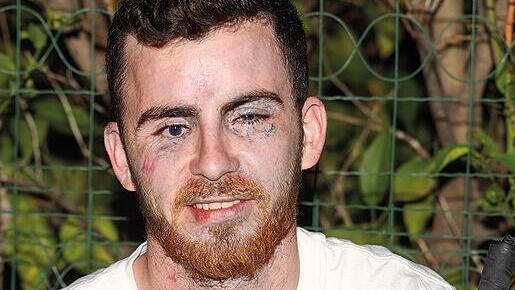
Lerner was called up for his second round of reserve duty about six months after completing his regular service in the 401st Armored Brigade's 52nd Battalion. At the time, he had just begun a preparatory program ahead of a civil engineering degree at Ariel University. He was assigned to the 10th Brigade, and on Dec. 22 he was wounded during a nighttime raid on a Hamas post in the Nuseirat refugee camp.
“During the raid, a terrorist came at us and fired an RPG. At that moment I collapsed inward and went blind instantly. I was hit by shrapnel in the eyes, face, right arm, neck and head.”
Lerner was evacuated to Soroka Medical Center, where he was sedated and on a ventilator for a week, also suffering from a brain hemorrhage. He was later transferred to Sheba Medical Center at Tel Hashomer, where he underwent another surgery to remove a tumor in his abdomen that was discovered by chance due to the injury. Fortunately, the tumor turned out to be benign.
Because of his injuries, he completely lost his right eye, and in his left eye he can perceive only faint light and shadows. In a near-unbelievable twist, Lerner was wounded just a few hundred meters from the spot where his grandfather, Michael Orlinsky, was killed in a stabbing attack during Passover 2002. “It was insane to fight the same enemy in the same place where your grandfather was murdered,” he says.
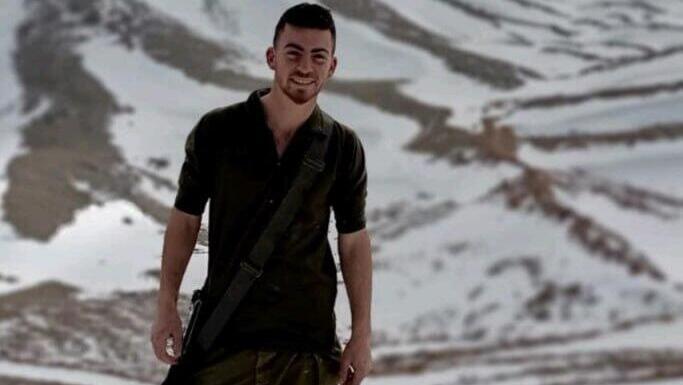
Hagai Lerner on Mount Hermon before the war
(Photo: Private collection)
Daily life: “I ride a tandem bike for the blind at Beit HaLochem, which is operated by the IDF Disabled Veterans Organization, and I work out twice a week at the ‘Brothers for Life’ gym. I’m studying computer accessibility and taking an English course. At the same time, I attend a special program for the wounded at Bar-Ilan University twice a week.”
Challenges: “Being able to ask for help, and the fact that you can’t go anywhere on your own — you need someone to help you navigate. Since the injury, I feel like I’ve been learning to live all over again — to get up, walk, eat, the simple, basic things.”
Small victories: “Getting up in the morning, going out, not sinking into depression, looking forward, loving. My dream is to fulfill my potential and be happy.
“Coming to terms with the loss of my sight was very hard, but in the end, you understand there’s nothing to do — you were wounded, and crying about it won’t help much. You have to move on and deal with it. It also comes from a place of gratitude to God — because yes, I was wounded, but I’m still alive. I may not be able to see, but my brain works, and I’m at my peak.”
Family support: “My family and my partner Shira have been with me from the start. Shira was my anchor, she supported me and showed me the good sides too. It was a major wake-up call for all of us, but everyone has been giving their full support.”
Bureaucracy: “I know a lot of people have trouble getting their rights from the different authorities. I, as someone officially recognized as severely wounded — and with an injury that’s impossible to miss — went through a relatively easy process.”
His message: “Always try to see the glass half full. It’s hard, but even within the injury, the good things are there. Thank you to the people of Israel for your support. In the rehab wards, you meet people who dropped everything to come and help, contribute, offer a hug.”
“If the bullets had been two centimeters to the left, I wouldn’t be here”
Yonatan Ma’atuf | Wounded in a friendly fire incident in the Gaza Strip
“The first thing I did was scream. I saw my hand was attached by just a small piece of skin. Ten seconds later, I already understood I wouldn’t have a hand,” says Yonatan Ma’atuf, then a Namer APC commander in Golani Brigade’s 12th Battalion, who lost his hand in Gaza in a friendly fire incident about nine months ago.
The incident occurred as members of his platoon were repairing a malfunctioning MAG machine gun. “I had just finished refilling oil in the Namer, right in front of the MAG, while they were disassembling it. One of the guys stepped aside for a moment, and the other reattached and cocked the gun. When the first guy came back, he didn’t realize the ammo belt was already back in.”
His comrade tried to unload the MAG, unaware it was loaded, and fired three rounds that struck Ma’atuf’s hand directly.
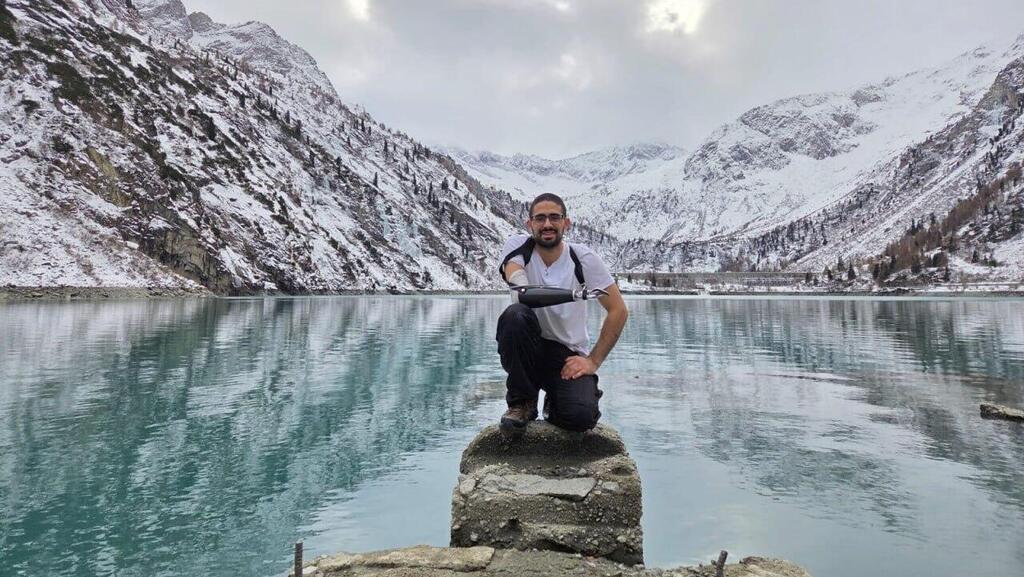
Yonatan Ma’atuf after the injury, at a lake in northern Italy
(Photo: Eliyahu Adler)
Yonatan was evacuated to Soroka Medical Center, where doctors had to amputate his hand. “I told myself, ‘This is what it is, and from here we move forward.’ I felt God had performed a miracle that I was still alive, because if the bullets had hit just two centimeters to the left, I wouldn’t be here,” he shares.
“Of course it hurt to lose a hand — I realized from the start that my life was going to change,” he adds. “The first period was tough. One of my biggest hobbies was rock climbing, and I wondered what that would be like now, or how I would meet someone and get married feeling so broken. But slowly you understand it’s not like you think.”
Daily life: “I try to stay as busy and as normal as possible. From the beginning, I told myself I wanted the injury to affect my life as little as possible. There are organizations that run classes for wounded veterans. I train in martial arts — I’m even signed up for future competitions — and I’ve gone back to climbing. This coming March I’ll also start studying at Ariel University.”
Challenges: “Sometimes I need help with the little things, like zipping up or buttoning a shirt. I can do it, but it takes time and I have to ask for help. Anyone who knows me knows that’s the thing I hate the most.
“I’m on a trip in Italy right now with a friend who ties my shoelaces in the morning — it’s not an easy feeling. We’re the same age, but I need help like a little kid. The looks I get on the street are tough too. In Israel people may be somewhat used to it, but it’s still not easy.”
Small victories: “Anything I manage to do alone that I couldn’t do before feels like a victory. A few days into the trip in Italy, I figured out how to tie my shoelaces by myself.
There are bigger wins too — like succeeding at wall climbing or in martial arts. At first I didn’t know how I’d manage. How do you throw a punch with one hand? But in the end, I go, and I enjoy those small victories more than anything.”

Yonatan before the injury, in Gaza. 'Anyone who knows me knows that asking for help is the thing I hate most'
Family support: “I draw strength from my family. My father, who lost his brother Staff Sgt. Yisrael Ma’atuf in battle in Lebanon in 1992, said to me in the hospital the moment he saw me: ‘Thirty years ago, we begged to be told that my brother was only wounded. Now my son is here, alive and mentally strong — so everything is okay.’ He told my grandmother the same thing — she took it the hardest.
My siblings didn’t know how to react at first, but they adjusted very quickly.”
Bureaucracy: “There are many good people and organizations that help and explain what needs to be done, and thanks to them I’ve been able to manage better. Organizations like The Next Step for amputees in Israel, and the organizations One Heart, Brothers for Life and Ahavat, have supported me from day one.”
His message: “It might be hard to see from the outside, but in rehabilitation it’s clear: the people of Israel are strong and united.”
“Every day is a fight to hold on to who you are”
Porat Shaer | Wounded during an operation near Jabaliya
“I couldn’t hear anyone, just a ringing sound. When I tried to lift my helmet, I got so dizzy it felt like the whole world was spinning,” says Porat Shaer, 39, a reservist in the 401st Armored Brigade's 9th Battalion.
Porat’s third round of reserve duty came just before his son’s bar mitzvah. Despite the timing, and due to a shortage of manpower in his crew, Shaer decided to report anyway. “At first we thought I wouldn’t enter Gaza, but in the end we decided I would, as long as I leave two days before the Torah reading. I didn’t tell my wife at all, I kept it from her,” he says.
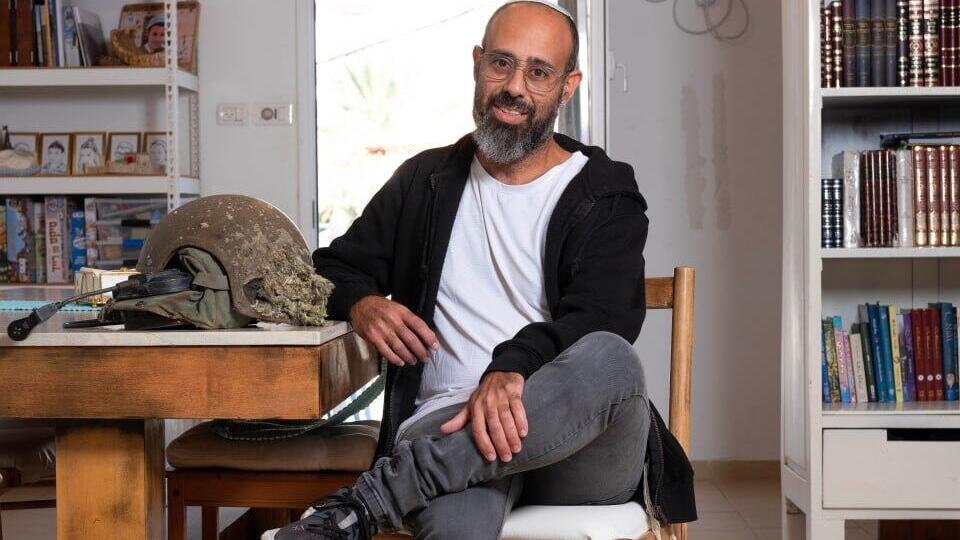
Porat Shaer
(Photo: Yuval Chen)
On November 18, 2024, the night before his son’s birthday, Shaer's unit was called into action near Jabaliya to secure a D9 bulldozer operating in the area. At one point, the tank was asked to reverse out of a narrow alleyway to let another vehicle pass.
“I told myself, ‘Okay, we’re leaving the danger zone,’ and decided to eat something. I sat in the chair and took my first bite just as the tank started reversing, and then suddenly I got hit hard in the head,” he recalls. The tank he was commanding had been struck by an anti-tank missile fired by terrorists lying in wait. “The missile pierced the tank just behind my head and shaved my helmet,” he recounts.
Shaer sustained shrapnel wounds to his hands, shoulder and neck. He was evacuated to Soroka Medical Center and later underwent rehabilitation at Loewenstein Hospital. He was diagnosed with a traumatic brain injury and an orthopedic injury to his hand. Today, he receives care through the head injury rehabilitation unit at the “Tzabar Health” home, a program operated in cooperation with the Rehabilitation Department and the Letat Barosh initiative.
Daily life: “Even now, almost a year later, there’s still no clear routine. It’s a routine of treatments — at least one every day, sometimes even three different ones in a single day.”
Challenges: “Because of the brain injury, I can’t manage my own schedule. I don’t know what treatment I have or when. When I do try to take some responsibility, I mess things up. I have memory problems, trouble finding words, difficulty staying patient.
“It’s strange, because to the outside world you look fine, you don’t look wounded, but on the inside, it’s a daily fight to hold on to who you are, to be a father. Whether it’s getting the kids ready for school or playing with them, it’s not simple. Loud noises or shouting really hurt my ears, and kids sometimes cry or fight — it’s hard to handle.”
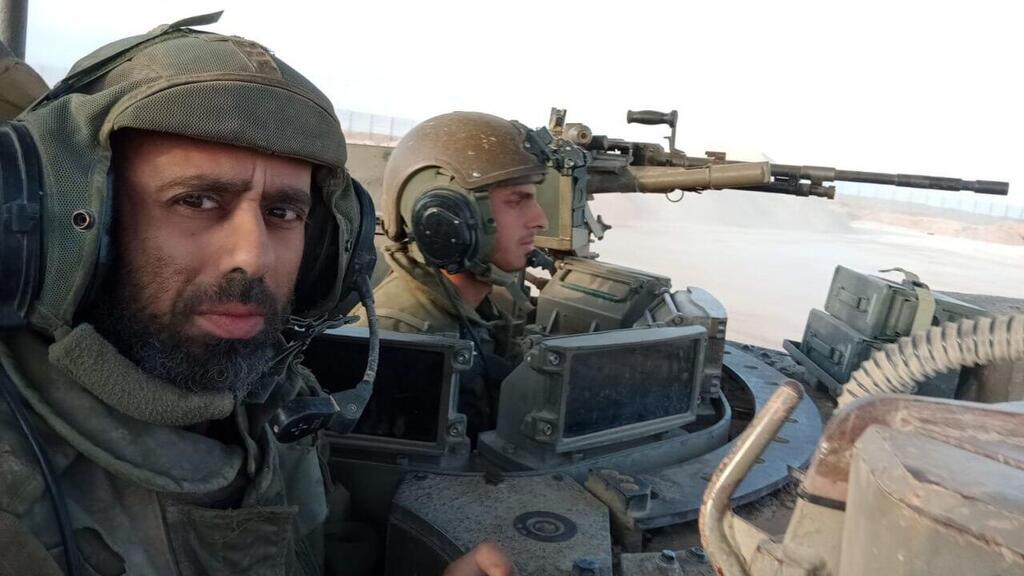
Porat Shaer in Gaza
(Photo: Courtesy)
Small victories: “The moments when I manage to play with the kids, even roughhouse a bit, are victories for me. In therapy, when I manage to lift a weight with my injured hand, that’s a win. As part of my rehab I do horseback riding, and recently I’ve returned to diving — it has to be with a guide, but it’s still a victory. From day one I wondered if I’d ever be able to dive again.
Lately, I’ve also started driving again — with my wife beside me — and every time we drive a little farther, it’s a win. It’s something I really love.”
Family support: “Everyone copes differently. I have five kids — some teens, some younger. When I have treatments at home, sometimes they get excited and join in. Since the injury, my wife is basically working full-time just being with me and taking care of me. Despite everything, we always try to show and see the good, to give the kids a sense of normalcy, as much as possible.”
Bureaucracy: “It took time before I was officially recognized as a brain injury case. Only later did ‘Tzabar Health’ get involved. The first time they met me, they asked about my symptoms and explained it was all connected to the head injury, that I wasn’t imagining things. Since then, they’ve been by my side.”
The message: “We are a nation of heroes. The injury isn’t just our personal story, it’s the story of the entire nation. We have to recognize that there are people whose wounds aren’t visible, but they’re still suffering. After this war, there’s a good chance that the person next to you is going through something — and we need to remember that and acknowledge it.”