

Qatari Prime Minister and Foreign Minister Mohammed Al‑Thani declared Sunday that Qatar will not fund reconstruction of Gaza, saying: “We will not rebuild what Israel destroyed.” Speaking on the second day of the Doha Forum, Al‑Thani said: “We will continue to support the Palestinian people, but we will not finance rebuilding what others destroyed.”
He added that there is much false information intended to harm relations between Doha and Washington. Drawing a comparison to the war between Russia and Ukraine, Al‑Thani argued that, just as Russia is expected to rebuild the damage it caused, Israel should be responsible for Gaza’s reconstruction.
“When we say Israel must rebuild they tell us ‘you as a region share the responsibility.’ We will not abandon the Palestinians, but we will not sign the checks to rebuild what someone else destroyed,” he said.
Gallery
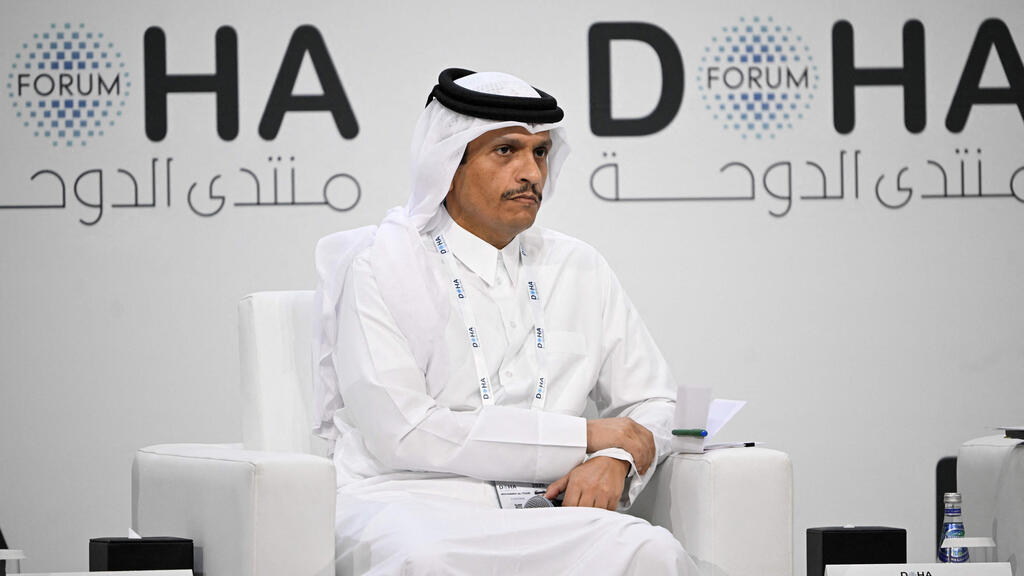
Qatari Prime Minister and Foreign Minister Mohammed Al‑Thani at the Doha Forum
(Photo: Mahmud Hams / AFP)
Al‑Thani warned that, without a political resolution to the Palestinian issue, the conflict could reignite. He cautioned that “the continued presence of Israeli forces in Gaza and ongoing violations threaten to ignite the conflict again,” and said that “the extreme right seeks to eliminate the Palestinians — we cannot remain their hostages.”
Regarding Qatar’s relations with Hamas, the prime minister denied that Doha currently funds the terrorist organization. He said the relationship began about 13 years ago at the request of the United States, and claimed recent Israeli criticism of Qatar is morally unacceptable, especially given Qatar’s long‑standing role as mediator.
At this stage, Qatar does not plan to send reconstruction funds, engineering equipment or building materials to Gaza until the second phase of the ceasefire deal begins. U.S. President Donald Trump said a few days ago that despite recent violations, “the ceasefire is going well” and the transition to Phase Two “will occur very soon.”
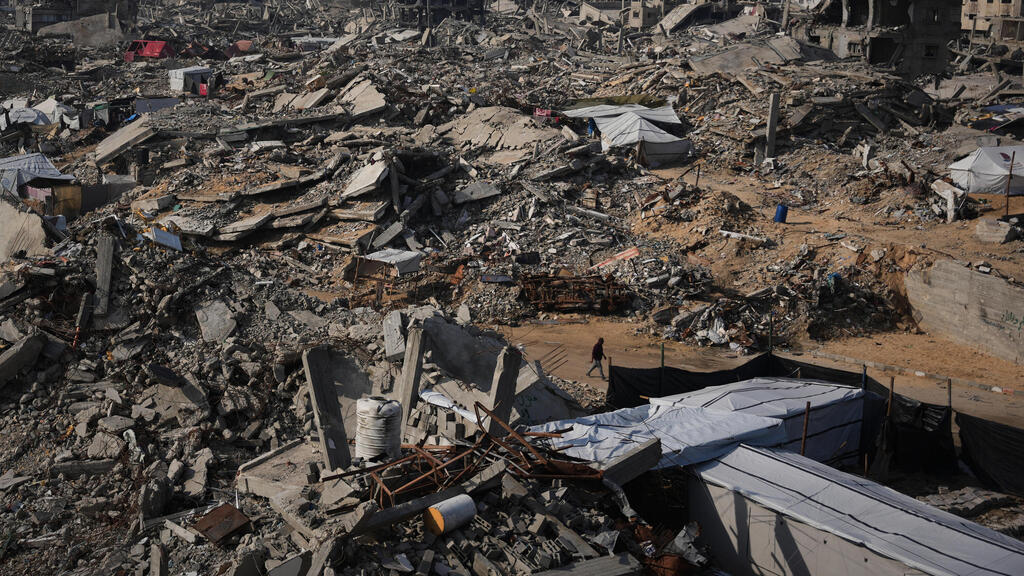
Destruction in Sheikh Radwan in Gaza City
(Photo: Abdel Kareem Hana/AP)
In Jerusalem, however, officials continue to insist they will not proceed with the Trump 20‑Point Plan until all hostages are returned. Meanwhile U.S. efforts to transition to the plan’s second phase face obstacles, especially around forming the international stabilization force (ISF).
Currently, few Arab or Muslim countries are willing to commit thousands of troops to Gaza under Israeli oversight. Azerbaijan expressed principled willingness but apparently backed away, perhaps after pressure from Turkey, which reportedly wants to occupy the space itself.
Israel opposes the deployment of Turkish or Qatari forces — states seen as supportive of Hamas — but says it would accept forces from Azerbaijan and Indonesia. Yet, after Hamas announced it would refuse cooperation with the ISF, any country contemplating deployment knows it risks entering direct conflict with Hamas and endangering its soldiers.