

When a senior Houthi official warned Egypt against military intervention this week, he reached back more than six decades for his most pointed argument. As Cairo considers sending forces to defend Saudi Arabia, Mohammed al-Bukhaiti told Al-Araby television that Egypt's army retained bitter memories of its earlier campaign in Yemen. His message was unmistakable: remember what Yemen cost you.
For Israel, that history is more than a distant sideshow. Several historians have argued that Egypt's five-year intervention severely weakened its readiness for the Six-Day War. Before Israeli aircraft struck in June 1967, Nasser's army had already spent years fighting, losing men and consuming resources in Yemen. The Houthis are invoking a disaster whose consequences reached all the way to Sinai.
Gallery
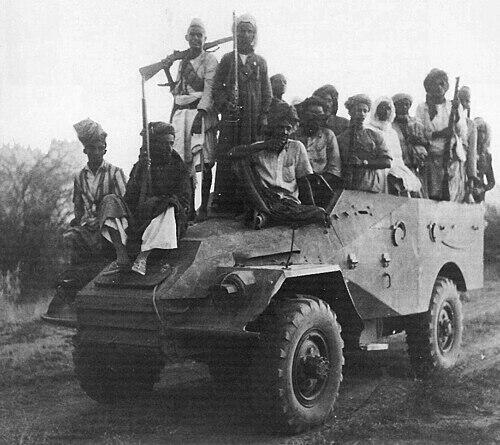
A Soviet-manufactured armored car, captured by royalist guerrillas from the Egyptians near Haradh
The quick victory that never came
The story began on September 26, 1962, when officers led by Abdullah al-Sallal overthrew Imam Muhammad al-Badr and proclaimed a republic in North Yemen. But the revolution had an immediate problem: the deposed monarch was not dead. He escaped into the mountains, rallied loyalist tribes and fought back. The republicans appealed to Egyptian President Gamal Abdel Nasser for help. Nasser saw an opportunity to rebuild his claim to Arab leadership after Syria's departure from its union with Egypt the previous year. A friendly republic on the Arabian Peninsula would also challenge Saudi Arabia's conservative monarchy. Riyadh backed the royalists, turning Yemen into a struggle between Arab rivals. The historical irony is striking: Egypt is now considering defending the country that helped frustrate its earlier intervention. Nasser's advisers expected a small force to secure a quick victory. Instead, a few hundred Egyptian commandos in October 1962 became roughly 70,000 troops by the summer of 1965.
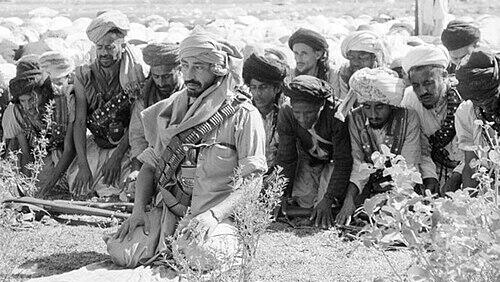
Muhammad al-Badr praying with his guards
Reinforcements kept arriving, but victory did not. Leaving threatened Nasser's prestige; staying demanded more soldiers and money. Yemen had become a commitment Egypt could neither finish nor comfortably abandon. Egypt had aircraft, tanks and artillery. Its opponents had mountains, intimate knowledge of the terrain and the ability to avoid the kind of battles Egypt wanted to fight. Former Egyptian military leaders later described an enemy that appeared and disappeared while their army expended enormous quantities of ammunition. Former Defense Minister Muhammad Fawzi wrote that Yemen's landscape had swallowed that firepower. It was an admission of the gap between bombarding a country and actually controlling it. Thousands of Egyptian soldiers died, although estimates vary. The economic damage extended beyond the cost of keeping them supplied. In November 1964, American officials explained that a proposed loan was stalled partly because Washington could not demonstrate that its aid would not help finance Egypt's presence in Yemen. The war consumed resources while making outside financial assistance harder to obtain. The brutality was not confined to Egyptian losses. Egyptian forces also used poison gas in Yemen. A May 1967 memorandum to President Lyndon Johnson explicitly recorded further Egyptian gas attacks, a stark reminder of how far the campaign had escalated from the supposedly limited intervention of 1962.
The other front in the Six-Day War
This is where Yemen enters the story of Israel's victory. Historians Eugene Rogan and Tewfik Aclimandos argue that the campaign seriously depleted Egypt's capacity to fight another war. Troops and resources were committed far from Sinai, while years of official propaganda about victories in Yemen encouraged some Egyptian leaders to overestimate their army's capabilities. The damage was both material and psychological. The competing demands were visible as the crisis escalated. A May 25, 1967, U.S. diplomatic cable recorded an Israeli report that Egypt had ordered an armored brigade from Yemen to reinforce its forces in Sinai. Cairo was preparing for a showdown with Israel while still committed to a conflict on the other side of the Red Sea. Israel did not merely watch.
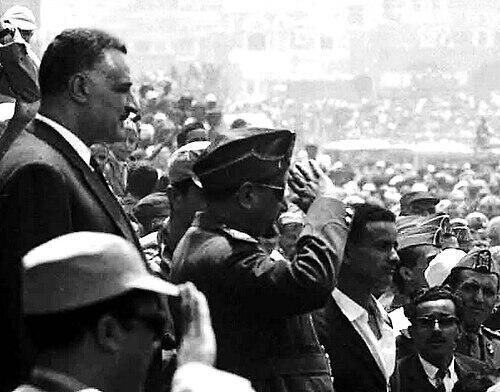
Egyptian President Gamal Abdel Nasser (standing to the left) welcomed by Yemeni crowds on his visit to Sanaa, April 1964. In front of Nasser is Yemeni President al-Sallal, saluting
Beginning in 1964, Israeli transport aircraft secretly dropped weapons, ammunition and medical supplies to the royalists, working through British mercenaries. Historian Yogev Elbaz documents 14 flights over two years. In one of the conflict's least-known twists, Israel was helping sustain Saudi-backed fighters against the Egyptian army, keeping pressure on its principal regional enemy far from Israel's borders. Historian Jesse Ferris takes the connection further in Nasser's Gamble. He argues that Yemen damaged Egypt's economy, poisoned relations with the major powers and undermined Nasser's standing in the Arab world. Those pressures, in his account, helped drive the miscalculations that led to war with Israel. Yemen was therefore not simply a drain on Egypt's strength; it helped shape the crisis in which that strength was tested. But it would be misleading to make Yemen the single explanation for the Egyptian collapse. Historian Asher Orkaby has challenged attempts to give the intervention a decisive role in explaining 1967. Egypt's politicized military leadership and Nasser's strategic miscalculations also mattered. Even Rogan and Aclimandos, who emphasize Yemen's damaging role, caution against claiming that Egypt effectively lost the Six-Day War there.
The warning is about the exit
After the defeat, Nasser withdrew his forces from Yemen in 1967, although the civil war continued until 1970. The intervention had consumed soldiers, money and diplomatic influence without delivering the regional triumph he sought. A campaign intended to demonstrate Egypt's power had instead helped expose its limits. Today's circumstances are different. The proposed mission is to defend Saudi territory, with reports pointing to air defenses and logistical support, not an Egyptian ground campaign inside Yemen. Egypt also contributed air and naval forces to the Saudi-led coalition in 2015. Nor were the Houthis the force Nasser fought: his opponents were royalists defending a deposed monarchy. Treating the current proposal as a straightforward repeat of 1962 misses those distinctions. The Houthis' warning works by blurring them. Its implication is that even a limited commitment could expose Egyptian forces to attack and create pressure for deeper involvement. That is the enduring question behind the history: not whether Egypt can send troops, but whether it can control what happens after they arrive. Nasser learned that entering a war and deciding how it ends are very different things.
First published: 11:00, 10.20.26