

Maj. Gen. (res.) Nitzan Alon, the outgoing head of Israel’s Hostages and Missing Persons Headquarters, said in his first interview that the command was formed during the night between Oct. 7 and 8 and immediately began coordinating intelligence from Military Intelligence and the Shin Bet to locate hostages in Gaza and guide negotiations for their release.
Alon described complex ties with cabinet ministers, revealed new details about the negotiations and spoke about the most painful moments of the mission, including cases in which hostages were confirmed dead while still in captivity.

A public narrative has emerged crediting Strategic Affairs Minister Ron Dermer and Prime Minister Benjamin Netanyahu with rescuing the negotiation process, Alon said, but “nothing essential changed.”
Alon said Hamas faces “an objective difficulty” locating Ran Gvili, the last remaining Israeli hostage to be held in Gaza. “Their difficulty is tied to the chaos that erupted among them immediately after Oct. 7,” he said. “Even so, we assess he can be brought home.”
He described unprecedented procedures created during the crisis, including a coordination mechanism with the Chief Rabbinate. “We had a category we called ‘Most Probably Dead’ — MPD,” he said. “Take the Bibas family, for example. We knew who abducted them. We informed Hamas who the kidnappers were so they could locate the bodies and return them.”
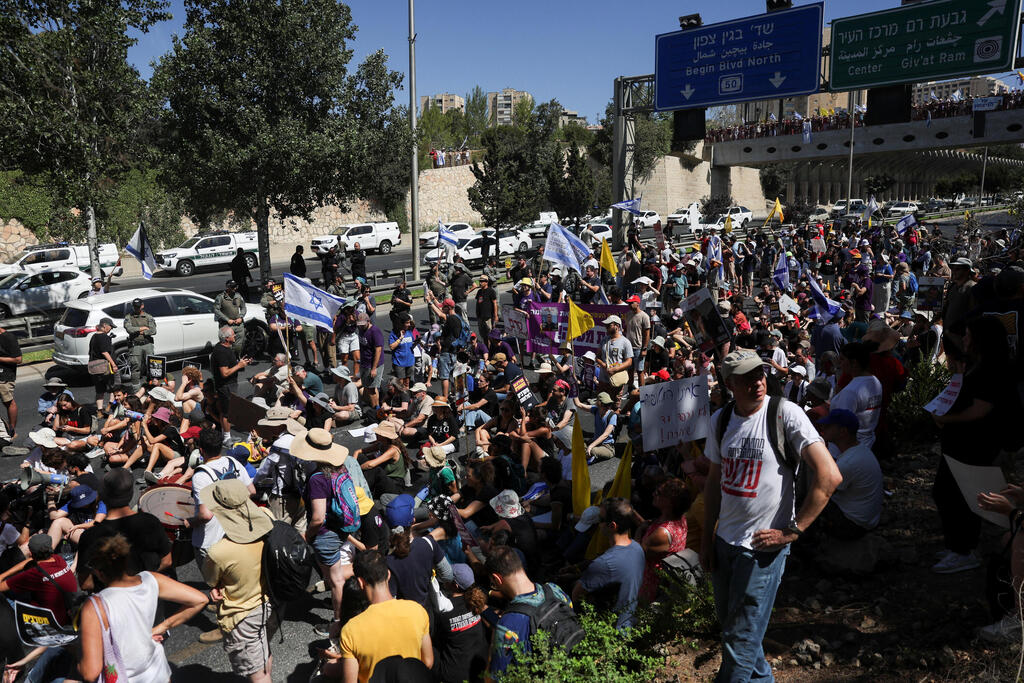
(Photo: REUTERS/Ronen Zvulun)
Alon was asked whether the mass demonstrations in Tel Aviv’s Hostages Square helped secure releases or, as the government had argued, raised the price and delayed deals. “I said in one of the cabinet meetings that civil society is, by definition, civilian,” he said. “You cannot order people to demonstrate; you cannot forbid them from demonstrating. When families asked me what to do, I avoided giving advice. At a few critical moments, I told people, ‘We are at an important juncture — don’t let Hamas exploit you,’ and they generally listened.”
He said Hamas initially believed the demonstrations strengthened its hand and tried to raise demands but later realized it would gain no advantage. Asked directly whether the protests had any effect, Alon said their influence on the negotiations “was far less dramatic than what is attributed to them.”
“The political leadership learned to insulate itself,” he said. “But the demonstrations were important for internal solidarity in Israeli society, for the families and, in some cases, for the morale of the hostages. It’s possible they also influenced American administrations.”