

During Elkana Bohbot’s long months in Hamas captivity, his wife Rebecca found herself unwillingly thrust into the center of a public campaign for his release. In one of the many interviews she gave while pleading for him to come home, she said: “With God’s help, we will get through this and we will have more children. I already want to be pregnant.”
Two months ago, six months after Elkana was freed, the couple closed that circle with an emotional video announcing that they are expecting their second child, a daughter and sister to their 6-year-old son, Re’em.
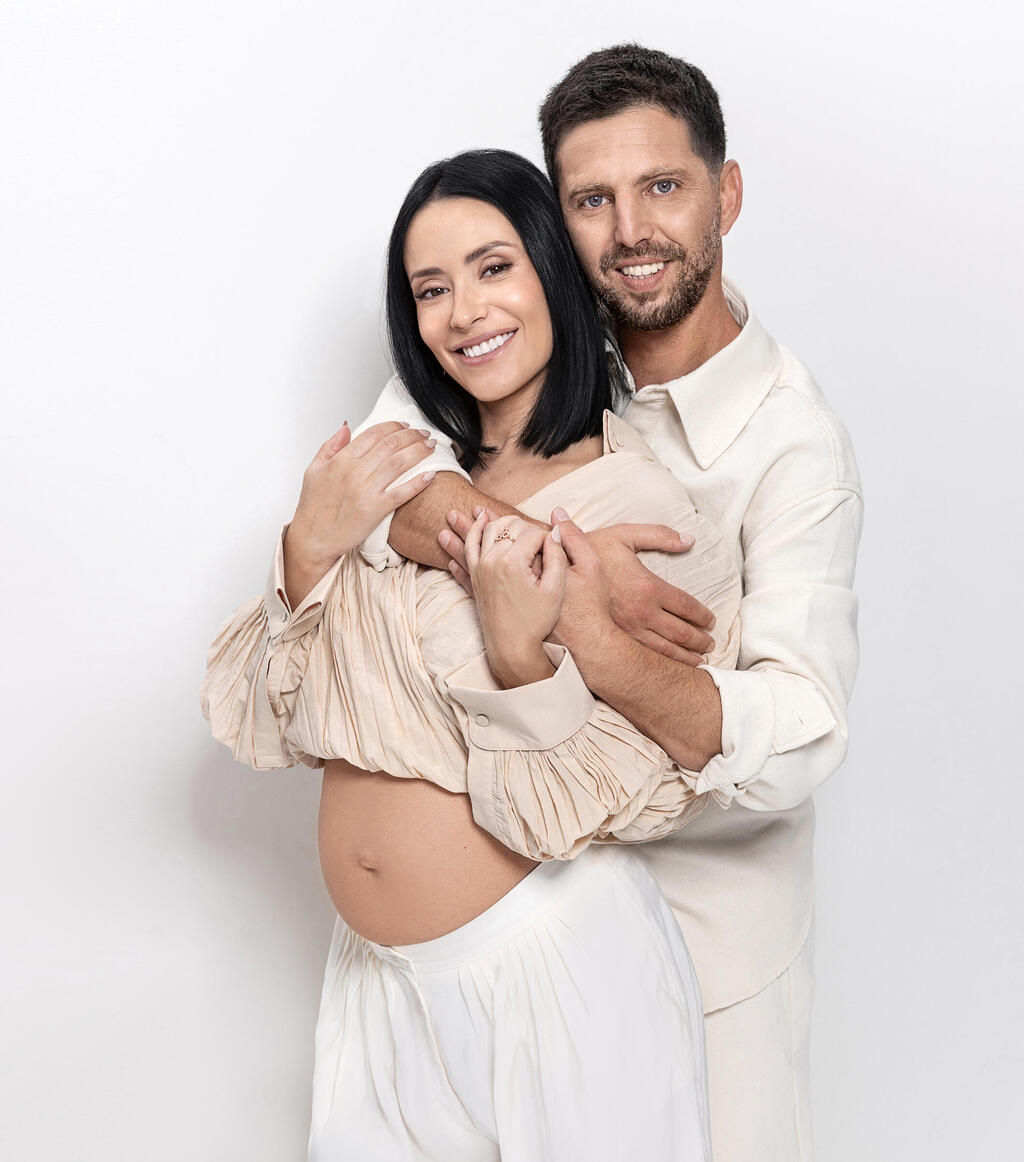
“Last Sukkot, Re’em and I were staying at a hotel in Tiberias,” Rebecca says. “At night, Re’em told me he was sad because all the children at the hotel had siblings and he didn’t. I explained to him that he would have siblings, that we were waiting for Daddy because I couldn’t make him a brother on my own, but it broke me. I realized the child was losing hope.
“I prayed to God and said, ‘God, enough, mercy. The child wants a sibling. Bring me my husband already.’ That same night, President Trump announced the release of Elkana and all the other hostages.”
Elkana: “For two years there, I ate my heart out, especially in the moments when I thought I wouldn’t come back, when I thought it was a shame Re’em didn’t have a brother or sister. And now, thank God.”
Rebecca: “Two months before he was kidnapped, Elkana told me, ‘Let’s have another baby,’ and I stopped him. I only stopped nursing Re’em when he was 3, and I wanted a little time for myself before starting again with breastfeeding. When he was kidnapped, I regretted that we hadn’t done it.”
How did you feel when you found out you were pregnant?
Rebecca: “It was a surprise. I didn’t expect it to happen so quickly. With Re’em it took us a year, after I had a natural miscarriage in between. The truth is I was very stressed when I found out. As much as I wanted it and waited for it, I wasn’t ready for the hormonal madness I was about to go through while still needing to support Elkana and Re’em.
“In the end, I decided to get all those negative thoughts out of my head. I said, ‘Wow, God heard me. All my prayers reached Him,’ like the song Re’em always sang when Elkana was in captivity: ‘God Almighty always loves me and it will always get even better for me.’ I always said that our revival and our victory would be to bring life.”
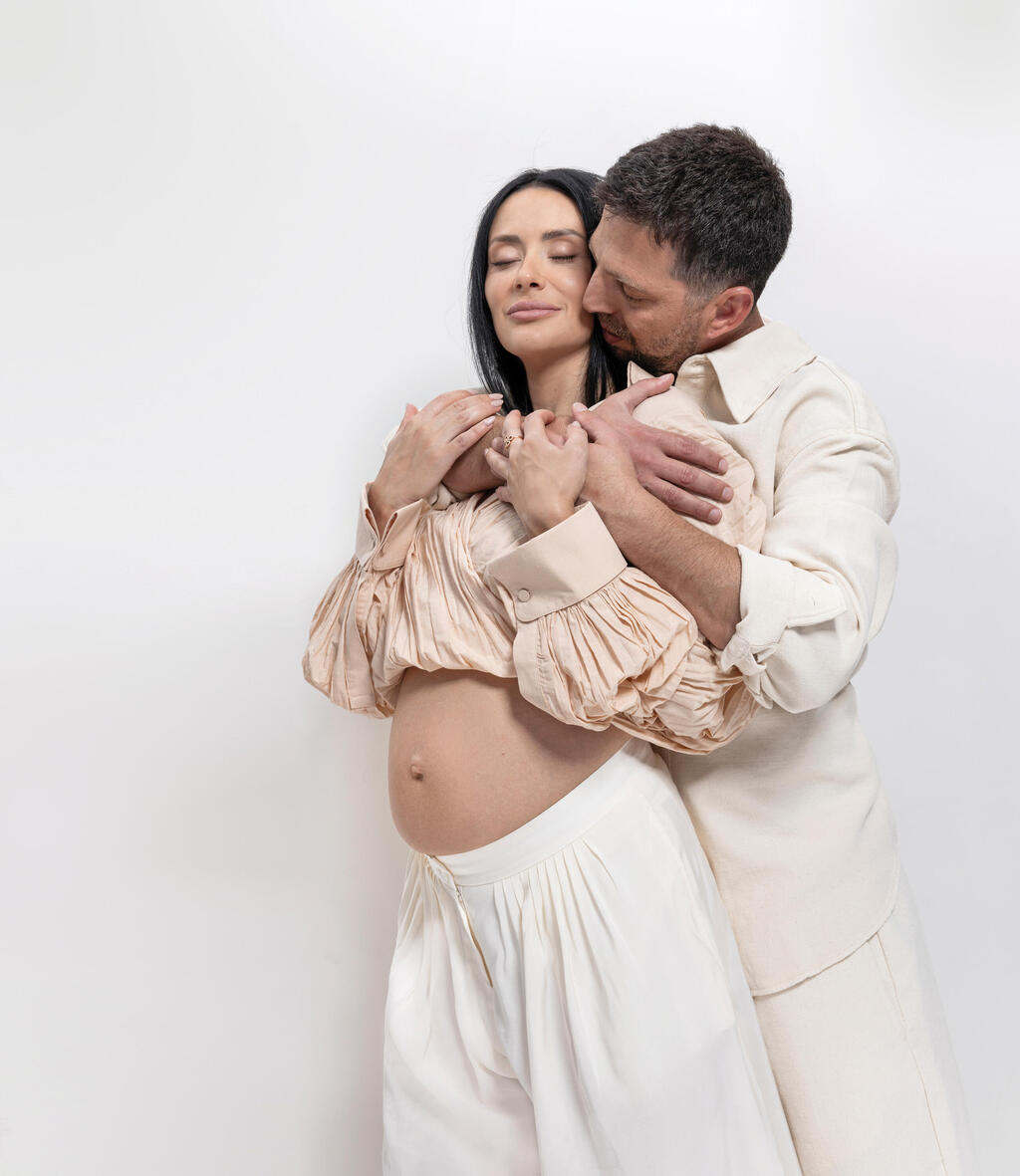
Elkana and Rebecca Bohbot
(Photo: Adi Orni)
How did you tell Elkana?
Rebecca: “It took me two days to tell him. We are all still in rehabilitation, and I was afraid it would knock him off focus. It was New Year’s Eve. That morning I bought baby shoes, put the pregnancy test in a box, and in the evening I said, ‘Happy New Year,’ and gave him the box. He screamed with joy.”
Elkana: “It was a dream, a miracle. There is no greater victory than that. Our enemy does not want us to flourish and multiply. That is what hurts him most, and my victory over them is this pregnancy.”
What existed before is gone
In March, Elkana celebrated his 37th birthday, his first since captivity. A party had been planned at his club Shalvata in Tel Aviv, but, as often happens in Israel, plans changed because of the Iranian attack.
“We didn’t give up,” Elkana says. “We moved to a loft near a shelter and celebrated big time. It was the first time I allowed myself to dance. Since Nova, I hadn’t been to a party and hadn’t danced, out of respect for my friends and partners who were murdered.”
Elkana’s book, “738 Days in Hamas Captivity,” written with Eli Khalifa and published by Dani Books, was recently released. It begins at the party and ends with his release from captivity. Even alongside the joy of his return, the family reunion and the baby on the way, the Bohbots are still grappling with everything they endured.
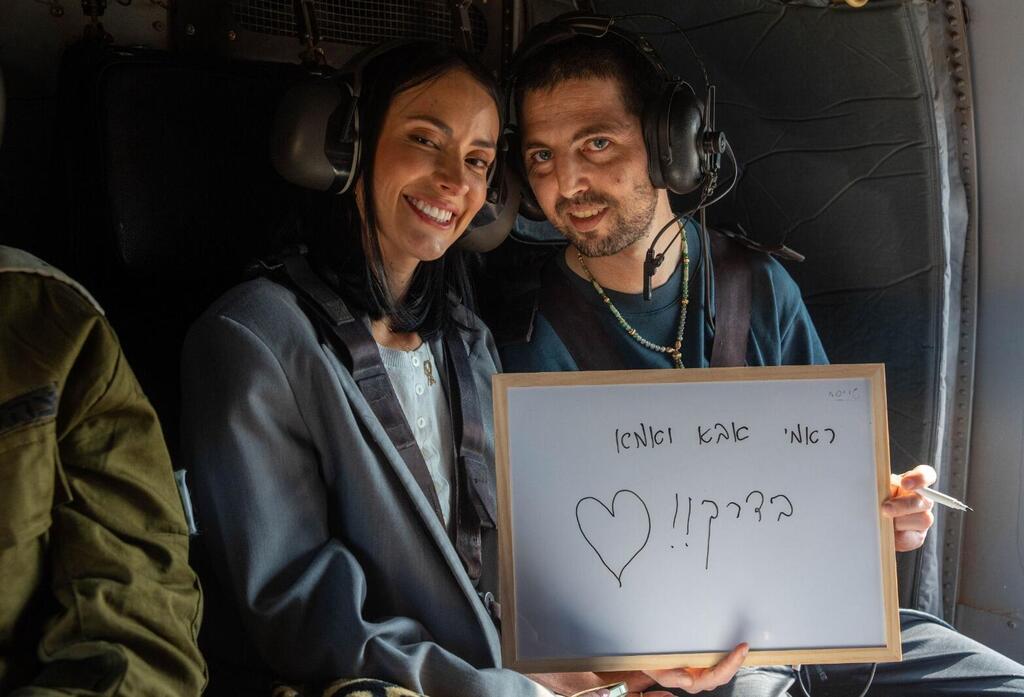
The day of Elkana's release
(Photo: IDF)
“It is a miracle that Elkana is here. I’m not allowed to complain,” Rebecca says. “But that doesn’t mean they came back and the story is over. For us, the story has only just begun.”
Elkana: “My nightmare is not over. At night, when one of my hands is stroking Re’em’s head and the other is holding Rebecca tightly to make sure she is there next to me, I understand that I came out of the tunnels, but the tunnels did not come out of me.”
Rebecca: “Elkana is a different person from the one I knew, but I am also a different woman. We are learning each other again and choosing each other again every day. I’ve had psychological support since October 7, and they prepared me for the fact that he would come back different and that things at home could be very difficult. Thankfully, he came back in much better condition than I expected.”
How did captivity change your relationship?
Elkana: “What existed before is gone. We are rebuilding our relationship. Like two people who may know each other, but have both changed. I need to learn the new Rebecca and she needs to get to know the Elkana who went through what he went through.”
In what way did you change?
Rebecca: “Before October 7, I was more anxious about the future. I always wanted to save and hold on to things, and Elkana just wanted to live and spend. Since captivity, we have switched roles. I learned to let go after seeing how quickly life can turn upside down. I understood that no matter what I have, if Elkana is not with me, I have nothing.”
What challenges are you dealing with today?
Rebecca: “Elkana is in a complex emotional state. He is in the guilt stage. He blames himself that he is alive and his friends are not. He can’t come to terms with the fact that they were murdered.”
Elkana: “I think a lot about my friends who didn’t get out of there. Sometimes I have my floods. People need to understand that my soul is wounded. This is a trauma that accompanies every single moment, especially when I eat. Food has a different meaning than it had before. I don’t sleep at night. Sometimes Rebecca finds me on the balcony in the middle of the night. I wake up and feel that I have to be under the open sky, in the air.”
What helps you?
Elkana: “Being active. I have such a packed schedule because it is part of my healing. If I’m not doing something, I sink. I am completely occupied with commemoration and advocacy. That is my life’s mission, whether through meetings with people, lectures or exhibits around the world.”

'For two years in captivity, I ate my heart out over the fact that Re’em had no brother or sister'
(Photo: Adi Orni)
‘I fled Colombia because it is a country of kidnappings’
Rebecca was born and raised in Colombia in a Christian family. When she was 15, her parents divorced.
“My home fell apart. There was nothing holding me in Colombia,” she says. “I came to Israel at 23 for the wedding of my cousin, who married an Israeli she met here, and I simply fell in love with the country.”
Until October 7, she worked in Mevaseret Zion for a tourism company specializing in travel from South America.
“Before the war, tourism was at its peak and it was one of the most beautiful periods of my life,” she says. “About a year after Elkana was kidnapped, I tried to go back to work two days a week, but when the humanitarian deal happened and Elkana was not part of it, it was very bad for me and I couldn’t keep working.
“After Elkana was released, they asked me to come back, but then the whole office was put on unpaid leave because there is no incoming tourism at all. I’m not complaining. Everything is for the best and I will find myself.”
In the many interviews she gave during Elkana’s captivity, Rebecca did not speak about being a convert to Judaism.
“I don’t know why I didn’t tell it. It probably didn’t seem relevant to me,” she says. “This is the first time I’m talking about it. Elkana calls me Ruth the Moabite.”
Did you convert for him?
Rebecca: “No. I converted of my own accord in New York before we became a couple. I decided I didn’t want to do it for anyone, only for myself. I was frightened by the process. It is not simple to convert, but when I got to know Judaism I was very impressed and decided I wanted to build a kosher home in Israel. I returned to Israel in 2016 as a Jew.”
Elkana: “I have such a packed schedule because it is part of my healing. If I’m not doing something, I sink. I am completely occupied with commemoration and advocacy. That is my life’s mission.”
How did your parents react to the fact that you converted and live in Israel?
Rebecca: “I received full support from my mother. My father objected at first, but I’m not really in touch with him, so it doesn’t interest me. For them, the fact that I live in Israel is traumatic, especially after Elkana’s kidnapping. But I always tell them that I am part of this country, for better or worse.
“My mother and siblings supported me very much during Elkana’s captivity. My mother and brother came to Israel to be with me, and I also traveled twice to Colombia and met the president there.”
Did the captivity period make you want to take the family and flee back to Colombia?
Rebecca: “It is the irony of fate, because I fled Colombia for here because it is a country of kidnappings. When I came here, I knew there were terrorists here and that it wasn’t always safe, but I also knew I could walk down the street or send my son to the park and no one would kidnap him. There, a child can be kidnapped in a mall from his mother’s hands.”
Elkana: “We thought we had a safe country. So we thought. Show me another place in the world where terrorists break into homes in entire communities and kill and kidnap and rape. This is an actual Holocaust.”