

In May 1948, as the British Mandate in Palestine neared its end, the idea of declaring a Jewish state was anything but inevitable. Behind the iconic moment later immortalized in photographs and textbooks lay days of uncertainty, improvised decisions and intense debate — with the outcome hanging by a thread.
David Ben-Gurion, head of the Jewish leadership, spent those final days in a state of visible tension. Known to develop a fever before major decisions, he paced restlessly in Tel Aviv, the weight of history pressing in. If the scale of a decision could be measured in body temperature, those around him later suggested, he must have been burning.
The road to that moment had begun months earlier. On Nov. 29, 1947, the United Nations voted to partition the land and establish a Jewish state. In Jewish communities, celebrations erupted. People poured into the streets, dancing late into the night.
Ben-Gurion did not join them.
“That evening the crowds danced in the streets. I couldn’t dance,” he wrote. “I knew we were facing a war — a war in which we would lose the best of our men.”
The war began almost immediately. The day after the UN vote, Arab leaders declared a general strike. Violence escalated, and though the British were still formally in control, they largely stayed out of the fighting. By early December, Arab states signaled their intention to intervene militarily once the British left.
At the same time, international support began to waver. In February 1948, the United States reversed its backing for partition and proposed placing the territory under a United Nations trusteeship — effectively postponing statehood. The proposal included a ceasefire and a freeze on political developments until a new solution could be found.
For some in the Jewish leadership, this seemed like a necessary pause. Militarily, the situation was deteriorating. Intelligence assessments painted a bleak picture: invading armies from Egypt, Syria, Iraq and Jordan would arrive with tanks, artillery and air power. The Jewish forces had none of those advantages.
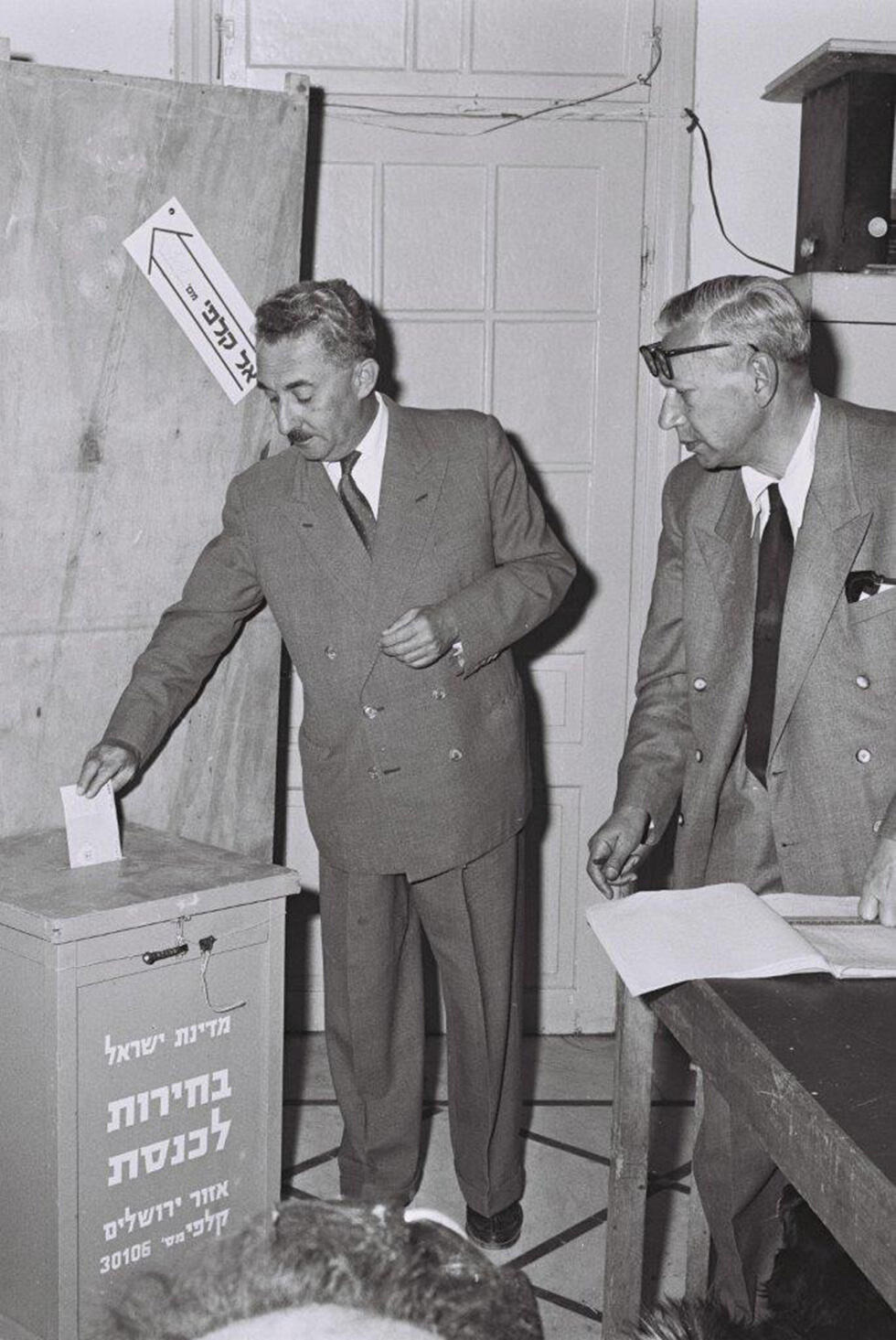
Moshe Sharett, one of the senior leaders, returned from the United States after a grueling 30-hour journey. His diplomatic mission had failed. President Harry Truman had refused to meet him. American officials warned bluntly against declaring independence.
“If you declare a state,” one message conveyed, “you will face invasion by organized armies — and you are not prepared.”
Exhausted and disheveled, Sharett went straight from the airfield to Ben-Gurion’s home. There, over tea and cookies served by Ben-Gurion’s wife Paula, he delivered his conclusion: the American proposal should be accepted.
Ben-Gurion listened carefully — and then asked him not to present that position publicly at the next day’s meeting.
By then, his mind was already made up.
Ben-Gurion believed time was not neutral — it favored the enemy. Arab forces, though not yet fully organized, were gaining strength. Delaying independence, he believed, would only make the eventual confrontation more difficult.
Just as crucially, he saw independence as a military necessity. Without a state, there could be no full mobilization. With one, emergency powers could be invoked and the entire population recruited.
On the morning of May 12, with just two days remaining before the British withdrawal, the Jewish leadership convened in Tel Aviv. The agenda: whether to accept the American trusteeship proposal or move forward with declaring a state.
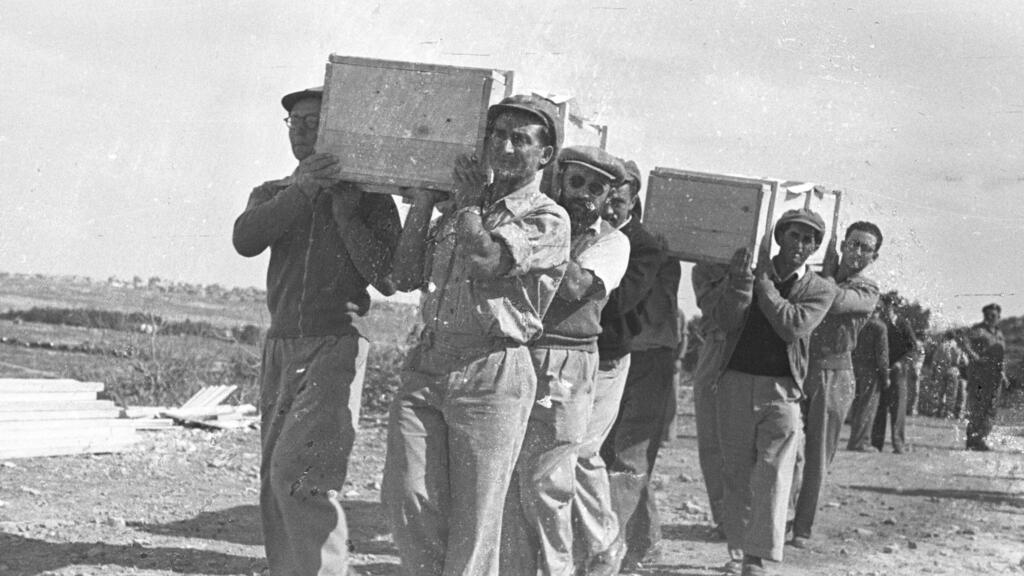
The first funeral for the fallen at Gush Etzion
(Photo: David Rubinger)
The news from the front was grim. Gush Etzion, a bloc of Jewish communities, was under heavy assault. Reports spoke of thousands of fighters surrounding Jerusalem. Intelligence warned of tens of thousands of troops preparing to invade.
Military leaders offered little reassurance. They spoke of severe shortages — especially in heavy weapons — and the need for reorganization. When asked whether a temporary ceasefire might help, they avoided giving a clear answer.
Ben-Gurion pressed ahead anyway.
He did not present a detailed military analysis. Instead, he offered a broader vision — one that looked beyond the immediate crisis.
“If we do not declare independence,” he argued, “the situation will only worsen.”
The debate was intense. Some leaders supported the American proposal. Others feared that declaring a state would bring catastrophe. The division was deep, and the decision hung in the balance.
During a break, Ben-Gurion moved through the hallways, speaking to participants one by one, trying to persuade them. One later recalled feeling as if “two thousand years of Jewish history” were being placed on his shoulders.
In the end, the vote was narrow. Six supported rejecting the American plan. Four opposed. Had just one person voted differently, the course of history might have changed.
Even then, fundamental questions remained unresolved. What would be the borders of the new state? The UN partition lines? The realities on the battlefield?
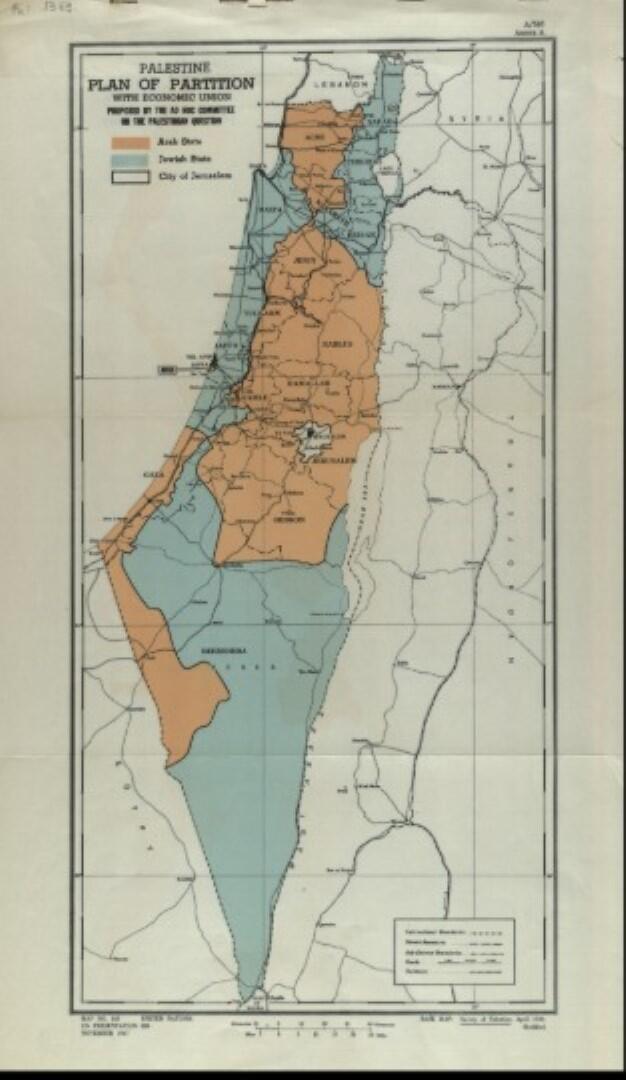
The UN partition plan
Ben-Gurion proposed a bold solution: declare independence without defining borders. War, he argued, would determine them anyway.
The proposal passed — by a single vote.
Another decision, however, was simpler. When it came to naming the state, alternatives such as “Zion,” “Judea” and “Canaan” were considered briefly. The name “Israel” quickly gained support and was adopted.
With the decision made, preparations began in haste.
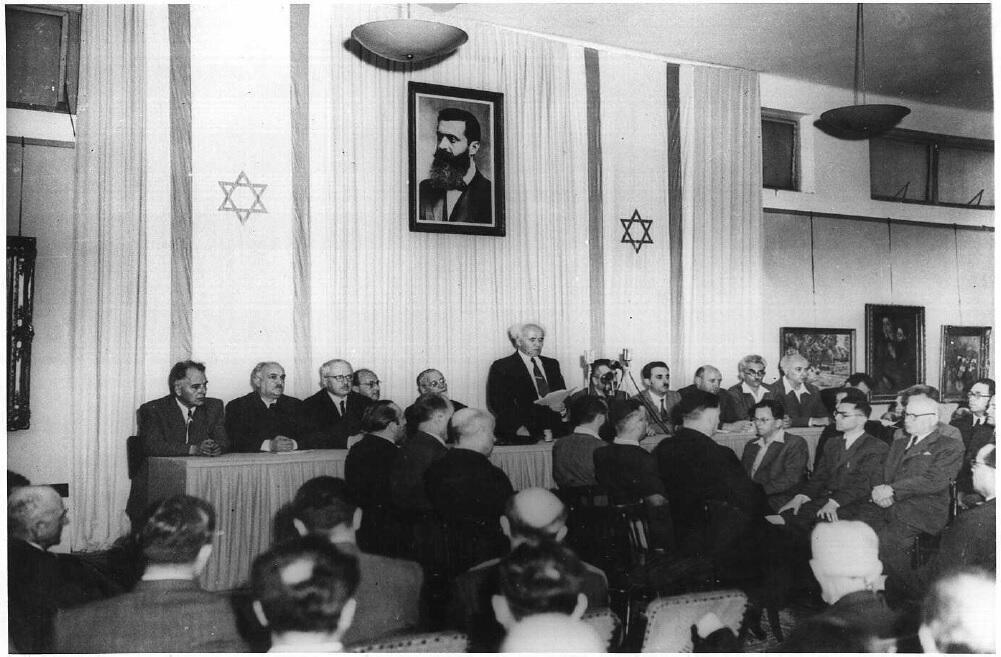
The ceremony was to take place in a small hall at the Tel Aviv Museum. It was organized almost entirely from scratch. Chairs were borrowed from nearby cafés. Flags were taken from storage and rushed to be cleaned. A portrait of Theodor Herzl was mounted behind the podium. A simple table was built from newly purchased wood.
Even as preparations continued, events on the ground intensified. Jaffa surrendered. Gush Etzion fell after fierce fighting. The cost of the coming war was becoming painfully clear.
Meanwhile, the text of the declaration itself was still being finalized. Ben-Gurion worked late into the night, revising the draft. He removed formal, legalistic phrasing and reshaped the language to be more direct and forceful.
By the morning of May 14, the day of the declaration, secrecy had largely evaporated. Newspapers were already reporting that a state would be proclaimed.
Last-minute disputes erupted over the wording. Religious leaders pushed to include references to God. Secular members resisted. A compromise was reached: the phrase “Israel’s Rock” would be included, without explicitly mentioning a divine “savior.”
Logistical problems nearly derailed the event. Taxis meant to transport officials were misallocated. The final version of the declaration had not yet arrived at the venue.
For a brief moment, it seemed the ceremony might be delayed — possibly past the start of the Sabbath, which would have created immediate religious tensions in the newborn state.
Ben-Gurion remained composed.
At the last moment, the document arrived.
Shortly after 4 p.m., he rose and began to read:
“We hereby declare the establishment of a Jewish state in the Land of Israel, to be known as the State of Israel.”
The ceremony lasted just over half an hour. By 4:32 p.m., the members had signed the declaration — on a blank parchment that did not yet contain the final text.
It was an improvised beginning. A state without defined borders. A leadership divided until the final hours. A ceremony nearly disrupted by logistics.
And yet, the decision had been made.
Within hours, the war Ben-Gurion had anticipated began in full force.
But against the odds, the state had come into being — the result of urgency, improvisation and a conviction that history would not wait.