

When Emily Austin landed in Israel this time, the emotional weight felt different.
“For the first time in a long time, I didn’t arrive grieving,” she said. During earlier visits, the war, the hostages and the uncertainty left her drained, each departure feeling like she was leaving part of herself behind. Now, she spoke of ordinary pleasures—iced coffee, Pilates, walking the streets—that signal something Israelis rarely take for granted: a return to breath.
Studio interview with American influencer Emily Austin
(Video: Lior Sharon)


Gallery
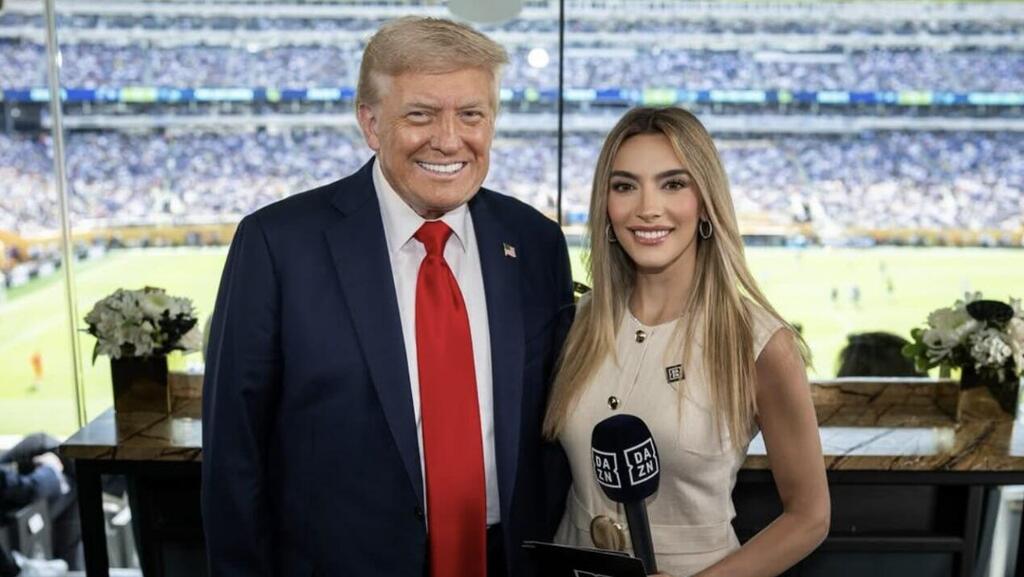
Interview with President Trump at the FIFA Club World Cup Finals
(Photo: emily.austin and daznfootball Instagram)
“For the most part, Israel’s war is taken care of,” said Emily Austin, a prominent American pro-Israel advocate and social media voice. “My fight is back in America.”
That fight, she explained, has become sharper, louder and more consequential. And at its center stands one figure she believes has fundamentally altered the global balance of power: Donald Trump.
'What you see is what you get'
Austin rejects the idea that Trump’s foreign policy is chaotic or impulsive. “What you see is what you get,” she said. “There’s no facade. No puzzle.” That same bluntness, she argued, defines Trump’s relationship with Benjamin Netanyahu.
Public disagreements between Washington and Jerusalem, she said, are often misread. “The media calls it fighting. I call it honesty,” Austin said. “If you disagree, you put it on the table and resolve it.”
She illustrated that trust with a personal story from a private meeting with Trump, one of several she has had with him. Given just minutes to speak freely, she chose Israel.
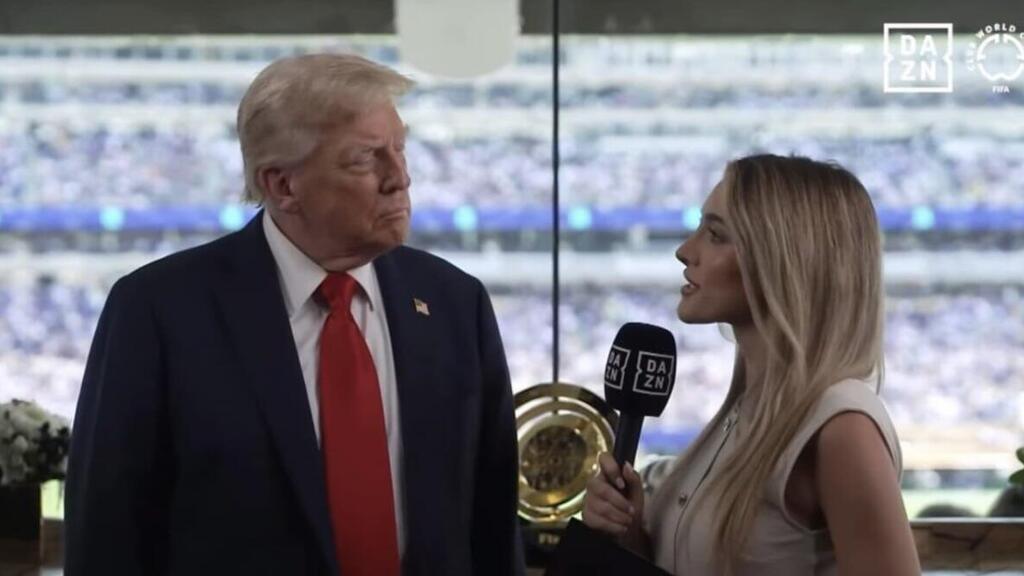
(Photo: emily.austin and daznfootball Instagram)
“I told him, ‘I love America. I’m an American citizen first. But I’m very concerned about Israel,’” she recalled. Trump, she said, took her hand and promised that as long as he was president, Israel would be protected.
For Austin, that assurance was not sentimental—it was strategic. “Anything that’s a threat to Israel is a threat to America,” she said. “Iran says ‘Death to Israel.’ After Israel, it’s America next.”
Asked directly about Iran’s leadership, Austin did not issue a formal warning—but her assessment was blunt. “I think Ali Khamenei is afraid,” she said. “He should be concerned.”
Fear as strategy, not accident
Austin’s comments come as Trump faces criticism for an assertive foreign-policy approach that appears, at first glance, to contradict his promise to avoid new wars. She pointed to the swift U.S. operation in Venezuela as a case in point.
“Seven minutes. No deaths. No escalation,” she said. “People call it aggression—I call it deterrence.”
In her view, the significance of Venezuela extends far beyond Latin America. By inserting the United States directly into the global energy equation, she argued, Washington has reduced dependence on unstable regions and indirectly pressured adversaries such as Russia.
“Why did Putin start the war in Ukraine? Resources,” she said. “When energy becomes more expensive, wars become harder to sustain.”
This, Austin believes, marks America’s return to what she openly called “alpha status.” “When the president speaks now, countries listen,” she said. “They don’t just tweet.”
Critics on the American left accuse Trump of abandoning restraint; some isolationists on the right argue he is betraying the MAGA promise to end foreign entanglements. Austin dismissed both critiques.
“To end wars, you sometimes have to go through discomfort,” she said. “Trump thinks ten steps ahead. We only understand it later.”

Austin at the Emmys 2025
(Photo: emily.austin Instagram)
Stronger message for Israelis
If Austin sounded confident about American power, her message to Israelis was far less comforting.
“When Israelis fight among themselves, from the outside it’s not taken seriously,” she said. “When there are people who want your country erased, infighting weakens everything.”
She stressed that her criticism comes from affection, not distance. Still, her warning was stark: political tribalism, online hostility and internal delegitimization erode Israel’s standing far more effectively than its enemies ever could.
“In the big picture, it doesn’t matter if you’re left or right,” she said. “People want us dead. Unity is survival.”
Austin extended the argument beyond politics, invoking history and religion. “Every sacred text shows the same pattern,” she said. “When Jews are prosperous, the world benefits. When Jews are divided, we’re conquered.”
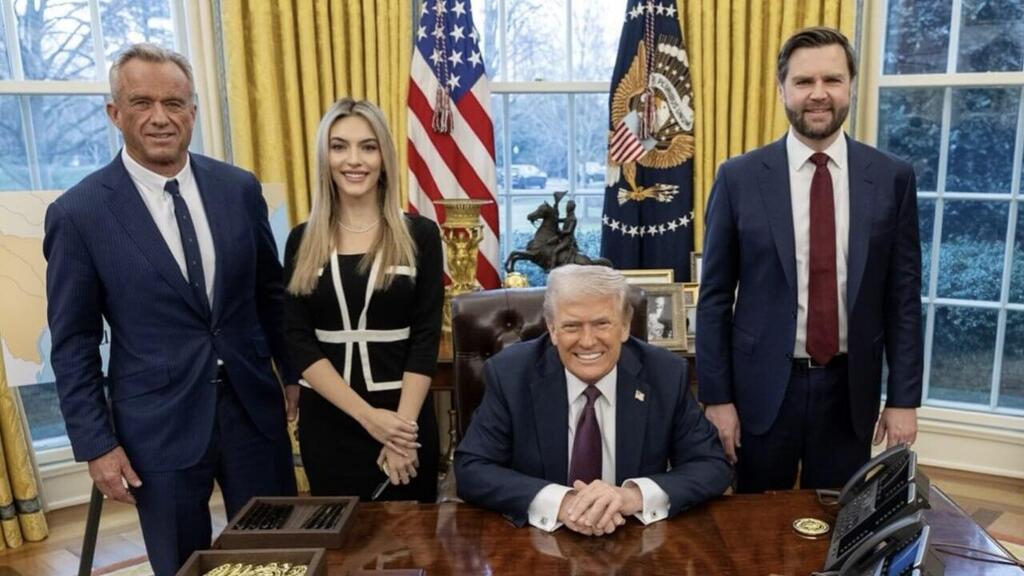
Austin at the White House
(Photo: emily.austin Instagram)
Her prescription was simple and unapologetic: less infighting, more unity; survival before ideology; and long-term prosperity rooted in confidence, continuity and growth.
As she prepared to leave the studio, Austin laughed about being recognized in Israel—sometimes by her real name, sometimes by nicknames or fictional characters. The confusion amused her. The moment, however, felt serious.
Israel, she said, may finally be exhaling. But the world is shifting quickly—and fear, unity and power are once again shaping history.