

The story sounds familiar: a spy named Cohen infiltrates the heart of an enemy capital, befriends the ruling elite and passes state secrets to Israel. But unlike Eli Cohen, “our man in Damascus,” this is the story of “our woman in Beirut.” And unlike Eli Cohen’s tragic end on the gallows, the story of Shulamit Cohen ends with survival and a happy ending.
This week in 1963, the story nearly ended differently. After she was captured and sentenced to death by hanging, a Lebanese court commuted her sentence 62 years ago this week to 20 years of hard labor.
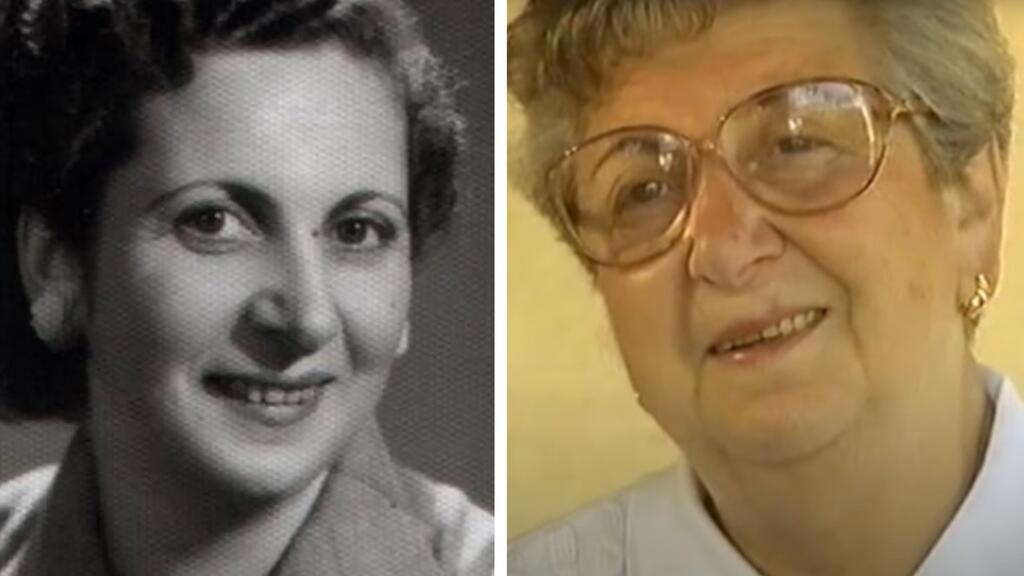
Cohen, known in the Mossad by the codename “The Pearl,” began her life far from Beirut. She was born in Argentina in 1917, and as a child immigrated with her family to Jerusalem. At 16, after her family fell into financial hardship, she was matched with Joseph Kishik, an older but wealthy Lebanese Jewish merchant, and moved with him to Beirut.
Thanks to her personal charm and command of languages, she became a prominent socialite. At Beirut’s parties and cocktail gatherings, she connected with Lebanon’s political and military elite. Presidents, ministers and senior officers admired her as “Madame Cohen,” and she cultivated close ties with key figures in government, including President Camille Chamoun, Phalangist leader Pierre Gemayel and even Gulf princes. She particularly impressed Prime Minister Riad al-Solh, who personally invited her to a Christmas party at his home. At that event, while seated in the garden, she overheard senior officers discussing a planned invasion of the Land of Israel.
Cohen decided to pass on the information. She wrote it in invisible ink and arranged for the letter to be smuggled to Haganah headquarters in Metula, effectively recruiting herself into intelligence work. Her connections ran so deep that even after her capture, Gemayel, then Lebanon’s interior minister, visited her in prison and ordered improvements to her conditions.
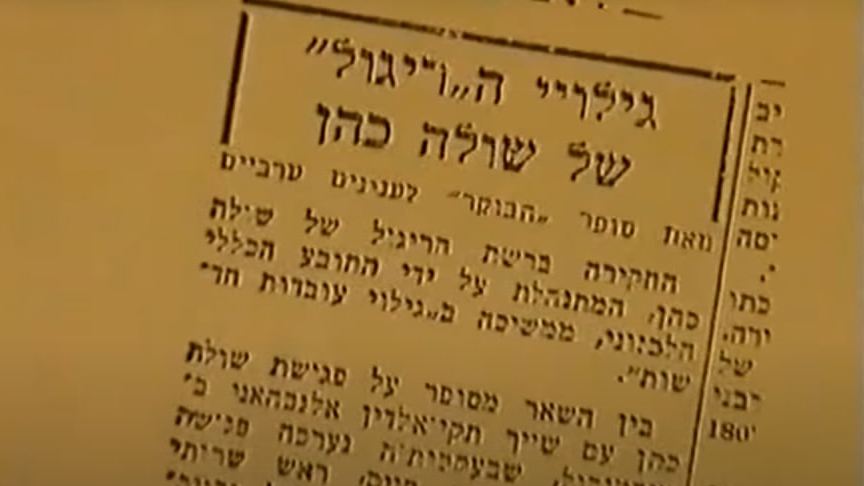
A report on Cohen’s activities
(Photo: The Intelligence Heritage Center)
For 14 years, she led a double life under the noses of authorities. Her husband, who discovered her secret, supported her and even financed some of her extensive smuggling operations. One of her most daring operations took place near Hanukkah. Dozens of Jewish children under her protection were about to board a bus to be smuggled to the Metula border when she spotted police agents nearby.
Remaining composed, she ran to a grocery store, bought dozens of candles, distributed them to the children and instructed the local rabbi to lead a Hanukkah procession. The agents watched the children walk through the Jewish quarter with lit candles, singing “Maoz Tzur,” assumed it was an innocent religious custom and left. Once they were gone, Cohen quickly loaded the children onto buses that sped them to safety.
All of this covert activity unfolded under an almost implausible cover: a model housewife and devoted mother of seven. Outwardly, Cohen seemed far removed from the world of espionage. Her daughter Carmela described her as a woman who constantly cooked, baked, sewed, knitted and embroidered. Her villa in the Jewish quarter functioned as an operational headquarters while remaining a warm family home, as she hosted Beirut’s high society without arousing suspicion.
But in 1961, authorities closed in following a tip from an associate. Cohen was arrested and imprisoned in a women’s jail in Beirut, where she endured harsh interrogations and severe psychological and physical torture. Interrogators tore out her nails, pulled out her hair, broke her teeth and subjected her to electric shocks that left her blind in one eye. After Eli Cohen was captured in Syria, guards mocked her: “He is Cohen and you are Cohen. He was hanged, now it’s your turn.”
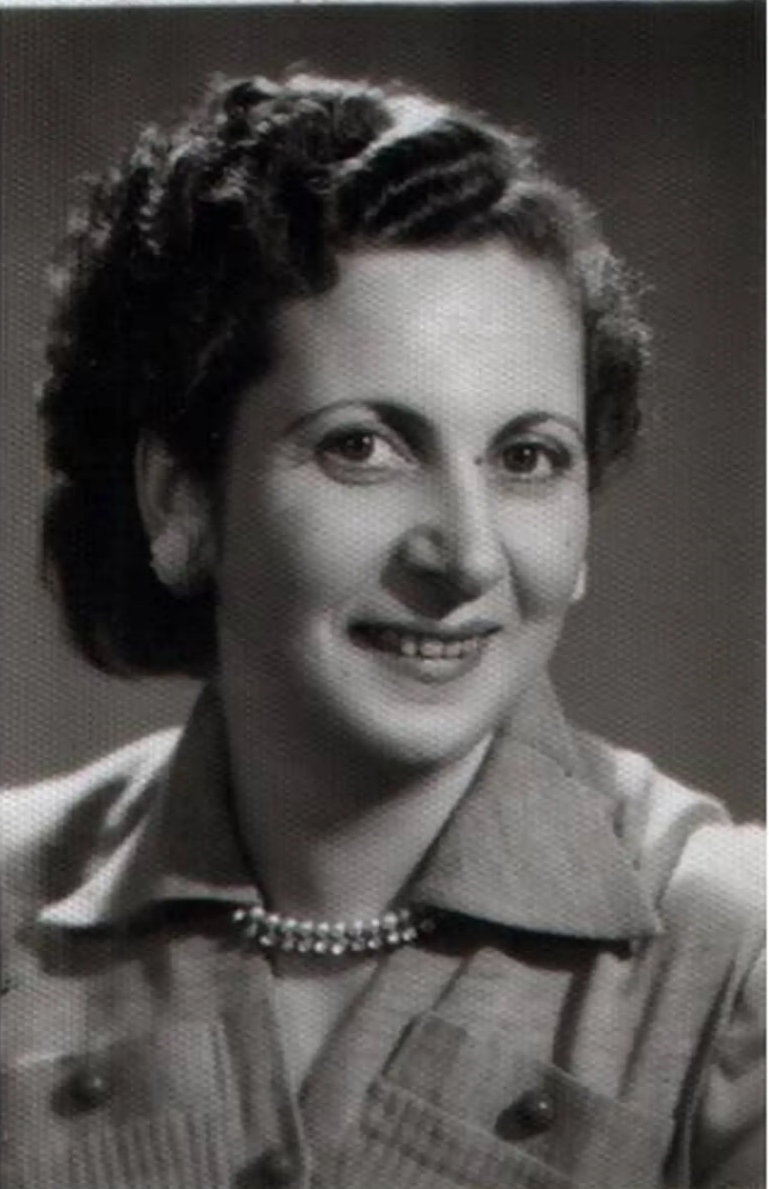
Cohen in her youth
(Photo: The Intelligence Heritage Center)
Despite the ordeal, she refused to break. She did not betray her handlers and drew strength from reciting Psalms. At the end of her trial, she was sentenced to death by hanging. On appeal, and taking into account that she was a woman and a mother, her sentence was commuted to 20 years of hard labor, later reduced to seven years.
Her only hope during her imprisonment was her children, some of whom she had managed to smuggle to Israel before her arrest so they could grow up safely.
After six years in a Lebanese prison, her ordeal ended. In August 1967, following the Six-Day War, Cohen was released as part of a secret prisoner exchange between Israel and Lebanon and arrived in Israel, where she was reunited with her family. Relatives who remained in Lebanon were later smuggled to Israel via Cyprus by Mossad agents.
Despite her extraordinary bravery and recognition as one of the most decorated women in Israel’s intelligence community — including the President’s Award, the Simon Wiesenthal Center’s Medal of Freedom and the title of Worthy Citizen of Jerusalem — Cohen remained modest, avoided publicity and lived a relatively private life.
In 2007, she finally received national public recognition when she lit a torch at the Independence Day ceremony on Mount Herzl. In May 2017, at age 100, the “Grandmother James Bond” died peacefully, surrounded by her children. One of them, Yitzhak Levanon, later served as Israel’s ambassador to Egypt.