

The current wave of protests in Iran is not the most severe the country has seen in recent decades. Previous waves, especially the 2022–2023 protests, the largest since the Islamic Revolution, were deadlier in terms of casualties and broader in terms of participation.
What distinguishes the current unrest is its context. This is the first protest wave since the outbreak of the Swords of Iron war and since Operation Rising Lion, which inflicted unprecedented blows on the regime. It is also the first wave since the election of U.S. President Donald Trump, who inspires genuine fear in Tehran as a leader known to follow through on at least some of his threats, even if it remains unclear which ones. Trump warned this week that he would act against the regime if it continues to harm protesters. So far, around 40 people have been killed.
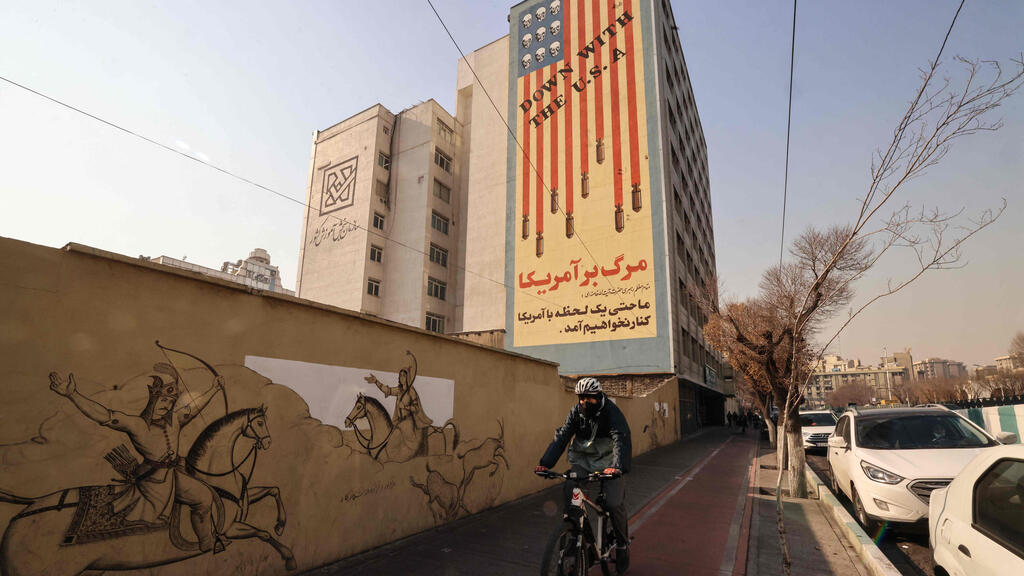
In Israeli discourse, which often struggles to maintain balance and suffers from short memory, the current protests are being portrayed as the beginning of the end of the regime and as an unprecedented event. This narrative is heard both from television commentators and from political leaders, including Prime Minister Benjamin Netanyahu, who declared this week that “it is very possible that we are witnessing the moment when the Iranian people take their fate into their own hands.”
For Israel as well, the protests are unfolding in a unique context. Following the 12-day war with Iran, Israeli sentiment ranges between hope that the greatest external threat will disappear through an unexpected internal change and fear that a threatened regime will try to divert attention toward Israel, worried that it might exploit Iran’s weakness to strike.
Economic despair as the spark
The current wave of protests erupted against the backdrop of deepening existential hardship among Iran’s citizens: runaway inflation, the collapse of civilian infrastructure, and relentless price increases. This week, Iran’s currency hit a new low, with 1.5 million rials required to buy a single US dollar.
The most visible symbol of the regime’s failure is the severe water crisis, which has become emblematic of Iran’s broader collapse. These are long-standing problems that have worsened in recent months following the renewal of international sanctions on Iran at Trump’s initiative.
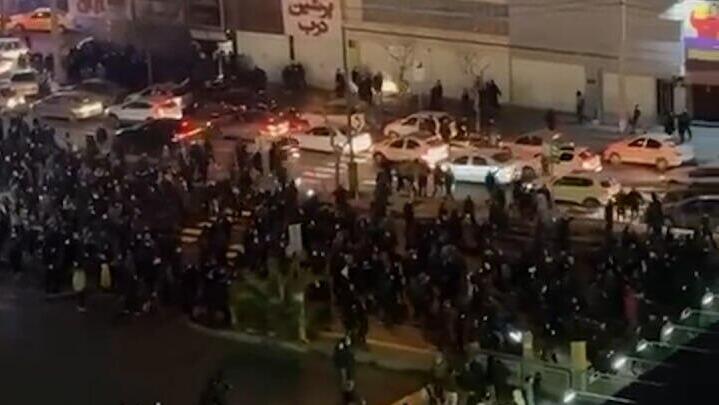
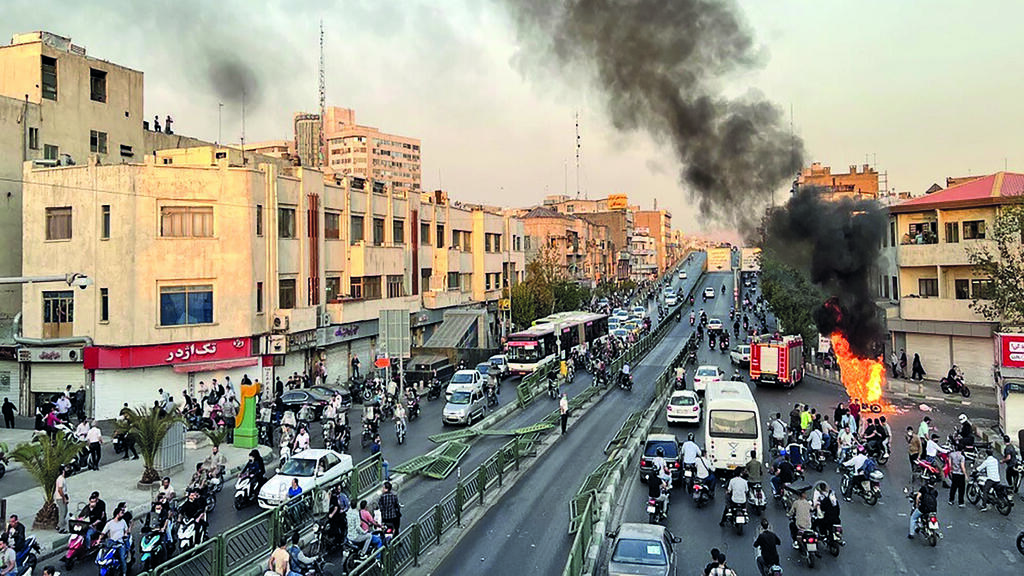
Protest in Tehran
Maryam, a 24-year-old Iranian woman interviewed this week by a local newspaper, said: “In the past, protests were about things like the hijab. Today, there are more and more empty stomachs.”
“Economically, a perfect storm has formed,” explained Prof. Meir Litvak, head of the Center for Iranian Studies at Tel Aviv University. “All the crises have peaked and converged at a single moment. Iran has massive gas reserves, yet it is facing a severe energy crisis due to a lack of funding and equipment needed to develop modern electricity infrastructure, leading to restrictions and disruptions across most of the country.”
These problems are compounded by severe environmental challenges, above all drought and air pollution. Tehran, in particular, is suffering from ongoing land subsidence and extreme density, prompting President Masoud Pezeshkian to recently float the idea of relocating the capital, likely to the Caspian Sea region.
From economics to politics
Past experience, deeply ingrained in the regime’s leadership, shows that protests rarely remain confined to economic grievances and tend to spill into the political sphere. Early signs of this have appeared in recent days, with chants such as “Death to the dictator” and “This is the year Seyed Ali’s house will be destroyed,” referring to Supreme Leader Ayatollah Ali Khamenei.
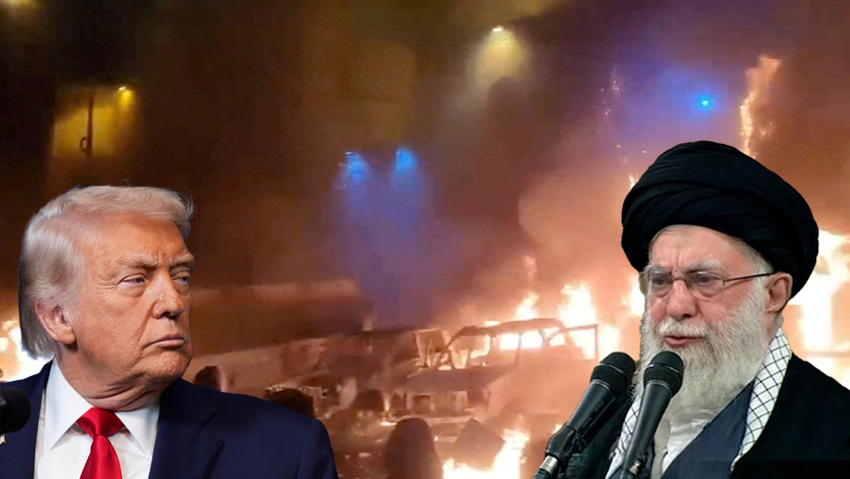
Donald Trump, Ali Khamenei
(Photo: Social Media/via Reuters, AP Photo/Alex Brandon)
The regime, for its part, is trying, unsuccessfully, to keep the protests within an economic framework. It has proposed measures such as grants of seven dollars per citizen, consumer coupons and price reductions, steps widely viewed as negligible in the face of the crisis.
No leadership, no revolution
Despite the revolutionary energy seen over the past two weeks, significant obstacles remain to undermining the existing order. These are fundamental gaps that characterized previous protest waves, foremost among them the absence of organized leadership with a coherent agenda.
This is largely due to the regime’s effective repression, which prevents opposition organizations and imprisons anyone perceived as a potential protest leader.
“In Iran, there’s a joke that there is freedom of expression, but no freedom after expression,” said Prof. Lior Sternfeld of Penn State University, author of the newly published book “Iran: Life Itself,” which seeks to provide tools for understanding the country’s social and cultural depth.
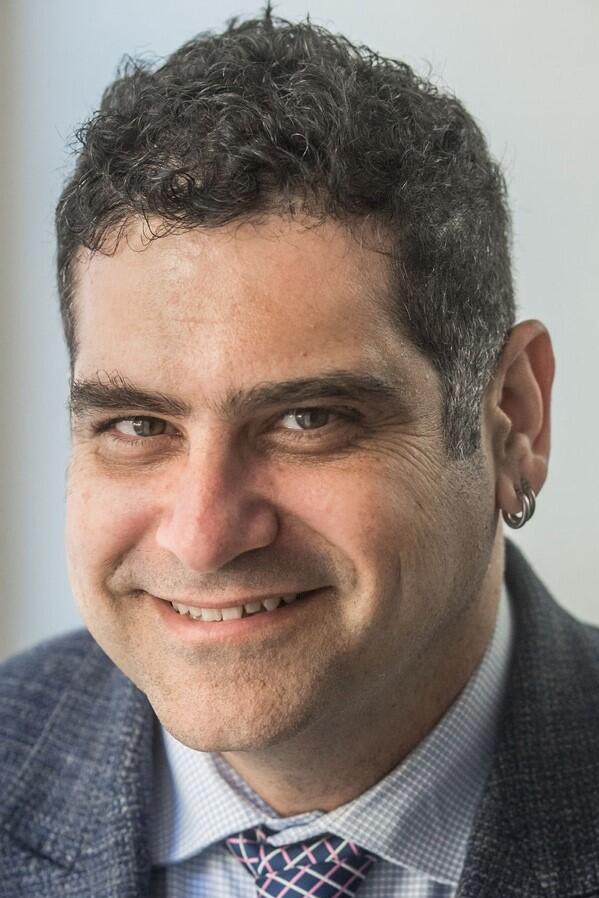
Prof. Lior Sternfeld
He added that the middle class, which led past protests, has been eroded by sanctions and struggles to play a leading role. Opposition figures abroad, including the exiled son of the deposed shah, wield little real influence inside Iran.
Prof. Arash Azizi, an Iranian researcher based in the United States and a lecturer at Yale University, sharpened the point in a conversation this week: “The protests are not as widespread as in 2022–2023, but the anger and frustration among protesters are more pronounced, and the regime appears more vulnerable than before, with Khamenei himself seeming weaker than ever.”
“Most conditions for change are ripe, but there is no solution to the lack of organizational infrastructure and leaders capable of leading a revolution,” he said. “Reza Pahlavi’s name comes up from time to time, but he is controversial and lacks an organization behind him. Unfortunately, despite mounting pressure, the regime still has considerable strength and a real chance of overcoming the current crisis.”
A spontaneous uprising
The protests of the past two weeks reflect this vacuum. They erupt spontaneously and simultaneously in dozens of locations, many of them in provincial cities. They are led by rotating local figures or by no clear leaders at all, accompanied by violent clashes with internal security forces and the Basij militia, and by the burning of regime posters, especially those featuring the supreme leader.
Yet nowhere has there been a reported collapse of regime symbols or total anarchy.
“A close look at the people participating and the slogans being chanted shows this is a spontaneous protest,” Sternfeld explained. “It is happening simultaneously and without central direction, from Tehran’s impoverished suburbs to middle-class neighborhoods in Shiraz, Kurdish cities and Baluchistan in the east.”
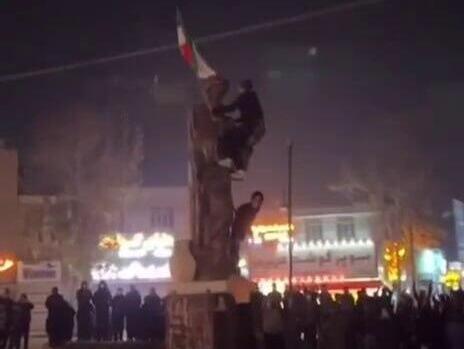
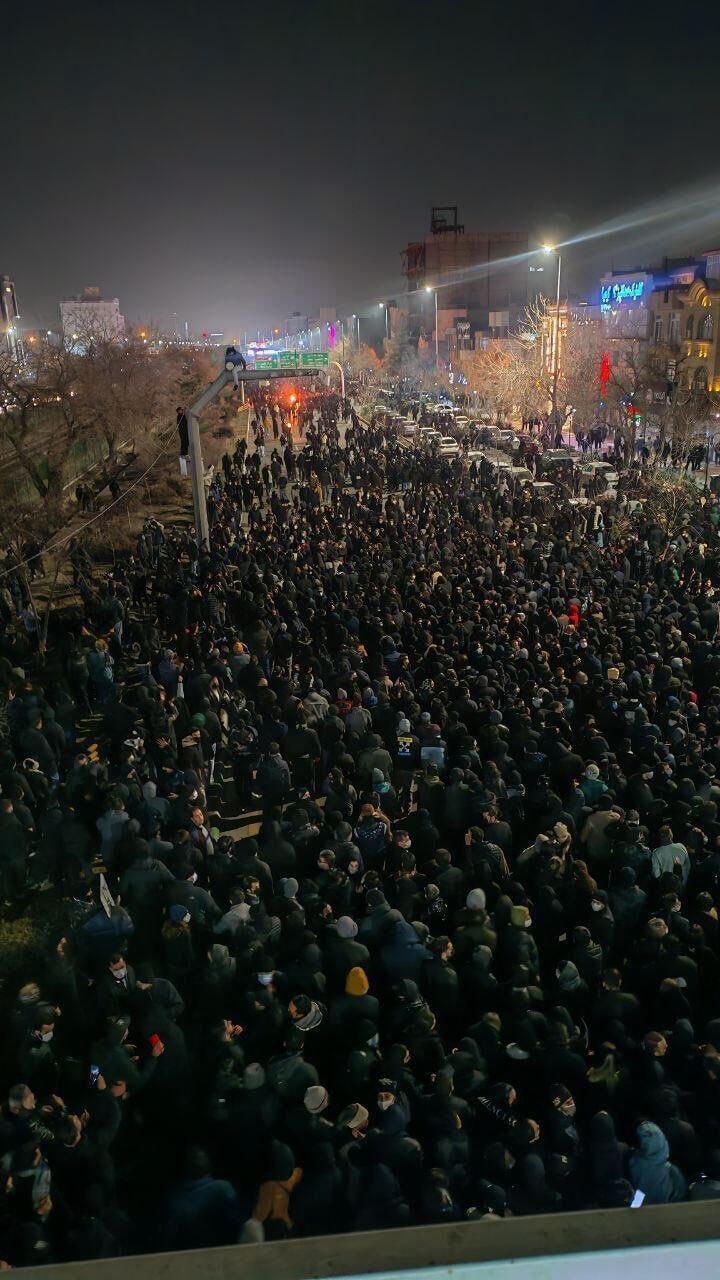
“The protesters are not presenting political demands. They are demanding basic accountability from a regime that cannot provide fundamental needs, especially water. The protest itself is not surprising, but the intensity of frustration and the regime’s total inability to respond are new.”
Beyond young people, several other social sectors play a key role. Chief among them are bazaar merchants, especially in Tehran. Traditionally conservative and closely tied to the religious establishment, they are now being hit hard by the economic crisis.
“There are reports of merchants refusing to accept Iranian currency because by evening it is worth far less than it was in the morning,” Sternfeld said. “Images of violent repression in the Tehran bazaar may further expand their participation.”
A regime still standing
For now, the regime shows no signs of collapse. It is far from deploying its full force, as it did in previous protests, when hundreds were killed. As in the past, it appears to believe that violent repression could intensify unrest and prefers to let some steam escape before reassessing.
Sima Shine, former head of the Research Division at the Mossad, explains that “the Islamic regime is facing a challenge it has never encountered before, in which external and internal threats are converging. Internal protest is a familiar challenge that the regime is accustomed to suppressing by force, but this time it becomes dangerous because of pressures from outside: the threat of action by Trump and the possibility that Israel could exploit the situation to strike.”
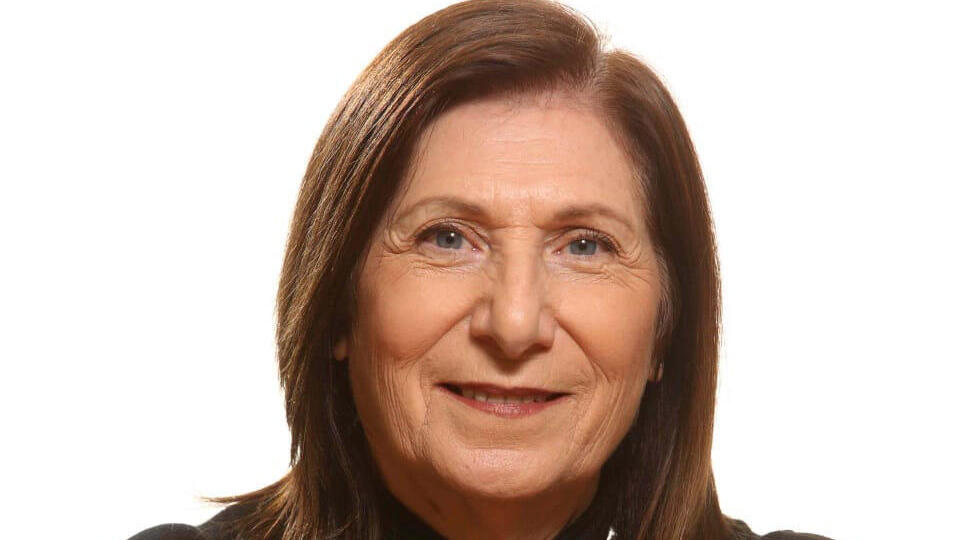
Sima Shine
“In Tehran, there is genuine concern that Israel, and possibly the United States as well, may take advantage of the current weakness to attack sensitive facilities, primarily nuclear sites or missile capabilities that Netanyahu emphasized during his recent visit to Washington, or to act to undermine the regime.”
“As a result,” Shine adds, “there may be thoughts among Iranian decision-makers about launching a preemptive strike against Israel, mainly through long-range missile launches, which proved to be the most effective tool in the most recent confrontation. At the same time, the regime’s leaders understand that such a move would trigger a devastating blow that could truly bring about their end. Therefore, it is doubtful that under current circumstances they are willing to embark on such an adventure.”
Crucially, there are no visible cracks within the regime or the security apparatus, an essential condition for revolution. Reports suggesting otherwise, including a brief tweet later deleted from the Mossad’s Persian-language account, were likely removed out of concern they could be seen as Israeli interference.
“One of the indicators of the shah’s regime collapse was elite flight and capital outflows,” Litvak said. “There is no sign of that now.”
Most Iranians may be alienated from the regime, but the minority supporting it is powerful, controls key institutions and clings to a fanatical ideology that enables brutal repression.
Within the regime, however, there is debate. President Pezeshkian is trying to pursue dialogue and economic reform, including nuclear negotiations and rethinking national spending priorities, ideas unpopular with hardliners.
Sternfeld does not rule out Pezeshkian being sidelined or blamed for the crisis. “The real solution would be deep economic reforms that loosen the Revolutionary Guards’ grip on key sectors,” he said. “That scenario is highly unlikely, meaning the problems will persist, along with the potential for future eruptions.”
Trump, fear and uncertainty
For nearly half a century, Iran’s regime has feared plots by the “Great Satan,” the United States. Trump’s current posture is perceived as more threatening than ever, given his record: killing Quds Force commander Qassem Soleimani, withdrawing from the nuclear deal, and the recent joint US-Israeli strike on Iran’s nuclear sites.
Iranians are now asking whether Trump might replicate in Tehran what he did in Caracas, or whether US attention will shift elsewhere.
David Makovsky, a former adviser to Secretary of State John Kerry, outlined three possibilities: Trump may wait and see; he may believe unpredictability restrains Tehran; or he may intend to act. “Trump likely understands that confronting Iran is far more complex than Venezuela,” Makovsky said, “and hopes the regime’s anxiety will do the work for him.”
The next eruption
Even so, Trump’s rhetoric has not boosted optimism among protesters. Many fear that foreign interference undermines legitimacy and provides justification for repression.
Across the Arab world, as in Israel, developments in Iran are watched closely but with far more caution. The prevailing view favors gradual, peaceful change to avoid chaos.
“It is far too early to know where this protest is headed,” Litvak said. “But what is clear is that the next eruption is only a matter of time.”
Sternfeld agrees. “Even if this wave fades, the underlying problems remain. Every protest begins where the last one ended. The potential for explosion keeps growing.”
Dr. Michael Milshtein heads the Forum for Palestinian Studies at the Dayan Center, Tel Aviv University.