

“Tell Bank to get Hitler.” The order came from Gen. William “Wild Bill” Donovan, the legendary head of the Office of Strategic Services, America’s wartime intelligence agency and the forerunner of the CIA. It was late 1944, Nazi Germany was collapsing, and Allied intelligence believed Adolf Hitler might flee Berlin for a final mountain fortress in the Alps.
The man Donovan wanted for the job was not a young commando fresh out of basic training. He was Aaron Bank, a 42-year-old Jewish officer from New York, the son of Russian immigrants, fluent in German and French, already seasoned by secret missions behind enemy lines.
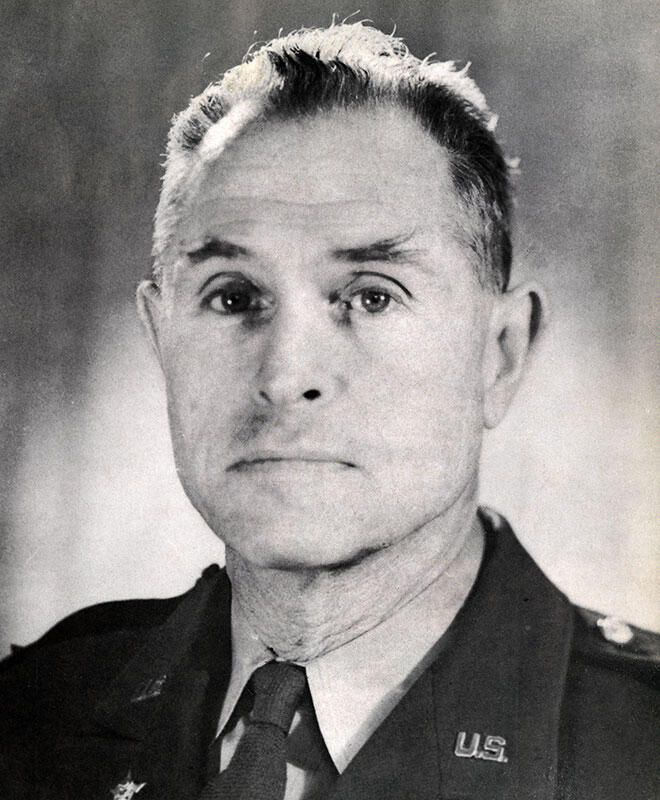
Bank’s assignment sounded like pulp fiction, except it was real: recruit anti-Nazi German prisoners of war, train them as a special raiding force, dress them in enemy uniforms, parachute them into Hitler’s expected Alpine redoubt and capture or kill the Führer.
Bank called the mission Operation Iron Cross.
The team was ready. The men had boarded the aircraft. Then, almost at the last moment, the operation was canceled. Intelligence showed Hitler had remained in Berlin, where he would kill himself on April 30, 1945. The Nazi mountain fortress, like so much of Hitler’s mythology, proved largely illusory.
But Operation Iron Cross was more than an aborted mission. It captured the essence of Aaron Bank’s life: unconventional, audacious, multilingual, physically fearless and decades ahead of the military establishment around him.
Bank would go on to become known as the father of the US Army Special Forces, the Green Berets. But before he built the unit that would shape American unconventional warfare for generations, he lived a life that seemed assembled from several different novels: lifeguard, spy, guerrilla commander, would-be Hitler hunter, wartime contact of Ho Chi Minh, Cold War planner and, in old age, one of the earliest voices warning that terrorists could target nuclear power plants.
He was born in New York City in 1902, the son of Russian Jewish immigrants. His father died when Bank was still a toddler, and his mother supported the family by teaching French, German and piano. Those languages, absorbed early, would later help turn her son into one of America’s most useful clandestine warriors.
As a young man, Bank was not yet a soldier. He was a lifeguard on Long Island and in the Bahamas, then chief lifeguard at an upscale resort in Biarritz, France. He traveled through Europe, sharpened his languages and developed the physical confidence that would later help him pass into the world of special operations at an age when most men were already considered too old for combat.
When the United States entered World War II, Bank volunteered. He enlisted in 1942, at 39. The Army initially treated his age as a problem, but Bank pushed forward, graduated from Officer Candidate School and was commissioned as an infantry second lieutenant. Assigned at first to a stateside transportation railroad unit, he soon volunteered for the OSS.
The OSS recognized what the regular Army had almost missed. Bank was older than the typical recruit, but he was athletic, disciplined, multilingual and comfortable abroad. He was assigned to special operations, the branch responsible for sabotage, guerrilla warfare and resistance activity behind enemy lines.
On July 31, 1944, Bank parachuted into France as commander of Jedburgh Team Packard, a small three-man unit dropped into occupied territory to link up with the French Resistance. The mission was dangerous by design. If captured by the Gestapo, Bank and his men knew they would likely be tortured and executed.
In the Lozère region and the Vosges, Bank worked with French partisans to harass German forces, disrupt movement and help clear the path for Allied operations. Around the time of Operation Dragoon, the Allied invasion of southern France, Bank and his resistance fighters helped drive German forces away from the beachhead before regular Allied troops arrived. They liberated towns before the armies reached them.
It was the kind of warfare Bank came to believe in: small teams, local allies, language skills, sabotage, mobility, trust and initiative. Long before “special operations” became a polished phrase, Bank was practicing it in forests, villages and mountain roads.
Then came the mission to get Hitler.
For Operation Iron Cross, Bank recruited German prisoners who opposed the Nazi regime, including former German soldiers, Communists and Jews who had survived inside the Wehrmacht by passing as gentiles. They were trained for parachute insertion, “raid and snatch” operations and combat behind enemy lines. The plan called for them to wear SS uniforms and move into the Alpine Redoubt, where Hitler and senior Nazis were expected to make their last stand.
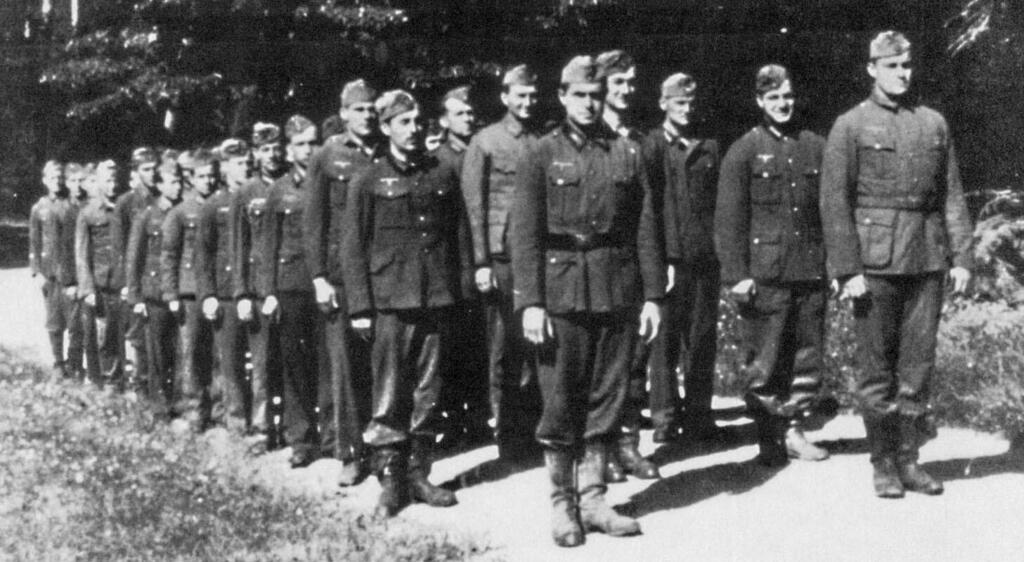
Aaron Bank standing alongside German defectors recruited for Operation Iron Cross. Bank is at left in the first rank
It was a mission full of danger, not only from the Germans. Wearing enemy uniforms made Bank’s men vulnerable to being shot by Allied troops as well. But Bank understood risk as part of the profession. Special warfare, to him, required men willing to operate in ambiguity, isolation and danger far beyond ordinary military assignments.
Iron Cross never launched. But its DNA survived.
After Germany surrendered, Bank was sent to the Pacific theater, where he entered another historical hinge point. In Indochina, he linked up with Ho Chi Minh, then leading Vietnamese resistance to the Japanese. Bank spent time traveling with Ho and came away impressed by his popularity among ordinary Vietnamese. He warned American officials that Ho had deep support and would likely win a free election overwhelmingly.
Bank recommended that Ho be allowed to form a coalition government. But Washington’s view hardened as the Cold War began. Ho was a long-time Communist, and US policy shifted toward supporting the French return to Indochina. Bank had seen something on the ground that policymakers in Washington did not want to accept. The consequences would echo into the Indochina War and, ultimately, the Vietnam War.
After World War II, Bank stayed in the Army. He served in intelligence roles in Europe and later in Korea with the 187th Airborne Regimental Combat Team. But his defining postwar work came when he joined the Army’s psychological warfare establishment and began pushing for a permanent American unconventional warfare force.
Bank and other veterans of guerrilla operations, including Col. Russell Volckmann, argued that the United States needed soldiers who could operate behind enemy lines, organize resistance movements and fight in the political and military gray zones where conventional armies were often too blunt.
In 1952, the Army approved the idea. Bank became the first commander of the 10th Special Forces Group at Fort Bragg, North Carolina. The name itself was a deception. The unit was called the “10th” partly to make Soviet intelligence wonder where the other nine groups were.
Bank built the new force from the lessons of the OSS. He wanted volunteers. He wanted men who could think, improvise and survive. He wanted language skills, demolition expertise, parachuting, amphibious warfare, mountain fighting, jungle warfare, skiing, sabotage and the ability to work with foreign fighters. He organized them into small teams with specialists in each field, the model that would become the Special Forces “A team.”
Within two years, the 10th Special Forces Group was manned and operational. In 1953, after the Berlin uprising, the group was deployed to West Germany, positioned for the grim possibility of operating behind the Iron Curtain if war with the Soviet Union came.
Only later, after Bank had retired, would President John F. Kennedy authorize the distinctive green beret that gave the force its famous nickname. But the soul of the Green Berets had already been formed by Bank: unconventional warfare, deep infiltration, partnership with local forces and the belief that a small team of the right men could shape events far beyond its size.
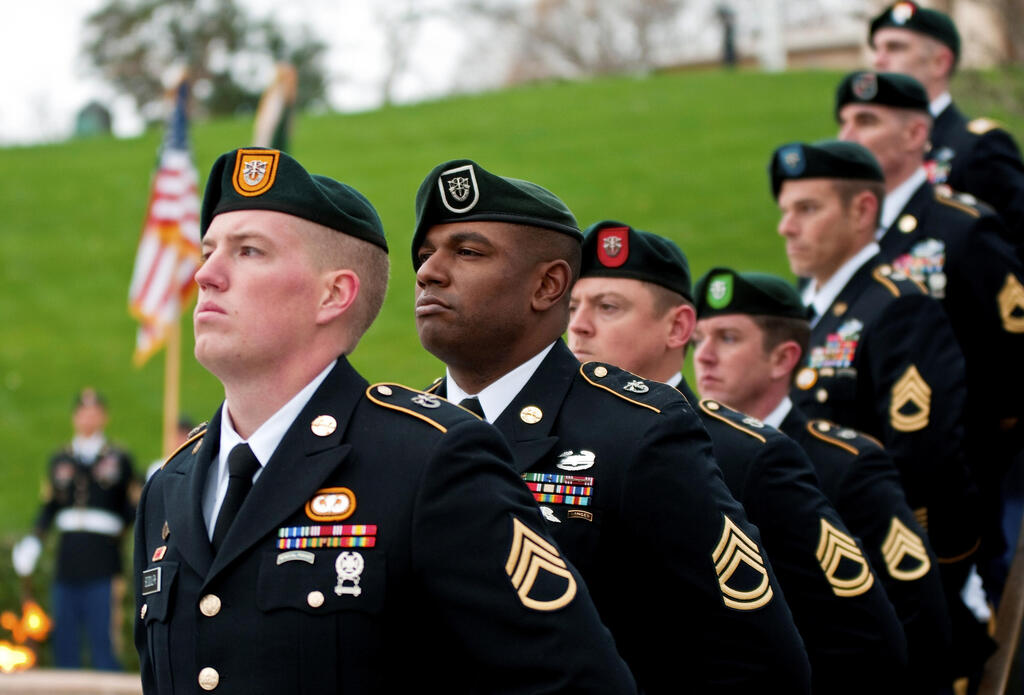
Green Berets
Bank retired from the Army in 1958, but he did not retreat into comfort. He remained vigorous well into old age, swimming miles in the Pacific Ocean near his home in Southern California. And then, in the 1970s, he found a new enemy: complacency.
Living near the San Onofre Nuclear Generating Station, Bank became alarmed by what he saw as shockingly weak security. In his judgment, a single trained saboteur could overcome the plant’s defenses and cause catastrophic damage. As one of the world’s leading experts on sabotage against power facilities, he understood the danger better than almost anyone.
He lobbied officials, testified behind closed doors and warned the Atomic Energy Commission that nuclear plants were vulnerable to terrorist attack. At first, he was ignored. So he helped bring the issue to public attention through investigative reporting and congressional scrutiny.
This time, Washington listened. The US nuclear industry was eventually forced to spend billions of dollars improving security, including armed on-site teams, remote shutdown capabilities and “red team” testing to expose vulnerabilities. Decades before terrorism became the central security obsession of the United States, Aaron Bank had already identified the threat.
In 1986, Bank was named the first honorary colonel of the Special Forces Regiment. In 2002, the year he turned 100, President George W. Bush honored him for developing unconventional warfare programs and techniques later used against the Taliban.
Bank also wrote two books: From OSS to Green Berets: The Birth of Special Forces, his account of his wartime and military career, and Knight’s Cross, a fictionalized version of the mission to capture Hitler. His life also helped inspire the mythology of the World War II commando story, including the kind of “impossible mission” narrative later associated with The Dirty Dozen.
Aaron Bank died on April 1, 2004, in Dana Point, California. He was 101. He was buried at Riverside National Cemetery.
His legacy is not only that he founded the Green Berets. It is that he understood, earlier than most, the kind of wars the modern world would fight: wars of resistance movements, proxy forces, sabotage, intelligence, terrorism, infrastructure and psychological pressure.
He began as the son of a widowed immigrant mother who taught languages to survive. He became the man sent to hunt Hitler. He helped build the soldiers who would operate in the shadows of the Cold War. And in retirement, he warned that the next battlefield might not be a beachhead, jungle or mountain pass, but a power plant on the California coast.
Aaron Bank spent his life seeing the next war before others did.