

When Oria Azran approached Odelia Ozel, 50, and asked her to design swimwear for an upcoming vacation in Thailand, Ozel had no idea how dramatically it would change her life.
"That was my big breakthrough, and it happened eight years ago," she says. "A mutual friend introduced us and Oria was about to leave for two weeks in Thailand. I made her an entire collection for the trip, eight or 10 swimsuits. I stopped working and focused only on her. I had expenses, but I knew it would come back to me. The people close to me didn't believe it would pay off, but they had to eat their words. She left, posted her first picture and tagged me. I woke up in the morning, opened my phone and saw a flood of new followers and tons of messages from girls who wanted to come and buy. It was amazing."
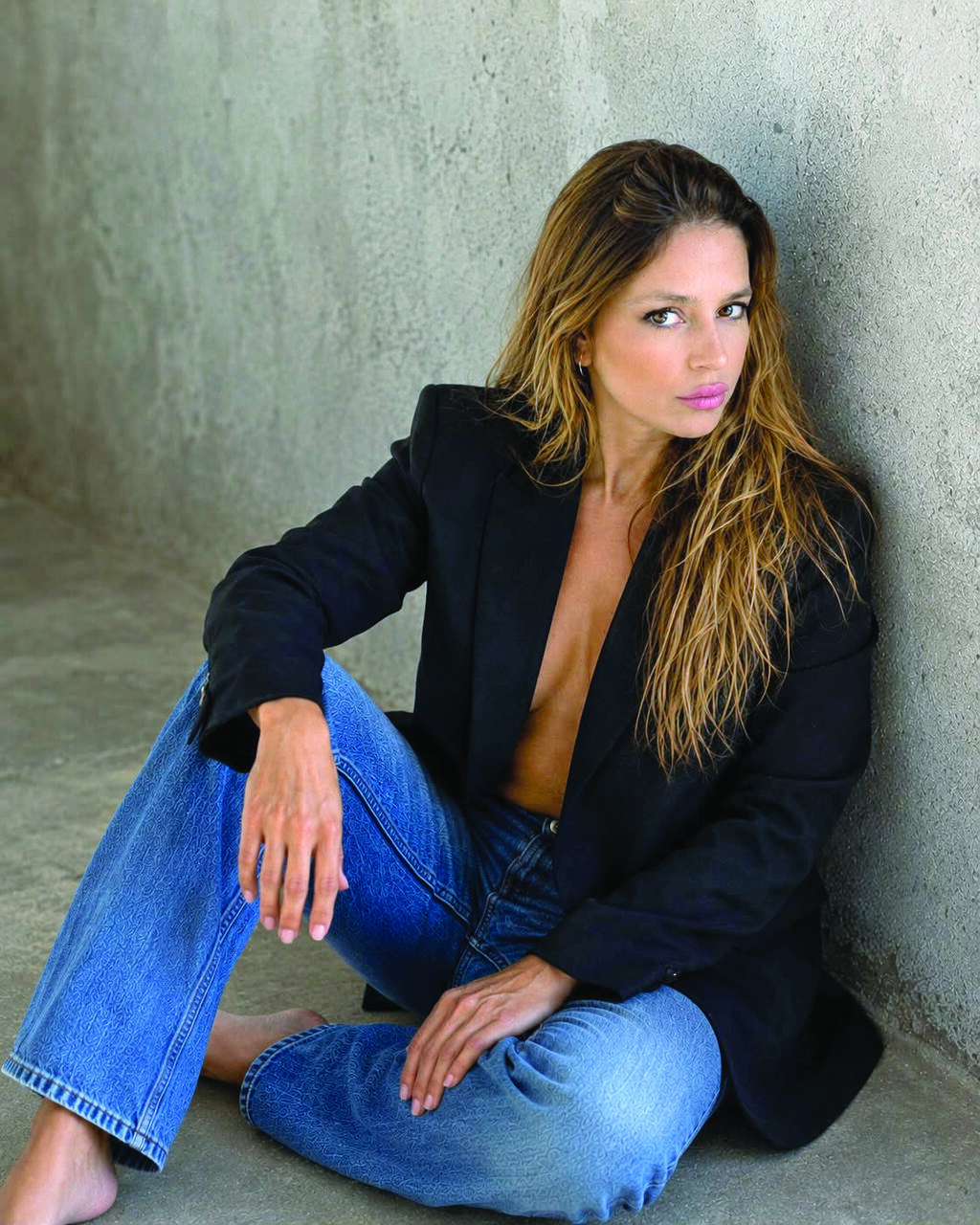
Ozel's namesake brand has become a household name among women who love swimwear and are willing to pay for it. Celebrities including Einav Booblil, Natali Dadon, Mor Silver, Romi Geyor and Frida Oziel already wear the brand. She has a large store in the Neve Tzedek area and an online store where women order swimsuits costing thousands of shekels.
"If it's a swimsuit that's not basic, and most of mine aren't, the price range is 800 to 1,400 shekels," she says. "A lot of women don't order just one but several, and they always get the matching beachwear as well."
'I designed, photographed, posted. That's it'
She was born in Bat Yam and grew up in Be'er Yaakov to a stay-at-home mother and a father who owned a large sewing workshop named after her. At its peak, Odelia Sewing employed 30 seamstresses and for years produced clothing for the country's major men's brands. When imports from China opened up, her father went bankrupt, closed the workshop and opened men's fashion stores specializing in large sizes.
"That must be in my DNA, because during all the long school vacations I worked for him. I would remove threads from the collars of men's shirts."
At first, she had no intention of following in her father's footsteps. She joined the Coca-Cola factory immediately after her military service and worked there for 20 years as a sales manager.
"I knew it wasn't my calling, but I was already a mother at 21, and it was a steady salary and a very protective environment."
At 36, however, the urge was already in her bones, and she dreamed about swimwear at night.
"I personally don't even like swimwear. I don't have a swimsuit body and I'm not the bombshell who wants to dress up for pool parties. But it was really stuck in my head. One day after work, with only a few percent battery left on my phone, I decided I was going to do it. When I was in the car, I googled 'swimwear seamstress' and drove to her. I don't know why it drew me in, but I knew I could do it and do it better than everyone else. I went to this seamstress, who had worked at Gottex for years. By coincidence, Neta Alchimister and Noa Beny from Bananhot arrived there at the same time as I did. We started that very week. We met in her living room and they told me they were new, too."
She started with a few designs and posted them on Instagram. She named the brand ODELIA OZEL and set out on her journey.
"I had 100 followers then — family and friends, that's it. I photographed the pieces on a wooden table I have on my balcony, which I call 'my blessing table,' and suddenly I started getting phone calls. One from Haifa, one from Be'er Sheva. I didn't understand where it was coming from. I didn't invest in advertising, I didn't run paid campaigns and I didn't buy followers. The simplest thing: I designed, photographed, posted. That's it."

'I make the most beautiful, highest-quality swimwear in Israel'
(Photo: Kult direction)
Her romantic life had not been particularly successful. She divorced at 27 after seven years of marriage and two children, Lian, 28, who until recently worked with her in the business, and Tal, 23, who owns a cleaning company. With her second partner, whom she met at 30 and with whom she has two daughters, Sharon, 12, and Shai Li, 10, she experienced many difficulties over a decade. She does not want to go into details, saying only that "after 10 years together, I realized it was holding me back, and we separated. He went on with his life and I went on with mine. What's important is that I have two amazing girls with him."
So you built the entire business while also dealing with a complicated situation at home?
"Yes, and it wasn't easy, but to his credit, he believed in me. When he saw it was succeeding, he told me, 'Go for it,' and encouraged me to keep going. I worked at Coca-Cola during the day and designed at night. I lived like that for seven years. The business was as important to me as my children. I was completely relentless. When people would go out at night, I would drive to the seamstress with a new design. That was my happiness. During my lunch break at work, I would drive to Nahalat Binyamin to buy fabrics, and at 6 p.m., when I got home, a group of women would be waiting for me downstairs. I would receive them in an empty room at home and also do custom sewing for them, take their measurements and design according to their size — which was a nightmare. Until I realized it wasn't bridal gowns and moved to collections."
When did you decide to leave your salaried job and take the plunge?
"At 42. I was making 10,000 shekels a month at Coca-Cola and working really hard, and one evening the saleswoman at the store called and said, 'We finished the day with 10,000 shekels in sales.' I said to myself, 'What, are you a masochist? Come on, quit.' The numbers just didn't make sense anymore. Of course it's scary. In fashion, everything isn't always perfect. Suddenly there are problems with sewing workshops, suddenly there's a collection that doesn't do so well. But my belief in myself is so strong that I really never let it bring me down. So, I took a small bank loan and kept going."
Tell us a little about your close relationship with celebrities.
"Oria and I have become good friends. Since that first time, I dress her for every trip and she helps me fine-tune my work. Even though she's two decades younger than me, she's really smart and has an incredible eye. I learn from her. For example, if she's going to Tulum in Mexico, I stop everything, go to the flea market, look for 'Tulum vibes' inspiration and we actually design together. In my opinion, Oria is the person who dresses and carries clothes better than anyone in Israel, and so many girls want to dress like her. I think everyone has worn my designs except Bar Refaeli."
Do they pay?
"Of course I don't give everything away for free. I also know how to identify which of the bloggers and influencers who approach me are bogus, the ones with fake followers. I can spot it in a second. By the way, sometimes a customer who's not a celebrity brings me tons of customers because the swimsuit looks so good on her."
What sets you apart?
"I make the most beautiful, highest-quality swimwear in Israel, and the difference between me and the other two major players, Shani Shemer and Bananhot, is that I don't have an army behind me. Everything is thanks to my taste and the quality I provide. I make the craziest swimwear and I feel like I'm setting the fashion trends. I'm the first and everyone copies me. But not Shani Shemer and Bananhot — we have an unwritten agreement that we don't copy each other's designs."
What do you mean by crazy swimwear?
"I'm the first to make swimwear from real denim, because I like challenging myself and I don't hold back. I took apart jeans and washed them so the denim would have those worn-in wash marks. It's extremely complicated to make swimwear from this fabric, almost impossible, but I made an entire collection. I also make a lot of crochet swimwear. Today I have it made abroad by a specialist, but I used to buy very expensive tablecloths and take them apart. I make swimwear from real leather and lace. Right now I have a swimsuit covered entirely in gemstones that I made in Italy and it cost me a fortune. I go wild. Regular Lycra with four threads doesn't interest me. I make fashion, not swimwear. My customers travel to Mykonos and Ibiza and people chase after them asking where they got it."
And women don't think twice about spending 1,000 shekels on a swimsuit?
"Even more. I had a collection of bandanas printed on sequins. A swimsuit from that collection cost 1,300 shekels and I sold out the entire collection within five hours. I always make matching beachwear for the collection, such as jeans and sarongs, so women leave here having spent 2,500 shekels on a swimsuit plus beachwear, and they're happy. There are lots of Israelis living abroad who shop from me online. This week I had a 4,500-shekel order from Mexico from someone who isn't Jewish or anything. Who's addicted to swimwear? The hot girls who have great bodies. If I had a great body, I'd be addicted too, but where would I wear it? I've had four C-sections. They're crazy about swimwear. I have customers who bought my entire collection this year, more than 10 designs. Sometimes I have to stop them — young women come into the store and go crazy. I tell a customer, 'Wait, you haven't even worn the one you bought last time.'"
Do you still manufacture in Israel?
"Yes, but not only, because you can count the swimwear sewing workshops here on one hand. I used to manufacture in Turkey before we had our falling-out with Erdoğan, and now I manufacture in Italy. I travel to lots of fabric trade shows in Paris, Nice and Milan looking for something special, something that makes you say "wow". I was at a swimwear trade show in Paris this year, walked between the booths and simply realized that I was beating all of them."
Are your daughters proud of you?
"Very much. My oldest, Lian, became more religious after Oct. 7, so unfortunately she no longer works with me in the business. Half the country became more religious after what happened, and swimwear isn't modest, so she left. But I very much hope she'll come back one day.
"My younger girls are very independent. They order themselves food on Wolt and can cook on their own. Now that they've grown up, I feel more liberated. I can fly to a trade show and even take an extra day off. There were years when it was really hard for me. I ran the store by myself, and at 8 p.m. I'd put two little girls in pajamas in the car after their showers and drive to the sewing workshop in Ashkelon or the laundry in Rosh HaAyin. Only now have I started cutting myself some slack and allowing myself to hire a delivery person."
So what are your next dreams?
"Abroad. I'd like someone to recognize the potential because I could make a lot, a lot of money abroad. So I want an investor to come along and take me to the sky there. But I'm also good here. There's never a dull moment. I work from 8 a.m. until midnight and I'm succeeding, and that's the best feeling there is."