

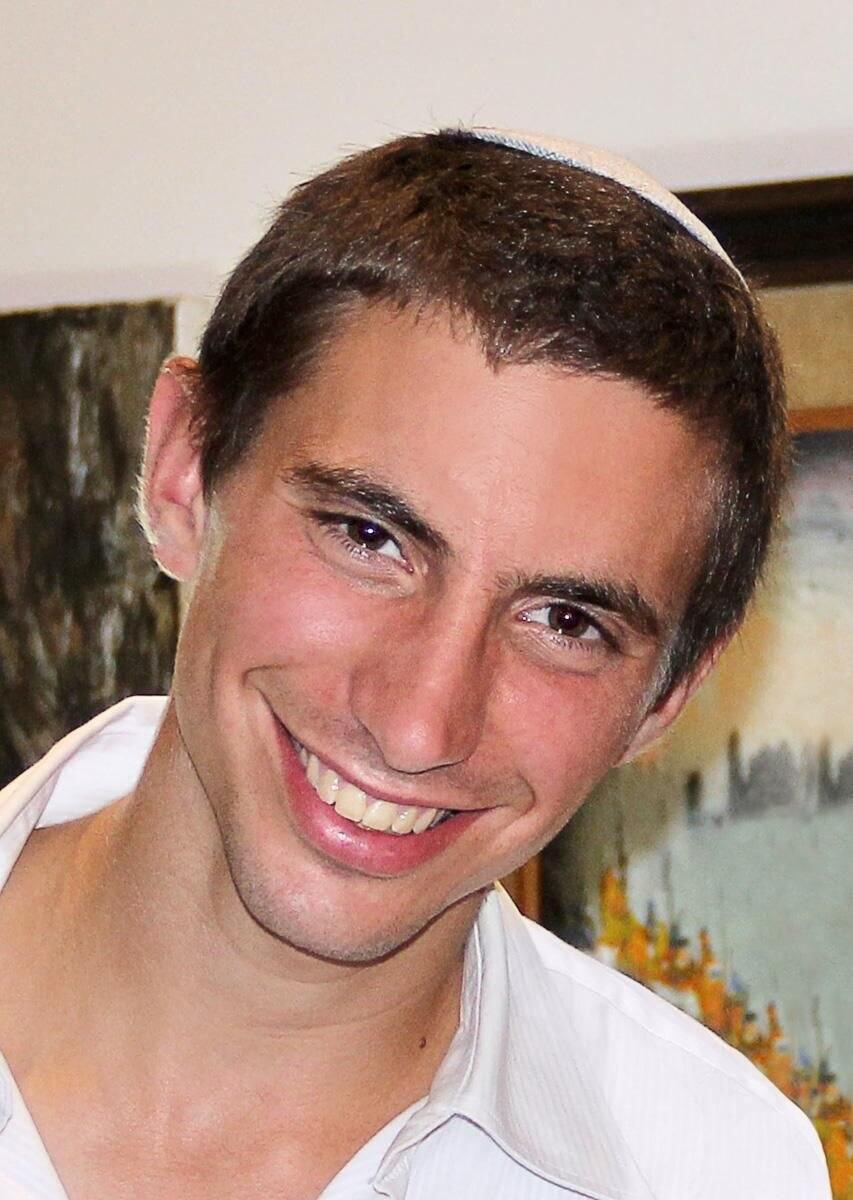
Twelve years after Lt. Hadar Goldin was killed in an ambush in Rafah during the final days of the 2014 Gaza war, his family will be able to visit his grave on the anniversary of his death for the first time. Goldin was killed on August 1, 2014, during Operation Protective Edge, and his body was seized by Hamas terrorists and taken into the Gaza Strip. Hamas concealed his remains for more than 11 years before returning them to Israel on November 9, 2025, and he was buried two days later.
Much has been written about Israel’s efforts to bring Goldin home, but far less is known about the covert intelligence operations, false leads, underground searches and special missions that ultimately identified where Hamas had hidden him. At the center of that effort was a small intelligence team named “Bring Back Your Sons,” established by Col. M., a 51-year-old officer from central Israel. For nearly nine consecutive years, M. led the intelligence work supporting special operations to locate and recover Goldin.
Without that team, which eventually identified the tunnel in which Goldin was being held, it is possible that his body would still be in Gaza. Over the years, and especially after the Hamas-led October 7, 2023, attack, M. became one of Israel’s leading experts on hostages and missing persons, helping devise intelligence and operational deceptions intended to uncover concrete information about the fate and location of Israelis held in Gaza.
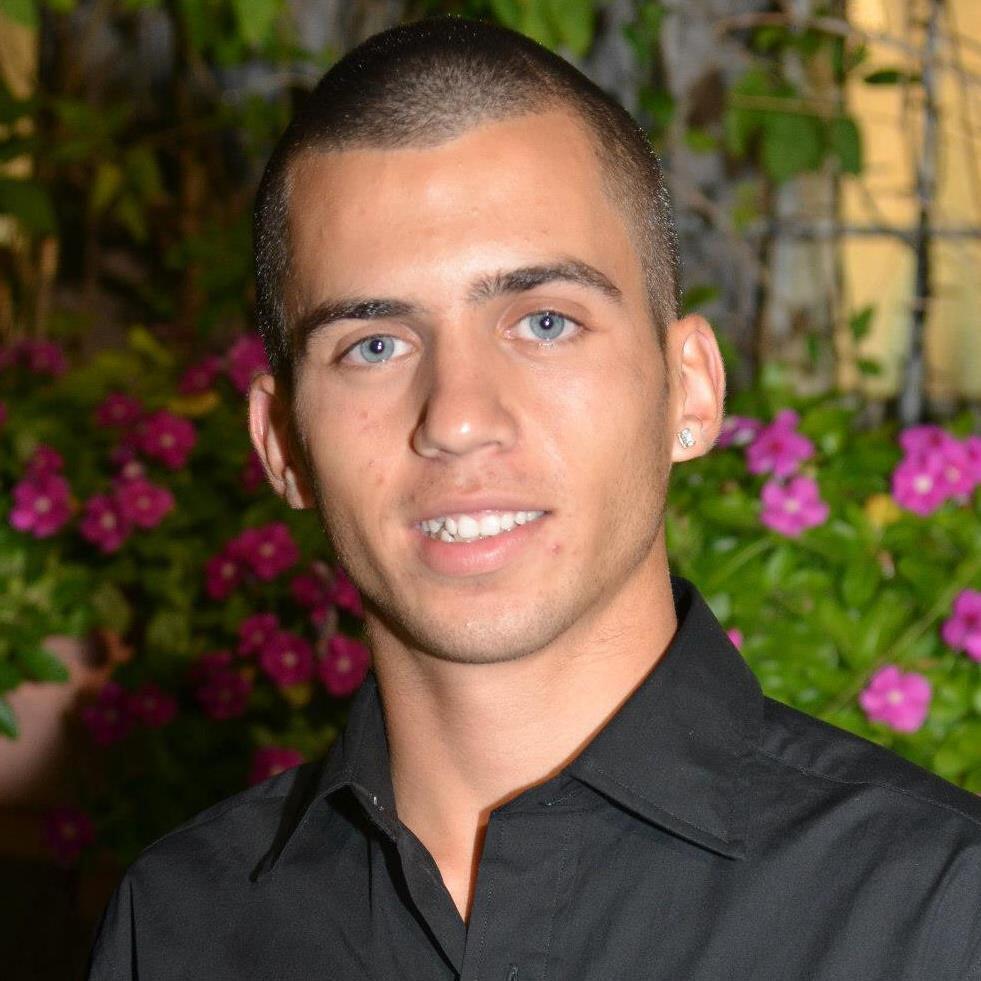
M.’s involvement in the field began in 2008, when he worked around a special Shin Bet investigation into the 2006 abduction of Israeli soldier Gilad Shalit. He later held several positions in Military Intelligence before then-IDF chief of staff Lt. Gen. Gadi Eisenkot summoned him in 2015 and asked him to examine every possible lead concerning two IDF soldiers whose bodies had been taken by Hamas during the 2014 war: Oron Shaul and Hadar Goldin. The mission was later expanded to include two Israeli civilians held in Gaza, Avera Mengistu and Hisham al-Sayed.
M. formed a small team with two female reserve officers, identified only as S. and D., while specialists from a range of intelligence and technological fields later joined their work. The team’s name, “Bring Back Your Sons,” was inspired by a Naomi Shemer song based on the prophet Isaiah’s vision of redemption: “Surely the islands shall wait for Me, and the ships of Tarshish first, to bring your sons from afar.”
The mistaken assumption
“We understood very quickly that our mission was to find a needle in a haystack,” said S., who joined the team because of her expertise in a particular intelligence system. She had previously served in the IDF’s Gaza Division, including during Operation Protective Edge, and worked on intelligence related to strikes in the Gaza Strip. After joining the team, she reported almost daily to search for another piece of information that might fit into an apparently impossible puzzle.
On August 1, 2014, after a ceasefire had already taken effect, Goldin’s reconnaissance unit from the IDF’s Givati Brigade was ambushed in the al-Tanur neighborhood of Rafah. Maj. Benaya Sarel, commander of the Givati reconnaissance battalion, and Staff Sgt. Liel Gidoni were killed. Goldin was struck by gunfire and dragged by Hamas terrorists into a tunnel, and only later was it determined that he had been killed at the scene.
Among the first Israeli officers to arrive was A.H., an officer in the IDF’s elite Sayeret Matkal reconnaissance unit. Days earlier, he had examined the scene where Golani Brigade soldier Oron Shaul had been abducted in Gaza City’s Shejaiya neighborhood, and before that he had taken part in the search for three Israeli teenagers abducted and murdered in the West Bank in June 2014: Naftali Fraenkel, Gil-ad Shaer and Eyal Yifrach.
After reviewing the evidence in Rafah, A.H. understood what had happened to Goldin and began searching for the tunnel into which he had been taken. Within hours, he found evidence that enabled Dr. Chen Kugel of Israel’s Abu Kabir Forensic Institute to declare Goldin dead. At the same time, Givati forces pursued the terrorists who had taken Goldin’s body, invoking the controversial Hannibal Directive, an IDF procedure intended to prevent the capture of soldiers. The force advanced toward a major Gaza route known to the IDF as the Tancher Road before senior commanders halted then-Givati Brigade commander Col. Ofer Winter.
The following day, Hamas announced that it had lost contact with the cell that had captured the Israeli soldier and claimed that the tunnel had collapsed in an Israeli airstrike. For months afterward, Israeli intelligence operated under the assumption that Goldin’s body had been buried in the collapsed tunnel alongside his captors, while Hamas bulldozers later appeared at the site, ostensibly searching for the bodies of the terrorists.
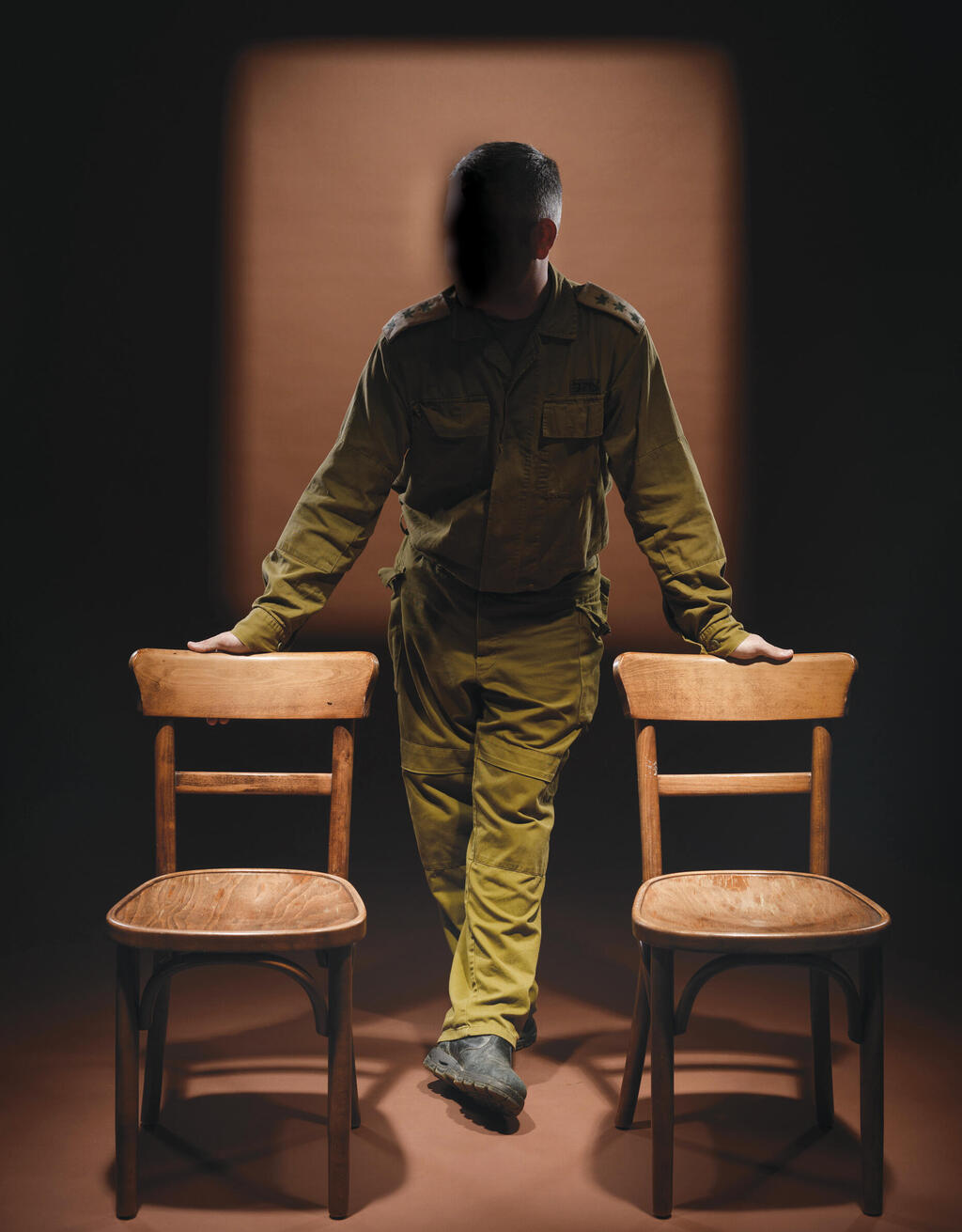
Col. M.
(Photo: Yonatan Blum)
But M. was unconvinced. “Eisenkot and Lior Lotan, who was then responsible for the prisoners and missing persons portfolio, called me to a meeting and asked me to review the files on Oron and Hadar,” M. recalled. “Something did not add up.”
He knew that the type of bombs used by the Israeli Air Force would have had difficulty collapsing the tunnel completely. He also constructed a timeline comparing the movement of Hamas terrorists, which he called the “red axis,” with Israeli ground operations and airstrikes, which he called the “blue axis.”
“The first strike that could have collapsed a tunnel took place only one hour and 50 minutes after Hadar was abducted,” he said. “Even if you calculate slow movement while carrying a body, after an hour and 50 minutes they would already have been far beyond the area struck by the Air Force.”
After roughly two months, M. returned to Eisenkot and Lotan and proposed establishing a separate team. Enough intelligence had accumulated, he argued, to challenge the official assumption and pursue alternative possibilities, and they agreed.
The ‘golden intelligence’
M.’s assessment that Goldin had not remained in the collapsed tunnel was reinforced by what the team called a “golden intelligence report.” Israeli intelligence obtained a Hamas document related to the organization’s elite Nukhba commandos, who were then still in the early stages of developing into the force that would later lead the October 7 attack. Monitoring the unit revealed that the body of an Israeli soldier had been removed from one of the tunnels.
According to M., Hamas procedure required the abducting cell to transfer a hostage or body immediately to a separate compartmentalization team. That team would move the captive or remains to a secret location without informing the original abductors where they were being kept. Israel also understood that Hamas would seek to move Goldin westward as quickly as possible, away from the Tancher Road and deeper into Gaza. “That meant the Rafah Brigade was holding Hadar,” M. said.
Head cameras and graffiti
Years after Goldin’s abduction, a Palestinian Shin Bet source contacted the agency and asked to speak with his regular handler. The handler was on leave, and the source was transferred to another officer. During the conversation, he made a statement that set off alarms throughout the system: “I know you approached me because of the information I have about the location of Hadar Goldin’s body.”
He demanded that Israel extract him from Gaza in return for additional information. The Shin Bet began planning the rescue, but during preparations discovered that Hamas had already exposed the source and turned him into a double agent, sending the search back to square one.
M.’s team continued working, summoning every soldier and officer who had entered the tunnel into which Goldin was dragged and questioning them one by one. The team also collected footage from soldiers’ helmet-mounted cameras, which revealed two critical details.
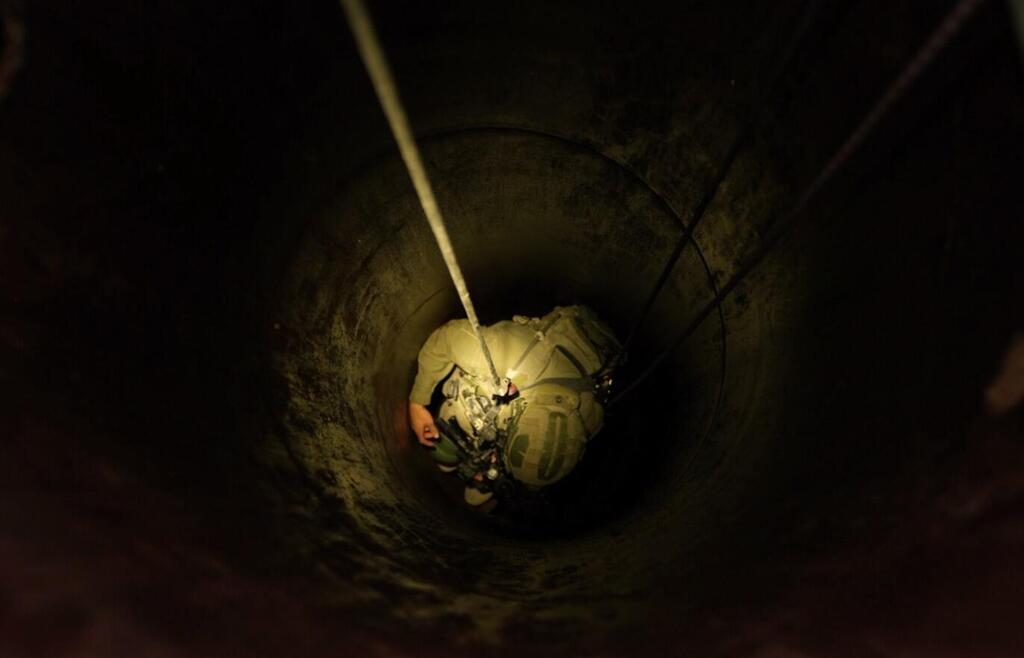
Yahalom troops seal the underground tunnel where Lt. Hadar Goldin was held
(Photo: IDF)
At one stage, IDF troops had used a tunnel-mapping technology that emitted smoke, allowing them to identify every opening through which it escaped. The helmet-camera footage also showed numerous Arabic graffiti inscriptions along the tunnel walls. The team realized that the graffiti contained the names of streets above the tunnel, allowing analysts to reconstruct the route, map its passage beneath Rafah and identify possible exit shafts.
Using the smoke patterns, the team reduced the search area to a defined geographical polygon. S. then used a technological system she had operated extensively during the 2014 war to reconstruct past movements inside Gaza. The team believed Hamas might have taken Goldin to a hospital or clandestine clinic, either to examine his condition or to store his body in refrigeration.
S. began tracking every vehicle that arrived at medical facilities in the area, then traced those that had originated in the suspected sector. Eventually, she found an ambulance that arrived at Rafah’s Youssef al-Najjar Hospital several hours after Goldin’s abduction.
Footage showed its occupants unloading a stretcher. S. then traced the ambulance’s earlier route and determined that it had come from a house in the al-Tanur neighborhood, inside the team’s search zone. She then saw something that transformed the investigation: Several men emerged from a house situated directly above the reconstructed tunnel route and loaded a large black bag into the ambulance.
“I cannot say with certainty that it was a body, but you can see a long black bag,” S. said. The ambulance then drove out of the suspected search area. “I called M. and D., who was my direct commander, and told them, ‘I think I found it,’” she recalled.
The Israeli assessment changed. Goldin had not been buried beneath the collapsed tunnel; his body had been moved from the abduction site and hidden elsewhere so Hamas could use it in future negotiations. But when the team presented its findings to the IDF chief of staff, Military Intelligence director and Lotan, they faced an obvious question: How could anyone know that the black bag contained Goldin rather than a Hamas terrorist?
The hospital and emergency tunnel
The team’s next task was to prove the connection between Goldin and the ambulance. During Hamas’ retreat after the abduction, terrorists had left communications equipment behind. The team reviewed recordings from the radio frequency used by the Hamas cell and intercepted a real-time message from the ambulance occupants stating that “the mission will be completed in the coming minutes.”
It was another important clue, but still not definitive proof. Investigators then focused on Youssef al-Najjar Hospital, seeking to determine whether Goldin had been taken there before being handed to Hamas’ compartmentalization team or whether his body had been stored in one of the hospital’s refrigeration units.
“We examined the size of the morgue, which refrigerators were there and every possible intelligence source,” M. said. “Could there have been an isolated section used by Hamas’ military wing that was inaccessible to others?”
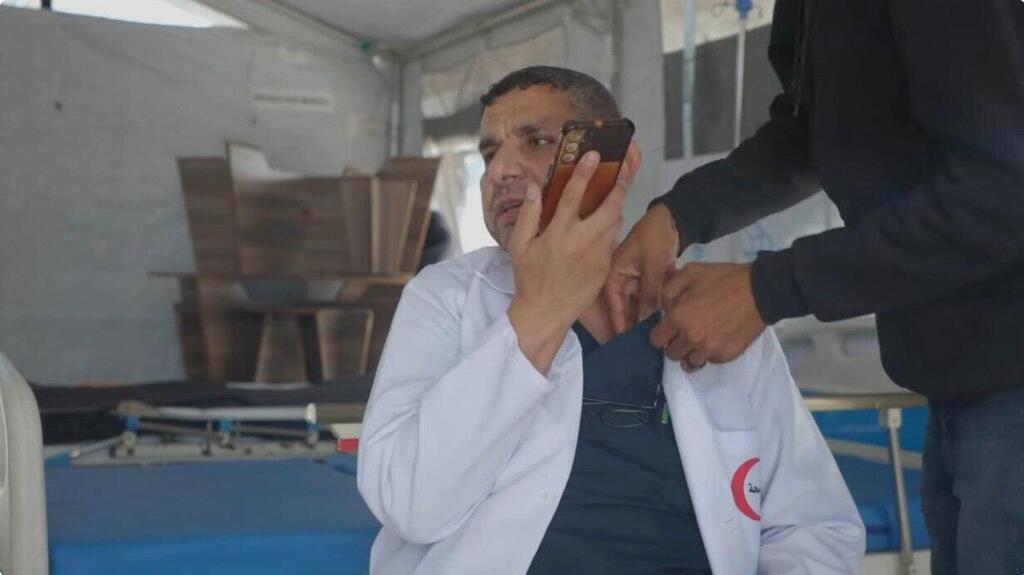
This was also the first time the team connected a Hamas physician named Marwan al-Hams to the Goldin case. Al-Hams would later become the director of the hospital. One of the mission’s greatest difficulties, M. explained, was separating meaningful intelligence from irrelevant background noise.
“Raw intelligence contains an enormous amount of noise,” he said. “You have no idea what is connected to your mission and what is not.”
Marwan al-Hams
A report might indicate that Hamas was heavily guarding a refrigerated warehouse in Rafah’s Yibna neighborhood, forcing the team to determine whether the site was connected to Goldin or merely to commercial goods. M. eliminated several suspected locations, including an orchard near Rafah and the guarded storage facility.
“After eliminating the false sites, I needed to shake the blanket and make Hamas make a mistake,” he said. “I needed to make them move Goldin.”
The team, together with the Shin Bet and other agencies, devised an unusual intelligence deception. It used two Palestinian collaborators suspected of having been turned by Hamas, knowing that Hamas would probably listen whenever they spoke with their Israeli handlers. Israeli intelligence then waited for Hamas to react.
The mistake eventually came from Mohammed Shabana, commander of Hamas’ Rafah Brigade. After reports reached Hamas that Israel was making progress in its search for Goldin, Shabana’s commander contacted Hamas’ military intelligence chief, who approached Shabana directly. Shabana assembled several of his men and instructed them to verify whether Israel had located the body.
“This unfolded over months,” M. said. “It did not happen in a few days. It required connecting many pieces of information and following Shabana and his men through the meeting, the briefing and what they did afterward.”
Shabana initially believed there was no possibility that the Israelis had reached Goldin. Nevertheless, he ordered his men to investigate fully. Several years before October 7, Israeli intelligence watched Shabana’s men arrive at a mosque in Rafah, remain there for roughly an hour and return home.
That evening, Shabana told his men that everything was fine and operations could continue as usual. Israel understood that something important was beneath the mosque, most likely a tunnel, but the remaining question was where inside the tunnel Goldin had been hidden.
The site was identified as an emergency tunnel belonging to Hamas’ military wing. It was not used routinely and remained sealed. At the time, the IDF had no forces inside Gaza and Israel was maintaining a fragile ceasefire. The government of Prime Minister Benjamin Netanyahu was not considering a major ground operation to enter the tunnel and recover Goldin, even though the location of the tunnel was now known. For approximately four years, little happened.
The return to Rafah
Everything changed after October 7, 2023, when thousands of Hamas-led terrorists invaded southern Israel, murdered about 1,200 people and abducted 251 hostages into Gaza. M.’s original team was no longer active, but he was called back and joined the IDF hostage and missing persons headquarters commanded by retired Maj. Gen. Nitzan Alon.
During the first weeks of the war, the headquarters worked to establish the most accurate possible lists of which hostages were alive, which had been killed and where they were being held. Location intelligence was essential not only for potential rescue operations, but also to prevent Israeli forces from accidentally harming hostages.
M. was placed in charge of intelligence for special operations and continued overseeing the cases of the four Israelis held by Hamas before October 7: Goldin, Shaul, Mengistu and al-Sayed. Israeli intelligence assessed that Hamas had maintained a clear separation between the hostages and bodies seized on October 7 and those held before the war, primarily to preserve operational secrecy.
The hostage headquarters instructed the IDF not to bomb the Rafah tunnel believed to contain Goldin. Another seven months passed before the IDF began its ground operation in Rafah, creating the first realistic opportunity to reach him.
Oron Shaul
The hostage headquarters enlisted Brig. Gen. Itzik Cohen, commander of the IDF’s 162nd Division, which was leading the fighting in Rafah. Cohen had previously commanded Goldin and approved an operation expected to last about two weeks.
M. joined the commander of the Israeli Navy’s Shayetet 13 commando unit, who agreed to lead a task force made up of naval commandos and Yahalom combat engineers. The objective was to reach the mosque in the Yibna neighborhood, enter the tunnel beneath it and find Goldin.
The ground operation needed to clear a route to the mosque took more than two weeks. Troops eventually reached a shaft leading into the tunnel believed to contain Goldin and advanced toward its main route, but the fighting was intense.
“It was far beyond anything ordinary,” M. said. “We quickly understood that this was not just another shaft or another tunnel.”
Hamas terrorists fought stubbornly from inside the network, which contained blockades, booby traps and hidden doors. The tunnel had three levels and extended for about seven kilometers. “Yahalom soldiers told us they had never encountered a tunnel like it,” M. said.
The search team believed Goldin’s body had been preserved in refrigeration, so troops were ordered to look for a room containing a refrigerator. The difficulty was that many rooms were concealed behind doors and walls that appeared solid from the outside, and troops could discover them only by breaking through the tunnel lining.
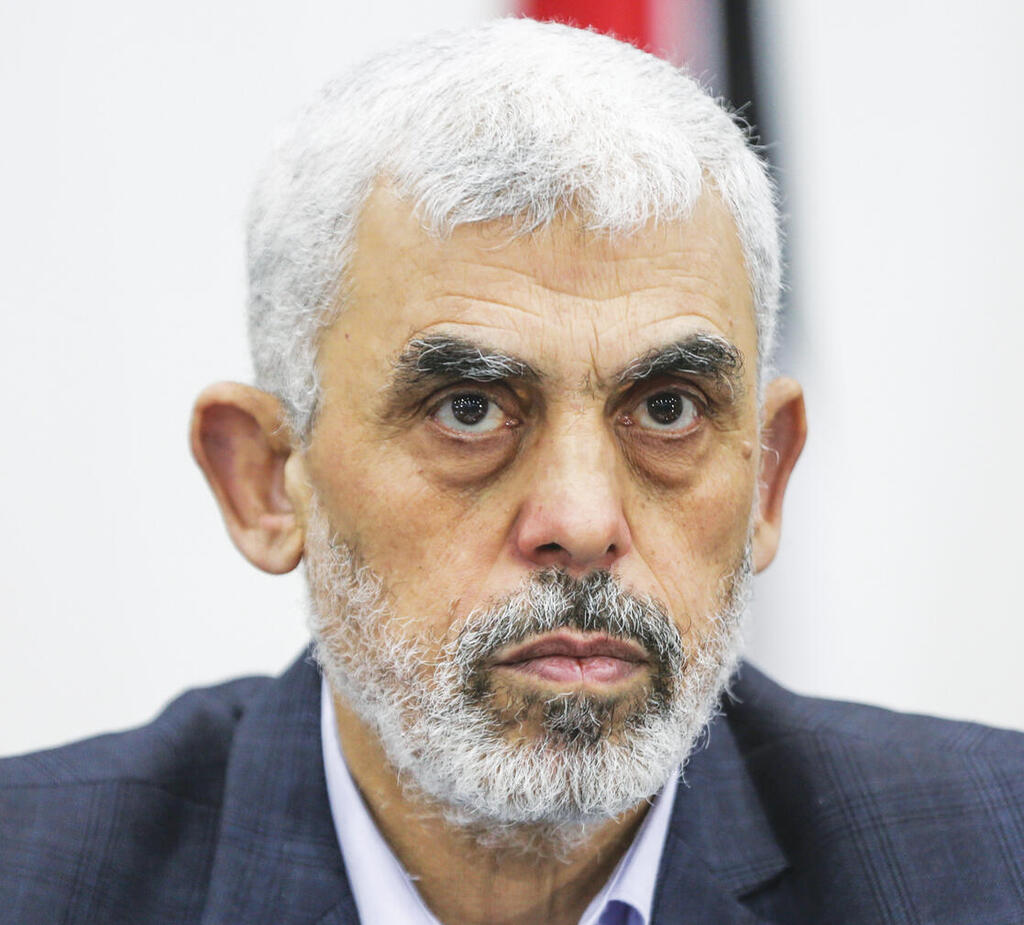
In July 2024, during a tunnel search, soldiers attempted to open one such hidden door. Shouting was heard from the other side, followed by gunfire. It later emerged that the men inside were bodyguards protecting Mohammed Sinwar, a senior Hamas commander and brother of Hamas leader Yahya Sinwar, and Rafah Brigade commander Mohammed Shabana. The chamber had served as their command center.
The two fled after the encounter. Their escape contributed to the breakdown of Hamas’ command-and-control system in Rafah and ultimately to the collapse of the organization’s Rafah Brigade.
Goldin’s rifle and the Hamas doctor
As the operation continued, M. feared that the political leadership might halt the search before Goldin was found. At the same time, intelligence indicated that Hamas doctor Marwan al-Hams had personally lowered Goldin’s body into the tunnel, preserved it and locked it behind an iron door. Israel now needed to capture him for questioning.
From August 2024 until January 2025, the searches inside the tunnel stopped and Israeli forces sealed the site because there were not enough available combat troops to continue the operation. The search resumed in early January 2025 after a Yahalom force became available.
For six months, troops examined the tunnel room by room but found nothing. They located the chamber in which Goldin’s body had apparently been examined during a Hamas deception operation and concluded that the body had been moved elsewhere inside the tunnel after that inspection.
The search produced no breakthrough until Mohammed Sinwar and Mohammed Shabana were killed while hiding in a tunnel beneath the European Hospital in Khan Younis. The IDF used heavy engineering equipment to reach the tunnel in which the two had been buried, believing valuable intelligence might be found there.
Mohammed Sinwar
(Photo: Anadolu, Anadolu Agency via Getty Images)
Among the discoveries was Goldin’s personal rifle, which Shabana had been carrying. Troops also recovered another item of intelligence value from the wreckage. “We returned to the tunnel, dismantled the walls and found nothing,” M. said.
Israel then carried out another major operation. After months of preparation, the IDF, Shin Bet and hostage headquarters captured al-Hams in Gaza. He had by then become director of the Rafah hospital and was reportedly lured to what he believed would be a television interview for a fabricated documentary project before being taken into custody.
But during interrogation, he refused to reveal anything. Members of M.’s team even brought the doctor into the tunnel, but he continued refusing to provide information to Shin Bet interrogators. On October 1, 2025, Yom Kippur, IDF forces detained al-Hams’ daughter, Tasnim, in an attempt to pressure him, but that step also failed.
Nine days later, on October 10, a ceasefire agreement took effect. Hamas had committed to returning all hostages and bodies in its possession but continued insisting that it could not reach Goldin.
After several weeks of pressure, Israel provided precise information about where Goldin was being held. Israeli forces also maintained a siege around Hamas terrorists trapped in an area known as the “Rafah pocket.” On November 9, Hamas returned Goldin’s body to Israel, and he was buried two days later.
‘This is the victory’
M., S. and D. devoted years of their lives to the search for Israel’s captives and missing soldiers. They were among hundreds of IDF troops, Shin Bet officers and Military Intelligence personnel who worked without regard for nights, weekends or holidays to bring home Goldin and the other Israelis held in Gaza.
On Sunday, for the first time, Goldin’s father, Simcha, will mark the anniversary of his son’s death at his grave.
“You go to bring Hadar home, but along the way you crush Hamas’ Rafah Brigade,” he said. “That is the victory, as far as I am concerned.”
“The achievement of returning a fallen soldier ultimately united the value of bringing a soldier home, whether Hadar or any other soldier, with determination in achieving the operational mission,” he added. “It combined intelligence work, M.’s extraordinary effort and the IDF’s major operation in the Rafah tunnel.”