

When the lights came on at the 669 club in Tel Nof (Israel's elite tactical unit for special rescue operations), silence descended in the room. Much like at the end of a movie that leaves a deep impression on its audience. But this was no cinematic spectacle. It was footage of a mass casualty event that took place in Khan Younis on December 16, 2023.
The material was captured by helmet cameras and produced as part of an internal air force investigation. It stood as a stark reminder of the price soldiers pay, in body, in mind, in life. For the tactical rescue fighters and the crew of the helicopter squadron, watching such footage is routine, part of learning under after‑action review. For Alon Hindi, Dvir Dangur and Eyal Cohen, fighters in the reconnaissance battalion of the 55th Brigade, those were ten minutes of trauma.
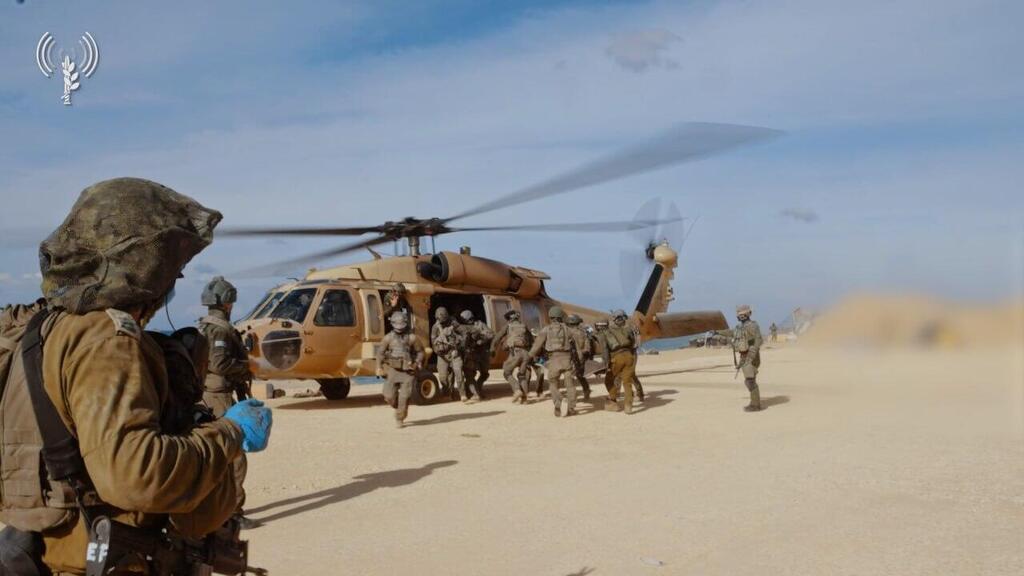
Evacuation of injured soldiers during the war


For the first time since they were wounded, they saw themselves on screen in one of the hardest scenes imaginable: lying on stretchers in the field after being stripped down, bleeding, mutilated, surrounded by people doing everything to save their lives. Eyal, the most severely wounded, appears in the video staring into the air with hollow eyes. The others scream in agony. They are loaded onto the unit’s Hummers and taken to the helicopter pad, into the aircraft that would evacuate them to Soroka Medical Center along with another critically wounded soldier.
Sitting with us in the club were three members of the helicopter crew: the pilot in command, Major P′ (res.); flight engineer, Major H′ (res.); and the 669 physician, Sergeant First Class. (res.) Dr. N′.
“I want to say something,” said Capt. (res.) Hindi, 28, breaking the silence. “My twin brother, who enlisted with me into the Paratroopers, was supposed to get married last summer, but they postponed the wedding because I was wounded. If not for you,” he turned to the air crew, “I’m not sure the wedding would have happened. And if it had, it wouldn’t have been a real celebration. For you the evacuation took 20 minutes. For us those were the 20 most important minutes of our lives."
Eyal, 42, from Rehovot, married and father of four daughters, was visibly shaken watching the video. “I’m in shock,” he said. “It makes me realize even more how close I was… to dying. I see everyone’s devotion there; my friends in the company and battalion, the evacuation team, the helicopter crew. Without you, my daughters might have lost their father. I am deeply grateful."
Gallery
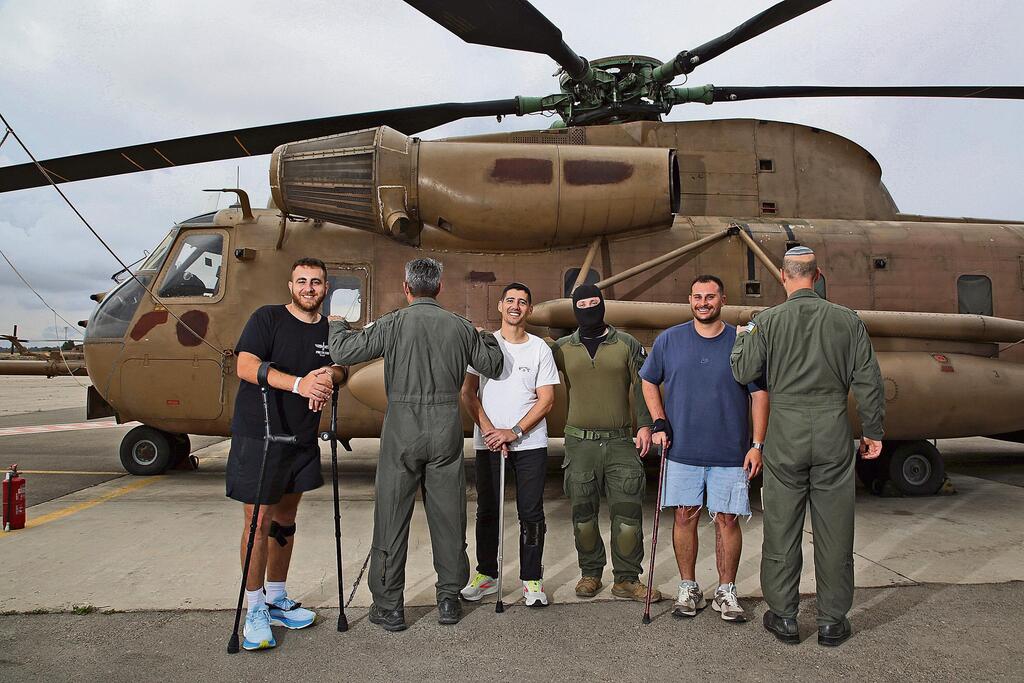
From the right: Major P. the pilot, Alon Hindi, Sgt.first class Dr. N., Eyal Cohen, flight engineer Major H. and Dvir Dangur
(Photo: Ryan Preuss)
“We are all deeply grateful,” said Dangur, 26, from Herzliya. “The fact that each of us still has all four limbs is no small thing, let alone being alive. We just saw Eyal’s condition in the video. If you had arrived a few minutes later, I’m not sure he’d be sitting here today. Watching the video for the first time, it’s crazy."
Pilot P′ downplayed the praise. “I just want to say that we and you, the wounded, are not the same,” he said. “In the end there are three people here who paid a heavy price. We only helped them get to the hospital. With all due respect to us, they are the real heroes."
Hindi added, “We wouldn’t have survived if you hadn’t taken us so quickly."
From hell to the café
But even the rescuers are not immune to the sights, sounds and smells. Not even crew-chief Major H′, 54, a former reservist and real‑estate entrepreneur who already thought he had seen everything.
“The incident was on a Saturday afternoon,” he recalls. “And by Sunday morning the team that relieved us was there. You go home, shower, drive to Tel Aviv and sit in a business meeting at an espresso bar. Twelve hours earlier you were on a battlefield in an incident with a fatality and 14 wounded, and now you are sitting in a café talking business. I’ve had cases of soldiers dying inside the helicopter before. I remember all the faces."
Two moments from this war are seared into his memory. “In one incident, I covered a fallen soldier whom the team had laid aside. In another, there were five wounded to evacuate and one dead.
The ground force asked us to take the fallen soldier as well, something we usually don’t do, because space is needed to treat the wounded. But they brought him aboard, and I saw one of his friends gripping his hand, crying uncontrollably. He wouldn’t let go of his hand. If you ask me what camaraderie means, that’s exactly it."
Dr. N′, too, often experiences the uncomfortable transition from the hell of war to everyday life. In his case, it’s life as a doctor at a central Israeli hospital, nearing the end of his emergency medicine residency.
“You finish a shift with 669, having evacuated and treated wounded from Gaza midair in a helicopter, and the next day you’re back in the ER with a woman who came in at 3 a.m. with a headache. It took me quite a while to adjust to that dissonance. In the first months of the war, I was more short-tempered, far less pleasant to people. Now I’m finally able to separate the two."
During the meeting, both the wounded soldiers and the rescuers share their accounts of the event. But, says Dvir Dangur, the most indelible moments weren’t just about the physical pain, as difficult as it was.
“When I woke up at Soroka two and a half days after the injury, the first thing I asked was what happened to Shalev Zaltsman from my team,” he says. “He was next to me when the blast went off, and I sensed he wasn’t doing well.
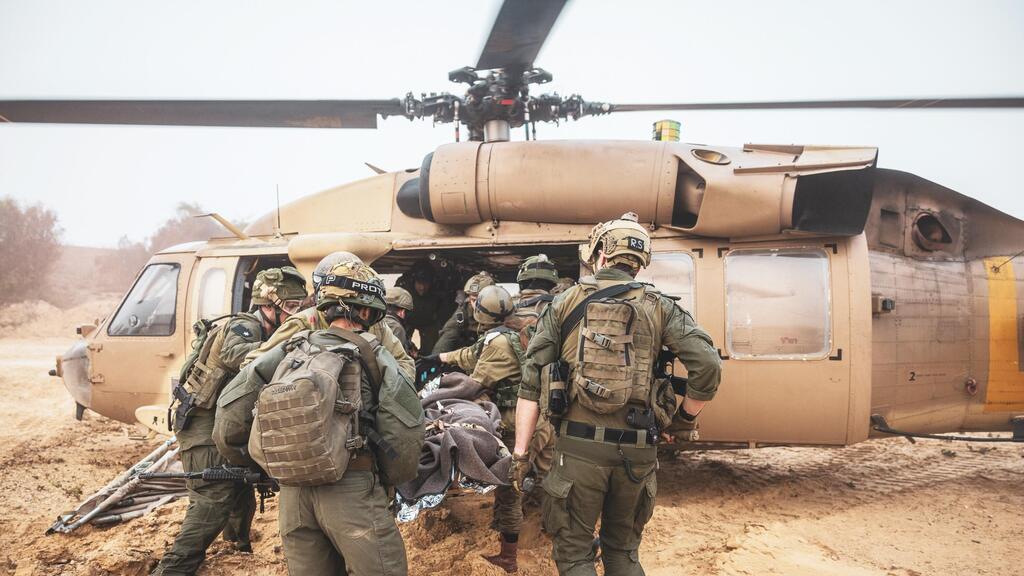
Unit 669 troops
(Photo: IDF)
"Only the third time I screamed in intensive care, ‘Give me my phone, I need to know what happened to my team,’ a hospital psychologist came over. She told me there were 14 wounded, 10 from my squad and four from the company command post. Alon, Eyal and another seriously wounded soldier were also at Soroka. Then she told me Shalev had been killed. I felt so angry; how did we lose such a pure soul? It was very, very hard to accept."
Dvir Dangur and Staff Sgt. (res.) Shalev Zaltsman z″l had been friends since their enlistment eight years earlier. “We were an organic team from the Paratroopers’ reconnaissance unit, 24 of us. Losing Shalev is no small price. I met his mother for the first time this past Remembrance Day. That may have been the hardest moment of my life.
"I was 20 centimeters from him when the explosive went off. He died, and I survived. It could have easily been the other way around. Shalev was one of the finest people in this country, and we’ll do everything we can to make sure people know his name."
Hindi adds: “I want to mention two more friends from our company who were killed six days after we were wounded: Alexander Shpits and Shay Termin, may their memory be a blessing."
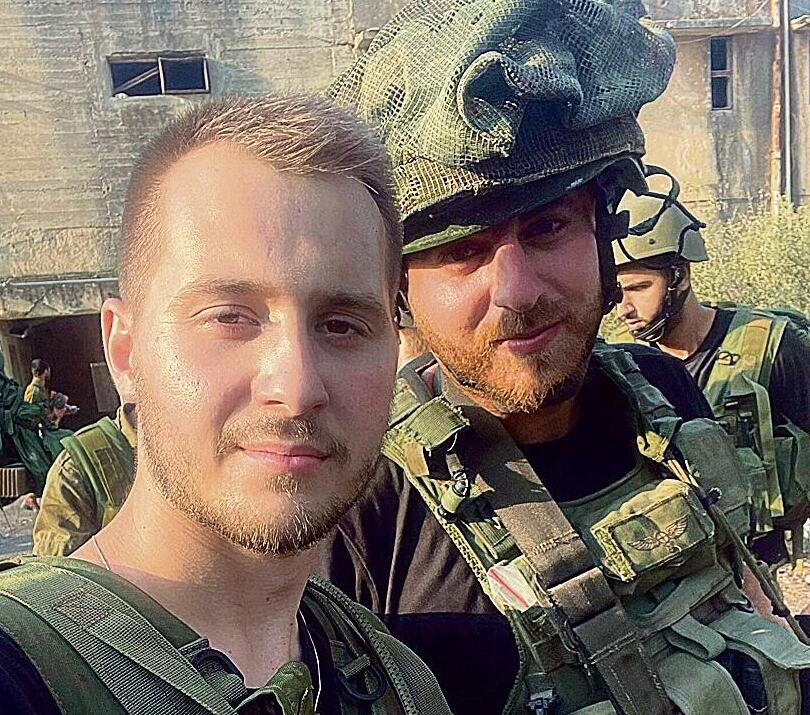
Dvir Dangur and Shalev Zaltsman z″l. "He was one of the finest people I know"
(Photo: Courtesy Dvir Dnagor)
All six interviewees, both the wounded and the rescuers, are reservists. “My wife and I have both been in reserve duty for a long time,” says H′, the co-pilot. “She’s on the team that accompanies the returned hostages, receiving them at the helipad and taking care of them in the hospital. I had the privilege of flying one of the hostages in the most recent deal. It was very emotional. It puts life in perspective."
Squadron 118, where H′ and pilot P′ serve, is no stranger to tragedy. On Feb. 4, 1997, two Yasur helicopters crashed while transporting soldiers to IDF posts in southern Lebanon, what became known as the 'Helicopter Disaster'. Seventy-three soldiers were killed.
On July 26, 2010, a Yasur helicopter from the same squadron crashed during a training exercise in Romania. Four pilots, two flight engineer and a Romanian officer were killed. H′ was part of that drill as the head of the technical wing and lost several close friends.
On October 7, the squadron lost another helicopter, hit by an RPG just after landing paratroopers near the Sa’ad Junction on their way to fight in Be’eri and Alumim. Aside from a few minor injuries, no one was hurt. “P′ the pilot and I were in the same Yasur helicopters that caught fire,” says H′.
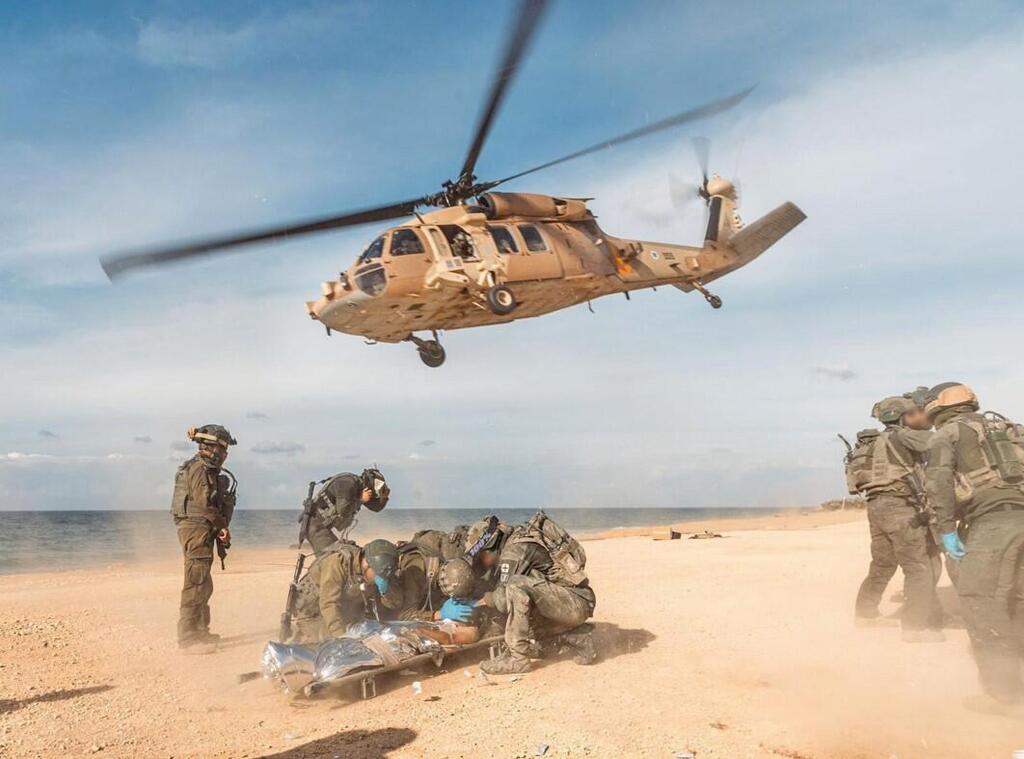
669 operates during the war
(Photo: Amit Agronov)
The events of October 7 hit close to home. H′’s daughter is a survivor of the Nova music festival. “I knew she was at some party, but I hadn’t connected the dots and didn’t know what was happening at Nova.
"Around 1:30 p.m., between flight missions, I learned we had lost contact with her. There’s a photo of her hiding between Coca-Cola fridges at the festival. From there, she ran toward the groves near Gaza, and by 3 p.m. a police car rescued her. Two of her friends, Karin Vernikov z″l and Karin Journo z″l, were murdered, and another friend was kidnapped and released in the latest hostage deal."
Dr. N′ adds: “I was on the helicopter that took him to the hospital after his release."
P′, the 44-year-old pilot, a religiously observant Jew, had only recently left active duty before the war began. On the morning of October 7, his daughter was on her first Shabbat shift as an operations sergeant in the Gaza Division’s command center at Re’im base.
“She called us and said, ‘Don’t worry, we’re locked inside the command center.’ Only later did we find out that terrorists were already on the base. By the time we grasped the full scale of the danger, they had already regained partial control."
Did she talk about what happened in the command center?
“She described the chaos; people bringing in personal phones because the army ones weren’t working. Wounded were brought in, as well as children of career soldiers who had come for the holiday. It was a hard scene. She’s still there, now a shift supervisor. Her military service is this war."
Dr. N′ was aboard a Black Hawk helicopter, much smaller than the Yasur, on October 7. “That day, I evacuated and treated 21 wounded,” he says. “The peak was eight wounded from the Nahal Reconnaissance Unit, all crammed into one Black Hawk. We had to remove them from their stretchers and squeeze them into the helicopter."
Blood, straight into the bone
Brigade 55, including Battalion 6623, was called up on Simchat Torah afternoon. “I got married a month before the war,” says Alon Hindi, a tech company engineer and officer in the command post of the Paratroopers’ reconnaissance company. In the first days, the battalion fought in southern Israel, and then was sent north to Mount Dov. “It was nice, but we wanted to be in Gaza,” says Hindi.
“We were really disappointed,” says Itay, a radio operator in the command post and co-founder of a startup. “The moment someone said, ‘There’s a chance we’re going into Gaza,’ everyone was thrilled."
In early December 2023, the brigade entered Khan Younis. The serious incident occurred on Dec. 16. It began with an RPG fired at a tank. The tank company commander, operating under the paratroopers’ battalion, was moderately wounded. Shortly afterward, while searching for the terrorists, an explosive device was detonated near a force that included Dangur’s team and the command staff.
“There was a crazy explosion,” says Dangur. “I remember waking up on the ground, and the first thing I saw was Eyal lying in a pool of blood. I tried to stand, but my legs wouldn’t work. I was losing blood fast. I knew I was going to die and was already picturing my mother standing at my grave. I didn’t want to die. I tried to put on a tourniquet but couldn’t. Then Netanel, the battalion commander’s radio operator showed up, a real angel, and tightened it for me."
Eyal says he didn’t even hear the explosion. “I just remember this high-pitched noise, tiiiiiing, and my arms and legs twisting around. I didn’t understand what was happening. Then, there was a blackout.
(Photo: IDF)
"After a while, I woke up and heard my company commander yelling, ‘Don’t worry, you’ll be okay,’ and I was screaming in pain. A medic came, I grabbed his vest and shouted, ‘Put me under now!’
"My father had died a year and a half earlier, and I silently asked him to help me. Then I lost consciousness. They told me later they loaded me into the Hummer, and two doctors there couldn’t find a pulse. I needed a transfusion, but they couldn’t open a vein in the moving vehicle. The senior doctor decided to do an IO - drilling directly into the bone."
“In such cases, medication or blood go straight into the bone,” explains Dr. N′. “It’s kind of like the drill you use at home."
Eyal: “The doctor asked another medic to sit on the floor and hold my legs, asked another lightly wounded soldier to hold the bag of blood, and on the first try, he drilled into the bone. That’s one of the things that saved my life."
Alon Hindi vividly remembers the blast. “I was conscious the whole time."
Dangur: “He hopped on one leg and cursed like crazy.”
Hindi: “Comrades from the company who visited me in the hospital said, ‘There were lots of wounded, but you were the loudest.’ I was cursing words I didn’t even know I knew. My right arm was almost completely detached, and I grabbed it. The wound was just below the shoulder, so you couldn’t use a tourniquet.
"One of the soldiers decided to press his knee into my neck to stop the bleeding. It kind of made sense, but I couldn’t breathe. I thought, ‘Well, if not from blood loss, I’ll die from suffocation.’ I even thought of George Floyd in the U.S., who was killed when a cop knelt on his neck.
"Luckily, the battalion doctor saw it and shouted, ‘What are you doing? Move!’ I started breathing again. The doctor put nine combat gauze packs on me to stop the bleeding. I also had a small shrapnel in my knee that tore my main artery."
Eyal: “At the hospital, they wanted to amputate his leg."
Hindi: “Anyway, within 10 minutes, we were in the Hummers heading to the helipad. It was a nightmare ride. The doctor yelled at the driver, ‘Slow down or his arm’s going to fall off and there won’t be anything left to reattach.’ And I was fully conscious, screaming and swearing."
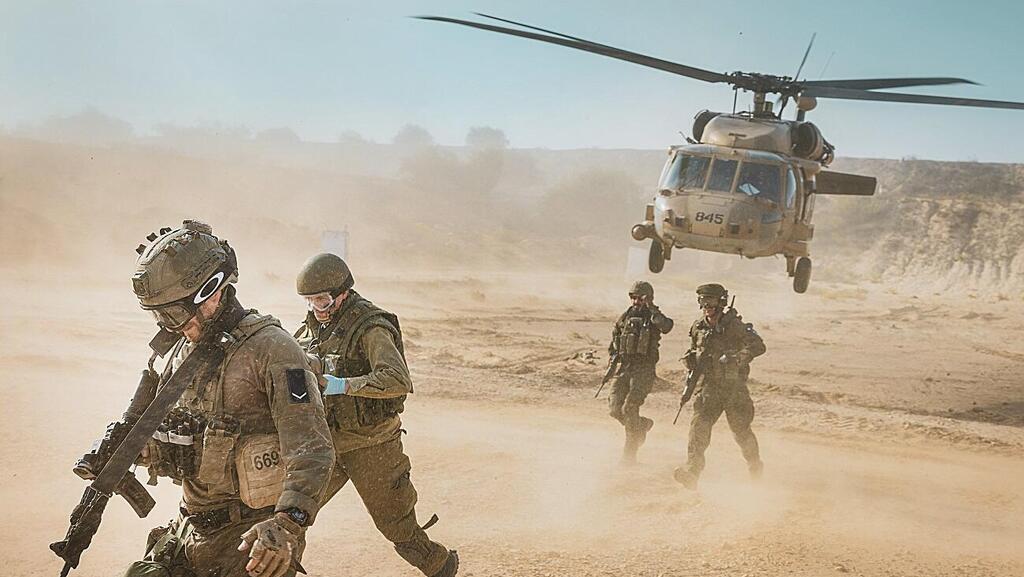
The rescue team was on routine standby that day. “Two pilots, two flight engineers, and a team of eight from 669: doctors, paramedics, fighters, commanders,” explains H′, the flight engineer. “At 12:30 p.m., while these guys were in a shootout with terrorists, we were cracking jokes in the dining hall."
(Photo: IDF)
P′, the pilot: “Once an incident occurs, we get an alert. Then wherever everyone is, regardless of what they do at the same time - someone’s in the bathroom, someone’s asleep, someone’s showering, someone’s eating - we all rush to the chopper. The first report we got was of an IED explosion in Khan Younis with lots of wounded. Three helicopters were sent out: our Yasur and two Black Hawks."
Dr. N′, as a 669 physician, do you need to know in advance what kind of incident you’re heading into, or do you just prepare for anything?
Dr. N′: “We prepare for everything, but it doesn’t matter how you prepare, you’ll always face something different. Once you land in the Strip, you have to load the wounded and take off as quickly as possible before you get hit with anti-tank fire.
"You’re racing against time, in the crazy noise of the Yasur, trying to get as much info as you can from the field doctor. So even in the air, we’re already listening on the battalion’s radio network to gather details concerning the wounded."
P′: “While flying, we got word of four critically injured. Once it’s more than two, the Yasur takes priority. We lowered altitude near Kibbutz Nirim and flew straight into Khan Younis. We were assigned a pre-prepared landing zone, a kind of dug-out pit, and had to maneuver the helicopter into it. In the background, I saw a huge smoke cloud."
Is there a defined time limit for staying on the ground?
P′: “No, but we operate to minimize it as much as possible. If it’s 20 seconds, that's great. If it’s two minutes, that’s what it is."
Dr. N′: “There’s a team from 669 and Unit 551 already on the ground treating the wounded. The goal is to keep us on the ground for the shortest time possible. We load the most severely wounded first, so if we have to take off before everyone’s on board, the worst cases are already in the air. We loaded Eyal first."
Hindi pretends to be disappointed to hear Eyal was considered the most seriously wounded, not him. “Come on, Alon, let it go,” Eyal jokes.
Left half a butt-cheek in Gaza
At that point, H′ took over, responsible for loading the wounded and managing the cabin. “I peek out the back window, give the all-clear to land, and direct P′ exactly where to touch down so the ramp opens right in front of the wounded.
"The field doctor hands off to our doctor, and I close the ramp for takeoff. Now imagine the cabin: four stretchers with critically wounded soldiers, eight members of 669, including two doctors, and me. And in that chaos, everyone’s working. Everyone has a role. I was asked, for example, to apply pressure to Dangur’s blood bags. Twelve minutes later, we were at the hospital."

(Photo IDF)
Dr. N′: “Those are 12 minutes of sheer intensity. A mass-casualty event inside a tight, cramped space. As a doctor, my first decision, made in seconds, is where to fly. We’re given two hospital options with each scramble: one central and one closer, for the most critical cases. In Gaza’s case, it’s either Soroka, Barzilai or Assuta Ashdod. The directive is: if the wounded can survive the longer ride, go to the center, to ease pressure on southern hospitals."
“I realized how critical the injuries were and chose Soroka. I told the second doctor, ‘You wait by the cockpit and take the most serious case (which was Eyal). We’ll manage the rest.’ Then we launched into treating the four.
"In this flight we managed to give three or four blood transfusions in very little time. We stopped bleeding, giving pain relief. Eyal got a chest needle as he appeared to have a severe chest injury."
Fifty-five minutes after the blast, they landed at Soroka. “I remember them taking me from the helipad, the fluorescent lights above me,” Hindi recalls. “I thought, ‘Okay, white light, either I’m in the hospital, which is awesome, or I’m in heaven, which is also awesome.’
"They rushed me into a 14-hour surgery. They managed to stabilize my arm, but the leg caused problems because of the shrapnel. For 11 hours the surgeon tried to bypass the torn artery using veins taken from other parts of my body.
"In the middle of the operation, he came out to tell my parents and wife they’d probably have to amputate the leg. That’s Eyal’s favorite part, because he’s religious; Hindi continues, "my mom made a vow that if the doctor saved my leg, she’d light Shabbat candles every Friday."
“She’s lit them every Shabbat since,” Eyal says proudly.
Hindi: “She lights them, and curses Eyal while she does."
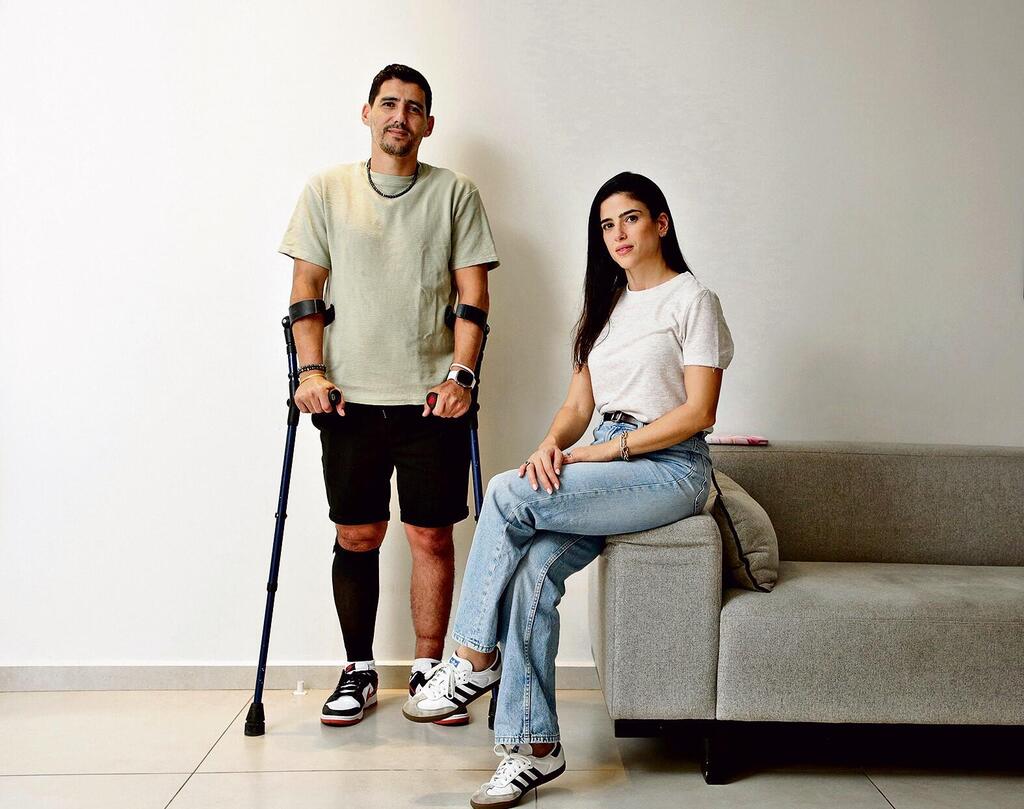
Eyal Cohen and wife Esti
(Photo: Ryan Preuss)
Eyal lists his injuries: “Both legs were broken. I tore the main artery, lost nerve function in my left leg, shattered my femur, broke my pelvis, and left half a butt cheek in Gaza. I’d show you, but it’s not polite.
"I was sedated and on a ventilator for three days. When I woke up, I thought I was still in Gaza. When I saw my wife, Esti, I told her I was sorry, because I knew what she was about to go through. I asked her for forgiveness."
How did your daughters react?
“My wife came to the hospital with our oldest. She was amazing, 15 years old, seeing her dad with all the tubes. She took a selfie with me. After I got out of bed, she took another photo, posted both to her story, and wrote: Guess who’s back. I didn’t see the little ones for another month and a half. They were told that Daddy fell into a hole and broke his legs."
The doctors who saved Eyal’s life and Hindi’s arm also saved Dangur’s leg. “I had a severe infection in my thigh. That’s why I was at Soroka for three and a half months before being transferred to rehab at Sheba. They changed my antibiotics every week."
How many surgeries have you had?
Dangur: “Eighteen under full anesthesia."
Hindi: “We’re even, but I was just told I need two more, so I’ll pass you."
Eyal: “I’ve had 16, but I’ve got one more scheduled, I’m catching up with you guys."
Hindi, laughing: “Maybe I’ll get a hair transplant; that counts as a surgery, right?"
After everything they’ve been through, the physical trauma, the loss of friends, even dark humor has become a form of healing.