

In Europe, an airport is often just one transportation hub among many. Travelers can choose trains or cars for environmental reasons, fear of flying, cost or the simple practicality of carrying ski or camping gear across a border.
In Israel, Ben-Gurion Airport is something else entirely: the country’s main gate to the world and its main way back in.
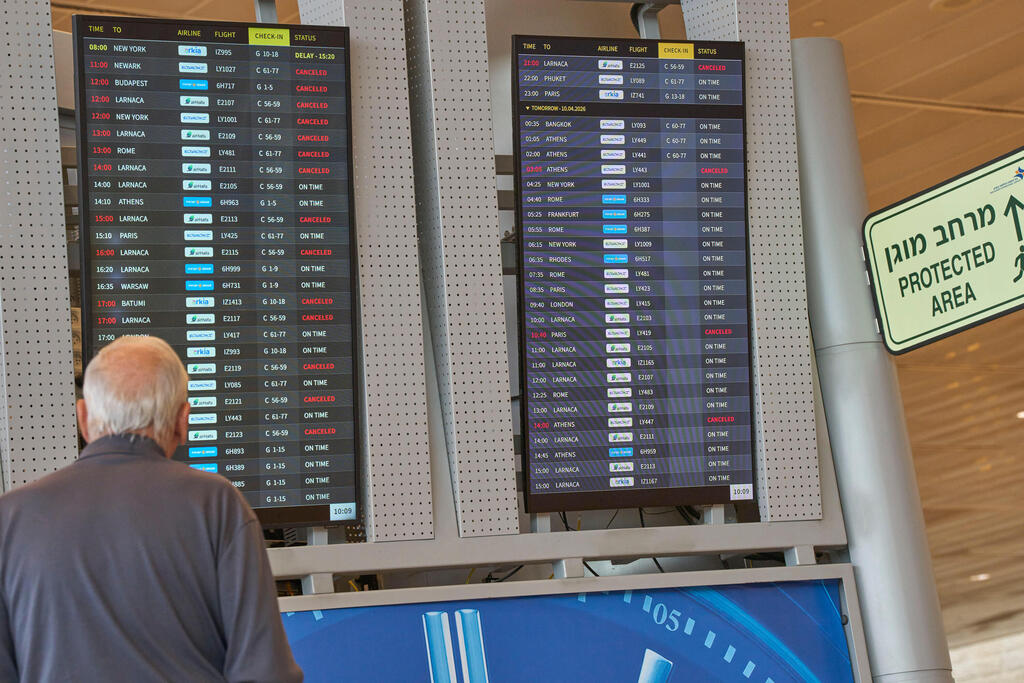
During Iran’s missile attacks, surreal moments unfolded repeatedly. A phone rang. An app warned of an incoming siren. Almost at the same moment, a plane appeared in the sky on its way to land. It was impossible not to think of the crew and passengers suspended in danger. The roar of the engines meant something more: The connection to the world still existed, even after regular flight schedules had lost all meaning.
Strategically, Ben-Gurion is one of Israel’s most sensitive sites. The destination listed on booking sites as “Tel Aviv-Ben Gurion” is heavily protected by missile defense systems and remains a prime target. When foreign airlines suspend service and departure boards empty out, the airport becomes a barometer of the national emergency. News broadcasts report which airlines have left, until when and who may be first to return.
Every plane that lands is more than transportation. It is a sign of resilience.
When airspace is partly or fully closed, as has happened twice since June 2025, conversations turn practical: How do you get back to Israel? Israel may be the only country where people do not want evacuation flights out of a war zone, but rather urgent flights back into one. In such moments, the sense of being an island becomes clear.
After a ceasefire with Iran took effect, even before its fate was fully clear, authorities announced the reopening of the airport and a resumption of flights. A rush for any available seat was all but guaranteed.
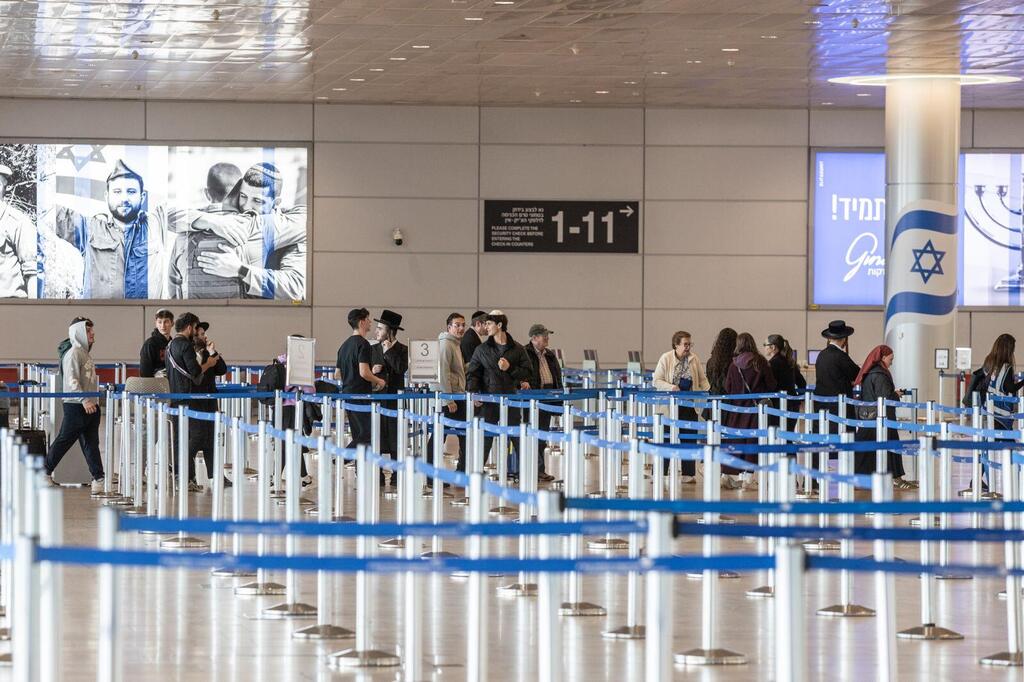
Even in calmer times, Ben-Gurion is a singular place where Israeli society converges: Haredi men with oversized hat boxes, surfers, young couples flying with babies and grandparents, businesspeople conducting job interviews in line, academics and foreign workers. Hebrew, Russian, Arabic, English and French mix in the terminal. A deeply divided society is united there by one need: to fly somewhere.
For Israelis, that need often requires explanation. It is not a luxury, but a kind of routine maintenance.
Sometimes distance is needed from daily pressure, the relentless news cycle and local hotel prices. In Israel, distance is measured less in kilometers than in flight hours. Cyprus’ entry into the European Union in 2004 suddenly put Europe “half an hour” away. Even a four-hour flight is considered short enough for a brief vacation.
The longing for “abroad” runs deep. Israelis often divide the world into two categories: here and overseas. Even clothing available at home gains extra value if bought elsewhere.
Ben-Gurion is a waiting room for that “elsewhere.” Perhaps that is why so many Israelis like arriving early, beyond any security requirement. The waiting time becomes a state in between: not quite outside, but no longer fully inside.
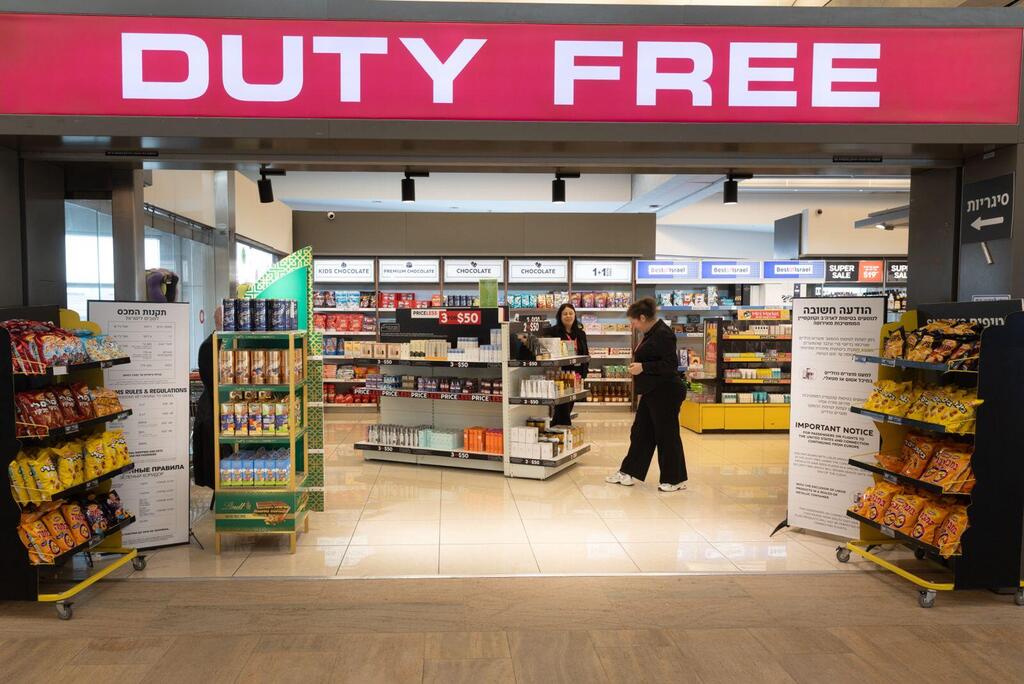
The love of the airport also appears in a custom that seems uniquely Israeli: buying duty-free goods under the “buy and hold” system. Travelers arrive hours early to purchase vacuum cleaners, coffee machines or televisions, leave them in storage and pick them up on return. It is almost a ritual pledge: leaving something material behind as proof that you will come back.
And then there is Toblerone. For unclear reasons, the triangular chocolate remains a standard gift, a relic of the era before low-cost flights, when overseas travel was a rare privilege. Writer Kinneret Rosenbloom once described how the chocolate’s nougat crumbs, sticking to children’s teeth, reinforced the sense that something different existed out there: other tastes, other shapes.
For foreigners, the airport’s most striking feature is security, which begins well before the terminal. Israelis abroad often grow uneasy when anyone can enter a departure hall. At Ben-Gurion, questioning and checks are routine reminders that the link to the outside world always requires vigilance.
Israelis themselves are not always aware how intense the questioning can feel to tourists. It is often seen as intrusive, though occasionally it is received differently. Once, a group of elderly women from Switzerland was delighted that, for the first time, someone seemed genuinely interested in their lives. They wanted to tell the young El Al security officer far more than he wished to know.
The 2020 Abraham Accords expanded Israel’s airspace, opening direct flights to Dubai and Abu Dhabi, often several times a day. In four hours, Israelis could be there — the same distance as Berlin. Many use the new routes as shortcuts to the Far East. But the possibility of passing over hostile airspace remains a constant topic of conversation. An emergency landing in Iran is the ultimate nightmare scenario, though history also records the reverse.
In September 1995, an Iranian plane carrying 170 passengers suddenly landed at the Ovda air base in southern Israel. A flight attendant had hijacked the plane because he was “tired of life in Iran.” It was a bizarre scene: Iranian women in hijabs and men praying on Israeli soil. Local television reporters rushed in, thrust microphones at frightened passengers and asked, in all seriousness: “So, how is Israel?”
After Oct. 7, Ben-Gurion also became, at times, a last station of memory and hope for those leaving the country. Photos of the hostages lined the road to the departures hall and the exit from the airport. At passport control, travelers saw the hostages’ faces as their documents were scanned.
The hostages, living and dead, have come home. But a shadow remains over Israel’s relationship with the outside world: the fear of identifying as Israeli abroad and the fear of not being able to return as planned.
Until that changes, perhaps vacations should be offered inside the airport itself. Israeli singer Meir Ariel might have approved. In his classic “Terminal Luminalt,” he sang of the airport as a place of healing, where watching large planes take off, on a doctor’s advice, eases “the pressure on the eye.”
Terminal, I love you, Terminal.
Gisela Dachs is a freelance journalist who spent two decades as a correspondent for the German weekly Die Zeit and has reported from Israel for three decades. She previously worked on the foreign desk of Libération in Paris and as a political editor at Die Zeit in Hamburg.