

Since the ceasefire took effect, and amid a public rush to book flights “at any cost” through Israeli airline websites after more than a month of severely limited operations at Ben Gurion Airport, it is becoming clear that, when it comes to foreign carriers, Israel’s return to the skies is still a long way off.
For now, most foreign airlines are not planning an immediate return. Major North American carriers — Delta, United and Air Canada — have canceled flights through September, the High Holidays period. Many other airlines have postponed their return until at least the end of June or later. An exception is Wizz Air, which has said cancellations currently extend only through April 27.

At the same time, Israel Airports Authority has already received inquiries from UAE carriers Etihad and flydubai, seeking to resume routes to Tel Aviv and secure landing slots. Past experience shows these airlines have often been among the first to resume operations in Israel after previous security events.
However, an industry source noted that, even when Gulf carriers express interest in returning, they face a significant operational constraint. “At present, there is a ban on landings from the east at Ben Gurion Airport, partly to keep airspace open for emergencies," the source said. "This means flights from the Gulf must take multi-hour detours via Egypt and the Nicosia air corridor, making operations less economical and sometimes unfeasible.”
According to the source, once the restriction is lifted, the “bottleneck” is expected to ease. “The airlines have already begun submitting the required approvals and paperwork, and the expectation is for a return by mid-April,” he said.
Dr. Uzi Freund-Feinstein, an aviation expert and senior faculty member in the Department of Tourism and Hospitality Management at Kinneret Academic College, told Ynet that the path to the return of foreign carriers remains long and dependent on several conditions. “The basic condition for the return of foreign airlines is calm and a high probability that the fighting will remain halted in Israel, the Middle East and the Persian Gulf. These airlines will have to wait until regulators in Europe (EASA — the European Union Aviation Safety Agency) and the United States (FAA and the U.S. Department of Transportation) lift their restrictions on operating in these areas, or at least allow each airline to conduct its own risk assessment.”
EASA announced Thursday it is extending its directive for airlines to avoid flying in Middle Eastern and Gulf airspace until April 24. The directive had previously been in effect through April 10.
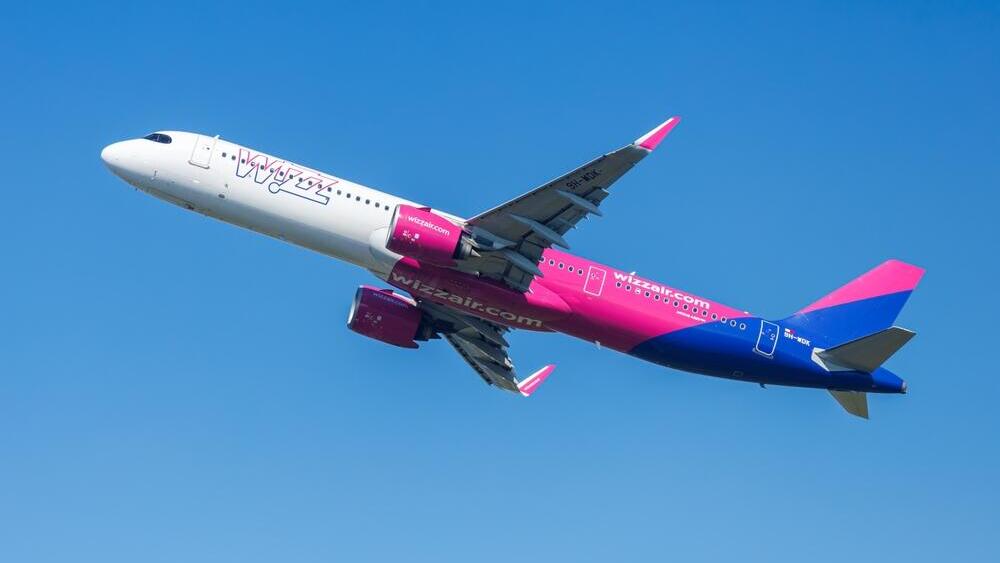
Wizz Air's cancellations currently extend only through April 27
(Photo: Markus Mainka / Shutterstock)
According to Freund-Feinstein, even after restrictions are lifted, a return will not be immediate. “Once airlines are permitted to operate in Israel and assess that the new situation provides sufficient certainty, they will need to decide whether they have the resources — crews and aircraft — to resume operations here. As time passes, airlines finalize their schedules, and their ability to return to the Israeli market diminishes,” he said.
He warned that some carriers may not return at all. “Certain airlines may decide that Israel is too high-risk a market and forgo resuming operations altogether. We have seen this with Ryanair and easyJet, which exited the Israeli market despite its importance to them for many years, and with Virgin Atlantic, which partially withdrew and shifted to code-share agreements with El Al.”
On pricing, Freund-Feinstein said the current situation is likely to persist as long as supply remains limited. “Prices are undoubtedly high at present, but over the longer term they are expected to moderate depending on competition and operational characteristics," he said. "Routes to the Far East have always been and will remain problematic. On these routes, Israeli airlines face little to no competition on direct flights.”
He added that security constraints are directly affecting costs. “Israeli airlines are required to fly on detour routes that have become even longer since the Houthi threat, forcing them to operate with a relatively high cost base that translates into higher ticket prices compared with carriers from the Gulf and Jordan.”
As long as restrictions persist, prices will remain elevated, according to Freund-Feinstein. “If foreign airlines do not return, or if they too are forced to operate on detour routes rather than through Omani and Saudi airspace, prices will stay high.”
Reuters reported that, even after the ceasefire, the global aviation industry does not expect immediate relief. According to industry sources, jet fuel prices have more than doubled since the conflict began, and shortages are expected to continue for months due to damage to refining infrastructure in the Middle East. International Air Transport Association (IATA) Director General Willie Walsh said that even if key shipping routes reopen, it will take considerable time for supply to return to normal levels. Airlines are already reporting unusually high fuel costs and operational adjustments — a trend likely to continue affecting ticket prices in the near term.
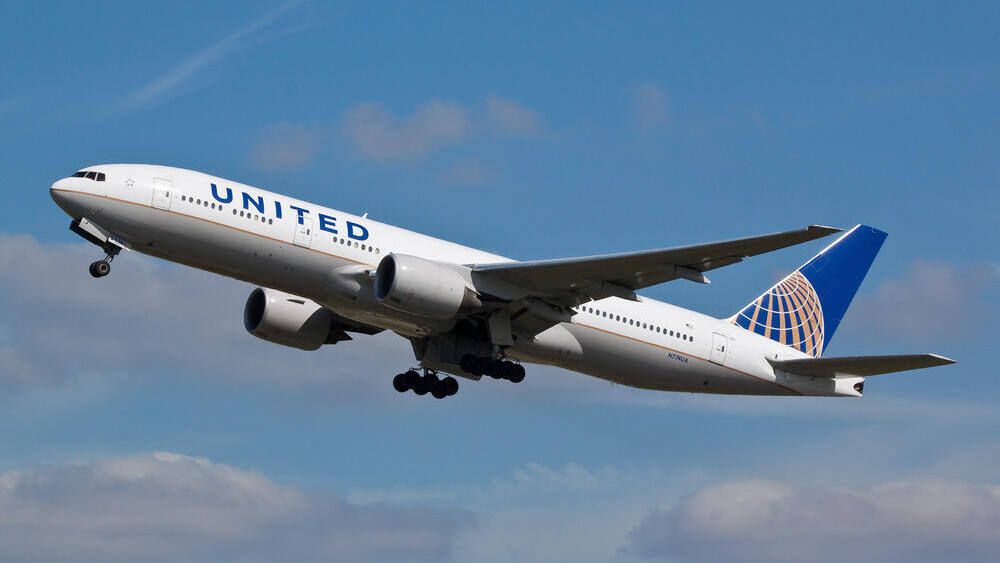
United Airlines is not expected to return to Ben Gurion Airport until at least September
(Photo: IanC66/Shutterstock)
Freund-Feinstein described a gradual rather than immediate process. “Stabilization of the ceasefire is expected to enable a relatively lengthy process culminating in a return to full operations. European and U.S. regulators will be able to remove Israel from the list of destinations deemed unsafe due to security conditions, aircraft leasing companies will allow airlines to operate leased aircraft in the Middle East and Gulf region, insurance rates will fall, and flight crews will agree to staff these routes.
“The expectation is for a relatively slow return to normal, alongside considerable uncertainty. If the current ceasefire becomes permanent and no additional risks emerge over the next month and a half, we are likely to see the first month of the summer season fall short of its potential, followed by a very strong month starting in July due to high demand relative to a typical season.”
Shirley Cohen Orkaby, vice president of Eshet Tours, said demand is already evident, but supply remains far behind. “Israelis very much want to go on vacation. They feel pent up after a long period of war, and as the situation stabilizes we will see demand increase daily. However, we are once again facing high demand and low supply — the return of foreign airlines will be gradual, and from experience we know it does not happen all at once.”
She stressed that no sharp change is expected in the near term. “We will see a gradual return beginning in late April, with airlines resuming in May and even into September, as in the case of United Airlines and Air Canada. Alongside the gradual reopening of supply, the aviation industry is also dealing with significantly higher jet fuel prices due to the war, which will affect pricing.”
Aviation Links VP Nir Mazor, VP of aviation relations, pointed to a sharp surge in public interest. “There has definitely been an increase in bookings, and especially in web traffic — meaning a significant resurgence in demand, exceeding 100% compared to the days before the deal. Experience shows it takes up to 48 hours for customers to return to booking at an accelerating pace and, if the ceasefire stabilizes, we are already preparing starting today and over the weekend with reinforced staffing to handle the volume of calls and summer bookings expected to return in a big way.”
He said demand is currently focused on nearby destinations, while supply remains limited. “Nearby destinations are leading demand, mainly Greece and Cyprus as classic summer destinations. However, while there is already a rush to purchase tickets on Israeli airlines, there is a shortage of broader supply from foreign carriers. As long as they do not return to flight schedules, this will continue to impact price levels.”
Still, he noted that past experience suggests a relatively quick recovery. “From experience, once a ceasefire stabilizes, foreign airlines tend to return quickly to flight schedules, and supply expands accordingly.”

Greece is the destination that is most in demand
(Photo: Shutterstock)
When will flights resume? Here is the full list of foreign airline cancellations:
Aegean Airlines — through June 26 (inclusive).
Uzbekistan Airways — through April 13 (inclusive).
Austrian Airlines — through May 31 (inclusive).
Azimuth — through April 19 (inclusive).
Azerbaijan Airlines — through April 30 (inclusive).
Iberia Express — through May 31 (inclusive).
easyJet — no plans to operate flights to Tel Aviv in the foreseeable future.
ITA Airways — through May 1 (inclusive).
Air Europa — through May 3 (inclusive).
Air India — through May 31 (inclusive).
Air Baltic — through May 31 (inclusive).
Air Seychelles — through May 1 (inclusive).
Air France — through May 3 (inclusive).
Air Canada — through Sept. 7 (inclusive).
American Airlines — through July 1 (inclusive).
Animawings — through Aug. 9 (inclusive).
Ethiopian Airlines — through April 15 (inclusive).
Etihad — through April 15 (inclusive).
Bulgaria Air — through May 11 (inclusive).
Blue Bird — through April 18 (inclusive).
British Airways — through May 31 (inclusive).
Brussels Airlines — through May 31 (inclusive).
Georgian Airways — through April 16 (inclusive).
Delta — through Sept. 5 (inclusive).
HiSky — through April 15 (inclusive).
Hainan Airlines — through April 19 (inclusive).
Wizz Air — through April 27 (inclusive).
TAP Air Portugal — through May 10 (inclusive).
TAROM — through April 18 (inclusive).
Transavia — through July 5 (inclusive).
TUS Airways — through April 18 (inclusive).
United Airlines — through Sept. 7 (inclusive).
Eurowings — through April 30 (inclusive).
LOT — through May 31 (inclusive).
Lufthansa — through May 31 (inclusive).
Malta Airlines — has removed Tel Aviv from its destination list.
Neos — until further notice.
Norwegian — through June 16 (inclusive).
SAS — through May 17 (inclusive).
SWISS — through May 31 (inclusive).
Cyprus Airways — through April 16 (inclusive).
Smartwings — through June 30 (inclusive).
SkyUp — through May 2 (inclusive).
Sky Express — through April 16 (inclusive).
flydubai — through April 30 (inclusive).
FlyOne — through April 18 (inclusive).
Centrum Air — through April 20 (inclusive).
KLM — through May 17 (inclusive).
Red Wings — through April 17 (inclusive).
First published: 15:21, 04.09.26