

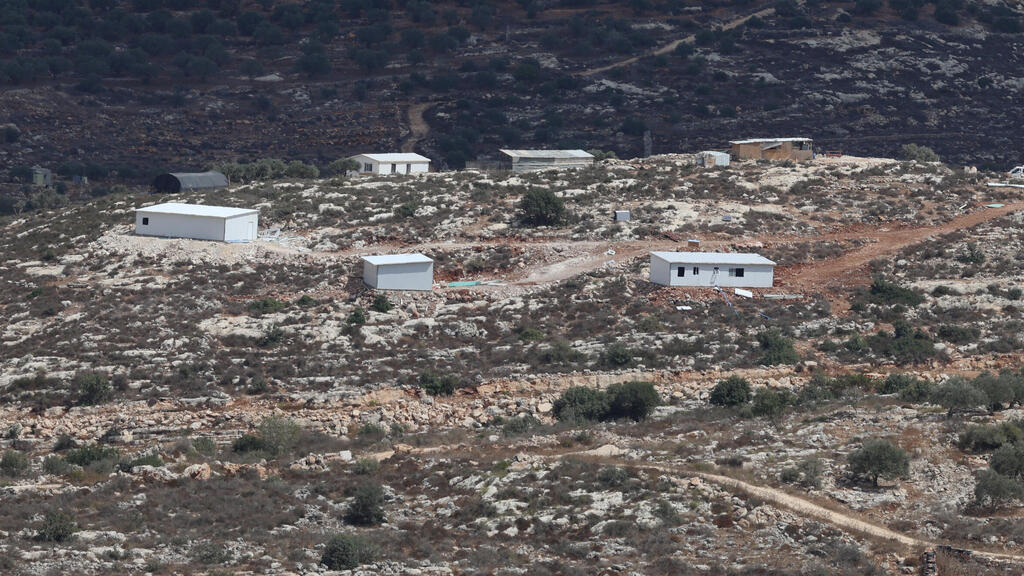
The Palestinian farmhouses scattered across the ridge above Wadi Qana look less like places to rest than small fortresses. Barbed wire surrounds them. Floodlights and cameras rise above the roofs. Metal grilles cover the windows, and heavy gates are bolted shut.
The owners say the fortifications are new, built after a year of repeated incursions, stone-throwing, vandalism and confrontations involving Israelis from newly established hilltop outposts nearby. Farmer Abd al-Rahim Abu Shaib even hung a warning sign in Hebrew outside his home, hoping it might deter intruders. He says hundreds of his olive trees were destroyed.
Until about a year ago, he says, settlers rarely came this close. Then a young man in a white Toyota began driving around the area, asking questions.
Abu Shaib says the man told him he had no future there and should leave for Jordan. Another Palestinian landowner, Fadi Hayek, says the same man threatened him and declared that the land belonged to Jews because God had promised it to them thousands of years ago.
Hayek later pulled up a photograph on his phone. The man, he said, was Elisha Yered.
At 26, Yered has emerged as one of the most prominent organizers and public voices of Israel’s hilltop outpost movement, a network that has expanded rapidly across the West Bank and increasingly into Areas B and A, where under the Oslo Accords the Palestinian Authority exercises civilian control. Recent Israeli reporting has also described Yered as a key organizer of illegal outposts. The Times of Israel
The campaign is not simply a collection of teenagers throwing up tents on remote hillsides. It has logistics, fundraising, communications teams, equipment and a political vision. Yered has become one of its most recognizable faces, publicly promoting a strategy aimed at changing facts on the ground before the Israeli government formally changes the law or abandons the Oslo framework.
A new target on the map
Dozens of unauthorized outposts have been established in Area C during the current government’s term. In the past two years, the report documents at least 23 more in Area B and another in Area A, together covering roughly 100,000 dunams, much of it Palestinian agricultural land. Israeli forces have dismantled some of them, only for activists to return and rebuild after troops leave. Israeli security forces have recently confirmed demolitions of illegal outposts in Area B, underscoring the growing phenomenon. The Times of Israel
The latest focus is an area activists call “Gush Qana,” around Wadi Qana in the northern West Bank. The stated goal is to create a chain of outposts linking Yitzhar and Emmanuel and, in the activists’ own language, interrupt Palestinian territorial continuity between the northern and southern West Bank.
Three outposts have already been established in the area: Mevo Qana, Tzon Aviezer and Kfar Ro’im.
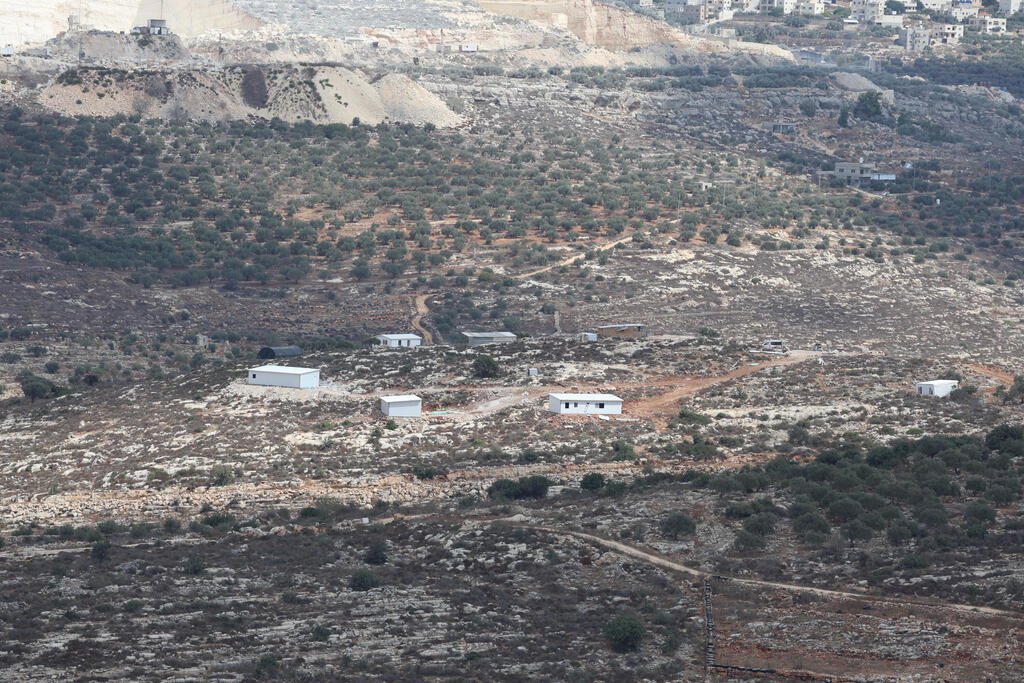
(Photo: Shaul Golan)
This is not an officially approved Israeli settlement plan. According to the reporting, there was no cabinet decision creating it, no formal planning process and no consultation with security officials. Israel officially removes unauthorized outposts built in Areas A and B, even as activists repeatedly return.
Yered, however, promotes the strategy openly. On WhatsApp, X, Telegram and Facebook, he circulates maps and diagrams showing where activists believe new Jewish footholds should be established. One slogan declares: “Cut the arteries of the Palestinian state, redeem Gush Qana.”
In a regular column in the religious-right magazine Olam Katan, he has outlined what he sees as a broader hilltop strategy, including a list of 10 mountains he considers essential to achieving Israeli sovereignty across the West Bank.
From hilltop youth to movement spokesman
Yered was born in Ramat Gan and moved as a young child with his family to the former settlement of Sa-Nur in the northern West Bank. As a teenager he took part in establishing outposts and was at one point subjected to an administrative order barring him from the territory.
After the last election, he briefly served as spokesman for Otzma Yehudit lawmaker Limor Son Har-Melech before leaving the job. He later became a high-profile figure on social media and an increasingly articulate spokesman for the ideological world known simply as “the hills.”
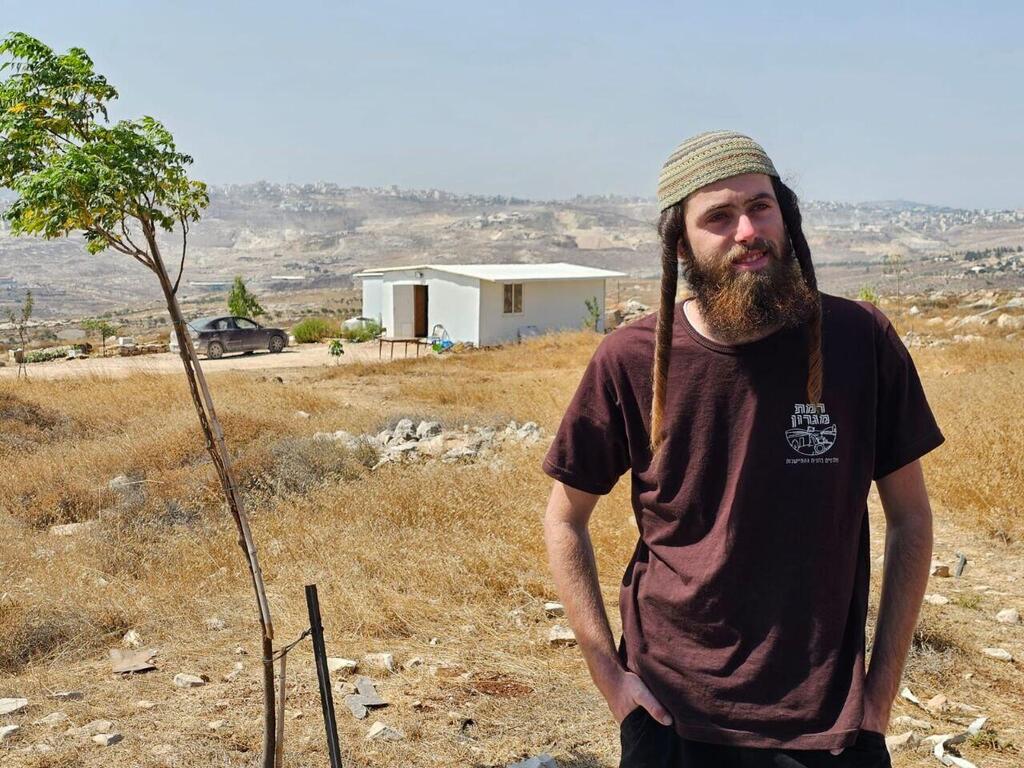
Elisha Yered
That ideology rejects the existing legal and political boundaries governing settlement in the West Bank. Its activists view Jewish control of the land as a goal that should be advanced directly, even when government policy has not formally authorized it.
For Yered, Wadi Qana is directly connected to the Oslo Accords.
In an AI-generated video circulated by his movement, he recounts a story about the final negotiations over Oslo II in September 1995, claiming Yasser Arafat insisted on receiving territorial continuity between Nablus and Ramallah. The video argues that the answer, 30 years later, is Jewish control of Wadi Qana.
Whatever the historical dramatization, the political message is explicit: the activists see hilltop outposts as a tool for changing the territorial map created by Oslo.
The machinery behind the hills
The outposts have developed an increasingly organized support system.
The Frontline Hills Administration and the Hills Fund provide logistical and financial assistance, according to their own publications. Their activities include construction materials, furniture, security equipment, sheep, solar systems, water infrastructure, road building, transportation and drones.
Before Rosh Hashanah, Yered published footage showing workers laying a permanent water line to Tzon Aviezer and Kfar Ro’im after months in which residents relied on water tanks and jerrycans.
The Hills Fund said in its annual report that it had supported more than 20 settlement points in Areas A and B and provided guidance to more than 15 new hilltops on selecting “strategic” locations and establishing themselves on the ground.
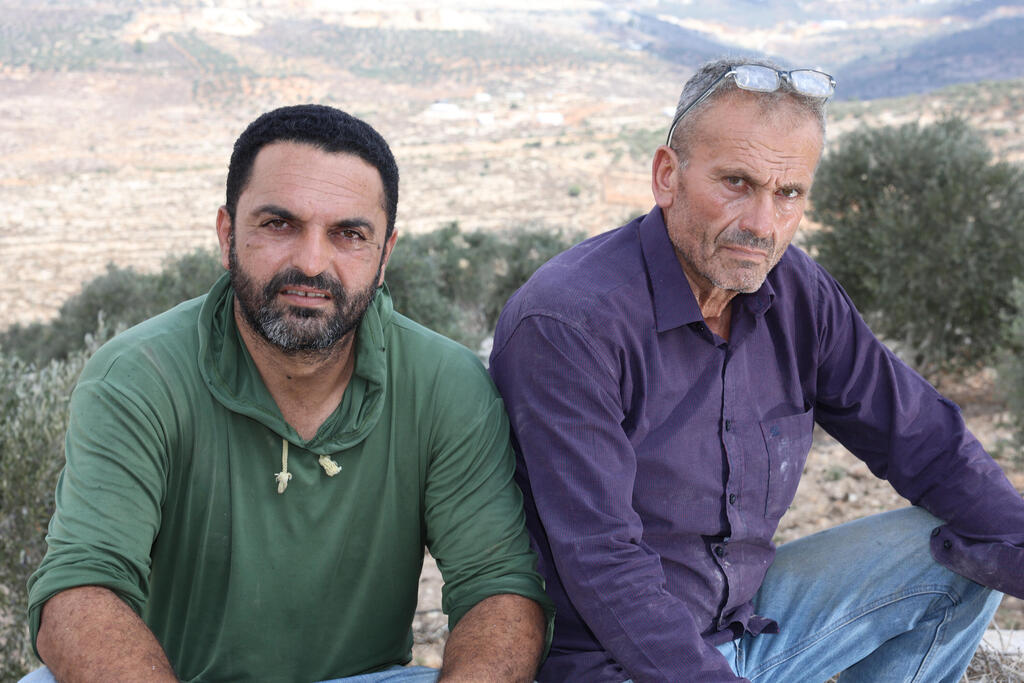
Fadi Hayek and Abd al-Rahim Abu Shaib
(Photo: Shaul Golan)
Fundraising pages solicit donations for specific costs, including 450 shekels to maintain a day of work on a hilltop, 860 shekels for a shepherd’s security kit and 2,000 shekels for a sheep.
The activists insist their operations do not rely on government funding.
Dror Etkes of Kerem Navot, an organization that tracks Israeli settlement activity, questions whether crowdfunding alone can cover the infrastructure visible on the ground. Building kilometers of access roads with heavy machinery, he argues, costs far more than the tens of thousands of shekels raised in individual campaigns.
The Justice Ministry’s public registry, according to the report, shows no government allocations to the registered nonprofits connected to some of the fundraising. Yered himself is not affiliated with those nonprofits, but he is active in the Frontline Hills Administration alongside other prominent hilltop organizers.
Palestinians fear what comes next
For Palestinian farmers living beneath the new outposts, the ideological debate is already tangible.
Abu Shaib says his property has repeatedly been entered and damaged. Hayek says he was threatened. Residents of nearby villages say confrontations and harassment have become part of daily life since the outposts appeared.
In Deir Istiya, southwest of Nablus, residents are now looking toward the olive harvest with anxiety. Village council head Izzat Mansour says locals fear the new hilltop residents will prevent farmers from reaching their groves.
“They don’t want to live with us,” he said. “They want to live here instead of us.”
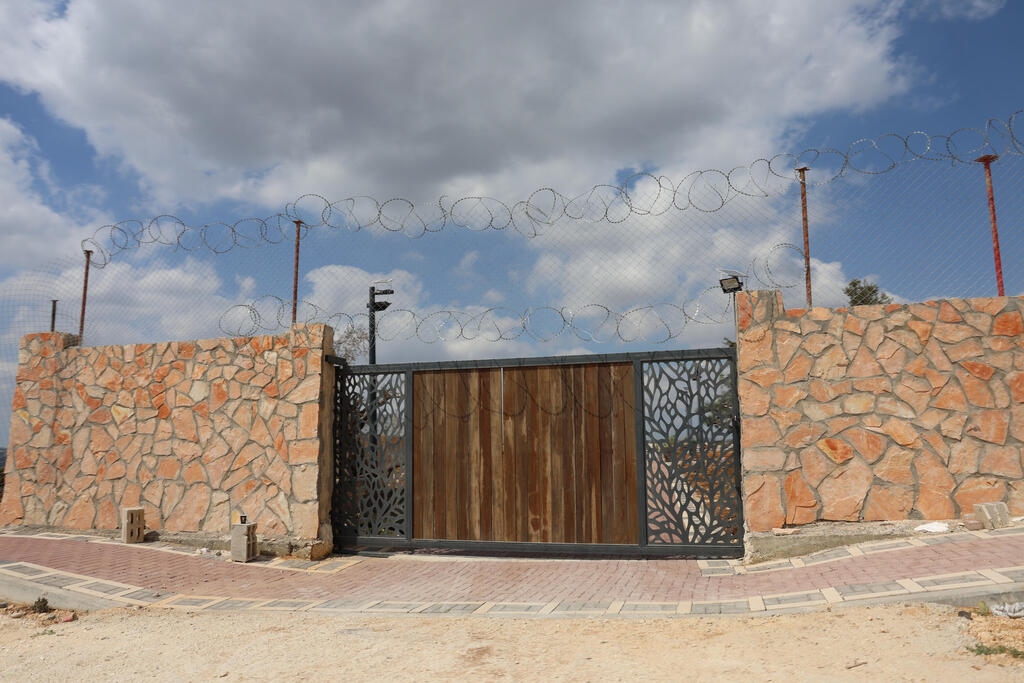
Palestinian defenses against violent settlers
(Photo: Shaul Golan)
Dr. Nafis Mansour, who heads the village farmers’ committee, said repeated evacuations followed by the activists’ return have convinced many Palestinians that the state is unwilling or unable to stop the process.
Israeli rights group Yesh Din goes further, arguing that the spread of outposts cannot be separated from the conduct of Israeli authorities and alleging that weak enforcement effectively enables their expansion. That is the organization’s assessment, not an official Israeli government position.
Religious activist Roi Kleitman of Bnei Avraham, a group sharply critical of hilltop extremists, argues that Yered’s influence now extends well beyond the outposts themselves. Through his writing and social media presence, Kleitman says, ideas once confined to the radical margins have entered broader religious-Zionist debate.
That may be Yered’s most significant achievement. The outposts remain unauthorized, security forces still dismantle some of them and the government has not formally adopted his map. But on the hills themselves, new roads are being opened, water pipes laid and structures rebuilt after evacuations.
One man is not literally redrawing the West Bank alone. But Yered has become the clearest face of a movement trying to do exactly that, one hill at a time.