

In August 2024, after three years of preparation, Elad Bezalel set out on one of the biggest challenges of his life: crossing Greenland as part of an Arctic expedition.
The goal was the historic Nansen route, a full journey of roughly 650 kilometers (400 miles), from the sea on Greenland’s east coast to the sea on its west, without being flown onto the ice sheet or collected from it at the end.
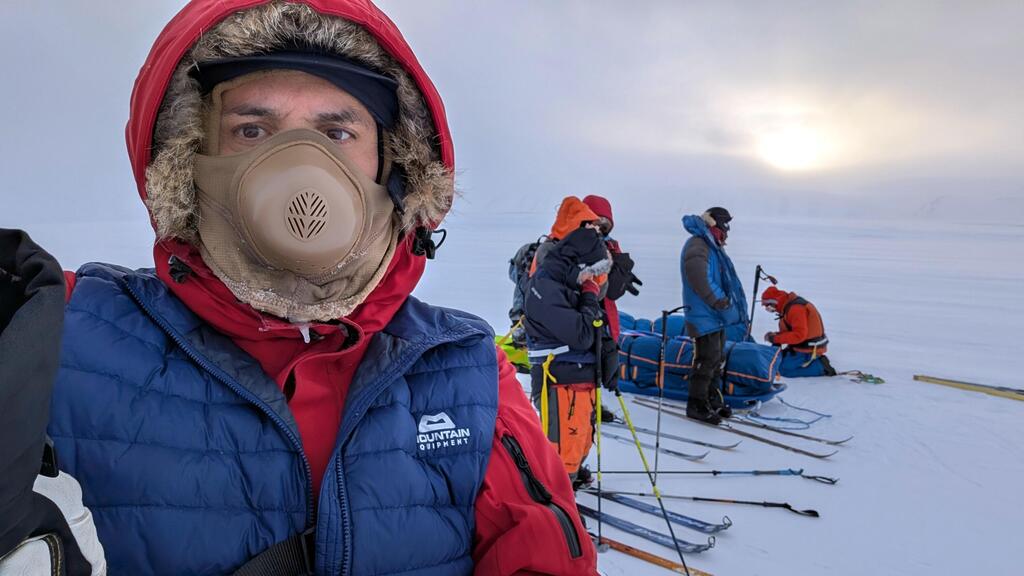
On the second day, the sled Bezalel was pulling suddenly fell into a crevasse. He tried to haul it out and injured his back. Despite the pain, he continued with the group for about another week, unsure whether he was dealing with something he could push through or an injury that could cause lasting damage.
Eventually, he faced the decision every expedition member dreads: keep going or stop. The farther the team advanced, the harder and more expensive a rescue would become, potentially even requiring U.S. military involvement. A helicopter was called, and Bezalel was evacuated from the ice.
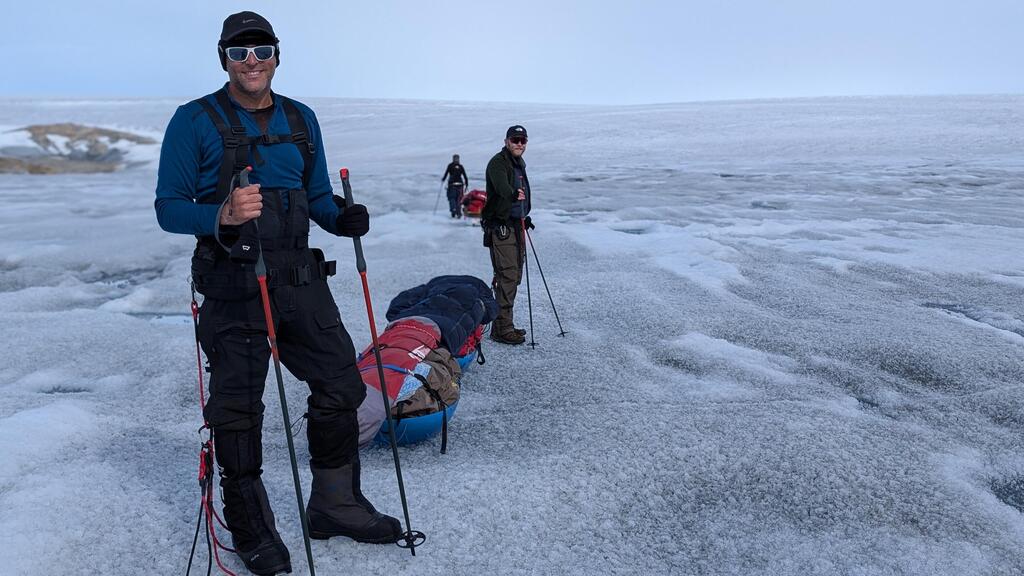
The Greenland expedition, 2024 ended in failure
(Photo: Courtesy of Elad Bezalel)
For him, the rescue felt like the loss of a dream. “I felt a real sense of loss,” he says. “A dream I had worked toward for three years ended in the middle of the ice sheet, very far from the result I had hoped for.”
Rather than trying to forget what happened, Bezalel sat down afterward and wrote five dense pages of lessons. He reviewed his decisions and confronted the question that mattered most: Was he really capable of returning to an expedition like this?
His answer eventually took him to Svalbard, the Norwegian Arctic archipelago far north of the mainland.
First, I have to ask: How does a man with a wife and three children get their blessing to set out on another expedition like this, especially after such a serious injury and dramatic rescue?
“That was probably the question that occupied me more than anything,” Bezalel says. “This isn’t only about me. There’s a wife and three children staying at home who have to live with my decisions. They were worried, and rightly so.”
“After the Greenland rescue, nobody at home simply accepted that I should go out again. But they also saw the rehabilitation, the training, the learning and the preparation. I think that gave them much more confidence that this time I was leaving from a different place.”
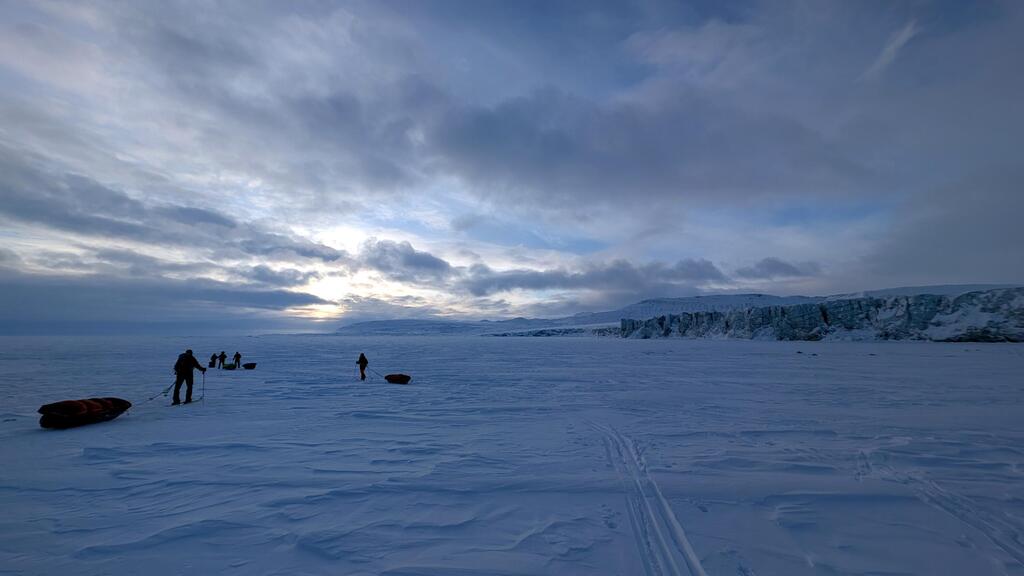
Skiing across the frozen eastern sea
(Photo: Elad Bezalel)
“The line between fulfilling a dream and selfishness is where the dream turns into ego,” he says. “If I had gone only to erase the failure in Greenland or prove something to myself or other people, I think that would have been selfish.”
“Before I left, my oldest son asked whether I thought I would finish this time. I knew he was looking at me not only as his father, but also as an example,” Bezalel says. “I felt a responsibility to show him how you approach a major challenge after failure, not through words but through actions.”
“I didn’t want to go back just because I had unfinished business there,” he says. “I wanted to return only if I knew I was really ready.”
Svalbard became the test. Could his body cope with another expedition? Had he genuinely learned from Greenland? Could he make better decisions when things went wrong?
“And along the way, something happened that I hadn’t planned,” he says. “I fell in love with Svalbard itself. It began as a test and ended as a dream fulfilled in its own right.”
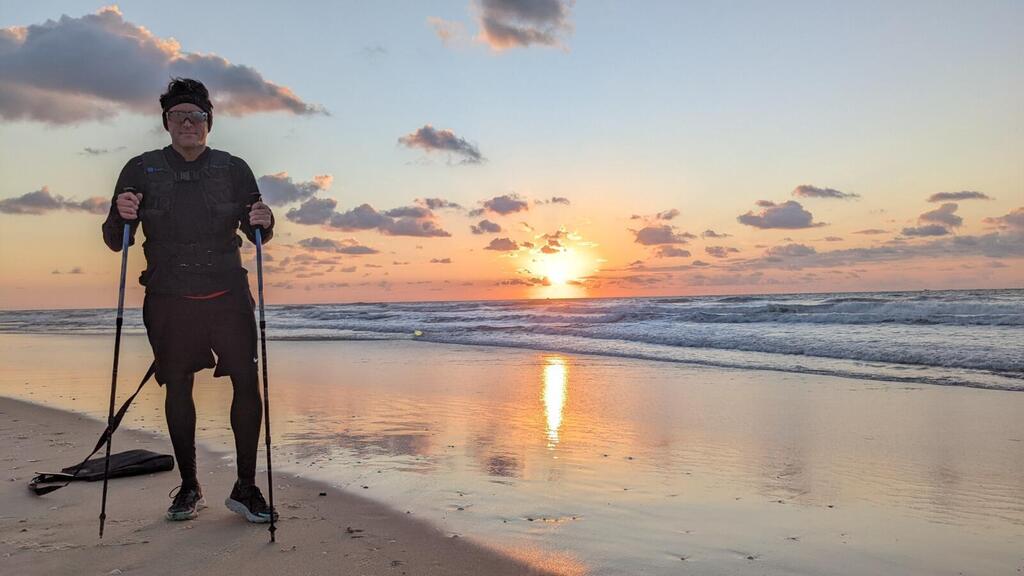
Training on Israel's Palmachim Beach
(Photo: Courtesy of Elad Bezalel)
For months beforehand, Bezalel trained on Israel’s Palmachim beach, running, lifting weights and dragging tires and sandbags across the sand, even in rain and hail. The training prepared his body, but could not reproduce what it meant to live in Arctic cold around the clock.
On March 7, 2026, about a year and a half after his Greenland rescue, Bezalel received his family’s blessing and returned to the ice. He traveled to Spitsbergen, the largest island in the Svalbard archipelago, roughly 1,300 kilometers from the North Pole. His goal was to cross the island from east to west.
Spitsbergen presents an unusually concentrated set of Arctic hazards: glaciers, frozen valleys, mountain passes, deep snow, fierce winds and rapidly changing weather. Then there are whiteouts, when snow, cloud and sky merge into a nearly featureless field of white, making it difficult to distinguish the horizon, slopes or obstacles ahead.
And there are polar bears. The expedition moved through their natural habitat, meaning vigilance was required even when the team stopped to rest.
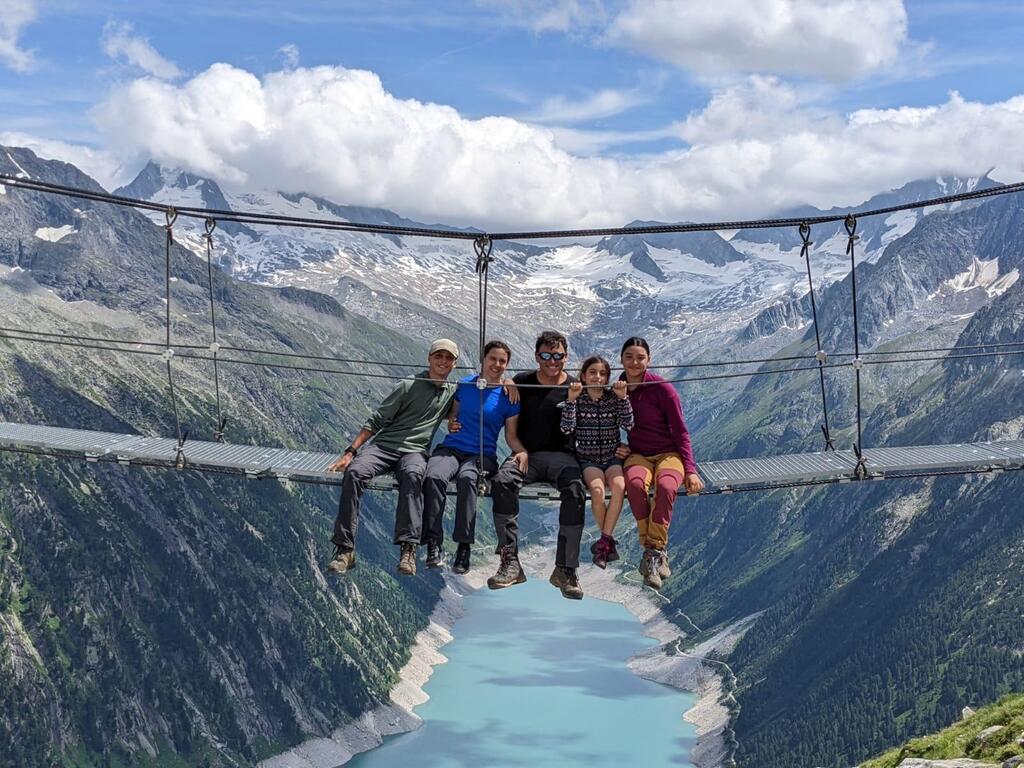
‘They were worried, and rightly so.’ Elad Bezalel with his family
(Photo: Family album)
Did you imagine another rescue ending this expedition too?
“If this journey had also ended in a rescue, that probably would have been the end for me,” Bezalel says. “I would have hung up the skis and stopped. Two rescues in a row would have been a sign, as far as I was concerned, that I wasn’t suited to this world, or at least that I wasn’t managing its risks at the standard I expected from myself.”
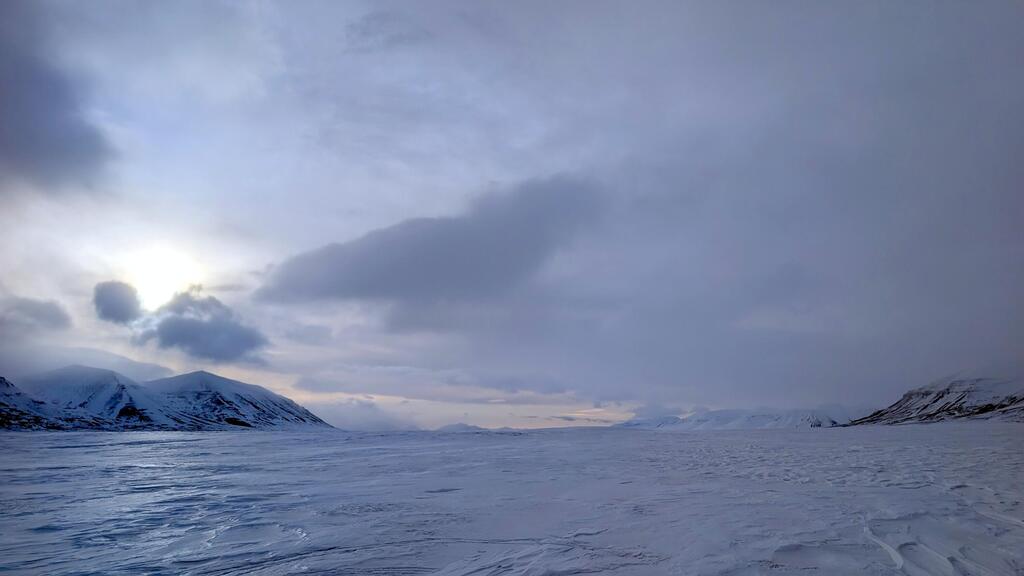
A particularly grueling day
(Photo: Elad Bezalel)
He joined five other experienced expedition members, including an emergency physician, a mountaineer and a man who had crossed the Sahara Desert three times. Over 12 days, the six crossed roughly 160 kilometers (100 miles), on skis. Each initially pulled a sled weighing about 60 kilograms (130 pounds).
Once dropped off, they had no roads, towns or supply points. Everything they needed traveled with them.
So you arrive and begin the expedition. Was there anything that surprised you, something you hadn’t expected?
“The wind. Most people assume the biggest enemy is the temperature, but for me, the wind was what dictated the expedition. It determined our pace, how exhausted we became, where we set up camp and sometimes even whether we left the tent at all.”
Each day, the team traveled for 10 to 12 hours, typically moving for 50 minutes before taking a 10-minute break. Reaching camp did not mean the day was over. They still had to pitch tents, melt snow for drinking water, cook, dry equipment and take turns watching for polar bears.
The glove that blew away and the mistake that nearly ended it all
Human beings are not the animals’ usual prey, and attacks are rare. But a hungry or curious polar bear can approach a camp and may, in some circumstances, treat a person as prey. For that reason, team members took two-hour overnight guard shifts equipped with a rifle, flare gun, binoculars and flashlight.
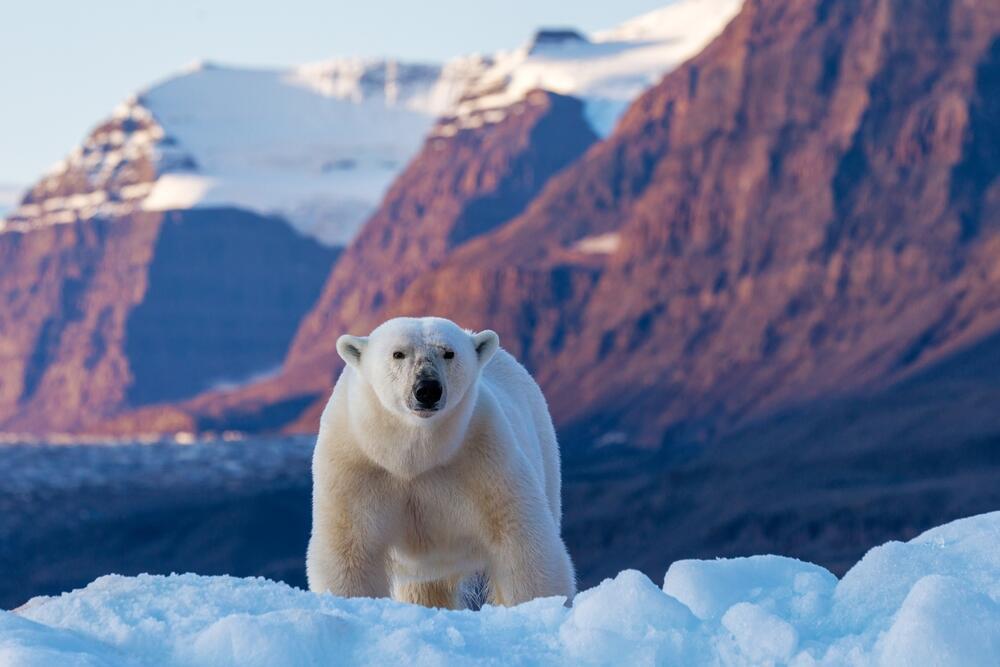
Polar bear. Cute, but extremely dangerous
(Photo: Jane Rix/Shutterstock)
At several points they found tracks. Near a frozen lake, they came across signs left by a herd of Svalbard reindeer, followed by what appeared to be the tracks of a large bear following them.
What is it like to realize you could become the prey?
“You understand that you have entered an environment where the polar bear is the apex predator and you are the guest,” Bezalel says. “But discipline very quickly replaces fear. If a polar bear had decided to charge me, there probably wouldn’t have been very much I could do. Often we couldn’t see more than 50 meters ahead. You understand that there are situations you simply cannot control, and you learn to live with that knowledge.”
“After making sure there was no bear around, I would do mobility exercises and yoga on a patch of snow I had packed down with my feet, in the dark, in temperatures approaching minus 30, with the rifle beside me,” he says. “It probably looked surreal from the outside, but for me it was just my morning routine, except now I did it in the middle of the night.”
One night, however, a far smaller mistake nearly brought everything to an end. Bezalel slipped while entering the tent. A glove that had not been secured to his wrist disappeared into the wind. In Arctic conditions, losing a glove can become a rescue-level emergency within minutes.
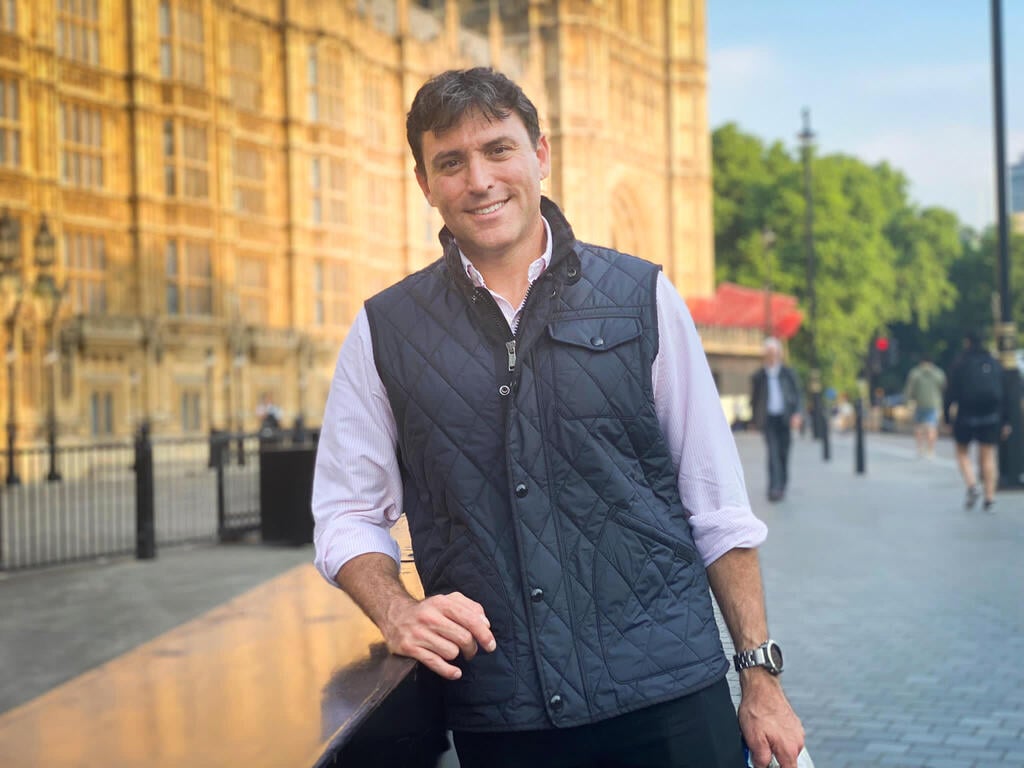
Elad Bezalel
(Photo: Family album)
What was stronger, fear for your fingers or embarrassment in front of the expedition leader?
“Without question, the embarrassment,” he says. “My fingers were still fine. But the next morning, when I had to tell the expedition leader that I’d lost a piece of equipment because I hadn’t been careful enough, and that I couldn’t solve the problem on my own, I felt like a complete rookie.”
The expedition leader fashioned a replacement from his own emergency gear and told Bezalel there were no spare gloves left. “I didn’t need to hear anything more,” he says. “I got the message.”
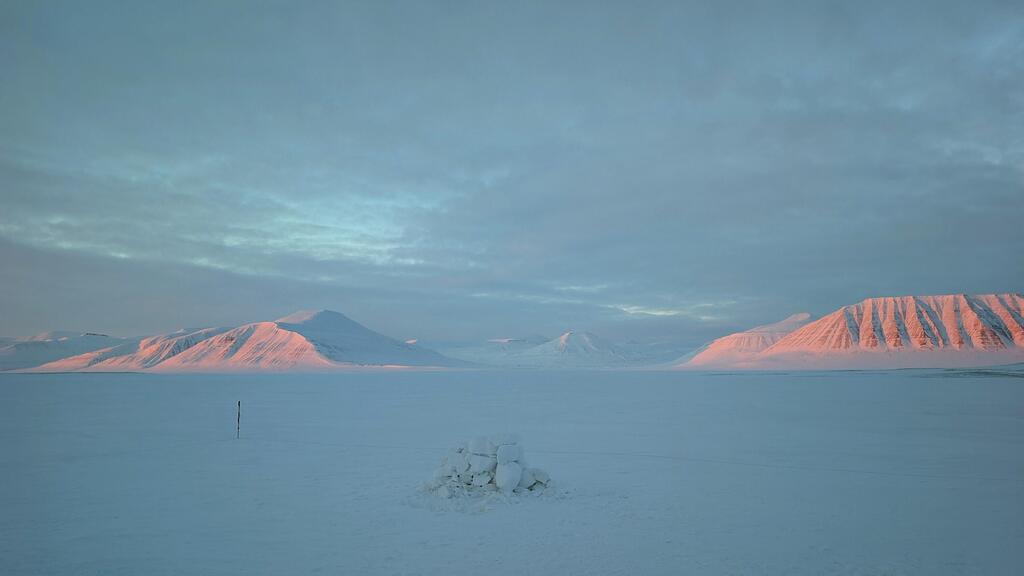
This is how you go to the bathroom. A makeshift toilet shelter
(Photo: Elad Bezalel)
That was when Bezalel realized danger did not necessarily arrive as a polar bear or a blizzard. It could be “one small mistake, then another one, then another.” From then on, he secured every item, assigned a fixed place to every object and stopped taking shortcuts.
The glove incident was not the only time the expedition forced him to reconsider the difference between independence and ego. On the second day, during a difficult climb through deep snow, the expedition leader asked a Swiss mountaineer for help.
What was harder, the physical effort or admitting that you needed help?
“The harder part was admitting I needed help,” Bezalel says. “My first instinct was to manage on my own. Instead of simply letting the mountaineer help me, I tried to help him help me, leaning too hard on my ski poles and pulling myself forward with my arms.
“That night, nearly every muscle in my arms seized up with painful cramps. That was when I understood there’s a big difference between independence and ego. Independence is doing everything you can on your own. Ego is refusing help even when accepting it is the right thing to do. In an environment like this, accepting help isn’t a sign of weakness. It’s a sign of professionalism.”
Between the cold, the embarrassment and the finish line
As the expedition progressed, the challenges never let up: a blizzard forced the team to change its safety procedures, the cold kept seeping in even inside the tent, and life in the field left almost no privacy. Yet it was amid that punishing routine that the turning point came, when Bezalel stopped fighting his skis, began to glide and realized he was truly on his way to the finish line.
What was the hardest moment for you on this expedition?
“The night we were caught in an unusually severe blizzard. The wind was so strong that even with all our layers, the cold cut through us within minutes. The expedition leader even changed the polar bear watch protocol. Instead of standing outside for two hours, each person stayed inside the tent, looked out through the entrance and stepped outside every few minutes for a quick scan. He judged the danger from the storm to be greater than the risk from a polar bear.”
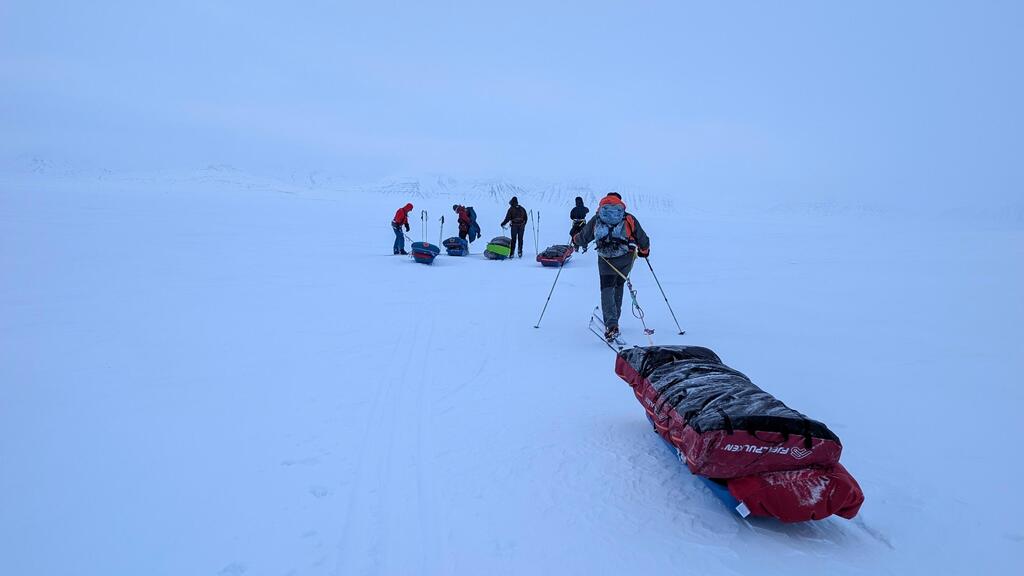
Preparing for lunch
(Photo: Elad Bezalel)
Paradoxically, walking was often easier than stopping. “The really hard moments came during breaks,” he says. “Within less than a minute, the cold would start getting in, your body would begin shaking and all you wanted was to start moving again.”
“During the first hour in the tent, I kept shivering almost nonstop. In a polar expedition course in Norway, the program director told me something I never forgot: ‘You need to be comfortably cold.’ You’re not trying to stay warm. You learn how to function even when you’re cold.”
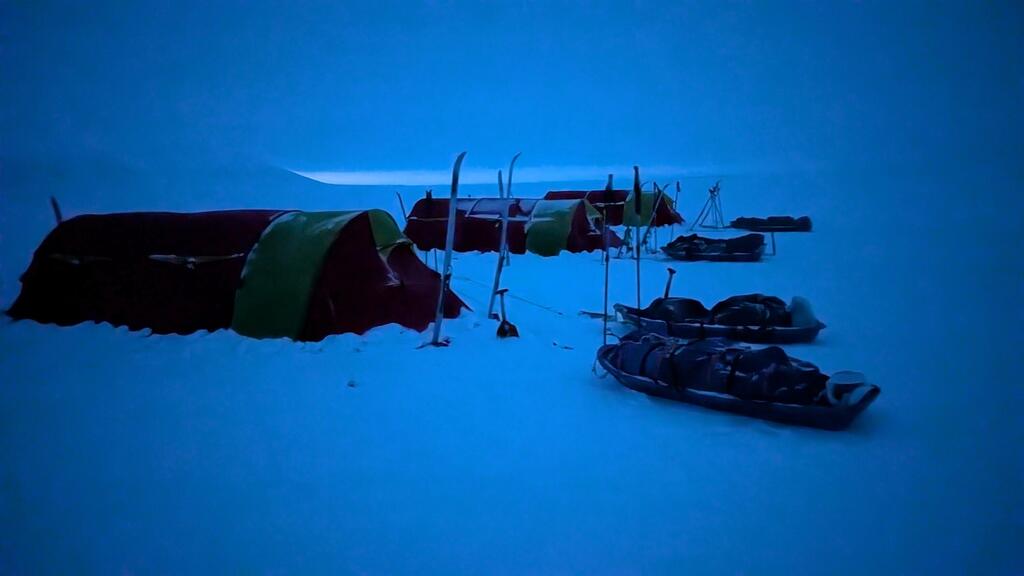
Polar bear watch
(Photo: Elad Bezalel)
The morning after the storm, temperatures inside the tents approached -25 degrees Celsius (-13 F). The expedition leader consulted every member separately before bringing the group together. They ultimately decided to remain inside until midday and wait for conditions to ease, even though it meant a longer walking day later. “Nobody tried to ‘beat’ the storm or prove they were tougher,” Bezalel says.
Is there a funny, frustrating, embarrassing or especially meaningful moment you remember from living together as a group in the tents?
“Maybe the most embarrassing, but also the funniest, moment was going to the bathroom. When you’re standing in deep snow in completely open terrain, there’s really nowhere to hide. The moment you step off your skis, you sink into the snow, so in practice you end up relieving yourself only a few meters from the rest of the expedition.
“Almost comically, that’s exactly when everyone suddenly finds something fascinating to look at in the opposite direction. Everyone pretends to be busy with something else, while you try to finish as quickly as possible, burn the toilet paper according to procedure and carry on as if nothing happened. After a few days, even the embarrassment disappears.”
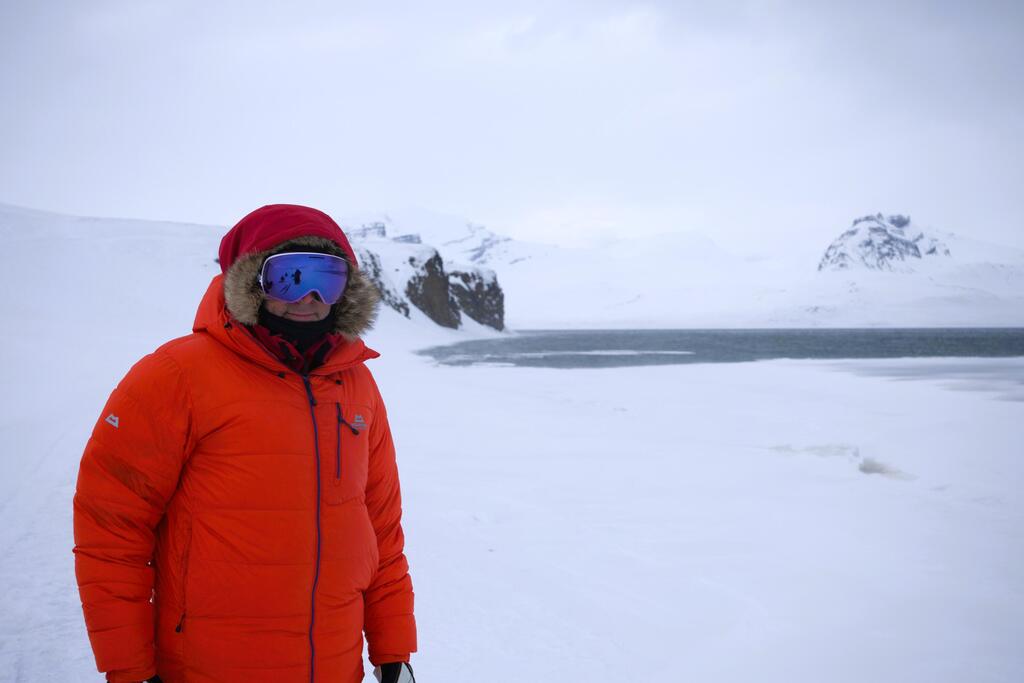
Elad Bezalel
(Photo: Courtesy of Elad Bezalel)
“On an Arctic expedition, you quickly realize there’s really no privacy. Everyone is in exactly the same situation, and everyone goes through the same thing several times a day.
“On my previous expedition in Greenland, expedition leader Katinka Hoskuld, considered one of the world’s leading polar explorers, actually liked to joke about it. After many days of dehydrated food, she would smile and ask us what everyone’s bowel movements looked like. It was her way of reminding us that even in one of the most extreme environments on Earth, you still need to keep your sense of humor. I think that was one of the things that helped keep the group’s morale up.”
When did you start to feel that everything was coming together, and that you were really on your way to finishing the expedition?
“What happened was actually very technical, but it had a huge impact. After nearly 10 days, I suddenly figured out how to actually ski. Until then, I had basically been walking on the skis. Every step took effort. Then, almost in an instant, the movement changed. I started gliding.
“Suddenly, I understood what the other expedition members had been feeling from the first day. I was no longer dragging the sled by force. It simply flowed behind me. The amount of energy I saved was unbelievable.”
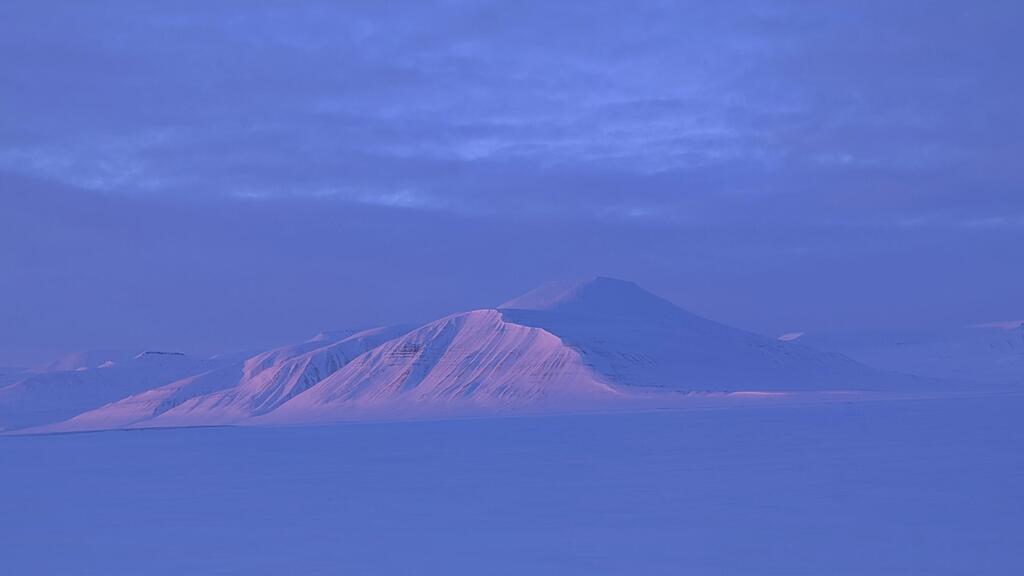
A magical view on the third day of the expedition
(Photo: Elad Bezalel)
“At the end of that day, I got into the tent and realized I felt... fresh. Suddenly, I felt like I still had energy left. I hadn’t expected that.
“In those final days, I no longer felt like I was fighting the expedition. Instead of counting the kilometers left until the end of the day, I found myself simply enjoying the walking and gliding across the snow. If someone had told me at that point that we were continuing for another week or two, I think I would have smiled and just kept going.
“That was one of the most interesting lessons for me. A lot of people think resilience is the ability to endure suffering. I think real resilience is the ability to learn. Once I acquired the right skill, the entire expedition changed. Not because I became stronger, but because I became more efficient.”
On the 12th day, after roughly 160 kilometers (about 99 miles) of glaciers, frozen valleys, storms and overnight polar bear watches, Bezalel and the other five expedition members reached Spitsbergen’s western coast. He is believed to be the first Israeli to complete the crossing in winter.
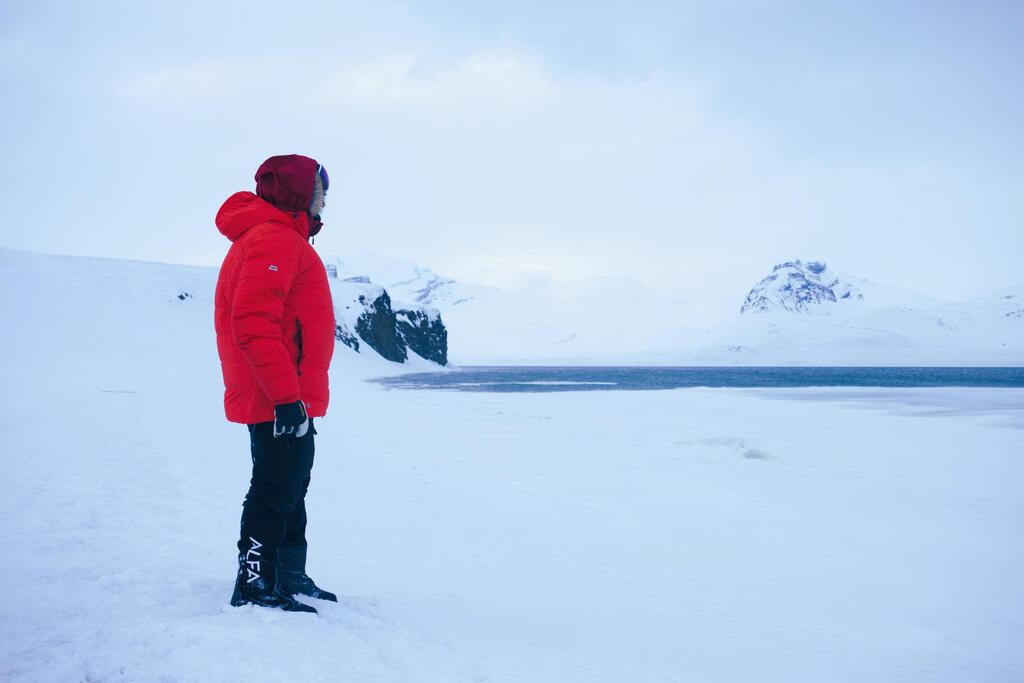
The finish line
(Photo: Courtesy of Elad Bezalel)
When you stood by the sea and realized you had finished, what did you feel? Did Svalbard heal the wound from Greenland?
“There wasn’t any outburst of emotion, and I didn’t feel like I had defeated anything. More than anything, there was a deep sense of satisfaction. I had done exactly what I came to do.
“But almost immediately, something else happened. For 12 days, I had been completely cut off. I left Israel just before the war with Iran began, and I deliberately chose not to take a satellite device with me. I didn’t want to be distracted by things I had no way of influencing.
“Only then, standing by the sea and realizing the expedition was over, did all the thoughts about my family and what was happening back home come rushing back at once. I wondered what kind of Israel I was returning to, and especially what my wife and children had gone through during those days. Until that moment, I simply hadn’t allowed myself to think about it.
“I don’t think Svalbard healed the wound from Greenland. I still have unfinished business there. But if Svalbard took something away from me, it took away the doubt. And if it gave me something back, it gave me confidence.
“Greenland is still waiting for me, but next time I’ll arrive there as a different person from the one who was rescued from it two years ago.”