

Christopher Nolan has spent decades making films about masked vigilantes, disappearing magicians, fractured timelines and men who cannot quite escape their past. His older brother Matthew, according to Costa Rican authorities, appears to have taken the family fascination with elaborate plots in a far less cinematic direction.
While Christopher was building a Hollywood career with films such as The Dark Knight, Inception, Interstellar and Oppenheimer, Matthew Nolan became entangled in a case involving a wealthy gem dealer, a missing fortune, an alleged kidnapping and murder, a fake passport, a prison escape kit and one extraordinarily unfortunate alias.
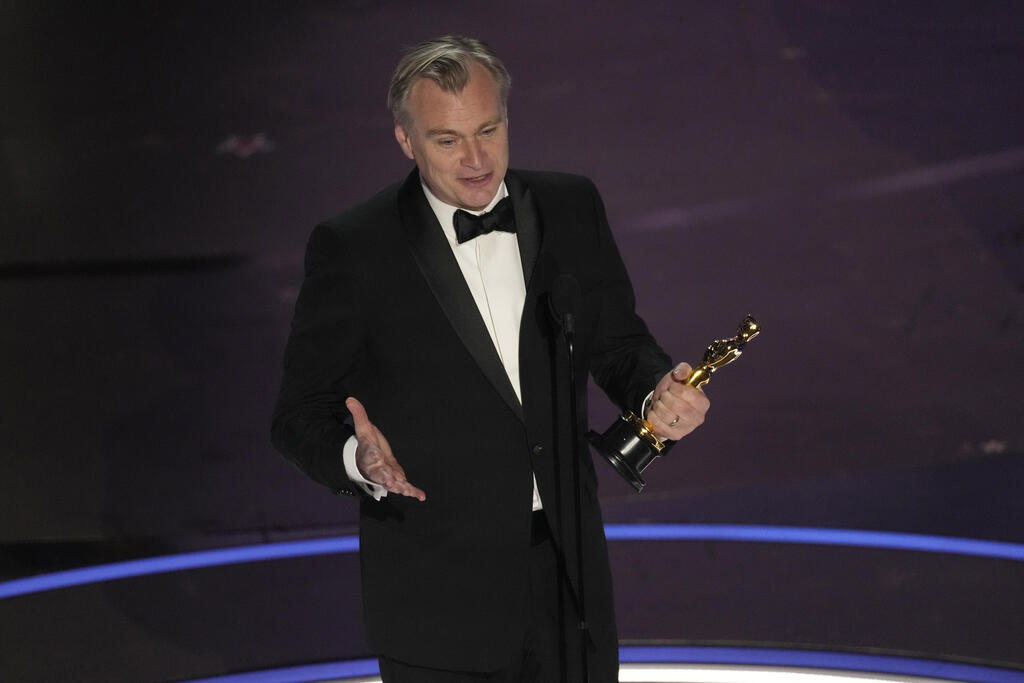
Christopher Nolan
(Photo: Chris Pizzello/Invision/AP)
The story begins with Robert Breska, a millionaire gem dealer based in South Florida who had previously been involved in a Milwaukee cocaine ring. Breska helped launder drug money by misrepresenting the value of gemstones, later testified against other members of the operation and received a reduced prison sentence.
After his release, he returned to the gem trade. Around 2004, Breska became convinced that his accountant, Robert Cohen, had stolen roughly $7 million from him. Cohen denied taking the money and said it had instead been lost by Mario Quintana, a Costa Rican business associate who had helped invest Breska’s funds through shell companies. Soon afterward, Quintana was found dead in what was ruled an apparent suicide.
Cohen became increasingly afraid. In a letter to his attorney, he warned that Breska was capable of endangering his life and wrote that if anything happened to him, Breska should be considered responsible. According to Costa Rican prosecutors, Breska then turned to Matthew Nolan. The alleged plan was to lure Cohen out of the United States and bring him to Costa Rica, where he could be questioned about the missing money.
Nolan was introduced to Cohen as a wealthy diamond dealer using the alias Matthew McCall Oppenheimer. The name was apparently intended to suggest a connection to the wealthy Oppenheimer family, which controlled the De Beers diamond empire for decades. It also became a remarkably strange footnote years later, when Christopher Nolan directed Oppenheimer. In February 2005, Cohen met Nolan in the United States, and Breska later persuaded him to travel to Costa Rica to conduct business with him.
Nolan arrived first and stayed at a hotel in San José, where he met Luis Alonso Douglas Mejía, a bellboy who would allegedly become his local accomplice. Nolan rented a white Toyota 4Runner and authorized Mejía to drive it. Cohen arrived in Costa Rica on March 2 and checked into a hotel with Nolan. Over the next several days, the two stayed in neighboring rooms, socialized and even attended an Andrea Bocelli concert together.
Then, according to prosecutors, the holiday atmosphere ended. Nolan had allegedly learned that Cohen took a morning walk around the Multiplaza shopping center near the hotel. On March 6, Nolan joined him. During the walk, Mejía allegedly pulled up in the rented Toyota, and the two men forced Cohen into the vehicle before driving away. Several hours later, Nolan returned to the hotel, retrieved documents from Cohen’s room and told Cohen’s attorney that his pregnant wife had fallen ill. He said he needed to leave immediately for Paris. Medical records later showed that Nolan’s wife was indeed unwell, although she was in Chicago rather than France.
Nolan returned to Costa Rica three days later, according to the court record. Cohen was allegedly being held captive in Limón province, where prosecutors said Nolan and Mejía tortured him in an attempt to locate the missing money. Cohen suffered a massive hemorrhage and died. His body was found March 10 on a banana plantation near Matina.
Police located the rented Toyota four days later, still being driven by Mejía, who had received two traffic tickets during the nine days after the kidnapping. When the vehicle was returned, the rental company reportedly discovered cellphone batteries and a roll of gray adhesive tape inside. Mejía was arrested and later sentenced to 27 years in prison. Nolan, meanwhile, had returned to the United States.
Costa Rica sought help from the FBI, and a Chicago-based agent began searching for him. According to the agent, Nolan managed to avoid arrest for nearly two years. The chase ended in February 2009 after Nolan and his wife filed for bankruptcy. He was arrested while attending a hearing in downtown Chicago. The agent later recalled Nolan telling him: “You never would have got me if it wasn’t for the bankruptcy.”
Costa Rican authorities then sought Nolan’s extradition on kidnapping and murder charges. While he was being held at Chicago’s Metropolitan Correctional Center, guards discovered that he was allegedly preparing to escape. Inside his cell, they found roughly 31 feet of rope made from bedding, a makeshift harness, a handcuff key fashioned from a pen cap and a razor blade hidden in a bar of soap. It was less The Shawshank Redemption than a particularly ambitious episode of MacGyver.
Yet Nolan was never extradited on the most serious charges. A U.S. judge ruled that Costa Rica had not presented enough evidence to justify extradition for kidnapping and murder. The judge did approve extradition on a lesser charge involving a fraudulent passport, but Costa Rica later abandoned that request because it considered the offense secondary to the murder case.
Nolan ultimately served a short U.S. prison sentence connected to the escape plan and was released in 2010. Two years later, he sued the U.S. government, alleging that he had suffered physical, psychological and psychiatric harm while incarcerated. Christopher Nolan and his filmmaker brother Jonathan have never publicly discussed Matthew’s case and were reportedly unaware of his alleged activities in Central America.
Matthew Nolan has since lived quietly in Chicago with his wife and children. Breska also remained free. The case ended with one conviction, one abandoned extradition effort and a murder allegation that never reached trial. For a family associated with intricate narratives, unreliable identities and endings that leave audiences arguing for years, it may be the strangest Nolan story of all.