

Israelis have always liked to think they know everything; otherwise, perhaps, they would not be Israelis. But never has that certainty seemed more pronounced than ahead of the coming election. Everyone seems certain of where they stand, with political positions increasingly hardened and little willingness to shift even slightly.
One consequence of Israel’s deep social divide and the polarization that accompanies it is absolute certainty. Most people know what is right and what is wrong, and the distance between truth and falsehood, however subjective those concepts may be, feels wider than ever.
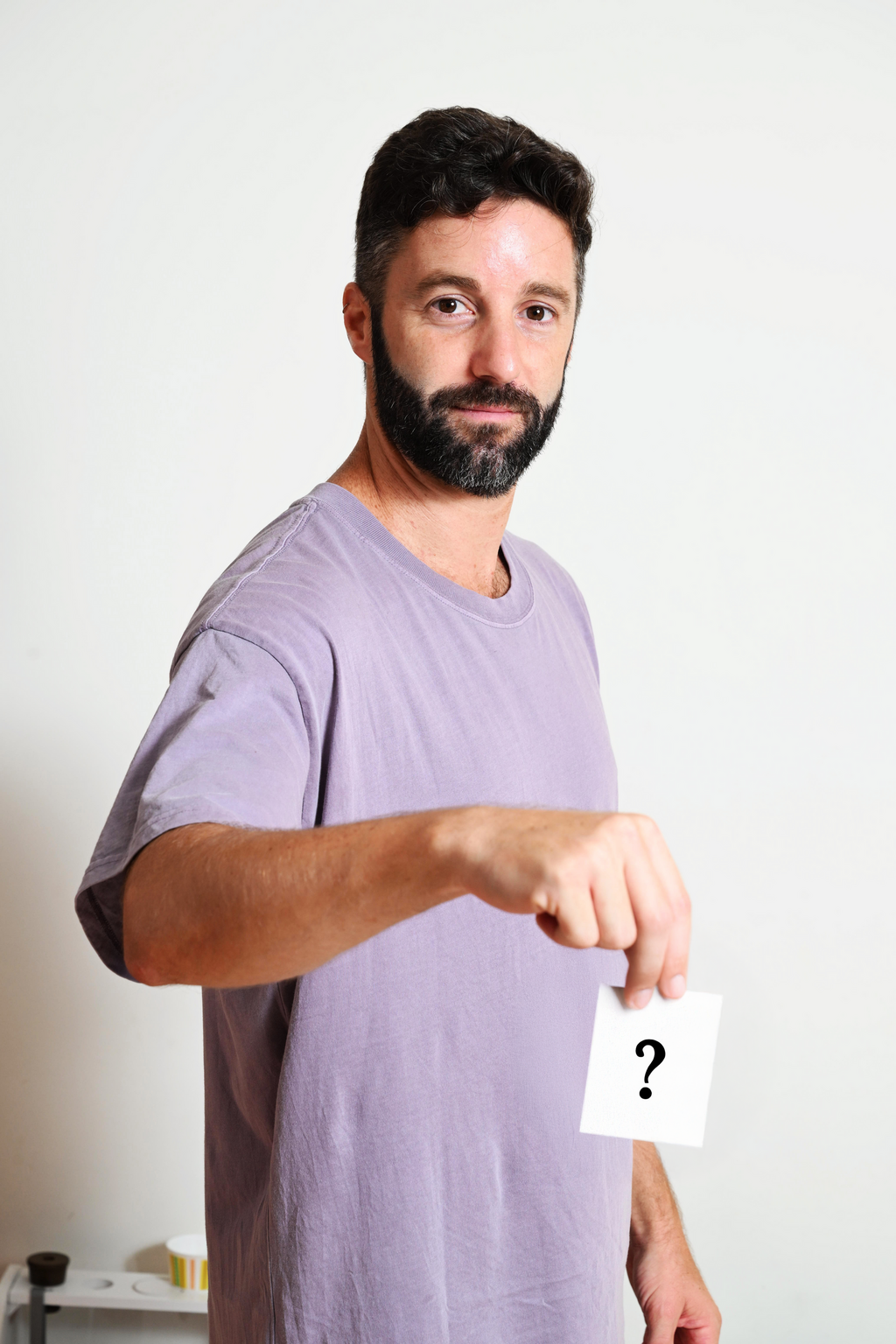
In such a reality, undecided voters, the potential swing bloc that could ultimately determine the election, have become something of a rare species.
What is it like to be undecided in Israel’s all-knowing, deeply polarized political climate of 2026? It is anything but easy.
Take Lior Carmon, 40, a father of two from Rishon Lezion who works in the ad-tech industry. He would very much like to know whom to vote for. It would spare him a considerable headache.
Trying to determine what he believes is right is difficult enough, particularly in a media environment where every source of information is suspected of serving somebody’s agenda.
“The noise on social media only makes things more confusing,” he says. “I don’t really know who represents me or my interests. I don’t have the time to dig deeply into every issue, and where do you even find reliable facts anymore? Every newspaper and social network seems to have its own agenda or interests. I’m trying to figure out where I stand, but then there’s the pressure from family.”
For decades, political affiliation in Israel was often tribal, almost automatically guiding a voter’s hand toward the same ballot chosen by parents and grandparents.
Over the past decade, that pattern has weakened. Dramatic shifts in Israeli politics, and especially the rupture created by October 7, have scrambled the political compass that once pointed many Israelis toward the familiar direction inherited at home.
Carmon is one of them. “For years, everyone in our family voted Likud, let’s say until around 2018,” he says. “From my grandmother, who voted for Menachem Begin, all the way down to the youngest generation. Then there was suddenly this dramatic change of direction. Everyone swung sharply left, or at least toward what is called left today, and I was trying to make sense of it all.”
Carmon points to another obstacle. On the surface, Israel’s political map appears simple: there is Benjamin Netanyahu, and there are those who oppose him. But the anti-Netanyahu camp is itself divided among several parties, leaving voters such as Carmon struggling to distinguish between them.
“When you try to dig deeper, you run into the paradox of choice,” he says. “There are so many options that, in practice, it feels like there are hardly any. Eisenkot, Bennett, it all starts to look like more of the same. None of them stands out to me as offering something genuinely distinct.
“That’s why I’m even questioning whether to vote at all. The old political coordinates have been completely scrambled. Bibi, with his support for the ultra-Orthodox parties, ends up looking like an economic leftist, while someone like Yair Golan (Democrats chairman) draws support from wealthy backers.”
Every election is, by definition, the most consequential in the country’s history: all previous elections have already been decided, while those that come afterward remain in the future. But describing this election as truly fateful may not be much of an exaggeration.
The events of the past three years, from October 7 through repeated confrontations with Iran, have shaken an Israeli society that was already deeply unsettled. Any rare opportunity to turn the wheel, or to keep steering in the same direction, therefore assumes enormous significance.
That sense of collective responsibility can sharpen the distinction between what voters see as right and wrong. It can also paralyze them. Even someone who understands that his vote is only one among millions may fear the sense of complicity that could come with backing a candidate who later disappoints.
That responsibility troubles Carmon. “I don’t trust myself to make the right decision, one that won’t bring even more destruction upon us,” he says. “An ordinary person, one of millions of voters, has to take into account that his decision can bring a sense of responsibility that the decision-makers themselves don’t feel.
“That’s why I used to think only less-educated people could bring themselves not to vote. I work in high tech, I make decent money, I have a decent life, and despite all that I still can’t reach what I think is the right decision.
“There’s a sense that the dream of this country is slipping away, and like many others, I find myself looking for a way out. Even the decision of whether to vote carries meaning. It may not change the makeup of the Knesset, but choosing not to vote can still express a deep sense of disillusionment with the state.”
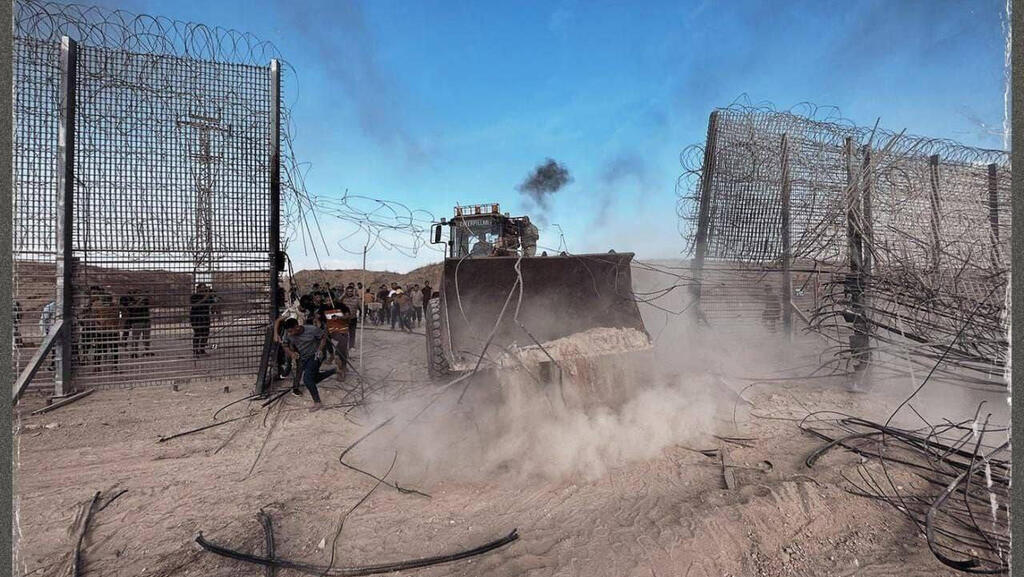
Infiltrating the Gaza border fence on October 7
By not voting, in a sense, you are voting for something else.
“Not voting has meaning. I don’t like people who don’t vote. I don’t respect them, but I’m getting closer to that point myself.
“I’m not talking about not voting because of being stoned in Tel Aviv or simply too lazy to bother. To me, that’s different. I’ve spoken with several friends who feel the same way, including people who voted for Itamar Ben-Gvir (National Security Minister) and others who are more traditional, and they have no idea what to do either.”
“They also feel a little stupid about their previous decision, and when people ask whom they’ll vote for, they don’t know what to say. They don’t know what answer will satisfy the person asking. It becomes this kind of social embarrassment.
“Do I present myself as a Bibist? All the definitions have become blurred, and the judgment has become much harsher. I tell my friends one thing, my family another, and then I sit alone wondering what ballot I’m going to put in the envelope, and I have no idea.
“In the end, casting a ballot is completely anonymous and takes only a second. But for months beforehand, there’s no anonymity at all. People constantly want to know whom you’re voting for, and then use that answer to decide what kind of person you are.
“Everything feels exposed, and that only makes the decision harder. It brings me back to the same problem: Where do I go to check the facts? Where can I find information I can actually trust? That’s become incredibly difficult.”
Carmon’s uncertainty over whether to vote at all is not shared by Nir Rom, 50, a father of three from Kfar Yona who works in computer sales. He will vote. For whom is another matter. The question may not keep him awake at night, but it certainly occupies him during the day.
At moments like these, when the dilemma feels genuine, he almost regrets not having inherited a firm political affiliation from his family. Tribal loyalty, even at the cost of independent thought, would at least have offered the comfort and simplicity of an automatic choice.
“Some people can say, ‘I’ve voted Likud my entire life.’ I can’t,” he says. “I haven’t gone with one party my whole life, and I don’t think that’s right either.
“For me, October 7 changed everything. I can barely listen to Channels 12 and 13 anymore, and even Army Radio has become difficult and unpleasant to hear. These are reactions I never used to have.
“I don’t have anywhere to get my information from. I don’t know how to solve this knot of indecision. As the election gets closer, we’ll hear more about the parties’ platforms. There are still good people in politics.”
From the outside, Rom appears to be facing a genuine dilemma. He says he has never voted for Netanyahu and strongly suggests this will not be the first time. But he also cannot bring himself to vote for Netanyahu’s rivals.
“I do think Netanyahu needs to go home,” Rom says. “We need change, and right now his presence is simply too divisive. Half the country can’t stand him, and that alone is enough to drive the country crazy.
“Still, I don’t know who can replace him. I think we were fortunate he was at the helm over the past three years. On one hand, I can’t stand him. On the other, I believe we made it through because of him. If others had been in charge, I think we would have stopped much earlier and backed down.”
“Today I regret using the term ‘settlers’ so dismissively (referring to Israelis living in West Bank settlements). How did we let that kind of language become so entrenched? Where I grew up, we were raised to believe that the peace process championed by Yitzhak Rabin and Shimon Peres was the right path. We focused on finding partners for peace, and we failed to understand that some of the measures Israel is taking now, in my view, should have been taken much earlier.”
So why didn’t Netanyahu do it? He was first elected 30 years ago and has been out of power only briefly over the past 17 years.
“They didn’t let him work. They didn’t let him do what he wanted. We constantly thought he was a liar and a hedonist. We genuinely believed we had a corrupt prime minister. The system is what’s corrupt.”
Gadi Eisenkot (the former IDF chief of staff now leading an opposition party), even as an alternative to the man Rom wants to leave office, does not persuade him either.
“I don’t see Gadi Eisenkot as prime minister either,” he says. “So right now, I don’t really have a candidate for prime minister.
“I would almost prefer Benny Gantz (another former military chief who once looked like Netanyahu’s main challenger), but he has since faded politically. I would trust him more. As far as I’m concerned, Eisenkot is still thinking in terms of Israel before the October 7 attack. That no longer works.
“Someone needs to stop the current trajectory and shake up the system. But it feels as though the person who can truly replace Netanyahu has not emerged yet. The next national leader people can really rally around simply isn’t there.”
“Once Israel had towering political figures such as former prime minister Ariel Sharon and Yitzhak Rabin. Who is the next Sharon? Who is the next Rabin? I don’t agree that the office makes the person. The person makes the office. Some figures are exceptional, no matter what.”
That leaves Rom looking toward the political fringes, niche parties hovering near the electoral threshold. That, too, offers one way out of indecision: choose something intentionally marginal, cast a vote but also register a protest by selecting something entirely different. In Rom’s case, one such option is economist Yaron Zelekha and his small party.
“He’s an option for me,” he says. “We all felt the impact of former finance and communications minister Moshe Kahlon’s reforms in our own wallets,” he says. “Mobile phone bills that once ran to more than 1,000 shekels can now be around 40. Zelekha points to other everyday economic costs that he argues could also be brought down.”
“The concern with voting for a small party is that it won’t cross the electoral threshold, and then the vote is wasted. That’s why I’m not saying I’m completely behind Zelekha. I’d like to feel more certain about him.
“If, at the absolute end of the day, I have to choose a party based on whether it will go with Netanyahu or Eisenkot, I’ll go with the one that chooses Netanyahu. But I won’t vote directly for him. I can’t use my own vote to put Bibi in. I’m in a lose-lose situation.”
If anyone is truly tormented by indecision ahead of the election, it is Shimon Dan, a retiree in his 70s from Azor. Unlike Carmon and Rom, who worry about their children, Dan also worries about his grandchildren.
The future of the country weighs heavily on him. His uncertainty is as profound as it gets. He is not choosing between parties within one political camp. He is genuinely weighing the camps themselves. Netanyahu? Eisenkot? Bennett? He cannot decide.
He treats his vote almost with reverence, as though the ballot he puts in the envelope will determine the election by itself.
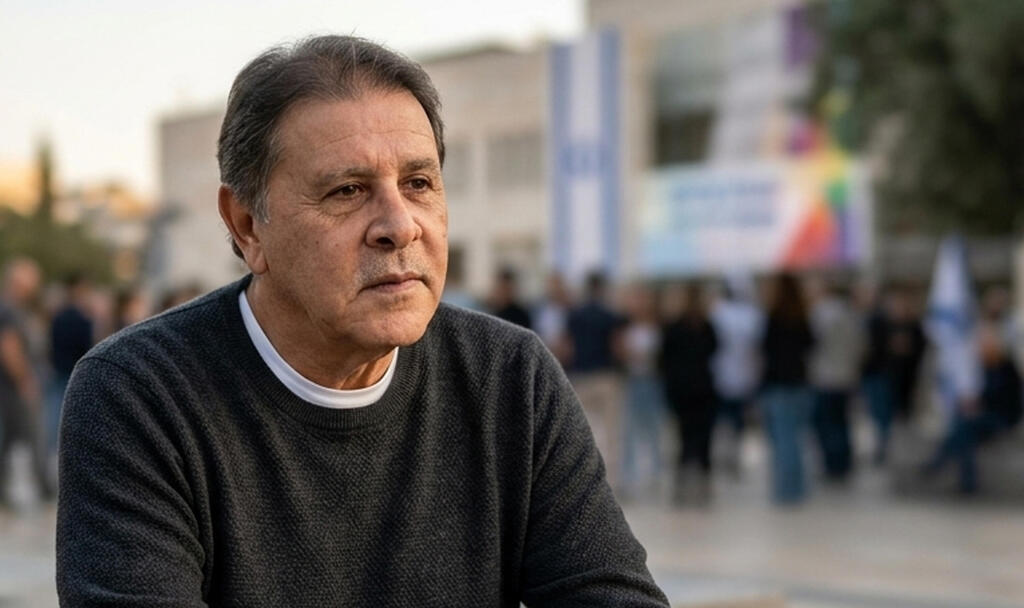
Shimon Dan
(Photo: Private album)
“Our reality has changed in recent years,” he says. “This is no longer a normal situation for ordinary people to live through.
“The questions I ask myself before voting are different now. In previous elections, I allowed myself to cut corners because we had not yet gone through the kind of national trauma we have experienced since October 7.
“Today I listen to candidates on all sides, and there are good people among them, but I still haven’t found anyone who gives me real confidence that he can help heal this deeply divided society. Not just unite his own political camp, but bring the country together.”
Listening to Dan, one could conclude that in a political reality defined by certainty, where people on opposing sides can barely meet in the middle because of mutual hostility, indecision itself carries value.
To hesitate is, in some ways, to reject extremism. There is humility in admitting that one does not know everything and that the arguments of the other side can and should still be heard and considered.
Unlike Carmon, whose doubts could ultimately keep him away from the ballot box, Dan is prepared to remain undecided only until the polls close on October 27. He will vote, no matter what.
“I have never agonized over an election the way I am agonizing over this one,” he says. “But my vote matters, and so does everyone else’s.”
Paradoxically, the more closely Dan looks, the further he seems to move from finding what he seeks. “Unfortunately, I can’t say that any candidate meets the standards I’ve set,” he says. “Maybe I’m looking for something that doesn’t exist, and in the end I’ll choose the lesser evil.
“It makes me very sad to say that. Apart from Netanyahu, who knows how to speak and comes across phenomenally on television, I expect those presenting themselves as the opposition to be combative, to shout, but they don’t give me the confidence that I can rely on them.
“They all speak in broad terms. I want someone to win me over, to make a convincing case, project real leadership and give me a reason to believe in them.”
Merav Partuk’s family would be thrilled to call her undecided. Her daughter, Shaked, has invested considerable effort trying to move her into that category. But ask Partuk, 53, and she says the effort is wasted. She will not vote in this election.
If anything, she has already crossed beyond indecision into resignation. Her disgust represents the stage of despair that many undecided voters may feel they are one step away from reaching.
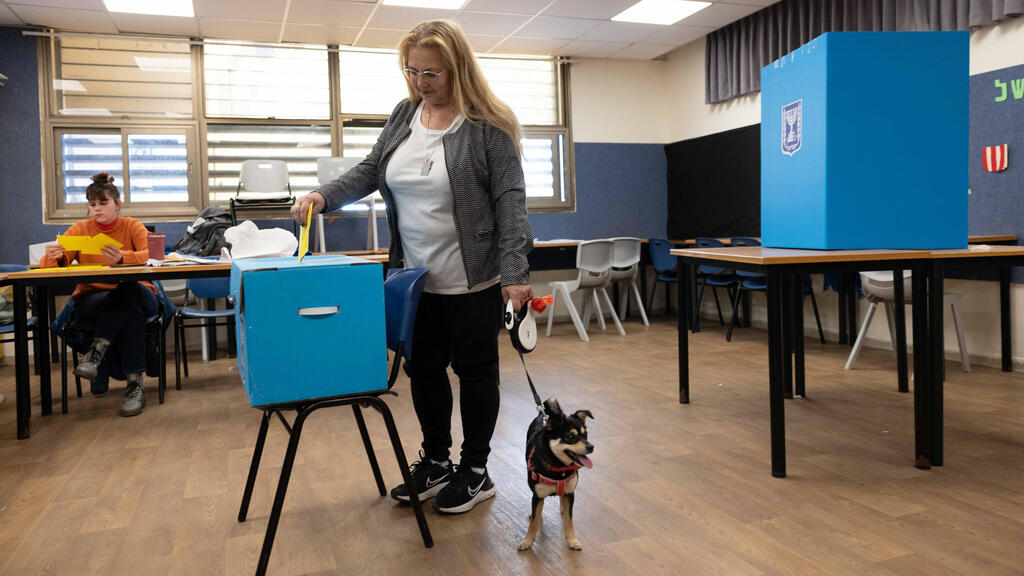
Israeli elections, archive photo
(Photo: Tal Shahar)
She wants to leave the country, she says, but even if she ultimately stays, it will be with a sense of having given up on Israel’s political reality.
“In the past, I tried to make a difference,” she says. “Today I think all these elections are, how can I put it gently, one big show. There is no right and there is no left. Beyond their own personal agendas, none of them sees anything else. Something bad has been happening in this country in recent years. All these elections are decided in advance.”
From that firmly held position, Partuk believes she can also offer undecided voters an answer. “I can understand undecided people. I tell them what I think: that it’s pointless. Let’s say we voted, we went to the polls, not once, not twice and not three times. Did anything change?
“My daughter keeps telling me that voting matters and that I have to take part, but she hasn’t been able to change my mind. I don’t think she will. I see things differently now.”