


The Islamic Republic was born alongside the slogans “Death to America” and “Death to Israel.” They were present at the first rallies of Ayatollah Ruhollah Khomeini’s supporters and were justified as a response to U.S. backing of the shah’s regime. Once, in London, I discussed this with an Iranian student. She was not an opponent of the regime.
“Don’t be impressed by those slogans,” she told me. “It’s like our modesty patrols, who fine you because they saw your hair under your veil. The same with the slogans. It’s cultural. There’s no enthusiasm or conviction. No one means it.”
“On our northern border,” I replied, “it feels very much like the government in Iran truly means ‘Death to Israel.’”
In Tehran, she answered, it did not look that way. And besides, we have never fought you directly. It will not happen.
That conversation illustrated the immense gap between the price Israelis paid for the proxy war waged by Tehran, through shrewd and deadly generals such as Imad Mughniyeh and Qasem Soleimani, and the consciousness of many in Iran. Many believed it was just rhetoric, a family tradition, like Friday soccer. Alternatively, they chose to look away.
Years passed before many Iranians grasped the vast capital and effort invested in a relentless jihad against Israel, and how it came at their expense and that of their children. In a dictatorship, the regime is not required to provide real accountability. All information is state secret unless declared otherwise.
At protests in Tehran over the past three years, new slogans emerged: “Not Gaza, not Beirut,” demonstrators chanted. About 50 days ago, a broad uprising swept the streets, setting in motion a wave of violence and events that culminated in the current military tension in the Middle East. The republic is bankrupt. The model is failing, from a deepening water crisis to a collapsed security doctrine. The matrix is cracking. The question is how far.
Four precedents, none like this
The United States has conducted four significant military operations against Iran since the Islamic Revolution.
The first was the failed 1980 attempt to rescue hostages from the U.S. Embassy in Tehran. Operation Eagle Claw ended in disaster: eight American servicemen killed in a desert sandstorm far from the embassy, a crashed helicopter, a burned aircraft, five abandoned helicopters and Khomeini declaring that “agents of God” had thwarted America’s mission. Jimmy Carter’s presidency never recovered.
Eight years later, after an Iranian naval mine struck a U.S. warship in international waters, President Ronald Reagan ordered a limited strike on Iran’s navy in Operation Praying Mantis. It ended successfully, though two American helicopter pilots were killed. Iran lost dozens of personnel and suffered heavy damage to its already limited fleet. The U.S. attack helped lay the groundwork for the end of the Iran-Iraq War.
President Donald Trump ordered the next two operations.
The first was the January 2020 decision to assassinate Qasem Soleimani, commander of the Quds Force and one of the most prominent military leaders in the history of the ayatollah regime. It was far from obvious. Unlike the previous two cases, there was no immediate operational trigger such as hostages or a direct Iranian attack demanding retaliation. Yes, Soleimani coordinated an Iraqi militia attack on the U.S. Embassy in Baghdad days earlier. Yes, he had American blood on his hands, dating back to the 1983 Marine barracks bombing in Beirut. Yet a series of U.S. presidents had chosen not to act. Soleimani operated across the Middle East, even during the Iraq War, with what amounted to practical immunity. That ended under Trump, after his administration withdrew from the nuclear deal signed by President Barack Obama.
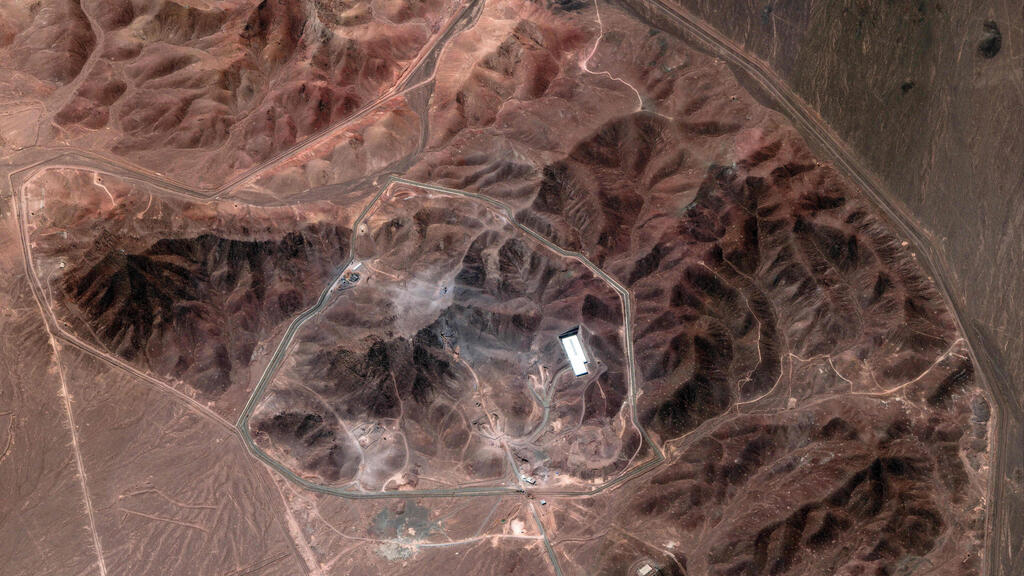
Then came Operation Midnight Hammer in June 2025, when Trump ordered the destruction of nuclear facilities at Fordo, Natanz and Isfahan. Again, the decision was far from inevitable. Israel initiated the war with a surprise attack, reportedly with White House approval, and had its own complex, if less effective, plans for the sites. Trump identified the opportunity, Iran’s vulnerability after the destruction of its air defenses and the relatively low cost to the United States. He ignored dire warnings, ordered a limited strike and ensured the war ended afterward. Among other steps, Israel’s final planned targets were canceled while jets were already airborne. Some of those targets were and remain vital to Tehran’s war effort.
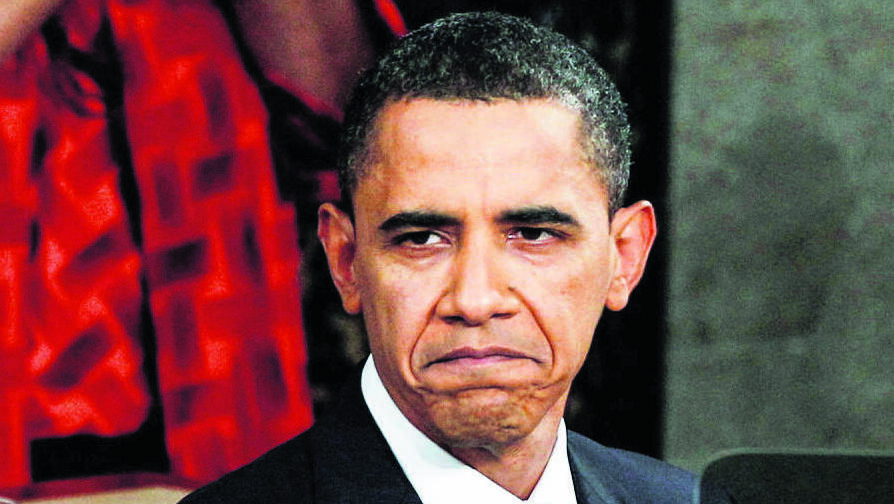
Barack Obama
(Photo: Jim Young/Reuters)
A blank page or a war
This is not a history lesson. None of the previous U.S. actions against Iran resembles what is currently on the table.
The possible scenario is exceptional in its strategy: a threat to the regime’s survival, combined with broad and deep strikes, including the potential targeting of the supreme leader himself, according to American media reports.
This week, reports in Israel and the United States highlighted divisions within the American leadership and operational challenges. Some of these publications should be treated cautiously.
“They all become kittens when they’re in the president’s presence,” one foreign source told me. “The president says what he wants, and they fall in line.”
Trump has demonstrated in Venezuela, Ukraine, Greenland and elsewhere that he prefers deals. This is not a cliché or an excuse. The most rational move for the Iranians would be to hand Jared Kushner and Steve Witkoff a signed blank page and let them fill in the details. After agreeing, they could return to the traditional endless Persian dance of negotiations.
The alternative facing Iran is a military confrontation with the most powerful superpower in history, relatively and absolutely. Who knows whether America and Israel are speaking with factions inside the country determined to seize power at the right moment.
This is not without risk for the United States. A single mishap or a successful Iranian plan, even briefly, could cause significant political damage. But a severe blow to the Iranian regime, even short of outright overthrow, could be a brilliant achievement that changes the region’s fate. Retreat now carries risks of its own.
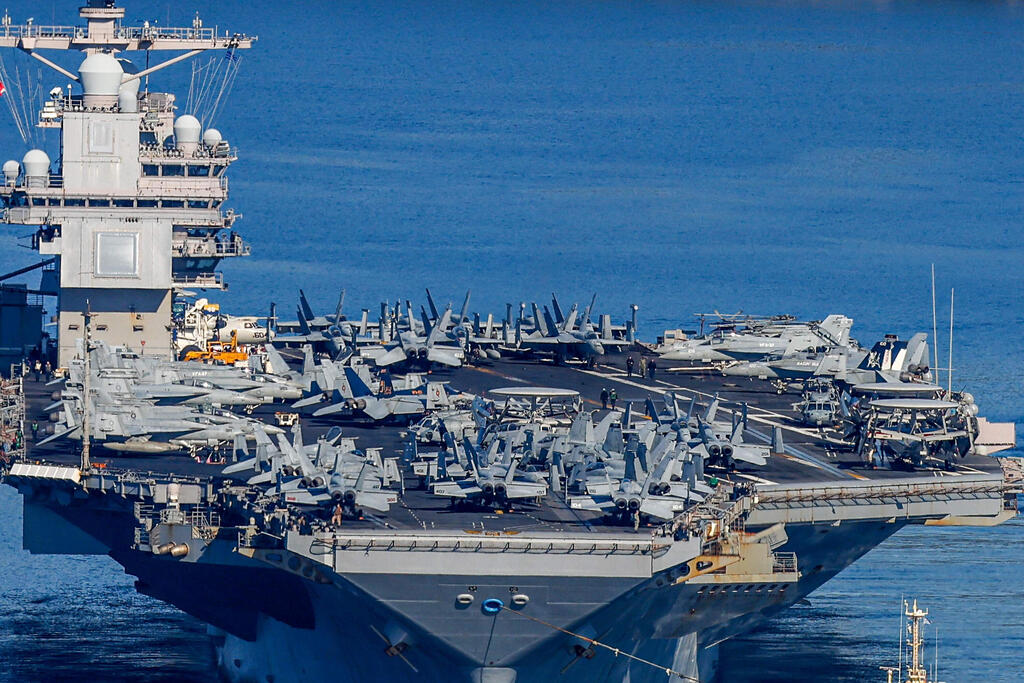
Aircraft carrier USS Gerald R. Ford
(Photo: Costas Metaxakis/ AFP)
In 2012, when President Obama chose not to enforce his red line in Syria prohibiting the use of chemical weapons, Russia and Iran stepped into the vacuum. The war intensified. Bashar Assad gained additional years to brutalize Syrians, including with chlorine gas after nerve agents.
Three years later, Assad initiated and enabled Europe’s refugee crisis, perhaps with Russian encouragement. Europe’s nationalist right experienced a remarkable resurgence. In 2016, amid dramatic migration scenes, Britain voted to leave the European Union. In-depth surveys showed immigration was the top predictor of pro-Brexit voting intentions.
What began with a broken American promise regarding a small, seemingly unimportant Middle Eastern country ended in global upheaval. A butterfly’s wings set off a storm.
Donald Trump is not Barack Obama. But Iran is not Syria.
The AI revolution that will redefine our lives
In my view, the most important line in President Trump’s State of the Union address did not concern Iran.
As usual, the speech focused on domestic matters, primarily the economy and personal security. But one line symbolized the deepest and most dramatic shift in our reality. It does not lead newscasts, at least not in Israel, but at most appears in business supplements.
The president referred to the staggering energy consumption of data centers powering artificial intelligence. According to a Goldman Sachs report published last year, these data centers, vast server farms with powerful processors, especially graphics processing units, will consume 165% more electricity within three years. This is already affecting electricity prices.
Trump told the American public that the model would change. Technology companies would have to generate or finance their own energy infrastructure.
“We’re telling the big technology companies they have an obligation to provide their own electricity needs, and they can build their own power plants so nobody sees an increase in rates,” Trump said, calling it a commitment to protect ratepayers.
A key meeting on the matter is reportedly scheduled at the White House next week.
It is difficult to overstate the magnitude of the AI revolution. It long ago moved beyond the massive consumer use of models such as ChatGPT, Gemini or Claude, which have effectively replaced Google for many.
Until about a year ago, there was intense debate over how dramatic the economic and social transformation would be and whether soaring valuations in AI-related companies represented a bubble. That debate is over. Even if one discounts apocalyptic predictions, such as a Citrini Research report warning of collapsing profitability and mass unemployment, it is clear that everything is changing. Correction: it is already changing.
The media carries charming anecdotes, such as that of an American named Sammy Azdopole, who programmed his robot vacuum using an AI bot so it could be controlled with his gaming joystick. The bot learned the vacuum’s operating mechanisms, connected to a server and wrote code. Without his knowledge, Sammy gained control over a fleet of about 7,000 robot vacuums across 24 countries, including access to cameras, microphones and home maps. It is a small example.
The more significant shift will occur in the real economy.
I spoke with Nir Sabato, CEO of a new AI company that has already raised funds from investors in Israel and abroad.
“The interesting thing socially,” he said, “is that most of the jobs we thought were the most resilient are now under heavy attack. AI, and its ability to write code, does not affect everyone equally. If I’m a porter, a locksmith or a kindergarten teacher, for now everything is fine. But there’s a certain layer of the population, programmers, developers, many people in high-tech and even creative roles, that is now under pressure.”
He stressed a crucial distinction: “There’s a big difference between what AI can do and what AI can do well. People don’t always notice that difference. They say, ‘Wow, AI wrote code, maybe we don’t need programmers.’ But the real question is whether it wrote good software. That’s complex. It’s not just whether the site looks good and works. It’s whether, based on that code, you can market to customers, integrate systems, handle edge cases, serve clients long term and, of course, ensure security.”
Israel is especially exposed to the AI revolution. About 60% of Israeli exports come from high-tech. There is no heavy industry, and agriculture is declining. In this reality, the lights in the government complex should be on late into the night. Talking about AI is one thing; understanding how to help the Israeli market grow within it is another entirely.
Sabato remains optimistic. He notes that relative to its population, Israel is the world’s top user of Claude. That reflects something characteristic of Israel: exceptional flexibility and constant technological adaptation.
“Open high-tech positions in Israel have been rising in recent months,” he said. “In my view, that’s because something very positive is happening. Israeli entrepreneurs and investors are not accepting the idea that ‘the party is over.’ Instead, they are reinventing themselves. They’re building AI companies, launching AI-first cybersecurity firms and raising significant capital from American investors. I think this is only the beginning. Israel is very well positioned.”