

In less than four years, entrepreneurs Danny Brickman and Amit Zimerman built a company worth about $1 billion, signing a letter of intent under which Israeli cybersecurity company Cyera is expected to acquire Oasis Security, the startup they founded.
Above all, it is an unusual all-Israeli exit: both the buyer and the acquired company are Israeli. In practice, it is the fastest all-Israeli startup exit to reach the $1 billion mark. “It all started in the army, when he kept coming over to my desk, hanging around and asking lots of questions,” Danny says of his partner Amit.
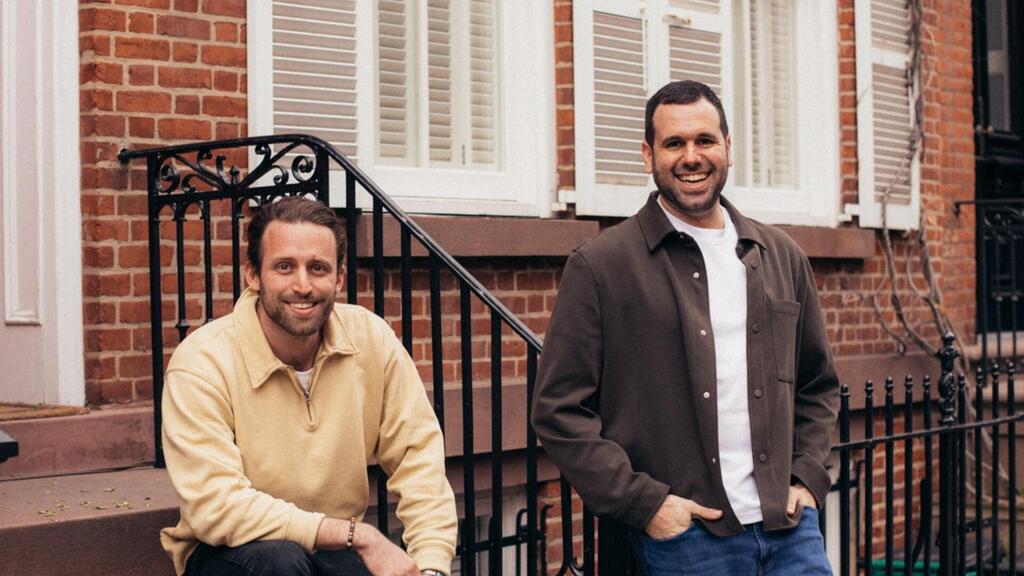
The two have a long history together, beginning with their service in Unit 81 of Military Intelligence and continuing all the way to the exit. “We’re like a married couple. Even if we get sick of each other for a moment, the next day we fall in love again. It goes in loops.”
All the way from the bottom
Amit is 36, married, the father of a toddler with another child on the way. Danny is 33 and single. They share the same sense of humor and constantly complete one another’s stories and sentences.
Danny grew up in Ramat Gan. His parents immigrated from Russia in the 1990s, less than a year before he was born. His extended family, including his parents and grandparents, all lived together in a three-room apartment. His parents worked 12 to 14 hours a day, and he was largely raised by his grandparents under what he describes as a strict Soviet-style upbringing, while seeing his parents mainly on weekends.
To earn pocket money, he started working at age 8 in his father’s software company. Life outside the home was not easy either. In his Ramat Gan neighborhood, he was sometimes subjected to insults and harassment because of his Russian background and became involved in fights.
“I grew up in the Elite neighborhood in Ramat Gan, on the other side of the Diamond Exchange. The 1990s weren’t easy for people from the Russian immigration wave. I would speak Russian with my parents off to the side so no one would hear. I found myself in violent situations against my will many times.
“I went to Ohel Shem High School in Ramat Gan. At home, we were taught that nothing is owed to you. You need to be a good student, you need to work to achieve things and win. We were raised to understand that there was a glass ceiling, and there still is a glass ceiling today. People who came from Russia didn’t have connections. By the time my siblings were growing up in the 2000s, things were already a little different, but it’s something that is still deeply ingrained in me.”
And how does all of that lead to the top of the global technology industry and a $1 billion exit?
“It’s the internal drive. When you want so badly to keep moving forward, you don’t care if you take a few hits along the way.”
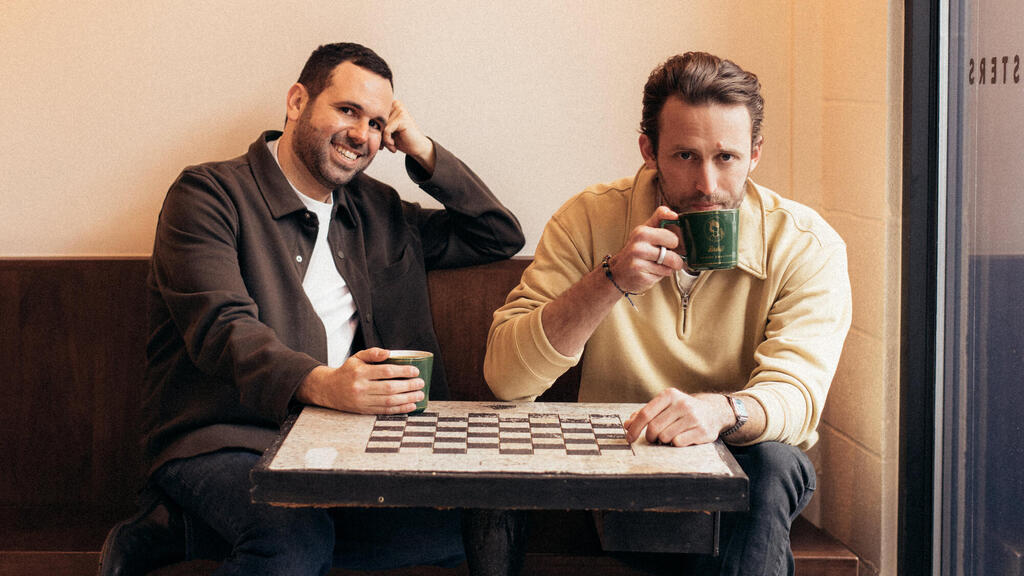
A connection that began in the military
(Photo: Ohad Kab)
And what do your parents say today?
“My parents are very proud. My success story, as someone who started with a bank account showing zero, is moving not only for my family and my parents, who built themselves from nothing, but also for their friends from the Russian immigration community. It means a lot to hear their reactions and to know that I make them proud too.”
Amit’s life story, growing up in Ra’anana, was also difficult. When he was 10, his father died, a trauma he says became one of the forces that propelled him forward.
Brickman: ‘From the outside, entrepreneurship looks like success and newspaper headlines’
“Losing a father at age 10 is a life-changing event that shaped a large part of who I am today,” Amit says. “I wasn’t a good student. I was diagnosed with learning disabilities, and people didn’t understand why I kept leaving class, why I didn’t study and why I didn’t do my homework. It took me years to understand that it was a trait, not a problem.
“My mother was left alone with us and constantly pushed us forward. Fortunately, she encouraged me to do whatever interested me, whether that meant raising reptiles or flying drones. Today, as a parent, I appreciate even more what she did for me, and I also appreciate the school I attended, which allowed me to complete my matriculation exams outside the regular framework.
“I entered this field even though I grew up far removed from technology, in a factory that made painting machines, where I worked with my grandfather. My hobbies weren’t exactly cybersecurity either, but when I realized that was what I wanted to do in the army, I locked myself in a room and started studying this thing that fascinated me. That’s how I got into Unit 81.”
That was in 2007. The field was not yet widely called cybersecurity, but Amit was already interested in computer systems, where they were vulnerable and how people could exploit them for good or ill.
“When I became curious about it, that was the first time I sat down and simply studied the field. Today I understand that my ability to become interested in something and teach myself isn’t an attention disorder, it’s a trait, together with my energy and restlessness.
“That was also when I stopped taking Ritalin. People in the unit always joked that I had a chair but never sat in it, because that’s what I like: moving around and connecting the dots.
“I always told people that the best ideas come when you arrange to sit next to someone, and I still believe that today. That and music. Whenever Danny and I meet someone, we immediately start talking about music.”
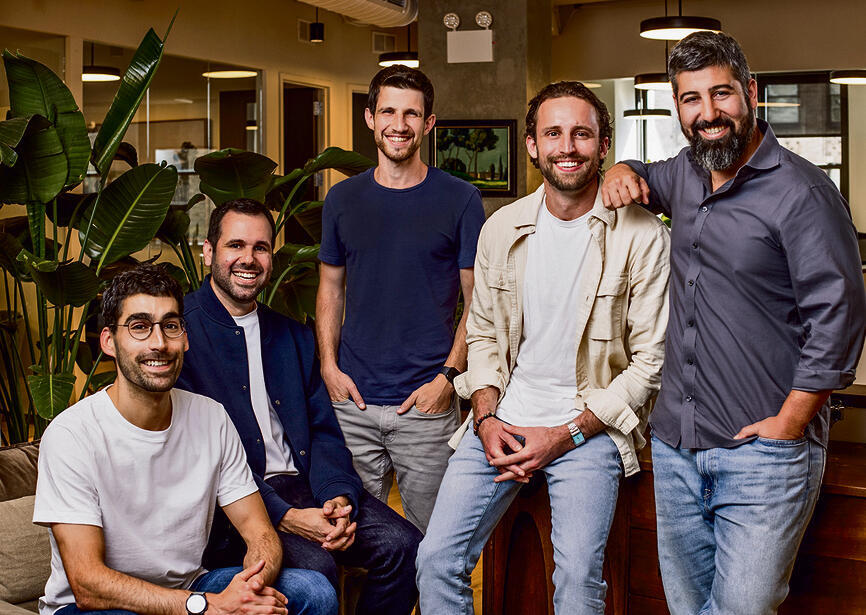
Brickman and Zimerman with Cyera founders Yotam Segev, Yonatan Itay and Tamar Bar-Ilan
(Photo: Ohad Kab)
Danny adds: “That’s true. If there’s one thing I took with me to the United States, it was 20 kilos of records. When Amit joined the army, the concept of a hacker wasn’t well defined. Today we run courses and teach kids to operate like Amit: think outside the box, leave their comfort zone and look for solutions to problems no one has thought about.”
The price of success
The pair’s hard work is expected to pay off financially. According to estimates, they jointly hold between 20% and 30% of the company, meaning the cash and shares they receive could be worth between $200 million and $300 million.
But financial success has also carried heavy personal and family costs. “I watched The Odyssey, and there’s a quote in it that says, ‘the power of the sacrifice is in the cost of the person making it,’ and that line made me think about both the entrepreneurial journey and life,” Danny says.
“From the outside, entrepreneurship looks like success and newspaper headlines, but ultimately you’re battling forces of nature when you try to create change and new ways of thinking, move artificial intelligence the way we do and accomplish things people aren’t used to.
“In the end, the sacrifice falls on us, and it comes with a serious price that not everyone is willing to pay and that not everyone feels comfortable talking about.”
Amit says it is fine that his partner is taking up most of the conversation because “there are plenty of costs to talk about,” and Danny adds that “for Amit, it’s the family cost.”
Amit: “My daughter was born during the year Danny and I made the decision to move to the United States to be closer to the market. I traveled a lot, and even when I was home, the extra room in the house was effectively my office. I wouldn’t see my daughter because I was living on East Coast time.
“That’s a very big sacrifice for a relationship, and once you have a child it magnifies the cost even more.
“In the end, to succeed you have to leave your comfort zone and live with discomfort, sometimes at a level beyond what the body can handle mentally and physically. You don’t sleep, you’re constantly flying, and mentally you’re also very alone.
“You don’t have anyone to talk to or think things through with except your partner, and he’s busy with his own problems. In practice, no one understands you, and you have to make the decisions yourself, like the decision we made that we had to move to the United States to run the business properly.”
And you landed there on Oct. 6, 2023.
“And on that cursed morning of Oct. 7, Amit and I were sitting in our hotel room in New York watching what was happening in Israel, and the decision was made that Amit would get on the last flight home so he could return and manage our Israeli site during such a difficult time.
“I stayed at the hotel in New York with five pairs of underwear that I had brought for what was supposed to be a few-day stay. I was in a city I didn’t know, where I didn’t have a single friend, in a different time zone, constantly connected to what was happening back home.
“At the same time, I had to work with the people who remained in Israel and were going through extreme experiences, and somehow hold all those worlds together.”
Amit: “I honestly think it was easier for me than for Danny during that period. The easier thing is to manage the situation when you’re in Israel and experiencing firsthand what people are going through amid the profound uncertainty all of us were living through.
“The loneliness Danny describes is very understandable in a period like that. Apart from entrepreneurs who have gone through it, no one understands you, and no one has time to stop and deal with it with you.”
So we’re still talking about the prices you paid and continue to pay, but come on, you made quite a payday.
Danny: “The costs also reflect the payoff, but they also explain its essence. If we take the story of Amit coming back to Israel after Oct. 7, we understood that during this insane period we wanted to create a warm home in Israel.
“One of the most moving stories, and I give Amit a lot of credit for this, was when there was a particularly difficult day in Gaza and we decided to let people work from home for a few days because we understood that people needed time to process it. The next day, we saw that 90% of the employees had already come back to the office voluntarily.”
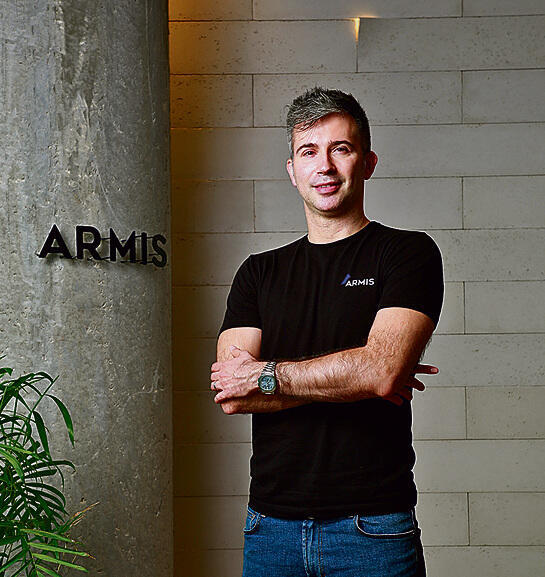
Yevgeny Dibrov
(Photo: Ryan Prois)
Amit: “Part of the culture we worked on was creating a supportive environment inside the company. The proof is that even when people are allowed to work from home, the office still has very strong attendance because people like being together.”
Danny: “When I stayed in the United States and Amit returned to Israel, I was very alone. I had no one to share things with, and Amit would stay awake in Israel until 2 a.m. to talk to me about what I was feeling and experiencing.”
The day after the exit
Despite their enormous success, both insist the money will not change them. “The money will change what we’re capable of doing, but it won’t change us,” Danny says.
Come on, Danny. There’s now a $1 billion price tag attached to you.
“That label comes with responsibility. You can run away from that responsibility and live the kind of life that many people would describe as indulgent, but everyone has their own nature.
“Amit and I still have more dreams to fulfill. We also believe that giving our energy to the people around us is the most selfish thing you can do, because you get so much back afterward. I think investing your abilities and opening a path for others is what Amit and I are proudest of. That’s what matters to us, not our bank accounts.
“It matters to us that our employees emerge from this story financially secure. And by the way, this isn’t our last journey with them either. Life is long and we have a huge mission ahead with Cyera. God knows how long it will take. But both Amit and I know that we are people who build and create, and people who care about people. This will definitely not be our last journey with our team.”
Amit: “I agree with every word Danny said, and I’ll add just how difficult the decision to sell was. In articles, it sounds glamorous, but it was the hardest decision we ever made. The main reason was that we were thinking about our employees all the time. These are people, some of whom followed us when we barely had a desk in the office. They are putting their time and their family time into this and following us.
“It matters to us that what we do next at Cyera develops them both personally and professionally, and that’s why joining Cyera makes so much sense.
“The issue Danny and I talked about most was the employees: how this move would advance them personally and professionally, how it would position them for the rest of their careers, and how to make sure the overwhelming majority of people on both sides of the ocean stay with us at full strength. That is not something you can take for granted in an acquisition like this.”
'Without proper oversight, AI agents can gain excessive access and cause data leaks, critical outages and major business damage'
Immediately after leaving the army, the two founded Oasis. They did so out of a belief, and a forward-looking understanding, that the next major revolution in cybersecurity would not come from humans but from non-human identities and AI agents, whose presence inside technological systems would need to be identified and secured.
At the time, non-human identities were still a relatively marginal category. Danny and Amit believed that in a world where software, cloud services and AI agents receive permissions and operate autonomously, managing those identities would become one of the biggest challenges in cybersecurity.
Many thought they were ahead of their time, but in less than four years, as AI exploded, Oasis became one of the leading companies in its field. Its acquisition by Cyera now brings together two fields that developed separately for years: data security and identity security.
The goal is to allow organizations to understand, manage and enforce the relationship between their sensitive information and every identity, human or non-human, seeking to access it. The deal broadens Cyera’s security offering, allowing it to combine data and AI protection, identities and AI agents in a single platform for major organizations worldwide.
Oasis will operate as an independent unit inside Cyera and continue leading the field of non-human identity security. The acquisition comes at a turning point for the cybersecurity industry. Organizations are rapidly moving from experimental use of AI agents to broad deployment across core systems.
That means AI agents no longer merely consume information. They locate it, analyze it, combine different data sources and perform actions independently. Every such interaction begins with a non-human identity seeking access to data.
What is a non-human identity?
“The age of artificial intelligence has introduced a new workforce operating inside organizations: AI agents that run processes directly affecting business activity, customers and revenue. To operate, AI agents, applications and other automated services use non-human identities, such as service accounts, API keys and tokens. These identities allow them to connect to systems and access information, much like an employee’s username and password.
“But AI agents can operate at enormous speed and scale, use large numbers of identities and connect to many different systems. Without proper management and oversight, they can gain overly broad access and cause data leaks, shut down critical processes and inflict significant damage on a business.”
And why is it important to manage them?
“Because managing non-human identities and AI-agent permissions is no longer simply a security requirement. It is a prerequisite for a business to adopt AI, run new processes and grow quickly while maintaining operational continuity and protection against attacks.
“Cyera’s data security platform allows organizations to understand what information they have, where it is located and how sensitive it is. With Oasis’ capabilities for managing non-human identities and AI-agent access permissions, the platform will connect organizational data with the identity requesting access and the agent using it.
“That will allow organizations to expand their use of AI securely, protect the processes driving the business and build a more advanced organization that is more resilient to attacks,” Amit explains.
The Talpiot and Unit 81 connection
Beyond being the acquisition of an Israeli startup by another company, the deal also reunites entrepreneurs who came out of the same technological ecosystem, speak the same military shorthand and grew up inside the same defense establishment.
Danny and Amit have known Cyera founders Yotam Segev, Yonatan Itay and Tamar Bar-Ilan since the early days of their service in Talpiot and Unit 81. Now, entrepreneurs who left the military and built complementary companies in civilian life are joining forces in Israel and the United States to build an ambitious cybersecurity platform.
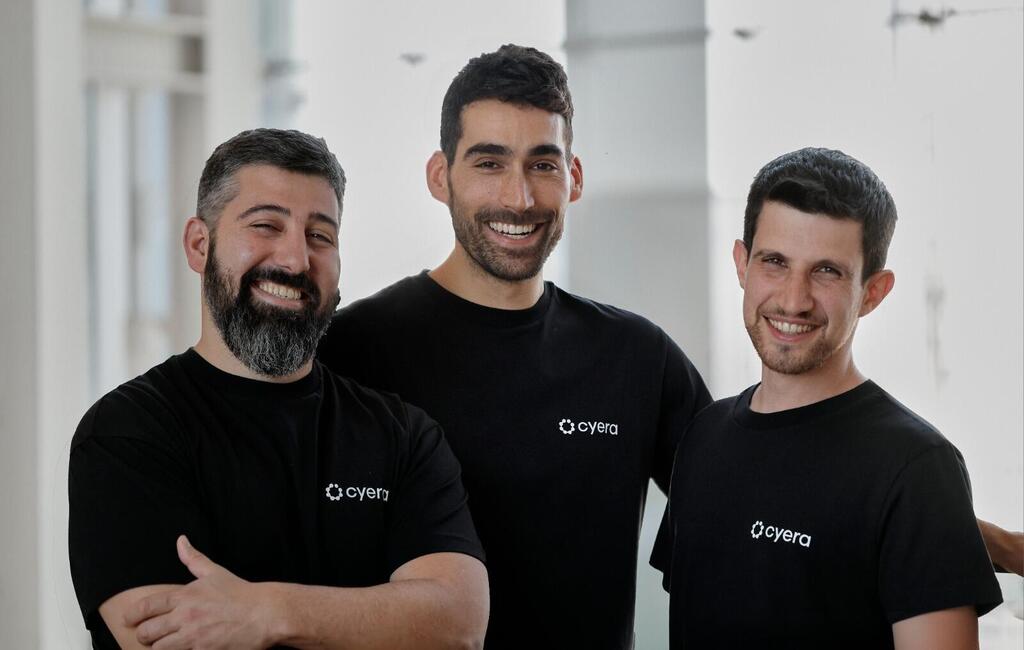
Cyera founders
(Photo: Natasha Zriker)
“Unfortunately, there aren’t many Israeli growth companies capable of doing a giant deal like the one we did with Cyera,” Danny says. “In Israel there is ego. Everyone wants to run with their own dream and win on their own, to be the biggest. And as we see and know from politics, we aren’t very good at joining together and creating something greater than the sum of its parts.
“But the market demands it, because both the close familiarity and the shared language allow us to build something Israel hasn’t seen before, both in terms of growth rate and leadership in the cybersecurity market.”
When they talk about synergy and familiarity, they mean that Cyera and Oasis come from what they call “the same family,” separated by about two years. “The family starts with Talpiot specifically, where I began my military journey with Cyera’s three founders,” Danny says. “Later I met Amit in Military Intelligence’s Unit 81, whose motto is turning the impossible into the possible.
“We met when Amit came to me and said, ‘Give me five team members, come with us and we’ll find a solution.’ The solution was for a problem that had already consumed thousands of work hours. It took another year, and we produced a solution that won the Israel Defense Prize.
“What made it possible was Amit’s tremendous ability to get many different organizations across the defense establishment and the IDF to put their egos aside and cooperate. That definitely resembles the path we took at Oasis.”
Those are presumably people who are involved now in Cyera’s acquisition of your company.
Danny: “Interestingly enough, without naming names, there is a connection.”
Amit: “Danny talked about our roots and the fact that we came from Unit 81, a place where they teach you to turn every impossible problem into a possible solution and break down walls through cooperation.
“Specifically, combining our capabilities with Cyera’s brings us toward the goal we set for ourselves: capturing as much market share as possible in our field.”
And how does the connection feel in terms of energy and the dynamic between two Israeli companies?
“Both we as founders and our teams know one another. We helped each other along the way with recruiting and sales. We have similar roots, a similar hunger and a cultural fit, and that is not characteristic of every acquisition. It is a special situation in which Cyera, as a large and powerful Israeli company, can propel forward what we built at Oasis.
“If you go back five years, it was difficult in Israel to dream about companies on Cyera’s scale. There were no precedents. Before the era of Wiz and Armis, there wasn’t even that kind of compass. The dreams were smaller. It is amazing to see Israel producing successes like these and also creating combinations such as Oasis and Cyera.
“In this combination, both companies bring business and technological strength, and together we are building a giant Israeli company unlike anything Israel has seen before, with an impact not only on the local market but internationally as well.”
Deals across the ocean
Looking abroad meant the two quickly understood that to succeed they had to be close to their largest customers, prompting both to move to the United States. “Building a business is difficult. You constantly have to be moving upward, and alongside that we made a difficult decision: both of us, as founders, would move to the United States.
“We understood that we needed to be close to the market and see with our own eyes, feel in our gut and in our hearts what our customers are seeing and experiencing, what they are going through and what they need.
“We believe that from here we can drive the company toward business success, and that is also for the dozens of people in Israel who followed us into the company because they believed we could deliver results.”
Danny: “One of our investors, Gili Raanan of Cyberstarts, told us: ‘You built a company in Israel that knows how to solve significant technological problems. To turn the company into a business, you now have to build a company in the United States, create an organizational culture, recruit people and build an engine capable of driving significant business. You can only do that by building a U.S. site and connecting it with the site and culture in Israel.’”
In other words, there is no way to do it while sitting on the other side of the ocean?
Amit: “No way, and today we understand that. I’ll give you an example. Danny was here in New York on a normal workday when suddenly a customer sent him a message saying he was free that evening to meet him for dinner in Chicago.
“Danny got up, took his passport and his bag, bought some nicer clothes on the way and sat down with the customer for dinner. That doesn’t mean we haven’t also flown from Israel to the United States for a meeting and returned within 24 hours, but that proximity is incredibly important. It is difficult to close business over Zoom. It isn’t the same as sitting opposite the customer, feeling them and understanding what hurts people and what motivates them.”
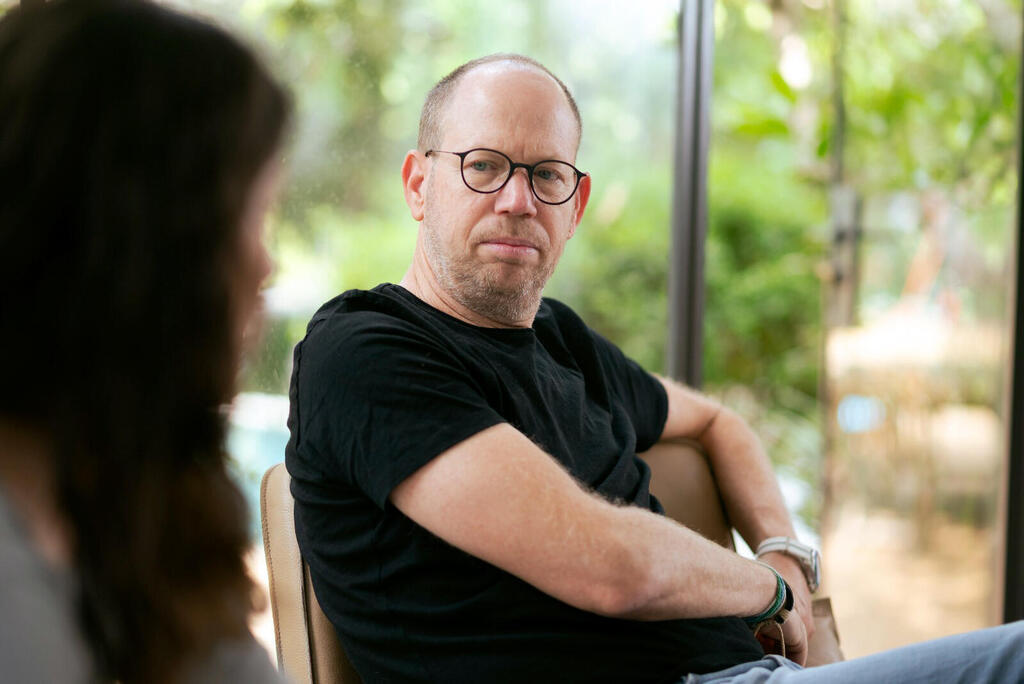
Gili Raanan, one of the investors
(Photo: Ron Shalef)
Danny: “So for everyone wondering who the hell buys clothes in all those giant stores at airports, the joke is on me. I learned firsthand why they exist.”
You mentioned Armis earlier, which had an enormous exit of about $8 billion. How similar are your roots to those of its founder, Yevgeny Dibrov, who also comes from a family of immigrants from the former Soviet Union?
“Yevgeny and I have obviously talked about our roots. Both of us had complicated stories. Yevgeny is a role model for many of our brothers and sisters, the 1.5 generation of Russians in Israel who look up to him.
“If there is one thing that moves both of us deeply, it is the opportunity to show other young people that everything is possible and that they must never give up, that everyone has an opportunity.”
What do you have to say about the state of Israeli tech, the layoffs and workers’ fears that AI will take over?
“Like everywhere else in the world, Israel’s tech industry is going through a major transformation because of AI. It is true that Israel initially fell behind because we didn’t focus enough on this area, but on the other hand, as is typical of Israelis, we are seeing a rapid recovery. Once Israelis realize we made a mistake, we move quickly to fix it and recover.
“Today you can already see encouraging signs of an Israeli tech industry that is maturing, changing and adapting to the world. Mistakes are part of learning. Ultimately, we are the sum of the mistakes we’ve made. We will return to a period of growth and activity, and it will happen faster than all of us imagine. We can see the ground moving. There is a correction underway.”
But for you, the AI boom has been a blessing.
“Correct. For us, it was amazing, and it was a carefully calculated bet. But now the entire tech industry is going to adjust itself to this new world. In economics, people sometimes talk about systems that grow stronger the more pressure they endure. It is similar to the way a recession can be viewed in macroeconomics as something ultimately constructive. That is how I see the recent period in Israeli tech: a temporary business downturn that will leave us much stronger.”
Just before the interview ends, both founders want to emphasize that Israeli tech’s success ultimately rests on the people who make it work, and that it is not only programmers or product teams who move the industry forward, but the entire network of people inside the companies.
“At Oasis, like at many Israeli companies, it starts with the people. Take our HR manager, Yaeli Alb, for example. She is one of the people who helped us move the company forward.
“When Amit followed me to the United States, she continued to hold the Israeli site together on the human level, seeing every person in the company and helping us make sure we weren’t overlooking people and were developing their potential.
“She and many other people at Oasis deserve enormous thanks for the tremendous contribution they made to our business success. In the end, it was the employees who delivered the incredible achievement of the fastest-ever $1 billion sale, which we accomplished in less than four years.”
So despite all the talk about non-human identities, in the end you’re saying it’s all about people.
The two laugh and agree: “A million percent.”
First published: 20:24, 08.28.26