

Inside a chamber carved into solid rock, 15 meters long and several meters high, Capt. B., an operations officer in Yahalom, the IDF’s elite combat engineering unit, stood before rows of personal lockers, beds and bedding prepared for an entire platoon of Hezbollah terrorists.
The chamber was part of a vast underground military complex in the Beaufort Ridge area of southern Lebanon, overlooking communities in Israel’s Galilee Panhandle. Hezbollah built the site secretly over nearly two decades as part of its preparations for a possible invasion of northern Israel.
Gallery
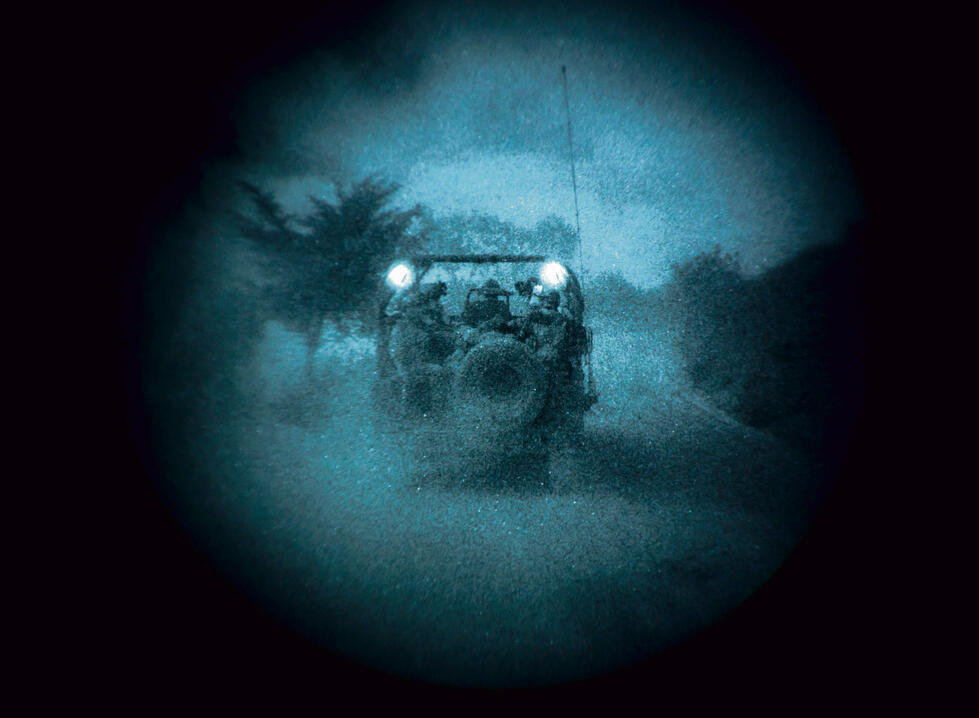
Descending into the tunnel network in the Beaufort area, north of the Litani River
(Photo: Ziv Koren)
This was not a narrow tunnel intended only for moving fighters between positions. The complex contained large living spaces, kitchenettes, toilets, showers, weapons depots and medical facilities, indicating that Hezbollah forces were expected to remain underground for an extended period.
“This is an extremely serious event and a massive operation that took a long time to prepare,” Capt. B. said. “This was a project in which they invested enormously. The infrastructure did not surprise us because we had already encountered these Iranian capabilities, weapons and precise designs in other underground routes. But experiencing it and seeing it with your own eyes is historic.”
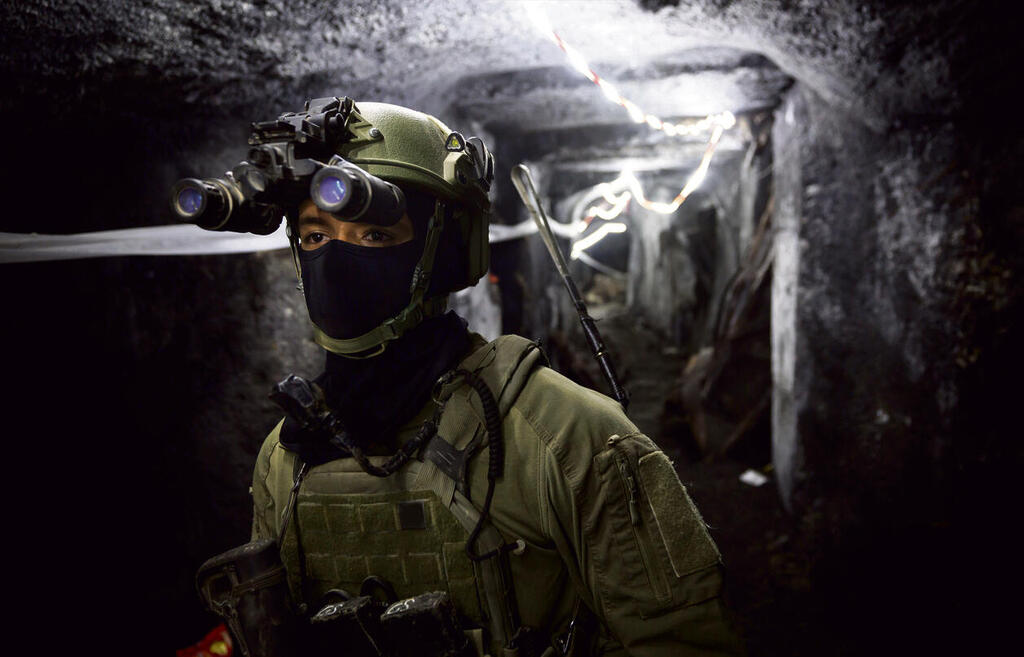
(Photo: Ziv Koren)
Hezbollah’s Radwan Force, its elite commando unit, had built tunnels closer to the Israeli border for rapid raids into Israeli territory. The Beaufort complex, however, served a different purpose. It was designed as a fortified underground base capable of resisting Israeli airstrikes and ground forces during a prolonged conflict.
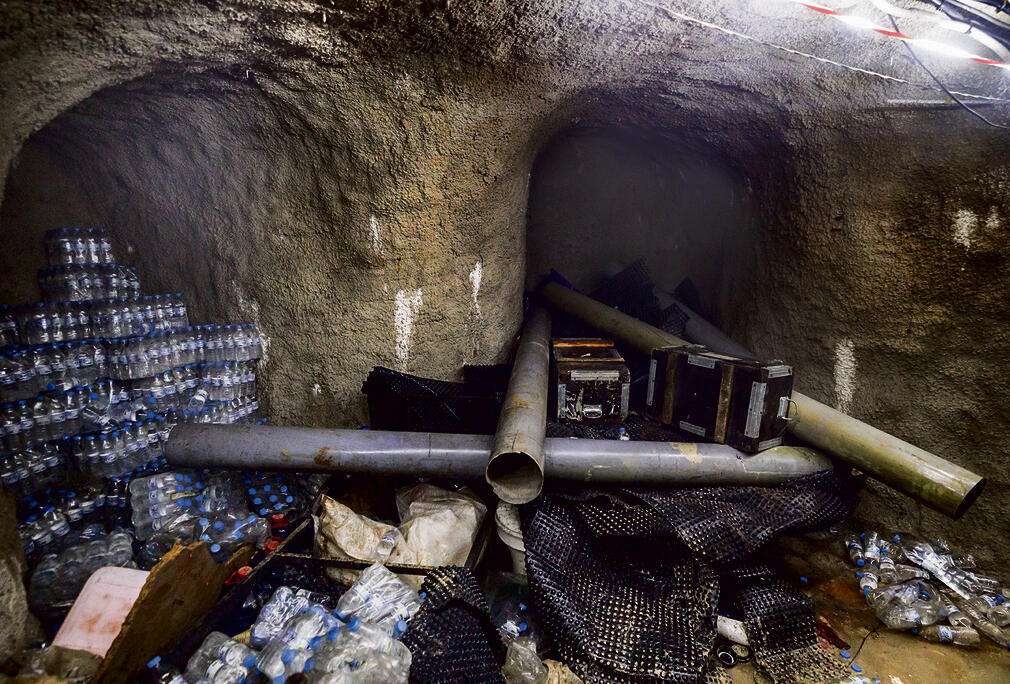
Underground supplies: large quantities of bottled water and equipment
(Photo: Ziv Koren)
“We found far more sophisticated weapons here, the most wanted items in the weapons world,” Capt. B. said. “There were unique anti-tank missiles smuggled from Iran and mines designed to target helicopters. They had clearly prepared to defend themselves against forces arriving from the air.”
The quantities stored inside the weapons chambers reinforced the assessment that Hezbollah intended to sustain extended operations from the site. IDF troops found hundreds of explosive devices, large quantities of anti-tank missiles, dozens of bounding mines intended to strike soldiers and low-flying aircraft, and more than 250,000 rounds of anti-aircraft ammunition.
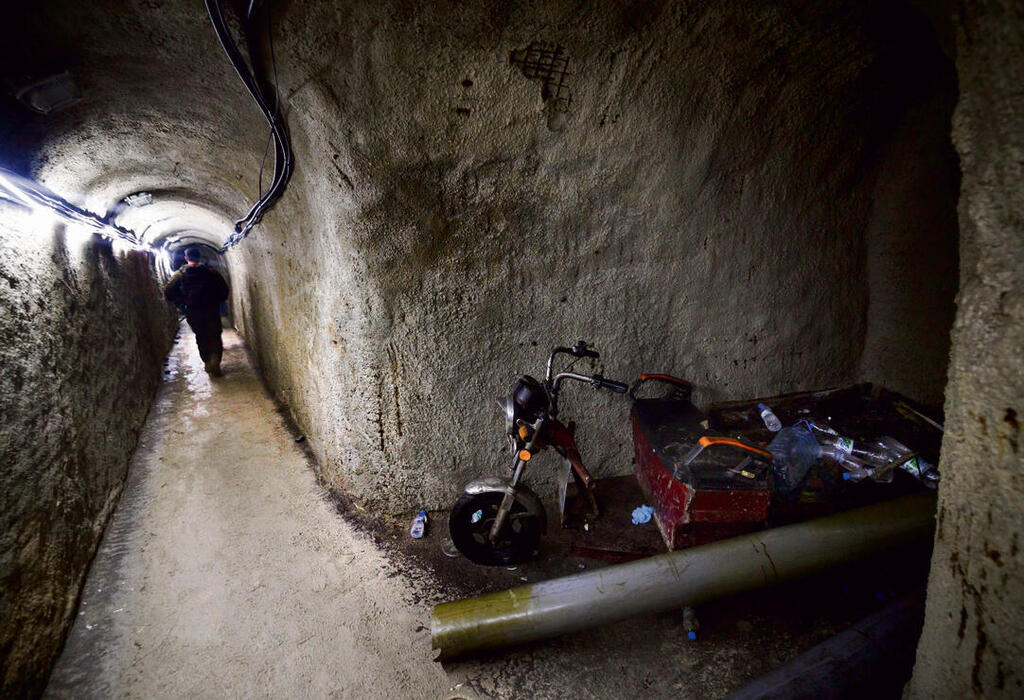
Three-wheeler from hell: a vehicle used to transport equipment through the tunnel
(Photo: Ziv Koren)
“I stood in front of all of it and imagined how many weeks it must have taken them to bring everything inside secretly,” Capt. B. said. “It was an extremely complex operation.”
The network of tunnels, passageways and large underground chambers also included advanced medical facilities.
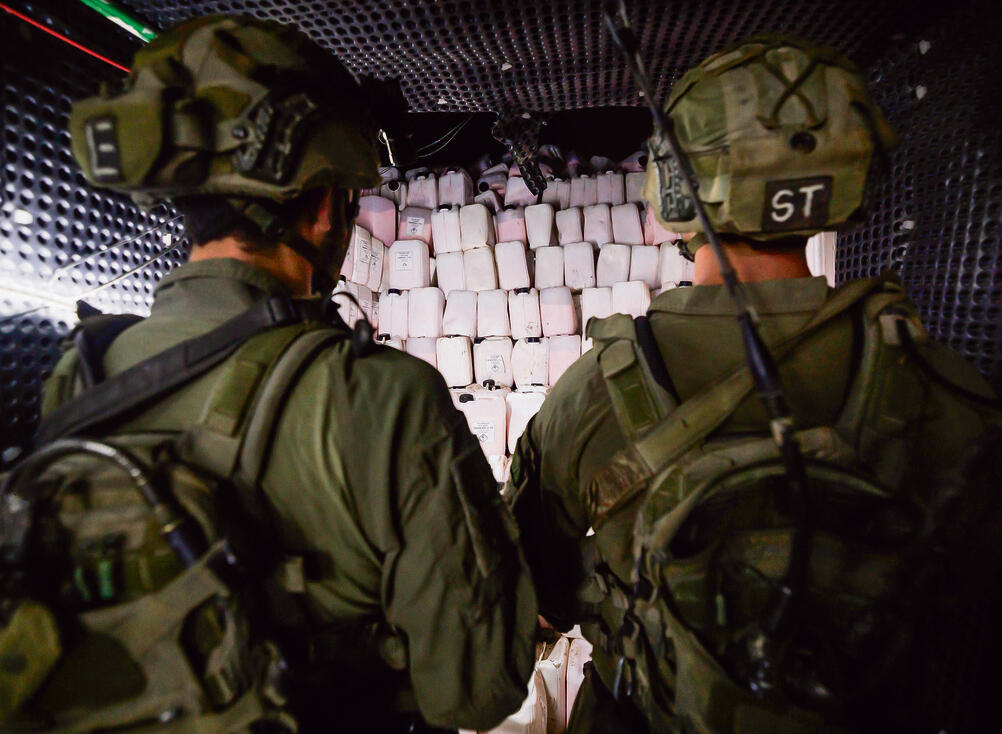
Target for clearance: a stockpile of IDF explosives stored in the captured excavated area
(Photo: Ziv Koren)
“In one of the more developed sections, we found an actual operating room,” Capt. B. said. “I cannot say whether it was also intended for a scenario involving kidnapped Israelis, but that is certainly a plausible possibility given the intentions we know they had.”
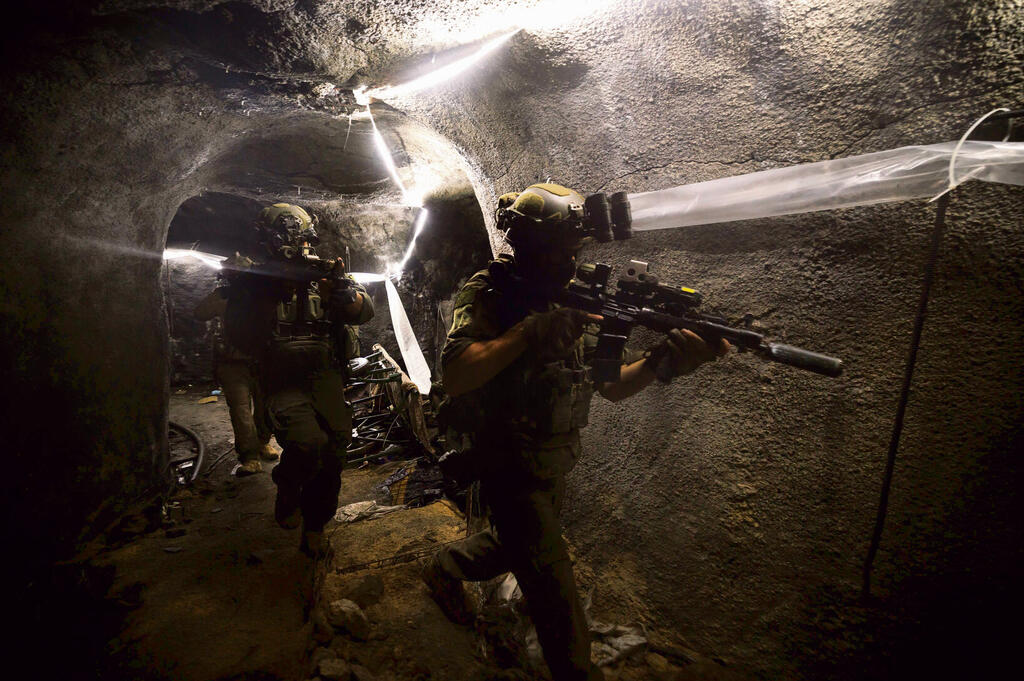
Troops also discovered small three-wheeled vehicles designed to carry equipment and move terrorists quickly through the main tunnel. The vehicles could allow fighters to emerge from concealed openings, fire toward Israeli territory and retreat underground.
(Photo: Ziv Koren)
The IDF encountered resistance while entering the complex. Although sections of the site were still under construction because of the difficulty of excavating solid rock, Hezbollah terrorists had already occupied positions inside it.
“The enemy even detonated an explosive device from inside the tunnels against our forces,” Capt. B. said. “There was an enemy here that resisted, planted explosives and came to fight.”
According to the officer, weapons and technology developed specifically for underground combat helped the IDF overcome Hezbollah’s defenses. Engineers from Yahalom, the IDF Northern Command and the Combat Engineering Corps are now working to map, clear and prepare the complex for destruction.
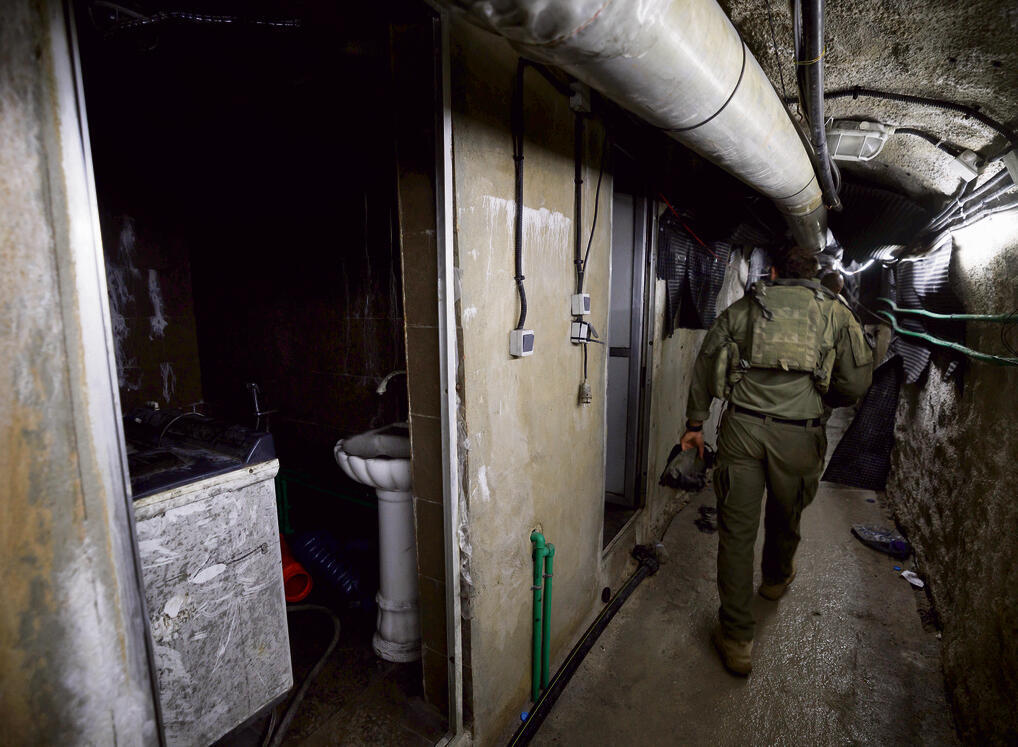
One of the toilet and shower rooms carved into the rock
(Photo: Ziv Koren)
The operation is part of an effort to dismantle what the IDF calls Hezbollah’s “anti-tank line,” a chain of elevated positions in southern Lebanon overlooking the Galilee Panhandle. From these ridges, Hezbollah terrorists could emerge from underground positions and fire anti-tank missiles directly at Israeli homes, roads and military positions.
“When you stand up there and realize that a terrorist can emerge from an underground route, see an Israeli home through his sights and fire at it, that is a situation we are not prepared to tolerate,” Capt. B. said. “Terror infrastructure cannot be allowed to remain in southern Lebanon, neither near the border nor on the ridge opposite it.”
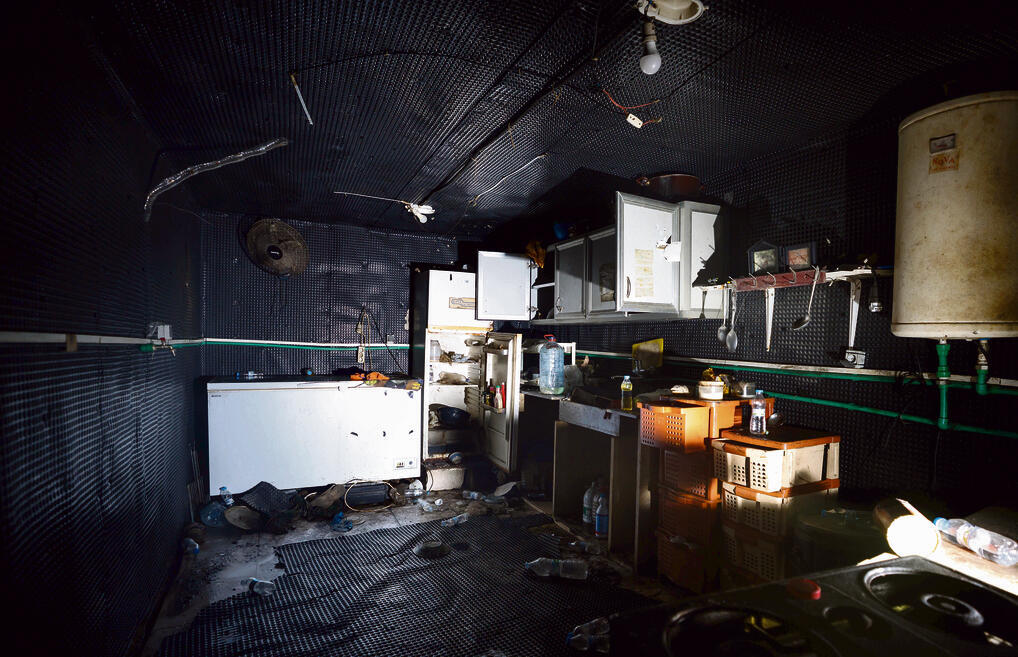
Deep underground: one of the equipped kitchens prepared for Hezbollah terrorists
(Photo: Ziv Koren)
The IDF is expected to complete preparations in the coming weeks to destroy underground Hezbollah complexes near the Israeli border.
Military officials believe, however, that additional underground infrastructure remains farther north, beyond the area currently under Israeli military control in southern Lebanon.
“Farther north, if and when we are required to act there, we also have targets,” Capt. B. said.