

It's early morning at a staging area near Kibbutz Misgav Am in the middle of the Galilee. The cold hits your face and the engines of the 36th Division’s Humvees are already roaring, ready to move.
“It’s about an hour and a half drive, and there will be a lot of dust,” a soldier warns us as we tighten our helmets and body armor. “Part of the route goes through roads we opened only a few days ago. It won’t be an easy drive, and at the end of it we’ll reach Beaufort Castle.”
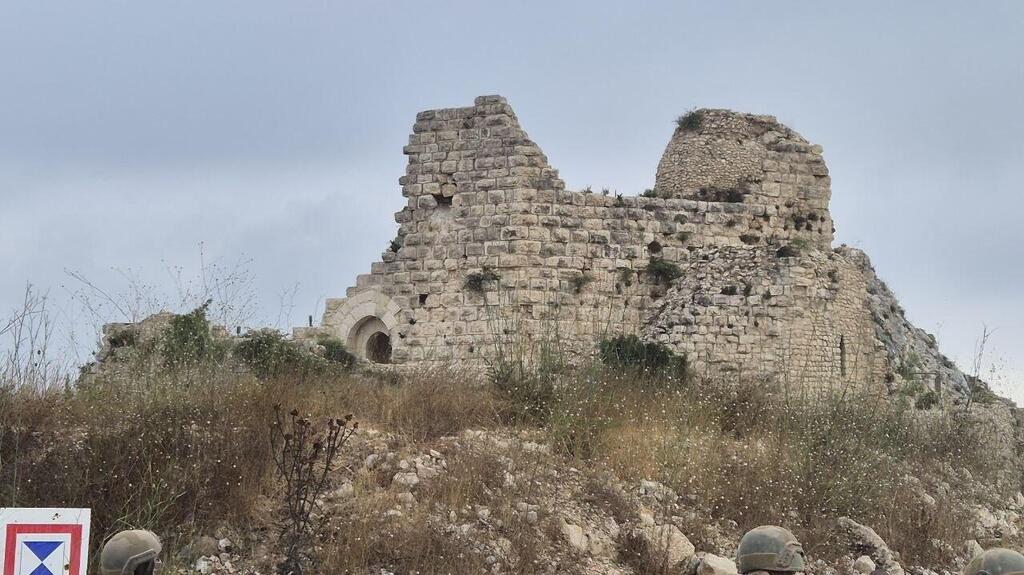
We climb into the Humvees and set off. The IDF Spokesperson’s decision to bring military reporters into the Beaufort area carries historic weight: decades have passed since an Israeli journalist last stepped on the stones of the Crusader fortress overlooking the old security zone and the communities of the Galilee Panhandle.
The road to Beaufort is a gallery of war images, terrifying and impressive at once. The IDF after October 7 is an aggressive war machine, and the destruction is visible from every hill and mound. The homes in the border villages, which over the years became fortified Hezbollah terror bases, have been completely flattened. Piles of construction debris line the sides of the road, and the buildings still standing look like sieves, silent testimony to the heavy gun battles that took place here.
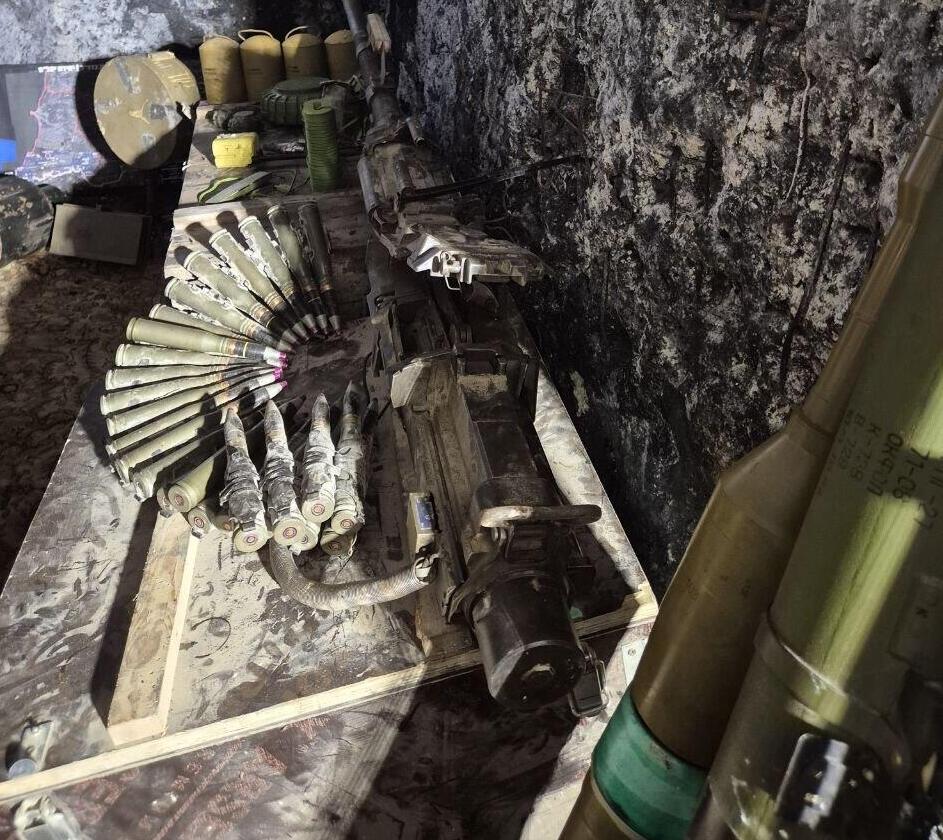
Weapons found in a tunnel near Beaufort
(Photo: Elisha Ben Kimon)
To allow the division to move, engineering forces opened about 32 kilometers of entirely new routes, now used by the logistical echelons transferring ammunition and supplies to the troops at the front of the “yellow line.”
The quiet here is deceptive. Fake. The ceasefire with Hezbollah has been violated time and again, and the gap between what the Israeli public sees at home and what is visible on the ground is glaring. IDF infantry forces carried out a significant ground operation and are deployed deep across the length and breadth of southern Lebanon. Hezbollah has been pushed back, leaving ghost villages behind, but it is by no means far from the forces. It bears repeating: the terrorists have not withdrawn from southern Lebanon.
If there is a heaven
The 36th Division captured Beaufort only a few weeks ago in an operation based on deception and misdirection. Forces from the Givati Brigade misled Hezbollah terrorists and were the first to cross the Litani River, while Golani troops stormed the fortress itself.
That operational success was mixed from the outset with the familiar, bitter taste of a strategic dispute. Considerable criticism has been voiced over the IDF’s presence in the Beaufort area, and even more so over the forces’ deployment on the nearby Ali Taher ridge, large parts of which do not have a direct line of fire on communities along the Galilee confrontation line.
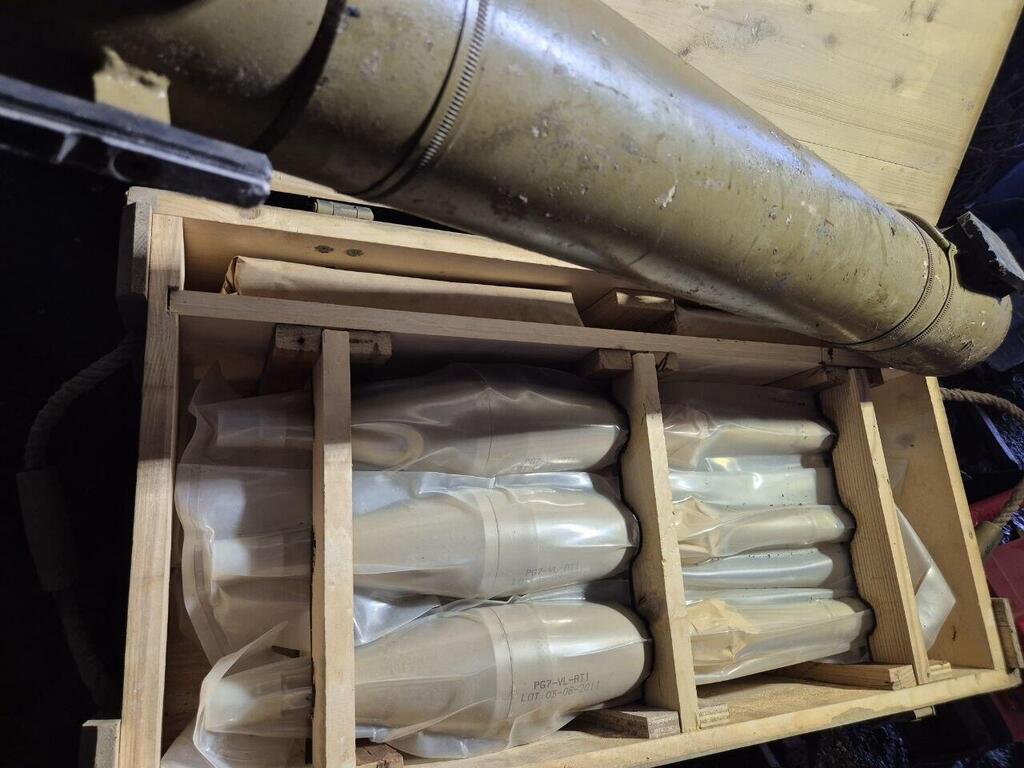
Weapons found in area of Beaufort
(Photo: Elisha Ben Kimon)
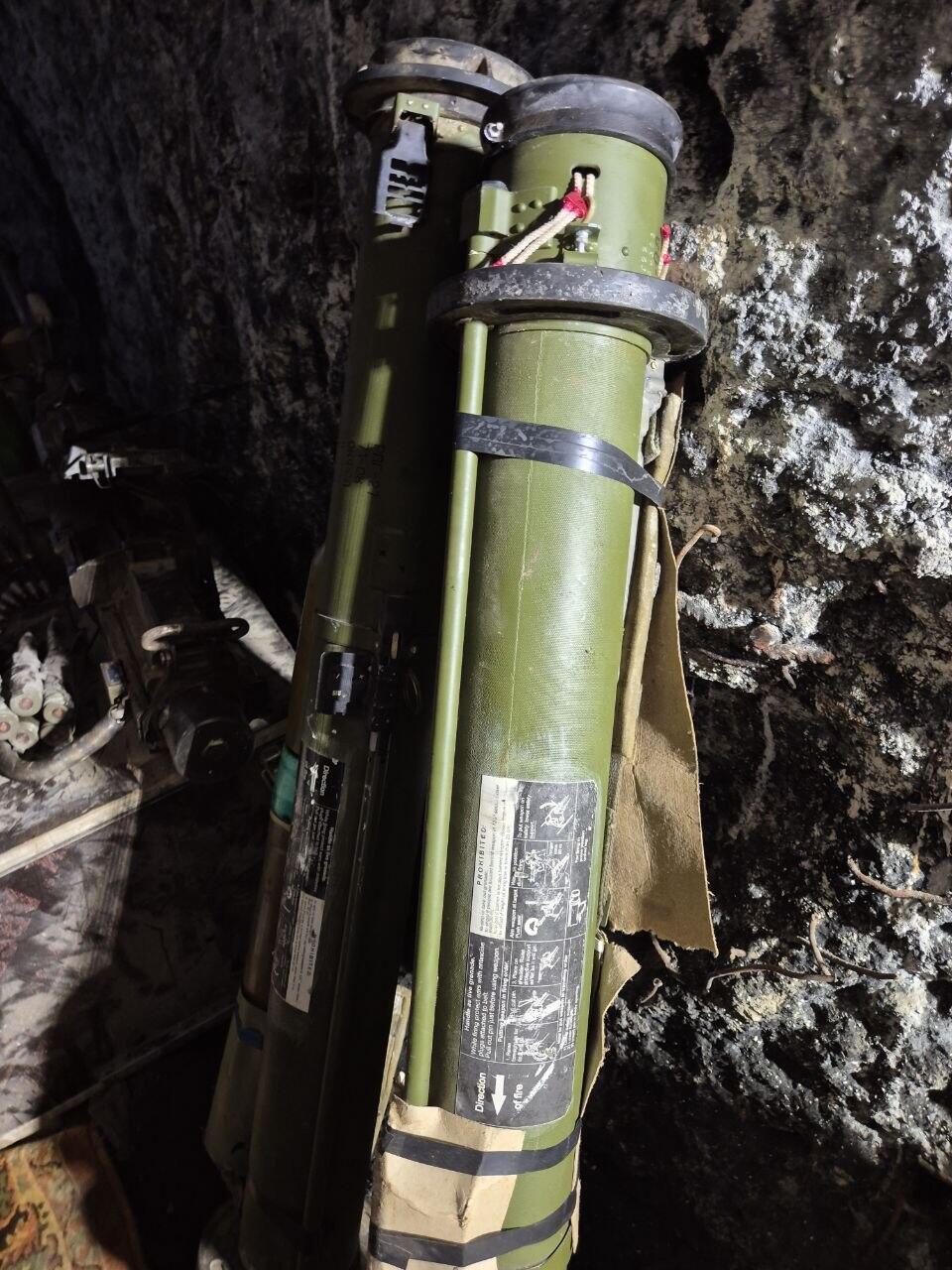
(Photo: Elisha Ben Kimon)
After about half an hour of movement inside southern Lebanon, we begin descending a steep, winding slope toward the Litani River. In an instant, magnificent natural scenery replaces the images of destruction. Blue, foaming water flows through the Litani, crashing against rocks surrounded by wild green vegetation. One reality of devastation on the ridge, and another, parallel reality of pastoral calm in the valley.
We cross the river on a temporary dirt bridge built by engineering troops. Similar bridges are scattered along the route, some of them bombed at the beginning of the campaign by the Israeli Air Force to prevent Hezbollah from reinforcing its forces south of the Litani. Now the road is open, and we begin climbing again toward the populated areas. A glance ahead reveals ruins; a glance back, nature.
After an hour and a half of jolting travel, we arrive at Beaufort. The excitement is evident among the Israeli journalists, who walk among the fortress’ giant stones and touch them with awe. Senior officers who fought here now stand on the dominant ridge and repeatedly insist on explaining to us the strategic importance of holding the site, even though there is no tunnel or significant Hezbollah strategic asset beneath the fortress itself.
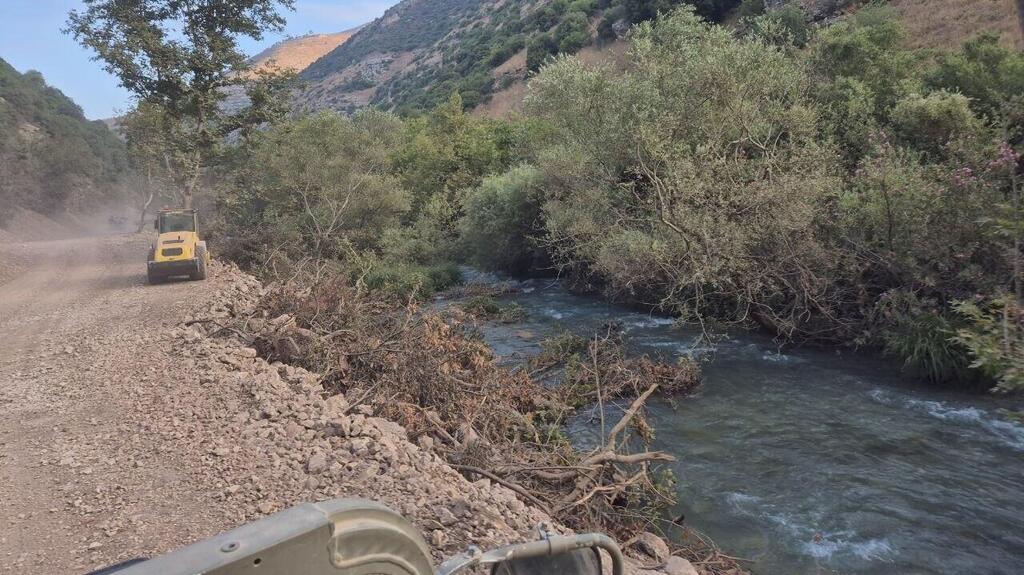
On the way to the fortress, you cross the Litani River.
(Photo: Elisha Ben Kimon)
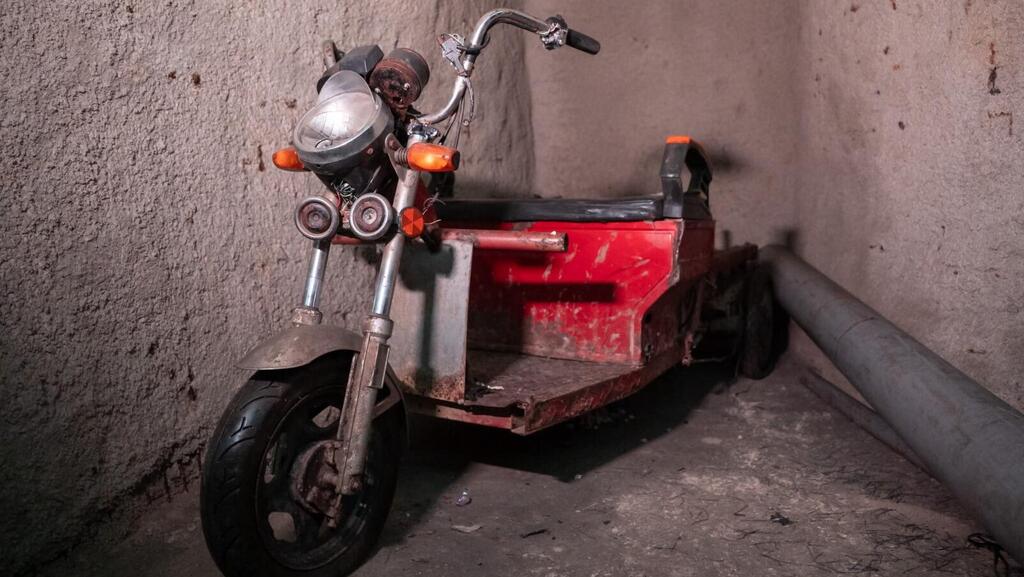
Mobility vehicles for Hezbollah's underground network
(Photo: IDF Spokesperson's Unit)
How much Israeli blood was spilled on these rocks over the years? The fortress tells the whole story without words. The Golani emblem has been stamped on a temporary structure near the entrance, and the brigade’s flag flies in the wind above the old fortress.
“Golani is Golani,” one of those present jokes. “First they plant a flag, then they finish the conquest.”
Hezbollah is not visible at the moment. It has been pushed back toward the Nabatieh area, but its invisible presence is strongly felt in the conversation.
“We are on the Beaufort ridge after completing in recent weeks the operation to capture southern Nabatieh Heights and the ridge. This is a critical area for defending the Galilee Panhandle, Metula and the communities,” 36th Division commander Brig.-Gen. Yiftach Norkin tells us. “During these battles, which lasted many weeks, we prepared the conditions for crossing the Litani. We searched the area for terrorists, and the battle was planned in a way that completely surprised Hezbollah under significant diversionary operations.”
Norkin proudly lists the achievements of the brigades that operated under the division: Golani, Givati, the 7th Armored Brigade and the Commando Brigade, now positioned at the edge of the divisional deployment on the Ali Taher ridge, alongside Yahalom combat engineers.
Alongside the praise, he does not hide the fact that the reality accompanying the ceasefire is, at the very least, complex.
“At this stage, under defensive deployment during the ceasefire, we are prepared for any scenario and determined to return to fighting,” he says, emphasizing: “Hezbollah is refreshing its forces and trying to remove weapons from the combat zone. It is improving some of its positions and capabilities. We are watching it, and when necessary, we will know how to strike those forces.”
Hezbollah was contractor for Iranian project
The proof of his words lies only a five-minute drive from the fortress. There, underground, a tunnel built by Hezbollah with Iranian funding and guidance was uncovered.
We receive approval to enter a winding underground structure more than a kilometer long. Inside, we are shown a vast weapons depot containing various types of explosive devices, heavy machine guns for firing at helicopters, Kalashnikov rifles, grenades, combat vests and shells.
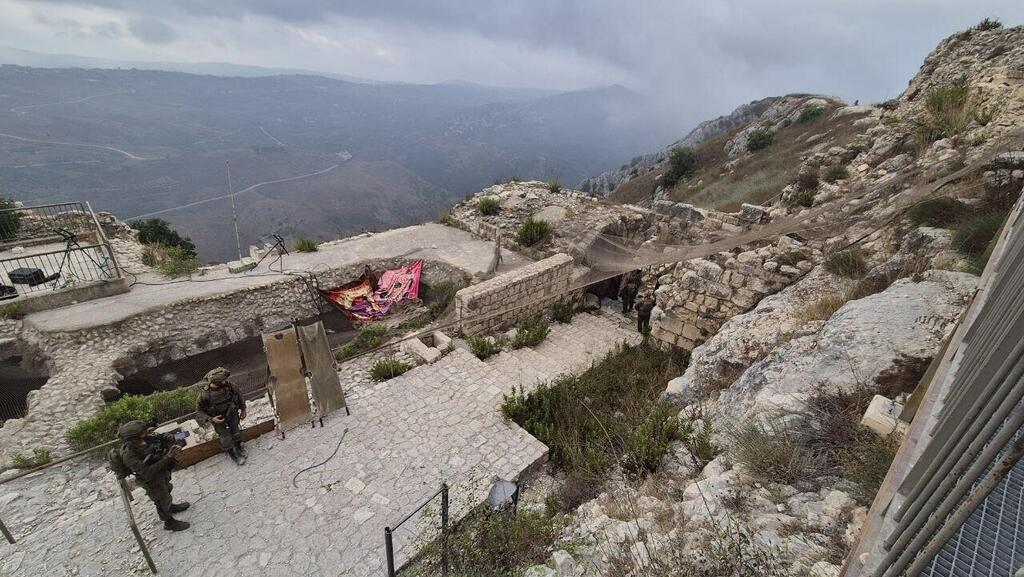
IDF soldiers at Beaufort Castle in southern Lebanon, last week
(Photo: Elisha Ben Kimon)
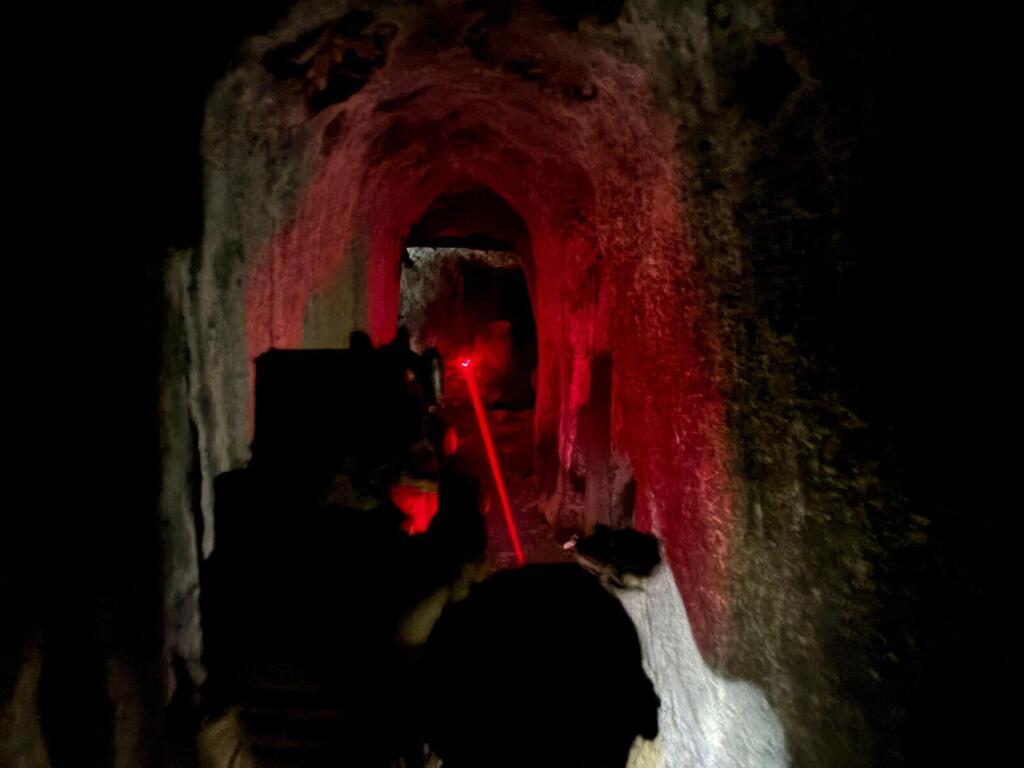
IDF force scans the underground tunnel in the Beaufort area
(Photo: IDF Spokesperson's Unit)
The biggest surprise is the medical equipment. On a wheeled stretcher are intensive care kits, syringes, disinfectants, ampoules and bandages. The IDF describes these as “underground operating rooms.” Forces encountered a similar feature in the tunnels of Hamas’s most senior leaders in the Gaza Strip. It is difficult to know when terrorists last set foot here, but it is clear the site was built for prolonged stays, at least several months underground.
At the entrance to the tunnel, Lt. Col. H., commander of S Company 1 in the Yahalom unit, tells us: “The route is relatively intact. There is electricity, water, sewage and drainage infrastructure here. This is something they built over 15 years. There is an insane amount of food here. The terrorists lived here. From these infrastructures, they fired at Metula and the northern communities. We found this entrance collapsed. At first, the Lebanese army came here as part of our desire for them to deal with the tunnels. They conducted a short tour and, of course, did not destroy the asset. So we had to return here to complete the mission ourselves.”
Capt. B., the company’s operations officer, adds: “The infrastructure we see here is part of an Iranian project, with Hezbollah as the contractor. Beyond the fully equipped operating room, we found high-end and unique weapons here, including rare Hezbollah anti-tank missiles and anti-aircraft launchers. From here they fire at Metula.”
Questions that hover over the ridge
The tour of the Beaufort area and the tunnels nearby makes very clear the threat under which northern residents lived for many long years. But upon emerging from the underground back into the Lebanese sunlight, it is impossible to avoid the question marks hovering over the entire maneuver.
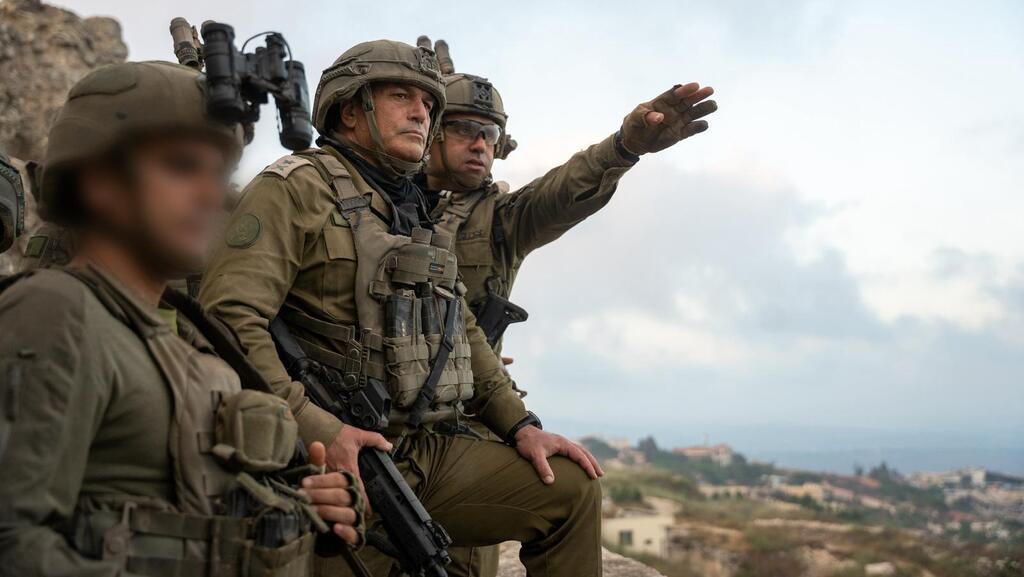
IDF chief of staff on Beaufort ridge
(Photo: IDF Spokesperson's Unit)
At the start of the operation, its goals were clearly defined: pushing Hezbollah beyond anti-tank missile range. That objective was achieved about a month ago. Since then, the ceasefire has been violated, no proper diplomatic arrangement appears on the horizon and, against the backdrop of U.S. restrictions imposed on IDF strikes in Beirut, the General Staff decided to expand the operation and push deeper into commanding points in southern Lebanon. In military language, this is called “deepening the achievement.”
One member of the General Staff often uses the phrase “shaping the area contributes to stabilizing it.” Loosely translated: demolish a house here, open a route there, all to create future operational freedom of action. It is clear that the IDF’s senior command understands well that the road to pulling back from here is long and winding. In side conversations, generals speak of a stay lasting many months. The military may be preparing for a prolonged presence in more permanent formations inside Lebanon.
Political officials repeatedly declare that the IDF will remain beyond the border, but many do not want to be part of a familiar script that returns Israel to the days of the security zone in the 1980s and 1990s.
Is the deep and extensive territory the IDF has seized in Lebanon truly an essential operational necessity for defending the Galilee? Or is it a dangerous entanglement under restrictive political conditions, one that is exacting too heavy a price?
In this bloody arena, where the future is always shrouded in fog, those questions remain open, hovering above the Golani flag flying over the walls of Beaufort.