

On the morning of October 7, just before 6:29 a.m., they were still four young operations room soldiers talking about officer training, dreaming about their post-army trips and enjoying life on what, to them, was the safest base in the world, even though it sat just five kilometers from the Gaza border.
Moments later, they found themselves without a brigade commander or deputy brigade commander, managing a battle, trying to dispatch forces and holding one another together inside a bubble of very real, mortal fear.
Gallery

‘We ran the Southern Brigade’s war, four nice little girls’; Lihi, Tahel, H. and Liel
(Photo: Yonatan Blum)
For three years, they remained silent. At first, they tried to live normal lives and continue their service as usual. Three have since been discharged, but what was burned into them during those 24 hours has never let them rest.
Now, at last, they have names, faces and a harrowing story that has never been told.
Tahel Dahan, 22, from Yavne; Liel Gehari, 23, from Gedera; Lihi Moskovitz, 22, from Rishon Lezion; and Lt. H., 22, from Kiryat Gat, are the women who served in the Southern Brigade operations room of the Gaza Division, under the command of the late Col. Asaf Hamami.
They became, against their will, the heroines of the shift that began on that Black Saturday and, in many ways, has never ended.
This is their story.
Hamas’ Oct. 7 breach of the Gaza Division base at Re’im


Then the sirens began
The most senior of the four is Liel, who enlisted in December 2021 and was discharged exactly two years later, three months after the war began. The youngest is H., who enlisted in March 2023 and chose to pursue officer training. This week, she begins a new position in the Givati Brigade, which she asked to join in order to continue the path of Hamami, the commander she admired.
All four went through the same training track for operations room soldiers.
“Basic training and a course at Julis,” Liel said. “After that, you’re assigned to a general sector — Gaza, Lebanon, the West Bank, Egypt. Then, after a few days of screening, they decide which operations room you’ll be assigned to. All of us, at different times, were assigned to the Gaza Division’s Southern Brigade at Re’im Camp.”
Inside the operations room, they worked in fixed pairs: a shift supervisor and an operations room soldier. In practice, the positions are similar, with the difference mainly in the level of responsibility. Tahel was Lihi’s shift supervisor and Liel was H.’s.
They describe a lively military routine among young women serving week-on, week-off schedules and spending 12 hours a day together in the same operations room.
As happens every year shortly before the Jewish High Holidays, they were asked to choose which holiday they would remain on base for and which they would spend at home. All four chose to stay on base for Yom Kippur and Simchat Torah, but even when they were on leave, they stayed together.
“On the first day of Sukkot,” H. recalled, “they all came to our sukkah. My mother made challah, schnitzel, sfenj. They’re all like her daughters.”
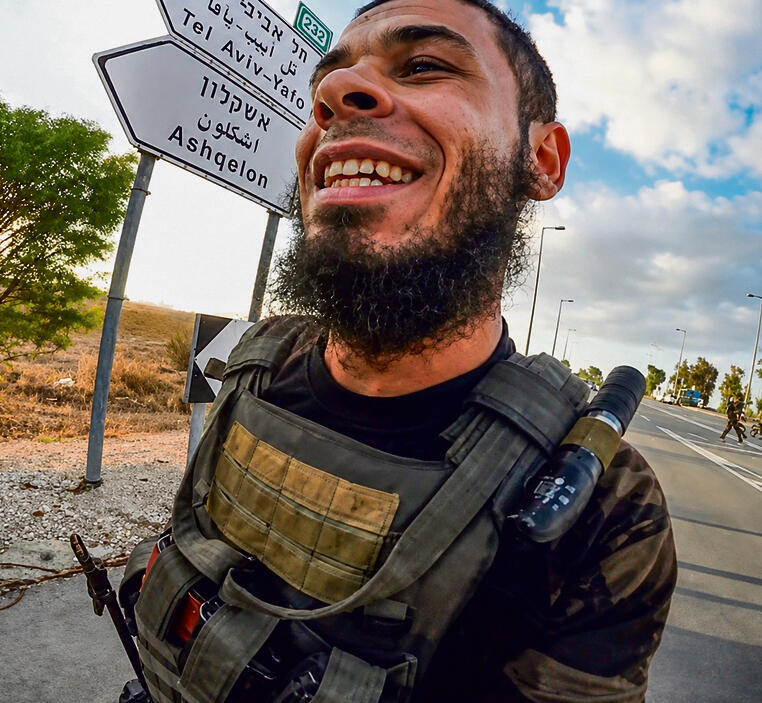
‘They dragged bodies like rugs. I remember an entire family on their knees. You see kidnappings’; terrorist Ahmad Biyoukh, dubbed ‘the smiling terrorist,’ who was later killed
They remember returning to Re’im Camp on Monday, Oct. 2, 2023, straight into a surprise inspection that ended with disappointing results.
“They let an unfamiliar person into the operations room,” Liel recalled. “Hamami was furious because the brigade had been a candidate for the Chief of Staff Award and this basically disqualified us. He took it very hard and changed things. For example, he canceled the entrance code to the operations room and instead handed out electronic access chips to only a few people.”
That decision, as they would discover, became critical five days later.
Because of the failed inspection, morale on base was somewhat low.
“Then Friday came,” Liel said, “and we felt like we had to lift everyone’s spirits. Of course, it was Friday, so we made shakshuka for lunch and meatballs from Tahel’s mother’s recipe. She was literally on FaceTime with us while we fried them. We ate the shakshuka and put the meatballs in the refrigerator. During the attack on the base,” she added, smiling briefly, “the terrorists went into the kitchenette, wrecked the whole place and ate our meatballs.”
“My shift with H. ended Friday at 9:30 p.m.,” Liel continued, “and Tahel and Lihi replaced us. Because we’re operations room soldiers and spend all day in the operations room, we don’t usually go to the base Kiddush. That Friday, something made H. tell me, ‘Go, sit with them.’ And I did. I saw people there I hadn’t seen in a while, some of whom are no longer with us.
“Afterward, we sat until 3 a.m. in the operations soldiers’ kitchenette with Tomer Ahimas, who was part of Hamami’s command team,” she said. Ahimas was killed on October 7; his body was taken hostage and returned to Israel in July 2024.
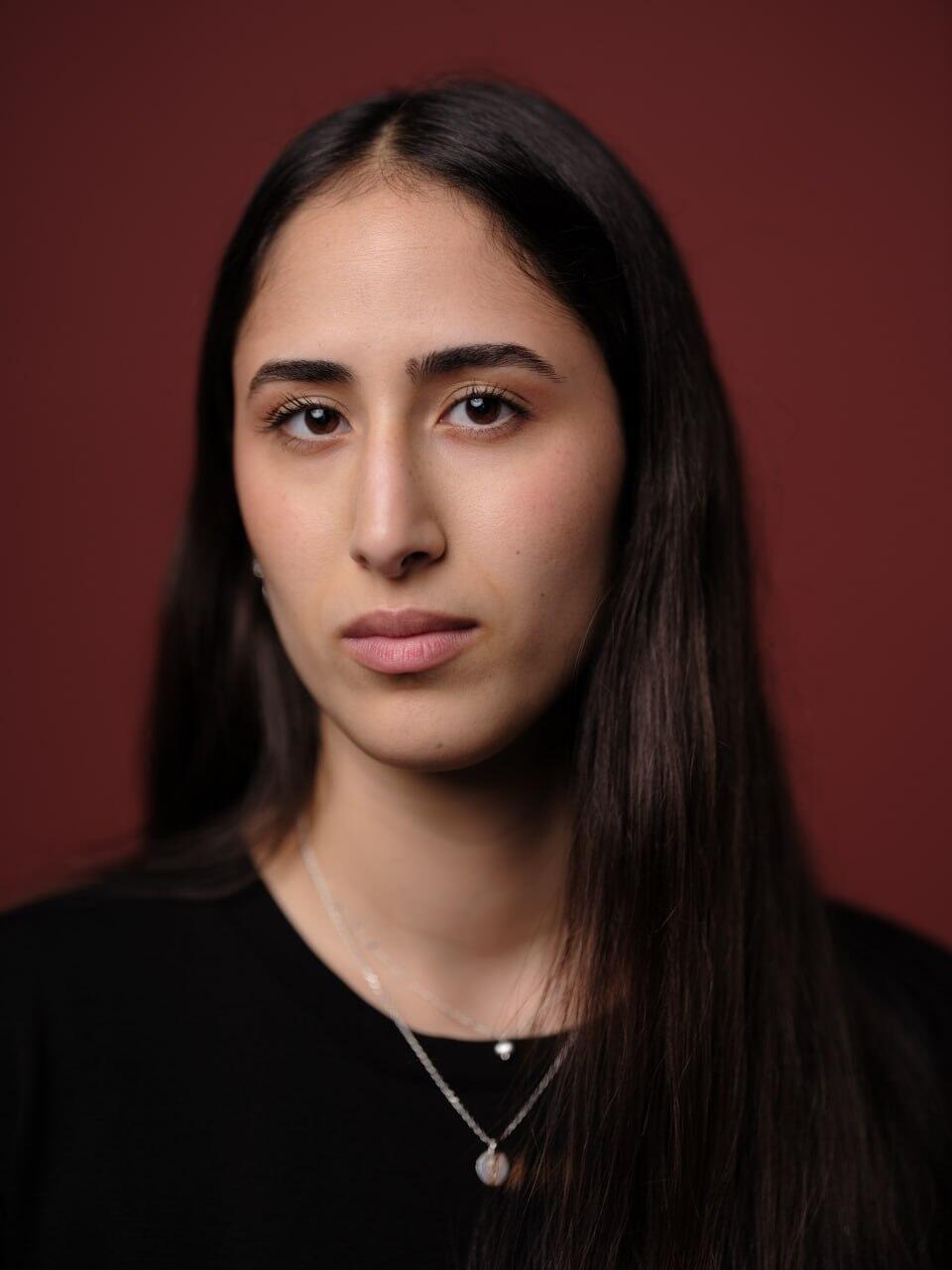
Liel Gehari
(Photo: Yonatan Blum)
The base, they said, felt safe and protected.
“Imagine arriving somewhere,” Lihi said, “and everything you’re taught is that the Gaza barrier is legendary, powerful and impossible to breach, and that there are so many fences and an underground barrier. So the second I saw on the cameras that they had crossed it, it shattered me. I felt like everything was exploding in my face, like everything had been a lie.”
The Southern Brigade is responsible for the Kissufim and Kerem Shalom sectors. The observation soldiers subordinate to it are stationed at Kerem Shalom, the Magen-Nir Yitzhak outpost and Kissufim. Their reports are relayed to the brigade operations room at Re’im, where the operations room soldiers sit.
“From there,” H. said, “we update the higher-ranking officials, from the operations room officer all the way up to the brigade commander, and they tell us what to do: dispatch a patrol, request resources from the division, make sure that in an extreme event there is a Zik drone overhead and so on.”
The brigade had 10 operations room soldiers, they said. Five remained on base over the holiday: the four women and one new soldier who was still in training and assigned to the morning shift.
Lihi began her shift with Tahel on the night between Oct. 6 and 7 and remembers it as relatively quiet.
“Just annoying little tasks, like a malfunctioning point along the fence and debating whether to wake people up and dispatch forces. Those were our problems.”
A few minutes before 6:29 a.m., she asked to step outside for a break.
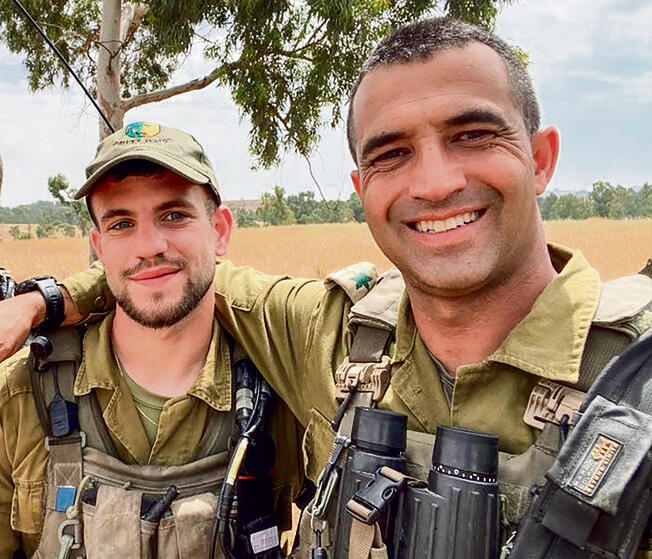
‘His son was in the operations room. We decided not to talk about it. Welfare NCOs played with him’; Col. Asaf Hamami with Staff Sgt. Tomer Ahimas
(Photo: Courtesy of the family)
Then the sirens began.
“When you’re inside the operations room,” Tahel said, “you don’t hear the sirens. They just appear on the computer. You see a red line on the screen, the launch point and the impact point, and then you wait a few minutes for the systems to determine whether it’s real. We were used to seeing one line, two lines. Suddenly, I saw a million lines.”
Tahel called Lihi back in, and the two switched positions and opened the commander’s operations room.
“I opened the system,” she recalled, “and all I could see were lines everywhere. I called communications to tell them there was a system malfunction.”
‘Terrorists are abusing bodies’
But the red lines on the screens were not a malfunction.
“One of the battalion operations soldiers called me,” Tahel recalled, “and asked, ‘Does this look real to you?’ Then we heard this insane boom, and you say, ‘OK, it’s real.’ Once the officer confirmed that it was real, you think, ‘OK, how do we handle this?’ No one had ever taught you what to do in something on this scale.”
A few minutes later, their commander, Hamami, entered the operations room.
“You understood the entire situation from his face,” Tahel continued. “He was very pale, completely white. He told us, ‘I’m heading to Nirim,’ threw the key to our officer and told her, ‘Go get the boy from the room,’ because his son Alon, who was 6, was spending the holiday with us.
“She left, and Lihi and I looked at each other with this ‘What the hell?’ expression. What do we do now? The joke about me had always been that while all the other shift supervisors were looking for action, I was the only one who said that if there was ever a raid while I was at home, don’t call me. And now it was happening on my shift.”

Lt. H.
(Photo: Yonatan Blum)
The commander’s operations room can hold up to 15 personnel, but that night everyone who was not fighting eventually came inside.
During the first hour, Lihi and Tahel managed the event through four screens showing what the observation soldiers at the battalions were seeing.
“A bulldozer breaking through the fence,” Tahel recalled, “and at the same time motorcycles crossing. Not what you saw at home. We saw the uncensored version.”
“Terrorists abusing bodies,” Lihi said. “Dragging them like rugs. I remember an entire family on their knees. You see people being kidnapped.”
“You don’t really see faces,” Tahel clarified, “but I remember they took a soldier, and I don’t know whether he was already dead or not. They carried him like a casualty and simply crossed the fence with him.
“During our service, we watched the investigation into Gilad Shalit’s kidnapping many times so we could learn from it. And I’m thinking, God, I’m in the operations room and it’s happening here. There’s a ‘Gilad Shalit 2’ happening on my shift.”
Were you afraid you would be next?
Tahel: “I still didn’t understand the situation. I remember the officer practically forced us to talk to our parents and tell them we were OK and alive. I called my mother and she didn’t answer, and I was happy. But the officer said, ‘Then call your father.’
“When I finished, trackers came in and said, ‘That’s it, there are terrorists on the base.’ And you think: What do we do? You don’t have a weapon. You have nothing.
“From that moment on, every time someone entered the operations room, they told us to duck. One time, I looked my officer in the eyes and she looked at me, and there was this look between us that said, this is it. Like, ‘Well, it was nice while it lasted.’”
Meeting death, again and again
At the same time, on another side of the base, H. and Liel woke to the sound of helicopters.
“I asked Liel,” H. recalled, “‘What are those helicopters doing here now?’ And she said, ‘Idiot, there’s about to be a Red Alert. Put your shoes on.’ The second she finished saying it, the siren started and we ran into a shelter in our pajamas.”
It took them another 45 minutes to get fully dressed in uniform.
“Including the beret,” H. said with a laugh.
At 7:15 a.m., they too entered the operations room.
“When they came in,” Lihi recalled, “they had a different look in their eyes. Liel was in this mode of, ‘We’re going to die,’ and I told her, ‘Look at me. We’re not going to die.’ By saying it to her, I was calming myself too.”
“And I couldn’t stop crying,” Liel added. “For hours. I’m answering people, talking to soldiers who need to get there, and it doesn’t stop. I can’t control it.”
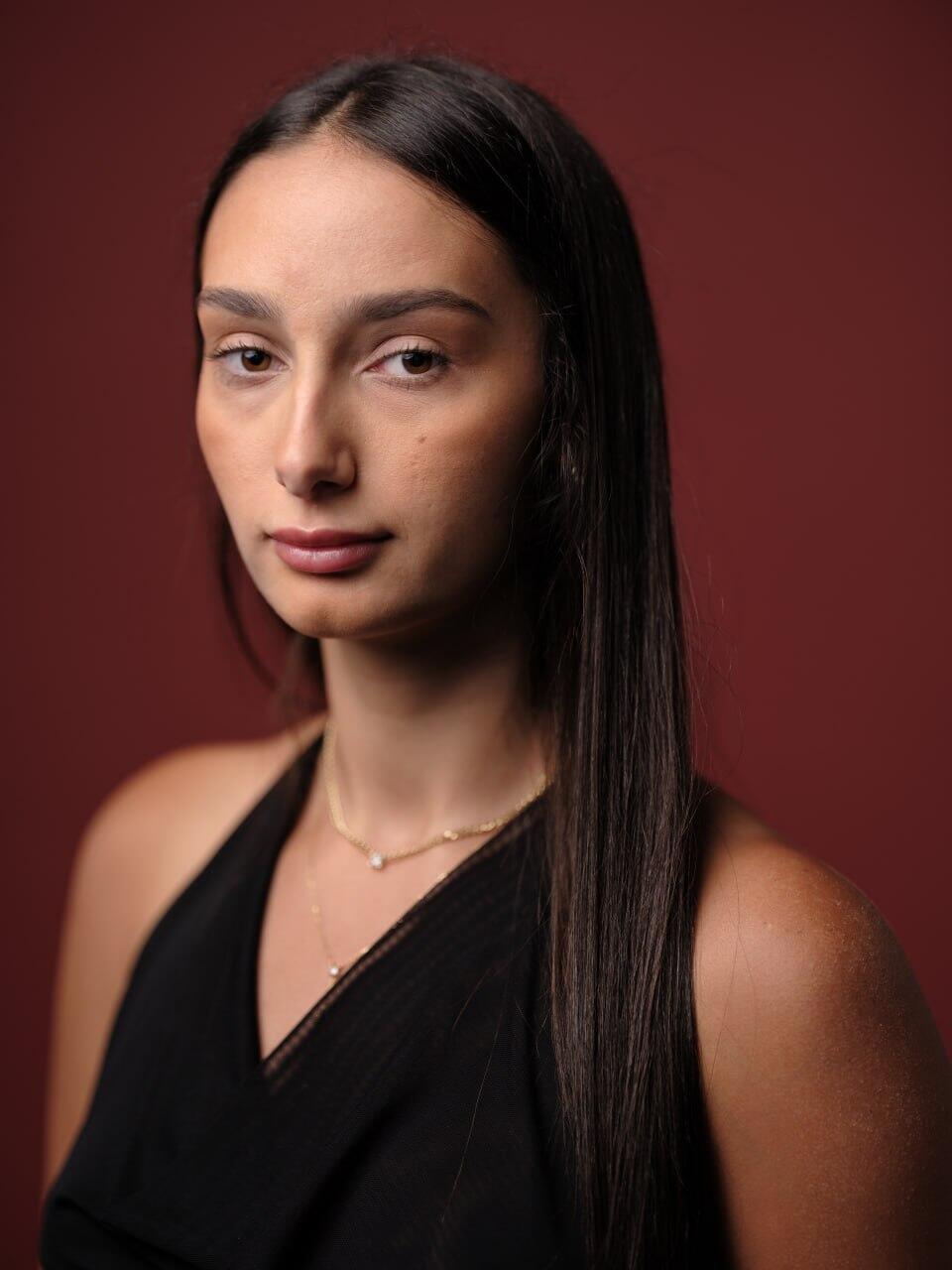
Tahel Dahan
(Photo: Yonatan Blum)
Then another problem emerged. “Because Hamami had canceled the code a few days earlier,” Tahel said, “the only way into the operations room was with an access chip that we had. Normally, people would enter a code and come in. Now they were standing outside waiting for us to let them in.
“And because this was a brigade headquarters, not a combat battalion, only the staff officers and trackers had weapons. So you’re sitting in the operations room with no weapon, hearing lots of Arabic because they’re talking among themselves, hearing weapons being cocked and pounding on the door, and you don’t know what to do. Are those trackers or terrorists? Do you open the door or not?”
So what did you do?
H.: “Eventually, one of the officers stood facing the door with his pistol drawn, and every time someone entered, he pointed it at them so he could shoot first if they opened fire.”
Lihi: “The order was that every time someone entered, you ducked down. Then there would be this second of silence that felt like an eternity, and you were sure, OK, someone is about to spray everyone with bullets.
“One time, I saw a tracker raise his weapon at someone and scream, ‘Get down, there’s a terrorist!’ We ducked, and that was the moment I was really sure it was over.”
Tahel: “The number of times we came face to face with death that day was incomprehensible. And the entire time, we were still answering calls. There was a point when I was answering phones while thinking at the same time, ‘OK, when are they coming in and shooting us?’”
Who was calling the operations room?
Tahel: “The operations room phone was apparently being passed from person to person. Civilians at home looking for relatives, people from the Nova festival — you could hear them running and hear gunfire as they begged for help — people calling from inside the container, battalions, people saying, ‘I’m on my way, I’m escaping, where do I go?’”
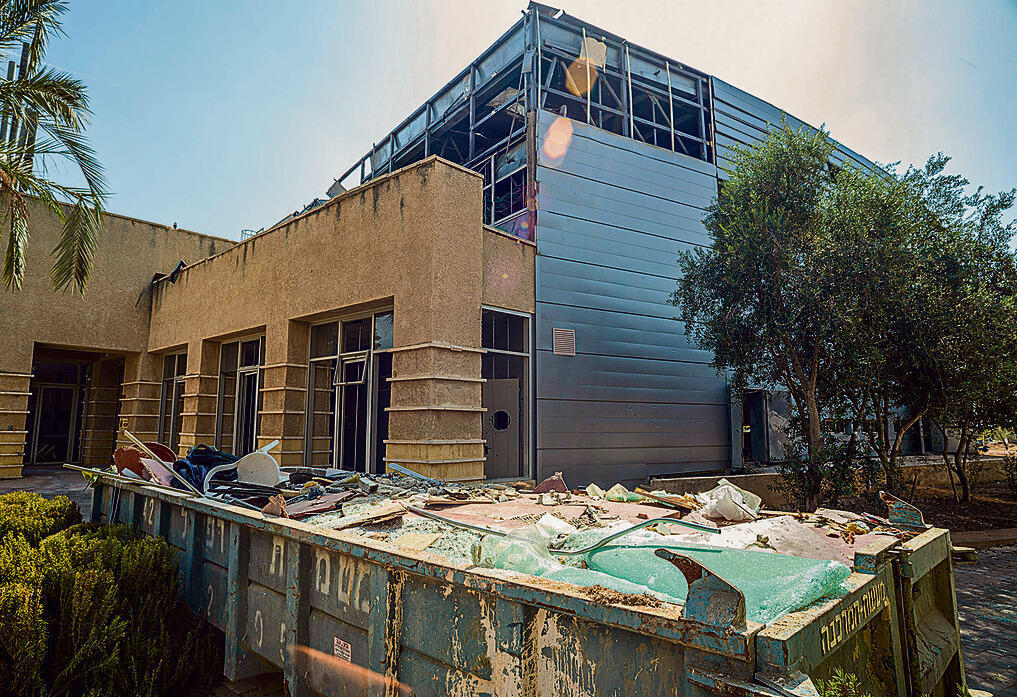
Re’im base on Oct. 7; ‘I’m answering people and I can’t stop crying’
(Photo: Yuval Chen)
The screens in the operations room kept running, and H. and Liel saw everything, without filters.
“On one of the cameras,” H. recalled, “you could see a concrete shelter full of terrorists wearing green and white headbands, and I looked at it and said, ‘But isn’t that the entrance to Kissufim? How can this be happening?’
“On the other screen, I saw a flattened fence and people moving in both directions, and I just looked at it and said, ‘No way,’ because that meant they were about to head toward Re’im.
“For a long time afterward, the face of one terrorist kept coming back to me. I would close my eyes in the shower and see him exactly, with his beard, sitting on a motorcycle next to the shelter, with terrorists passing by while he directed them.
“I remember one of the observation soldiers responsible for the surveillance balloons, who sat with us, fainted. Then the officer said, ‘I need eyes,’ meaning someone had to replace her because somebody had to keep watching.
“So I moved to their operations room, and in front of me I saw a soldier being kidnapped. It was the most horrifying thing I had ever seen in my life.
“When I came back to the operations soldiers, Liel asked me, ‘What’s wrong with you?’ and I couldn’t speak. I couldn’t open my mouth. When I finally did, I just started crying.
“That was when I said, there is no way I am being kidnapped. But a second later, once I sat down in the chair and started working, I forgot about it.”
“There was a discussion in the operations room,” Liel recalled, “that under no circumstances were we going to be taken alive. You also weren’t going to watch your friend get kidnapped. If necessary, we die together.
“And because we didn’t have weapons, the thought was that we would stab pens into the main artery in our necks. There was no way I was going to watch one of them die in front of me and stay alive. I couldn’t go on living like that. It wasn’t happening. I can handle things up to a certain point. Kidnapping was a line I couldn’t cross.”

Lihi Moskovitz
(Photo: Yonatan Blum)
Tahel: “It was an emotional roller coaster. There were moments when I said, ‘We’re all getting out of here whole and healthy,’ and other moments when I accepted that I was going to die.
“But being kidnapped? That didn’t even cross my mind. I thought, if necessary, I’ll shoot myself in the head before the terrorist does, and he’s not taking me.
“One time, I remember everyone ducked down and I stood up because I thought, ‘At least I’ll take the first bullet so I won’t have to see any of them die.’”
And at the same time, with their own mortal fear and the decision — whether realistic or not — that they would not be taken alive, they continued functioning for the world outside.
“We saw kidnappings,” Liel recalled, “but not people’s faces. In any case, you don’t have time to stare because you’re in the middle of calls on eight phones at once.
“You hear reports: This person is down, this one is wounded, someone in the Kerem Shalom operations room was sure he was going to die and screamed ‘Shema Yisrael.’ The radio traffic had stopped being operational. Everyone was calling, ‘I’m in the bushes and need rescue.’ Soldiers were begging for their lives.
“There were so many calls where you had to calm people down, as though I didn’t have terrorists on top of me too.
“One civilian woman called because a relative of hers was trapped in one of the kibbutzim, and she apparently thought that was the right time to tell me what a disgrace the army was, that it made no sense that no one was coming to rescue her cousin and, ‘You’re a joke of an army, you’re doing nothing.’
“I let her get it all out, then I told her, ‘Do you know where the soldiers who tried to save your cousin are? They died. The ones who stayed on base that weekend died. The ones who were on their way and tried to get there died. The ones who are still trying to get there are fighting or were killed on the way.’
“Then she started crying, telling me how sorry she was and that it was bigger than her. People didn’t understand how it wasn’t that simple to just send a force to rescue someone.”
“Even within the army,” Lihi recalled, “I remember a call with an operations room soldier in Kissufim who was really angry with me and screamed, ‘You’re not helping me.’
“I remember saying, ‘I’m trying to help you, but I also have terrorists on my base.’ And suddenly it registered with me: I also have terrorists on my base.
“Most of the time, you don’t focus on yourself, and in retrospect that also saved me. I wasn’t dealing with my own horror.
“So many times afterward, when people asked where the army was or complained, I wanted to say that in the end, we were also sitting under a table waiting for a force to come help us, even though I was ‘the army.’”
Hamami’s son
By this stage, Southern Brigade commander Col. Asaf Hamami and two members of his command team, Staff Sgt. Tomer Ahimas and Sgt. Kiril Brodski, had already been killed and their bodies taken into Gaza, but the people in the operations room did not yet know it.
Tahel: “At first, for 20 minutes, we kept calling nonstop: Tomer, Hamami. On the radio, the red phone, the green phone. No answer.
“I remember that at some point, someone pointed toward Alon, his son, and said, ‘Understand the situation.’ The decision was made that we weren’t going to talk about it anymore. Because clearly, if he wasn’t coming back to us, he wasn’t alive.”
And what did you do with the boy during all this?
H.: “We brought him mandalas that we used to color ourselves, and the welfare NCOs sat with him.”

‘I collapsed to the floor and started screaming and crying’; the late Sgt. Osher Barzilay
(Photo: IDF Spokesperson’s Unit)
Liel: “All I could think was, this boy has just lost his father and he doesn’t know it, and he’s coloring mandalas.
“Then he got hungry, and we didn’t have food in the operations room because you’re not allowed to bring food inside. H. and I were addicted to gum, which was also forbidden, but every day before a shift we’d open the pocket of our uniforms and pour half a pack into it.
“So that morning, by chance, I still had a few pieces of gum in my pocket, and that’s what we gave him to eat.”
Were you afraid for him if terrorists broke into the operations room?
Lihi: “I couldn’t even get that far in my mind. You don’t have time to think about things like that. You have three phones, one on your shoulder, one against your ear, and you’re shouting something while someone is saying, ‘Pass this to the division,’ ‘Pass this to the battalion,’ and there are strikes and chaos.”
Tahel does remember one moment when Col. Tal Ashur, the previous brigade commander, entered the operations room and told them: “I’m Tal and from now on, I’m your brigade commander.”
“That was when I understood that Hamami was gone,” she said. “Because if Hamami were alive, no one would replace him. That was when it really hit me.
“Ashur ordered that everyone who was at Julis” — where soldiers from the base who had been on holiday leave were gathered after being called back — “be brought to the base.
“At the same time, they trapped the terrorists inside the sports hall and hit them with a Zik drone strike. No one told us.
“Suddenly, everything started shaking. Only when we came out of the operations room did we see there was no sports hall anymore, and on the side there was a pile of terrorists’ bodies.”
According to the IDF investigation, a fierce battle was being fought outside. Officers and trackers who had been fighting since the morning were joined by several troops from the elite Shaldag unit who were landed nearby, along with additional forces.
The last surviving terrorists left Re’im base at around noon.
Replacement operations room soldiers arrived in the evening and the four women finally left the room. The entire base was declared clear only at 7 p.m.
“You look at them,” Liel said of the replacement soldiers, “and you see girls who are obviously scared, traumatized and crying, but they don’t have the face of someone whose life is going to be different from ours forever.
“They’re grieving the people who died. We couldn’t even get to the point of grieving the dead.”
Tahel: “Liel and I made them a list of people not to call because they were dead. At the time, we didn’t know some of the reports weren’t true.
“I remember feeling very alone, like everything was on our shoulders, and we were just 18, 19 and 20 years old. No one prepares you for a situation like this. You say, OK, where do we even begin? And you don’t know how or whether it will end.”
It was not only the piles of bodies near the sports hall and the terrible smell that hit the operations room soldiers when they finally stepped outside. It was also the flood of reports from which they had been cut off all day.
“I remember opening my phone,” Lihi said, “and suddenly there were a million messages. People thought you were dead.
“Then I got a message that Osher had lost contact,” she said, referring to Sgt. Osher Barzilay, her close friend and an operations room soldier at Nahal Oz.
“I went to the officer and told her, ‘You are calling the Northern Brigade right now and finding her for me.’
“I collapsed to the floor and started screaming and crying. Suddenly, you understand, because now you are being exposed to the information.
“Osher was listed as missing for a week. For a long time afterward, I kept thinking about why I wasn’t there in her place. I felt guilty that she died and I lived because we were the same.
“Osher was in my class. We enlisted together and then arrived at the division and simply split up — she went north and I went south.”
Post-trauma
It is hard to believe, but the operations room soldiers who functioned so courageously that day were not even sent home for a short break. They remained at Re’im base until the end of October.
On the first night, they slept in an open shelter while two trackers guarded them.
“On Oct. 8 at 9 a.m.,” Tahel recalled, “we went into another 12-hour shift. And we kept serving on the same base, in the same operations room, in the same chair, in front of the same computer.
“When we came in that first morning after, there wasn’t one of us who didn’t have a lump in her throat.”
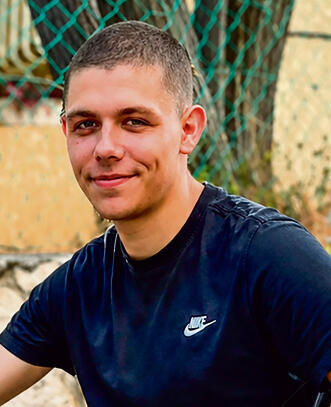
The late Sgt. Kiril Brodski
Lihi: “You go on shift already knowing your friend, who a week earlier you had gone to a party with in Tel Aviv, and you were talking together about becoming officers — suddenly you don’t know where she is.
“Tomer, who we had spent hours with, is gone. Hamami is gone.”
Tahel: “And suddenly there are all these new faces who come in as if to comfort you or strengthen you. I remember reservists coming into the operations room and hugging us, and I thought, ‘Why are they hugging me? What did I go through?’
“You haven’t processed it yourself yet.
“When I finally went home, people brought me gifts. And you tell yourself, ‘Keep a poker face. Pretend nothing happened. Denial, denial, denial,’ because you’re worried about your parents and family.
“You’re afraid that being sad for even one moment will hurt everyone around you. Because if I step out of the role of the strong one for even a second, they won’t let me go back to the base.
“I remember saying I would prove to everyone that everything was fine so they wouldn’t worry.
“It was only in August 2024, after I was discharged, that it all came out.”
The days passed. Liel was discharged in December 2023. Lihi left to help establish a new battalion between Kissufim and Kerem Shalom. H. became an operations room soldier at Kissufim, returned to the brigade as a shift supervisor and later went to officer training.
Tahel remained in the operations room until July 2024 and experienced a small measure of closure when the bodies of Tomer Ahimas and Kiril Brodski were returned during her discharge leave.
Asaf Hamami’s body was returned only in November 2025.
But the wound remained.
“Only when I got to the new battalion,” Lihi said, “did I understand how serious my condition was, because suddenly you see yourself compared with everyone else.
“I would go to sleep fully dressed because every night I was convinced they were going to kidnap me, and every morning I was sure something was going to happen to me that day.
“Then you enter the operations room and it’s quiet and everyone is working. And I would get angry that they weren’t perceiving reality the way I was.
“6:29 on a Saturday became an event for me. I’d be on edge, just waiting for that minute to pass and for nothing to happen.”
H.: “One time, long after October 7, we were sitting on a night shift and someone shouted over the radio, ‘Complex incident.’
“I started breathing like I was having a panic attack, and a very young operations room soldier who had joined us simply looked at me, put her hand on mine and said, ‘It’s OK, it’s an exercise.’
“I served physically inside Gaza, and there wasn’t a single night when I didn’t imagine myself being kidnapped into a tunnel.
“When I was in officers’ course at a base in central Israel, the war with Iran was happening. There were strikes nearby and I heard explosions that reminded me of the explosions that day.
“That was where I had my first panic attack, and Liel was the first person I called. Only she understood.”
Did you see a military mental health officer?
Tahel: “Only once. I felt like I desperately needed 24 hours at home to breathe, and only after he diagnosed me did they say, ‘Oh, you really do need to go home.’”
H.: “They took the girls who had arrived in the operations room most recently, in August 2023, sat them in a circle and said, ‘If you want, there’s a mental health officer at the division.’ That was it. That was the end of the conversation.
“I remember thinking, thank God I’m not part of that circle.”
Tahel said she only understood that she was dealing with post-trauma after she completed her discharge process.
“After I was discharged, all the grief fell on me. I didn’t leave the house for two months. Then I started therapy.
“I had always been closest to Lihi, and one day after my discharge she sent me a message, and then Liel did too, and we reconnected.
“We talk a lot about what happened. Lihi and I also meet often. In the end, these are girls who went through this intense service with me 24/7. They understand me better than anyone.
“During the war with Iran, for example, I was sitting in the safe room. I remember being with my family, my little cousins beside me, these girls sitting perfectly calmly, and I couldn’t sit still.
“The only people who really understood me were my parents, who said, ‘Go outside if you need to.’”
Why are you speaking publicly only now?
Lihi: “Because now the four of us are at a point where we think we deserve to talk about what we went through.
“For most of our time in the army, they made us feel like we hadn’t gone through anything, so we had no legitimacy to break down or go home.”
Liel: “There are the observation soldiers and operations room soldiers who died or were kidnapped, there are combat soldiers with their post-trauma, and we sort of felt, who are we? What even happened to us, supposedly?”
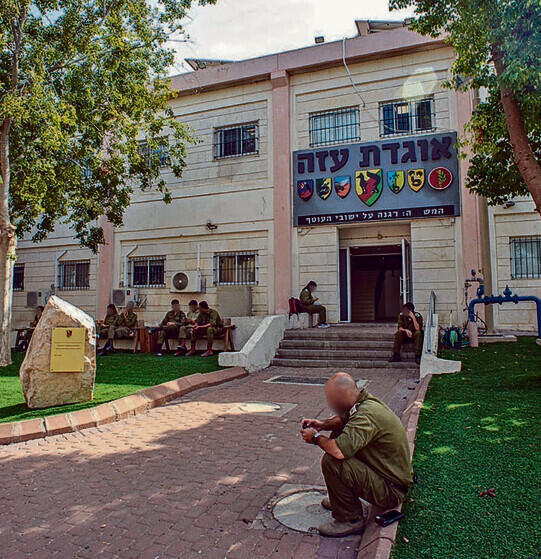
Gaza Division headquarters at Re’im Camp; ‘There is no shame in wanting to move on with your life’
(Photo: Yuval Chen)
A great deal happened to you. How would you like people to treat you?
“I just want people to understand that post-trauma can work in all kinds of ways. You don’t have to fight inside Gaza to be traumatized.
“I’m not asking for pity, just a little more recognition.
“I remember we would walk into the operations room and people would tell us, ‘Stop crying,’ ‘You look bitter,’ ‘You look sad.’
“We went above and beyond. We stayed until the end and gave everything we had, and some people also did reserve duty and stayed even longer.”
You could have asked for a transfer or for a few weeks of rest. Why did you continue?
Tahel: “Because of Hamami, Tomer and Kiril. There was no way I was going to be discharged before they came back.
“And Tomer and Kiril really did return during the week of my discharge leave. We wanted that closure.
“I carried so much guilt over being part of such a terrible event. Because I am the army. It happened on my watch and I didn’t help.
“These are situations where you take responsibility on yourself because you were the one in the operations room, you were on the phones. Maybe you could have made one more call, dispatched one more force.
“You can always look back and find something you could have done just a little more of, even if you gave 200%.
“That guilt is still with us today. It’s also much of what kept us there.”
Lihi: “We genuinely thought we hadn’t gone through anything.
“I started therapy because of grief. I didn’t think anything had happened to me at all.
“When people asked me what happened, I would say, ‘I have nothing to tell. There wasn’t that much.’
“I truly believed nothing had happened to me.
“Then I understood that something had happened to me and that I deserved to tell my story.”
Liel: “We felt like no one would understand. Not the officers, not our friends. Like it was us against the world.”
‘Who am I supposed to be angry at? Hamami?’
In June 2025, the IDF released its investigation into the battle at Re’im Camp and found a series of failures, both in preparedness for such an event and in the way the incident was managed at the brigade level.
The four former operations room soldiers did not read the investigation.
Tahel also recalled that she was questioned about the events for the first time seven months after October 7.
“I didn’t remember anything from that day,” Lihi said, “until one moment when the four of us sat together and they started bringing things up.
“I remember thinking, Oh my God, that’s right, that happened. Everything started coming back to me.”
Liel: “I remember being very angry with myself because I still hadn’t figured out my future.
“‘You’re 23, wake up,’ I would tell myself.
“Until my psychologist said, ‘A person has a hard time imagining the future when all they are trying to do is survive the present.’
“I really am trying to hold on every day — not in a suicidal way, God forbid — but to be happier and enjoy more of the things I used to enjoy easily and now have to put a little more effort into.”
Lihi: “When I was discharged, I felt like I was going to conquer the world, like I could do anything.
“Then I did reserve duty and started working. At first, you feel on top of the world because you’re out of the army and you’re sure it’s behind you.
“But then I started noticing that everything could trigger me.
“If something fell under the table and I had to bend down, suddenly I couldn’t breathe because it reminded me of how I had hidden.
“Or my boss, who was actually a great person, but I couldn’t deal with her because she reminded me of my commanders in the army.”
H.: “Even going out took us a long time. It took us a long time to decide it was OK to have fun.
“Even though the country was at war, we were allowed to go out and enjoy ourselves.”
And anger? Do you feel angry?
H.: “Who am I supposed to be angry at? Hamami? The division commander?
“It isn’t anger so much as frustration, because you give your life to the system and you’re running a war here.
“We ran the Southern Brigade’s war — four nice little girls taking all the calls and listening to the radio traffic.
“Until now, we were in this invisible place where we weren’t allowed to be proud of ourselves because supposedly we hadn’t been through any event and we were guilty for much of what happened.
“Only now are we at the point where we can say, yes, we went through something. We got up from it, we rehabilitated ourselves and we are continuing with our lives, each of us doing whatever she is doing.
“And it really is a daily battle.”
Lihi: “There is no shame in wanting to continue with your life.
“In the end, we’re 22- and 23-year-old kids. We have our whole lives ahead of us.
“We want to live them as well as we possibly can.
“There is no shame in helping yourself recover.”