


A covert CIA mission during the Cold War ended in failure when a nuclear-powered surveillance device was lost high in the Indian Himalayas — a mystery that remains unresolved six decades later, and one that environmentalists and Indian officials say could still threaten millions.
According to a New York Times investigation published Sunday, the CIA recruited a team of elite American and Indian climbers in 1965 to install a long-range listening device near the summit of Nanda Devi, one of the tallest and most remote peaks in the world. The goal: to monitor Chinese missile tests following China’s first nuclear explosion.
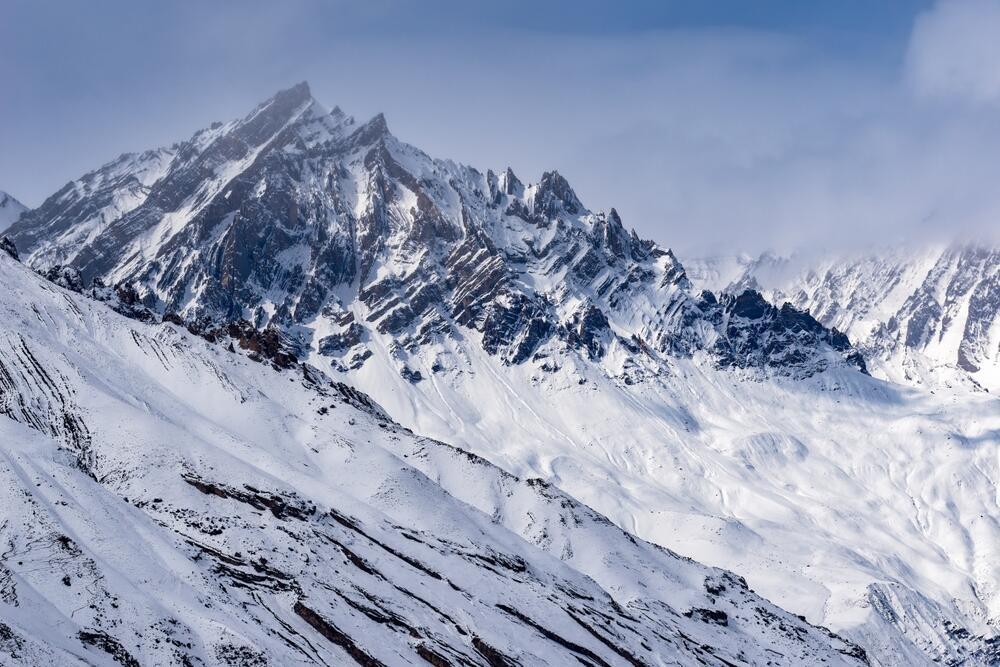
(Photo: David Havel/Shutterstock)
The antenna, powered by a 50-pound generator containing plutonium-238 and -239, was designed to operate undetected for years. But a sudden blizzard forced the team to retreat before installation was complete. Under orders from Indian mission commander Capt. M.S. Kohli, the climbers secured the device on an ice shelf and descended. When they returned the following spring, it was gone.
“All I found were bits of rope,” Kohli later recalled. CIA officials panicked. “‘These are plutonium capsules,’ they said. ‘This will be very, very serious.’”
The device has never been recovered.
Now buried somewhere in the glaciers that feed the Ganges River, the missing plutonium generator — known as a SNAP-19C — is feared to pose a risk to hundreds of millions of people living downstream. “You can’t leave plutonium by a glacier feeding into the Ganges!” said Jim McCarthy, the last surviving American climber on the mission. “Do you know how many people depend on the Ganges?”
While some scientists say the river’s vast flow would dilute any radiation, others warn that if the device is damaged or discovered, it could be used in a dirty bomb. Plutonium, if inhaled or ingested, can cause cancer and organ failure.
Documents found in the personal archive of Barry Bishop — the National Geographic photographer who helped organize the mission — reveal the extensive cover story created for the operation, including forged scientific credentials, letters of support and menus for the climbers. Files from American and Indian intelligence services confirm that the expedition was organized at the highest levels of both governments.
The story remained classified for over a decade until it was exposed by journalist Howard Kohn in 1978. Indian lawmakers demanded answers, and Prime Minister Morarji Desai promised an investigation. Secret diplomatic cables cited by the Times show that President Jimmy Carter privately thanked Desai for helping to downplay the affair.
In India, the device remains a source of public anxiety. In 2021, a deadly landslide near Nanda Devi killed more than 200 people, fueling speculation that heat from the buried generator had destabilized the glacier. Though no evidence has linked the disaster to the missing device, officials in Uttarakhand state have urged Prime Minister Narendra Modi to authorize a search. “Once and for all, this device must be excavated and the fears put to rest,” said state tourism minister Satpal Maharaj.
As global warming accelerates glacial melt, some scientists warn the generator could eventually emerge from the ice. In the words of one Indian intelligence veteran, “This is a grave danger, lying there for all humanity.”