


“I live day to day. I’m not making money — I’m just scraping by,” said Oren, a taxi driver who drove me through Tel Aviv. He has learned to schedule his work around hours of higher demand and lighter traffic. “Who wants to work in traffic jams? At 1 p.m. I go home and come back out in the evening. Since fares were cut, it’s not worth it for me to take trips outside the city. If the choice is between waiting with an empty cab or taking an out-of-town ride, I’ll choose to wait.”
He pushed back against criticism of taxi drivers. “People say, ‘Taxi drivers are thieves.’ We’re not thieves. We’re trying to make a living. I start my morning 15,000 shekels in the red. I have to work three days just to cover my Gett subscription, another week for National Insurance, VAT, income tax, the garage — the car needs servicing every month. In the best case, I’ll finish the month with 11,000 shekels, after working around the clock, at least 10 hours a day, including weekends,” he said. Asked why he stays in the profession, he replied, “I’ve been a driver my whole life. Before this I drove a truck. This is what I know how to do. If I knew how to do something else, I’d leave.”

Many other drivers feel the same way. Not only do they struggle to leave the profession, they are forced to work under the dominant company that controls the market — Gett Taxi. About 70 percent of taxis operate through Gett, which is also the only company authorized by tender to operate at Ben Gurion Airport, giving it enormous power.
“Gett has become a monopoly. We made it a powerhouse because we’re a captive audience,” Oren said. “They started with subscription fees of 300 to 400 shekels a month. Now I pay 2,100. I know taxi drivers who don’t have food and take out loans just to keep a new car on the road. Raising fares is the only way we’ll survive. A taxi is a luxury. Anyone who wants can take public transportation. If you want a special ride to your front door, you should pay. I’m not saying to fleece the public — that’s not the goal — but I also want to live.”
About six years ago, intercity taxi fares were cut, prompting many drivers to favor local trips and avoid longer rides. That shift is also seen as a key factor behind the ongoing taxi shortage at Ben Gurion Airport, as many drivers simply avoid airport runs.
In April, significant fare updates took effect following a joint decision by the Transportation and Finance ministries through the interministerial price committee. The most dramatic change was an increase of about 16 percent in intercity fares, alongside a modest reduction of about 4.58 percent in the base fare for urban trips.
The move was intended to encourage out-of-town travel, but it was met with anger among taxi drivers. They argue that even the updated fares fail to reflect their high operating costs. Many drivers continue to avoid intercity trips, saying they are unprofitable, particularly because in many cases they are unable to find a passenger for the return journey and must drive long distances with an empty cab, turning the trip into a loss compared with the income they can earn from shorter rides within the city.
'We’re not suited for this'
For the average passenger, it makes little difference that a trip ended up being unprofitable for the driver — until the familiar moment arrives: you order a taxi, wait and wait, and it never comes. That can happen at the airport after an exhausting flight, at the end of a night out or when heading home from the train.
“One of the most common passenger complaints is congestion at Ben Gurion Airport. There are always complaints about taxi drivers not using the meter or not lowering prices, but this is one of the problems created by decisions of the price committee,” said Zohar Golan, chairman of the Israel Taxi Drivers Association. “Today drivers have to work many more hours just to reach minimum wage. They work a lot and earn very little. Tires have gone up, fuel has gone up, insurance has gone up, garage costs have gone up — but our income has been left behind,” he said. The situation has produced both frustrated drivers who struggle to make a living and passengers who receive poor service.

Zohar Golan
(Photo: Kobi Koanks)
Government officials acknowledge that something needs to change, but what initially appeared to be a trial balloon has begun to take shape, alarming taxi drivers. Two weeks ago, during a Cabinet meeting approving the 2026 state budget, the transportation and finance ministers agreed to establish a special task force to develop solutions for taxi drivers ahead of the possible introduction of Uber and similar services.
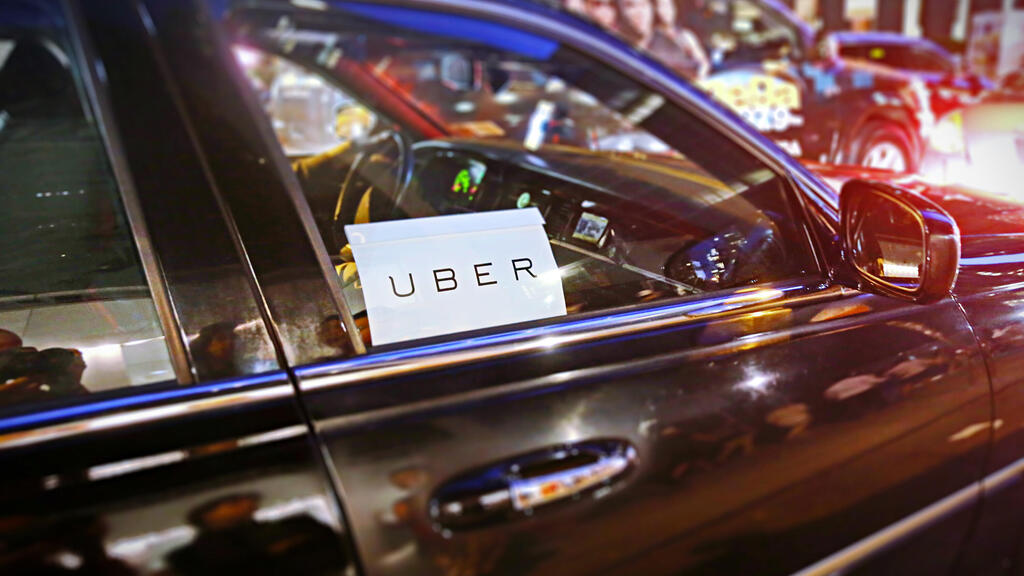
Uber’s business model is a marketplace platform that connects independent drivers with passengers through a digital app and charges a commission on each ride. Supporters argue it would increase competition, but critics warn it could also undermine regulation and significantly worsen traffic congestion. Uber entered Israel in 2012 and sought to operate private ride services as it does abroad, but because it did not meet Israeli legal requirements, the Transportation Ministry sued the company and a court ruled it could not operate. Golan said the renewed discussion of bringing back an Uber-style model is intended to legitimize a growing phenomenon in the ultra-Orthodox community known as “drivers.”
“They operate like taxis, but illegally, entirely under the radar,” he said. “They’ve developed their own app with thousands of drivers nationwide. These trips have no insurance, don’t meet regulations, drivers don’t report the rides and don’t pay taxes.” In May, the Tax Authority raided several drivers, detained a dispatcher and an office linked to the activity, and summoned people for income tax questioning. “They panicked and slowed activity for a while — but recently it has resumed. The rumors are that there are behind-the-scenes instructions not to crack down too hard,” Golan said.
(Photo: Mike Dotta/Shutterstock)
Golan said the move is a purely political one, aimed at legitimizing illegal activity in order to win support from Haredi voters in Likud primaries, where their influence has recently become clear. “The activity of these drivers is intensive and cuts directly into our work. There is a black market here worth tens of millions of shekels,” he said. “The idea of Uber is meant to make them legal.”
Beyond that, Golan said, becoming a licensed public transportation driver requires lengthy and rigorous training designed by professionals who considered all aspects of passenger transport. “A taxi driver who completed that training can be taken to court for every misuse of a meter or regulatory violation, and then along comes a driver from Bnei Brak who has had a license for a year and wants to take passengers to Ben Gurion Airport,” he said. “These are gig workers, and we are professionals. If they want to eliminate a professional industry in the name of competition, then they should compensate taxi drivers who paid hundreds of thousands of shekels for their taxi licenses and for the damage done to them over the years.”
Golan added that studies worldwide show the introduction of Uber has led to severe traffic congestion and the addition of hundreds of thousands of vehicles to the roads. “They will completely clog this country,” he said. “If we already have blocked arteries now, once drivers are allowed to carry paying passengers, we’ll face traffic jams people here have never seen. We’re not suited for this.”
A fair model without subscription fees
A new taxi company, TAXIGO, was launched last week, saying it aims to challenge Gett’s dominance and introduce competition into Israel’s taxi market. After investing more than 4 million shekels and spending about two and a half years in development, the company unveiled a model it says is fairer to drivers, with reduced commissions of just 8 percent, no subscription fees and no exclusivity requirement, allowing drivers to work simultaneously with other apps.
At launch, TAXIGO said more than 4,000 drivers had already joined and that it intends to become a major player in the sector. For consumers, the app offers a simple user experience, 24/7 human customer service and a 5 percent cashback benefit. Features such as integration with Verifone payment terminals that allow cash withdrawals inside the cab, along with partnerships with restaurants and retail platforms, are intended to position the new app as a broader service platform that could help restore competition to the taxi industry. Its success, however, will depend on recruiting thousands more drivers to meet demand.
TAXIGO is not the only company seeking to challenge Gett’s market power. This week, Yango, which also operates a taxi-ordering app, filed a request with Israel’s Competition Authority to declare its main rival a monopoly. Yango argues that Gett holds a market share well above the legal threshold and uses its market power in ways that harm competition, drivers and consumers.
“A real dependence has developed among drivers on Gett’s platform as a primary, if not exclusive, source of income, in a way that restricts competition in the market,” Apli Taxi Oz, the company operating Yango, wrote in a letter to the competition commissioner. According to the data presented, tens of millions of taxi rides take place in Israel each year, with more than half ordered in advance rather than hailed on the street. Yango says Gett’s share of pre-ordered rides far exceeds half the market, allowing it to effectively dictate the rules of the industry.
The Competition Authority said it will examine the claims in depth. If Gett is declared a monopoly, regulators could take steps including oversight of driver fares if abuse of market power is proven.
Cheap for consumers, costly for drivers
The widespread perception that taxi rides in Israel are expensive does not reflect drivers’ profitability. In practice, most of the fare paid by passengers is absorbed by regulation, taxes and mandatory expenses, leaving drivers with thin margins. Israeli taxi drivers operate in one of the most tightly regulated markets in the developed world, paying high licensing fees, heavy indirect taxes — including some of the highest fuel prices in the West — and steep insurance and maintenance costs, while charging fares that are among the lowest in advanced economies.

Transport Minister Miri Regev
(Photo: Kobi Koanks)
A comparative report by Dr. Roby Nathanson of the Macro Center for Political Economics shows Israel’s taxi market is among the cheapest for consumers but one of the most expensive for drivers. The per-kilometer fare stands at just 2.01 shekels, the lowest among all cities examined. Even in relatively inexpensive European cities such as Budapest or Rome, rates are at least double, while in London they are five times higher or more. In the United States, per-kilometer fares are more than 200% higher. A typical 5-kilometer urban ride in Israel costs about 23 shekels by distance alone, far below prices in Europe and North America.
Other fare components place Israel closer to the global middle: the meter-opening fee, about 12.8 shekels, is higher than in Madrid, Budapest and Rome but lower than in London, Paris and Berlin, while waiting fees of about 2 shekels per minute are near the international average. The anomaly lies in the unusually low distance-based fare.
Costs, however, are exceptionally high. Fuel prices in 2025 averaged about 7.16 shekels per liter, the highest among comparison cities — about 17% higher than Europe and more than double U.S. prices. With drivers traveling over 62,000 kilometers a year, fuel alone costs about 40,000 shekels annually. Insurance adds 11,000 to 18,000 shekels, and total annual vehicle costs reach about 52,800 shekels — higher than in London and far above Dublin and New York. Entry to the market also requires a taxi license costing more than 280,000 shekels.
The result is a system in which passengers pay relatively little while drivers bear a heavy financial burden. Critics argue that introducing companies like Uber misses the root problem. Israel already has a nationwide network of licensed drivers. Lower fares could be achieved without dismantling the system if the state reduced fees, taxes and fuel costs. As long as regulation remains heavy and taxi drivers are treated primarily as a revenue source, passengers will keep complaining about prices and drivers will continue to struggle.