

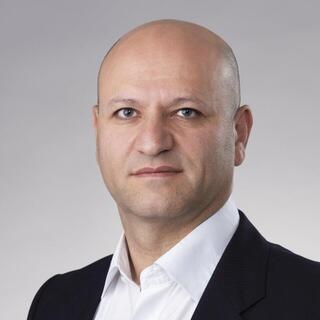
A political storm erupted this week after Ra’am leader Mansour Abbas declared that “a Palestinian state exists,” a remark immediately seized on in Israel’s heated pre-election debate as supposed proof of a hidden radical agenda within his Islamist party and, by extension, an argument against any future political cooperation with it.
The controversy intensified after Abbas told Channel 12’s Meet the Press that his positions on the Palestinian issue were continually evolving and that he was focused above all on the future. That prompted a different accusation, this time from within Arab society, that he was “denying the Nakba,” the mass displacement of Palestinians surrounding Israel’s establishment in 1948. After facing threats and criticism from both directions, Abbas clarified that he did not deny the Nakba and said he accepted, as a matter of reality, that Israel is a Jewish state.
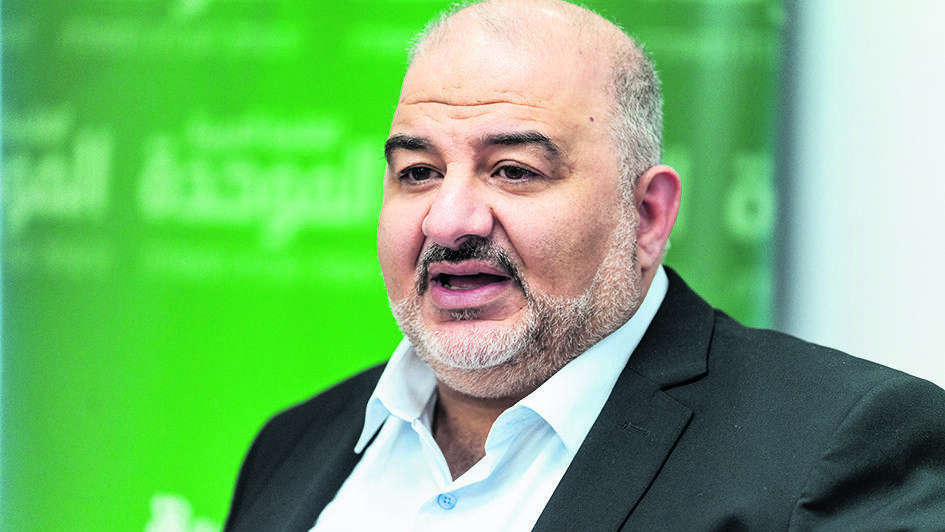
In practice, the Palestinian state question occupied only a limited part of Ra’am’s 28th general conference, held Saturday in the central Arab city of Tayibe. The gathering marked 30 years since Ra’am was founded ahead of the 1996 election, when Israel’s Islamic Movement split into a southern branch that entered parliamentary politics and a northern branch, led by Sheikh Raed Salah of Umm al-Fahm, that rejected participation in national elections. About 1,050 delegates attended the conference, where they selected the party’s candidates for the Knesset, authorized Abbas to reserve slots among the top five and unanimously empowered the party leadership to choose candidates for places six through 10.
The main themes were political participation, relations with other Arab parties and efforts to bring non-Arab candidates into the slate, most notably former deputy public security minister Yoav Segalovitz. “We are nearing completion of the process, and half of it is already behind us,” Abbas told me this week.
The internal primaries produced few surprises because most senior positions were uncontested. Abbas retained the chairmanship and northern district slot; MK Walid Taha, from Kafr Qasim, represents the center; MK Walid al-Hawashla, from the Bedouin community in southern Israel, represents the south; and MK Yasser Hujirat, from Bir al-Maksur in the Galilee, holds the national slot. The only significant contest was for the women’s place, where MK Iman Khatib-Yassin defeated candidate Shima Hindawi of Acre.
The packed hall reflected an energetic political base and brought together veterans of the Islamic Movement, associates of its founding leader Sheikh Abdullah Nimar Darwish, local council heads, businesspeople and a large number of younger activists. It also served as a demonstration of Abbas’ internal strength. Although his decision to join an Israeli governing coalition has faced years of criticism inside the movement, the conference showed broad support for his direction. “Most members, especially the younger ones, respect his courage, see him as a sober leader and identify with his main goal: entering the establishment and influencing it from within,” one delegate from the Bedouin town of Tel Sheva told me.
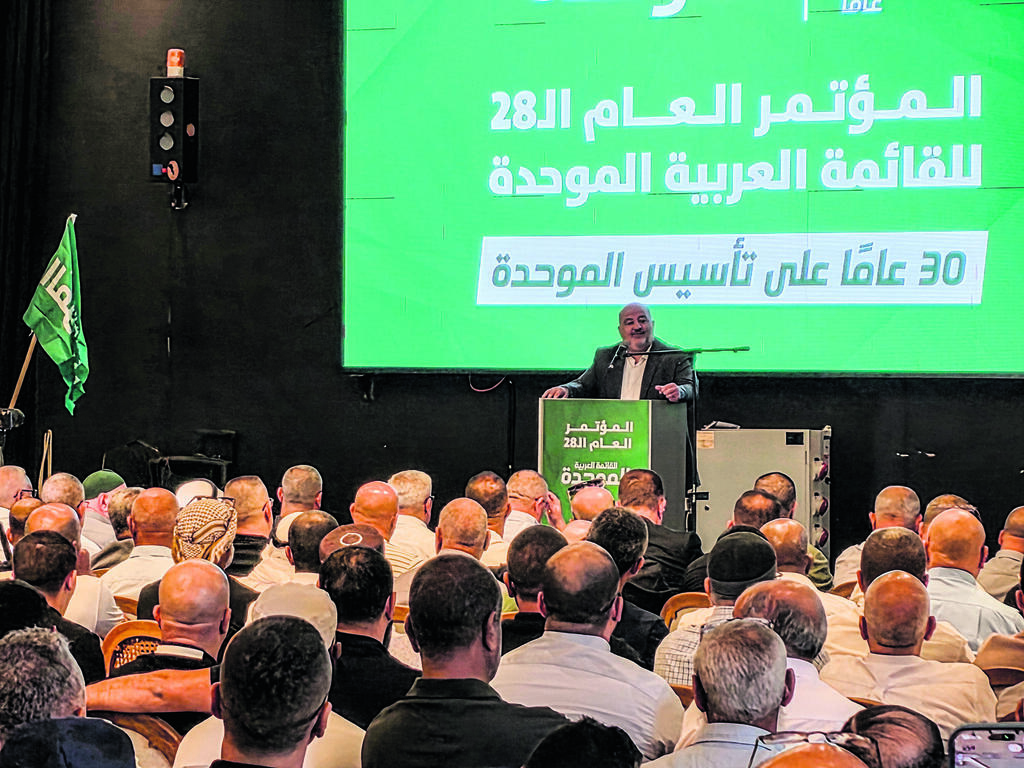
Ra’am’s 28th general conference
Ra’am has been translating that strategy into an intensive ground campaign. In recent weeks it has held a youth conference, meetings with Bedouin clan and tribal leaders, neighborhood gatherings and religious events where clerics urged participation in the election. Sheikh Ibrahim Mawasi of Baqa al-Gharbiyye, who said he had long boycotted elections, recently told a campaign rally that voting had become both a religious and social necessity. Sheikh Abu Yusuf al-Heib of Tuba-Zangariyye offered an even sharper contrast with Ra’am’s rivals: “In the past we voted for Zionist parties. Today we are all Ra’am. What is the point of sitting in opposition when you have the possibility of joining and influencing?”
Yahya Dahamsha, chairman of Ra’am’s political department, described the choice facing Arab voters in similarly stark terms. “The election will determine whether Arab citizens continue with a marginal, protest-based existence expressed through speeches and loud demands that the state change fundamentally, or move toward active participation at the heart of political decision-making, partnerships with Jewish parties and involvement in forming coalitions,” he said. “Ra’am is playing a pioneering role in a deep transformation of Arab politics in Israel.”
Taha made the same case through the party’s experience in parliament. “We want to move from being observers to being actors,” he said. “When we had 15 Knesset members, we did not really influence anything. We began influencing only when we changed direction and joined the coalition during the previous change government.” He added: “We are in one of the most complicated situations anywhere. We have to find a path that combines being loyal citizens of Israel with the fact that we are part of the Palestinian people.”
A broader political ambition
Speakers at the conference repeatedly emphasized that Ra’am now sees itself as seeking a mandate broader than its traditional Islamist base. Abbas and Sheikh Safwat Freij, head of the southern branch of the Islamic Movement, said the party aspires to represent Arab society as a whole, including Christians and Druze. Ra’am considers its first five places realistically electable but is aiming higher, potentially enough to bring candidates placed seventh or eighth into the Knesset.
“Our goal is the realization of rights and equality,” Abbas said. “We will continue pursuing that even though people within Arab society sometimes accuse us of Israeliization or even Zionization.” He also spoke about Arab citizens serving as a bridge between Israel and the wider Arab world, an idea embodied in a party strategy called “Jusur,” Arabic for “bridges.”
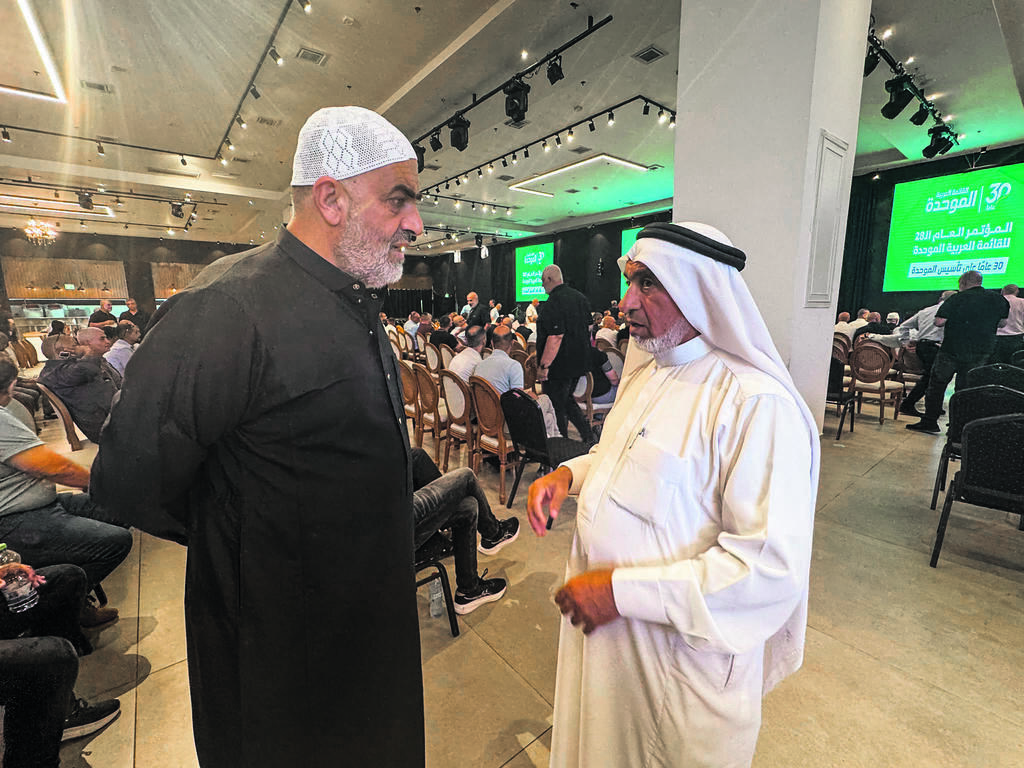
Attendees at the Ra’am conference
Another major theme was the need to reset Ra’am’s strained relationship with the other Arab parties, particularly Hadash, whose communist tradition has long clashed with the Islamic Movement. Abbas has proposed that the Arab parties, despite their ideological differences, jointly sign a surplus-vote agreement, establish rules for political conduct and create coordination channels. He argues that such steps could raise Arab voter turnout and strengthen Arab representation in the Knesset.
At the same time, Abbas says he is frustrated by attacks from Israel’s right and from his Arab political rivals, while hearing little clear support from the broader opposition. On the controversy surrounding his Palestinian state comments, Abbas argued that opposition parties could have taken a more creative position. “They could have spoken about ways to reach a political settlement instead of immediately aligning themselves with the right,” he said.
Ra’am and the Islamic Movement
The conference also exposed an unresolved tension in Abbas’ repeated efforts to present Ra’am as increasingly independent of the Islamic Movement. The event looked in many ways like a joint gathering of the party and the movement. Senior figures from the southern branch addressed delegates, the hall was filled with the movement’s green flags, and speakers repeatedly invoked the political legacy of Sheikh Darwish.
That legacy rests on a difficult dual approach: participating in Israel’s political system and operating within its laws while preserving an Islamic and Palestinian identity and supporting a broader regional political settlement. Abbas says separation does not mean a complete break. “About 60% of Ra’am voters belong to the Islamic Movement,” he said. “But this conference reflects an acceleration of the process of building the party’s independence and separating the spheres of activity of the two organizations.”
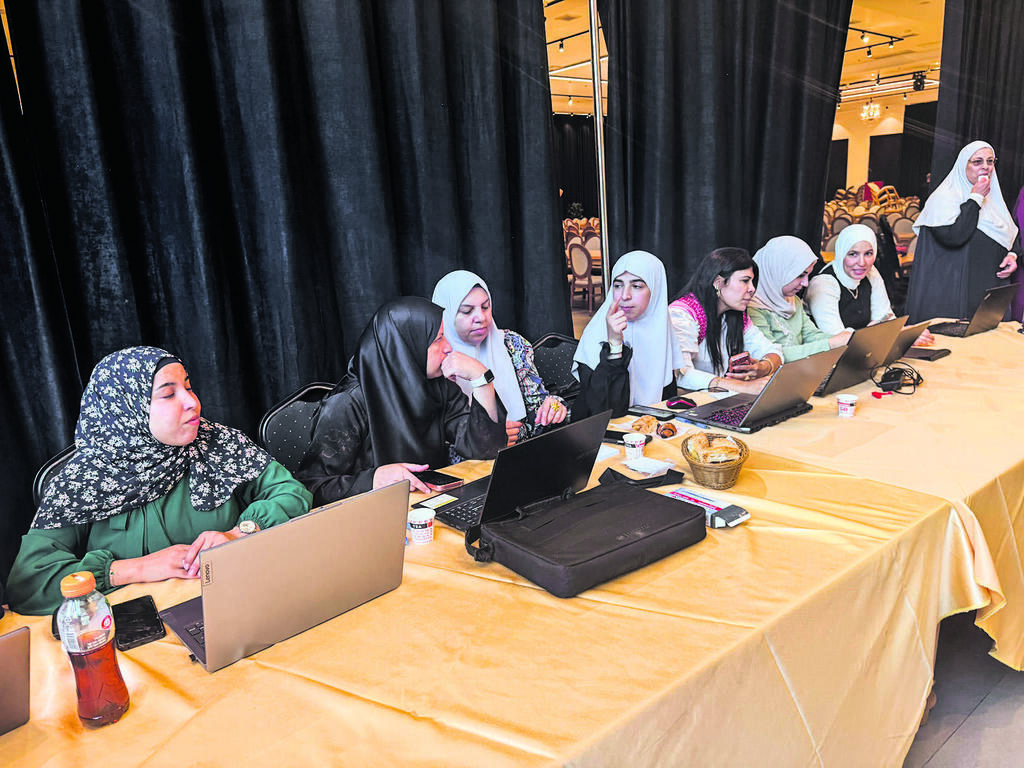
Delegate registration desk at the Ra’am conference
He noted that this was the first gathering formally defined as a Ra’am conference. Previous conventions at which Knesset candidates were chosen were Islamic Movement conferences. Of the southern branch’s 670 general conference members, about 500 are also members of Ra’am’s conference. Others belong only to the movement, while Ra’am now includes a small number of Christian representatives and hopes eventually to bring in Druze members as well. The party is also building independent institutions, including its own political department, executive committee and separate constitution.
“The practical meaning is that not every decision by Ra’am will have to pass through the Islamic Movement’s Shura Council, as happened in the past,” Dahamsha said. But he stressed that the party will retain its traditional character. Ra’am, he said, will not initiate or support legislation that conflicts with Islamic law and will remain rooted in the social and cultural community from which it emerged. For some Arab voters, that creates a genuine dilemma: they are attracted to Ra’am’s relatively revolutionary political strategy but uncomfortable with the party’s conservative social identity.
‘A Palestinian state exists’
Abbas says the uproar over his Palestinian state remarks reflects Ra’am’s growing political weight. “If a similar statement had come from one of the other Arab party leaders, it would not have drawn unusual attention,” he said in an interview with Arab media. “But because it came from Ra’am, it created a storm.”
“Every statement we make is examined under a microscope and will be used by right-wing parties to attack us,” he added. “The storm proves that Ra’am has established a position of influence that can no longer be ignored.” Abbas said the party was trying to state openly the complexity of its position. “Our main objective is to address the needs of Arab society in Israel, but we cannot ignore the Palestinian people and their right to live alongside Jewish society in Israel,” he said.
Wadih Awawdeh, political commentator for Radio Nas, said Abbas’ emphasis on integration and influence resonates with many Arab citizens, both because of the depth of their social and economic problems and because of frustration with the Joint List model. He argued that polls may underestimate Ra’am because many surveys, particularly those conducted by Jewish organizations, struggle to reach traditional communities and peripheral populations where the party is strongest, particularly among Bedouin voters in southern Israel.
“The coming election will be decisive for the experiment Abbas is promoting, which in many ways is ahead of its time,” Awawdeh said. “If it collapses, the consequences for relations between Arab citizens and the state could be dramatic.”
A test for Israeli politics
The debate over Ra’am reflects the dramatic transformation of Israeli political discourse since the October 7 attack. Almost every issue has become saturated with slogans, political positioning and accusations of disloyalty. Complexity has increasingly been replaced by demands for absolute allegiance, while discussion of alternatives or the longer-term future has become harder to sustain.
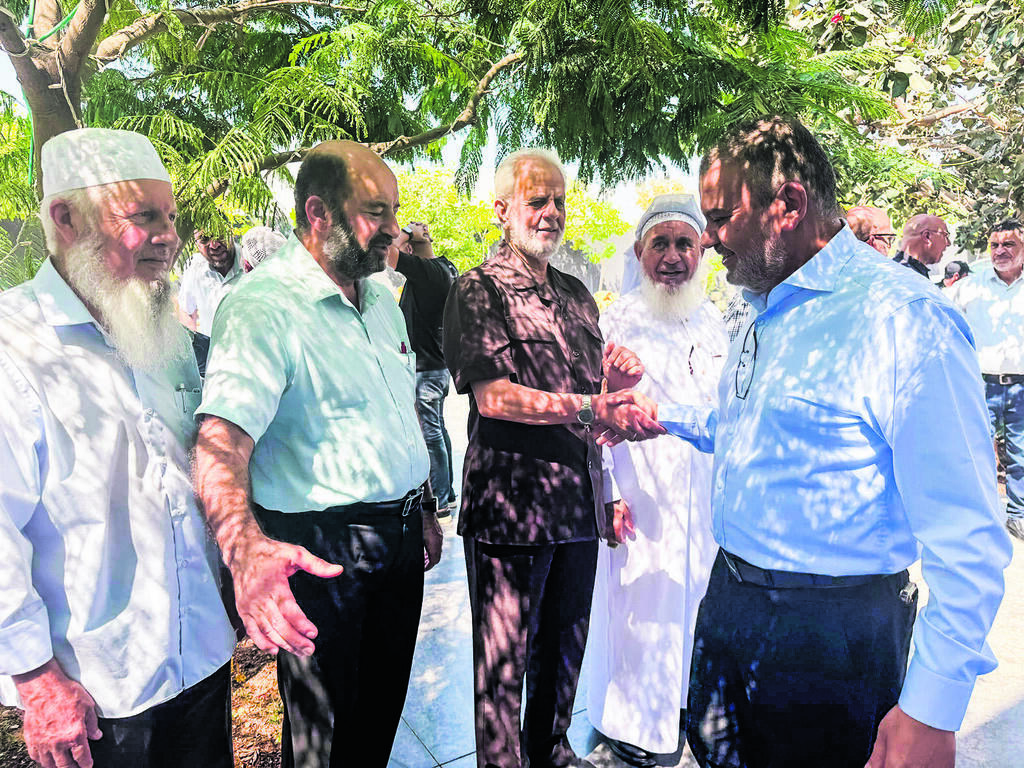
MK Walid Taha, right, shakes hands with Ibrahim Sarsur
Ra’am is not, and will not become, a Zionist party. But Abbas has repeatedly broken political taboos. He led an Arab party into an Israeli governing coalition for the first time. He publicly acknowledged Israel’s Jewish character, provoking a furious response at the time from Hamas leader Yahya Sinwar. He has argued that Arab society bears some responsibility for its spiraling crime and violence and supported involving the Shin Bet domestic security agency in combating organized crime. More recently, he expressed support for expanding civilian national service among young Arab citizens.
None of this makes Ra’am an ideal partner for every political camp, nor does it erase the party’s Islamist identity or the disagreements surrounding it. But those who insist that Ra’am must be permanently boycotted, or describe it categorically as a fifth column, should also confront the changes the party represents.
They should explain what alternative they envision for a country that may simultaneously deepen its control over millions of Palestinians in the West Bank while alienating roughly one-fifth of its own citizens. That question goes well beyond Mansour Abbas or the coming election. It concerns the kind of political relationship Israel intends to build with its Arab citizens and whether participation and integration remain possible at all.
Dr. Michael Milstein is a senior researcher at Tel Aviv University’s Moshe Dayan Center for Middle Eastern and African Studies