

Just after 7 a.m., Sunny Volkov, 26, has already been awake for hours. She prepares food, measures medication, gets her daughter dressed. Lian, 3, leans against her. Her mother is her entire world. In practice, she is both mother and father. Sunny smiles, wipes away tears before they fall and pushes the stroller toward preschool. Around them, people hurry to work, a routine morning in an ordinary city. For Sunny, nothing is ordinary anymore, and every morning begins with a quiet decision to keep going.
Sunny, a young artist, is the widow of Oshri (Osher) Vaknin. Osher, his twin brother Michael and Elkana Bohbot founded the Mushroom Project production collective 15 years ago, working in the trance music scene and promoting dark, underground sounds in Israel. For Osher, taking part in the Nova music festival in southern Israel with their production was a dream come true. It became a nightmare: He and Michael were killed while trying to evacuate their audience to safety, and Bohbot was abducted and released from Gaza two years later.
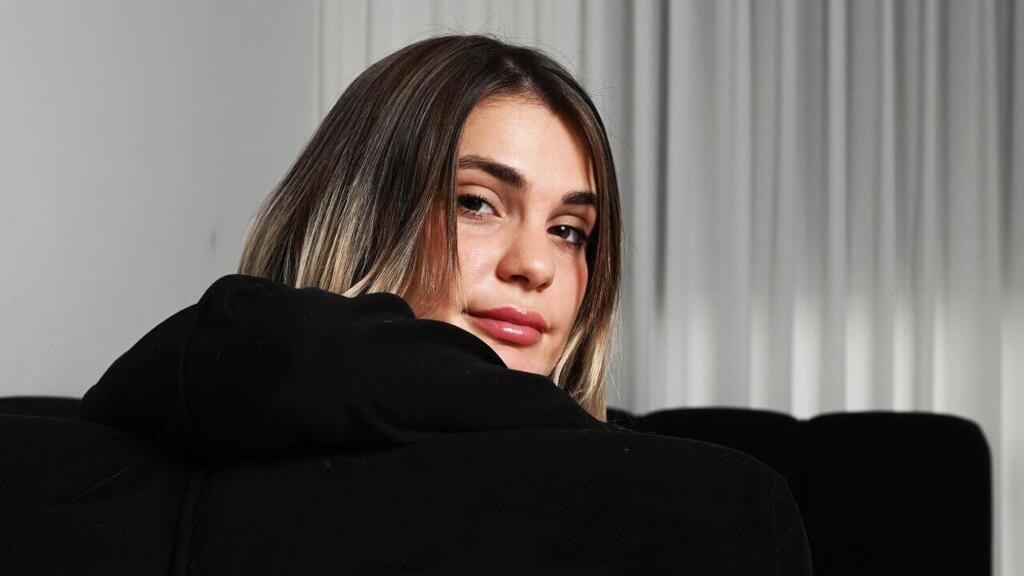
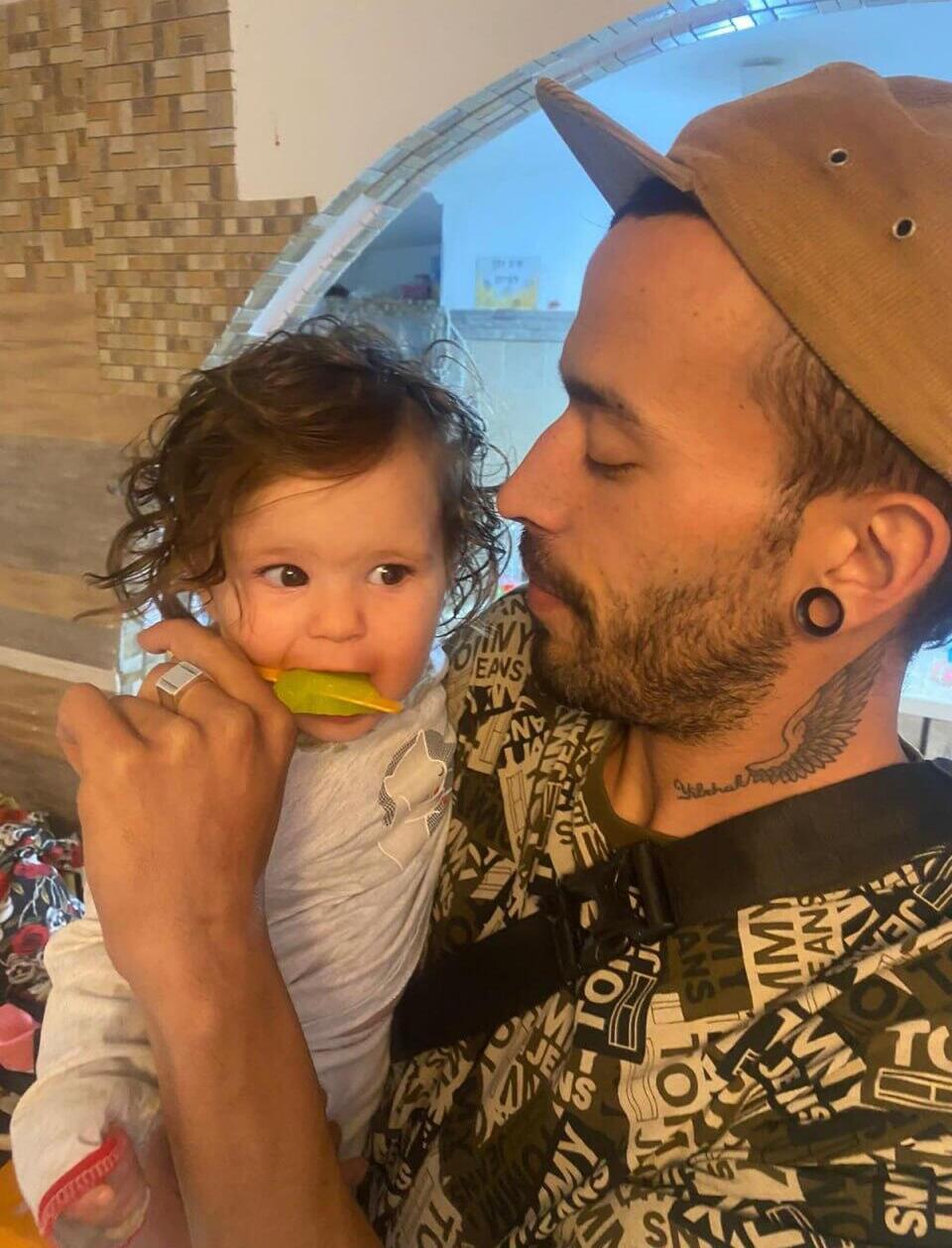
“In the year before the festival we lived day to day, like any young couple trying to find our way,” Sunny says in her first interview since that morning. “Reality brought us challenges. Lian was born with a defect, had surgery immediately after birth and spent months in rehabilitation in the neonatal intensive care unit. We had sleepless nights, hospitalizations, anxiety, endless worry. When would she be able to eat like other children? And through it all, she completely enchanted us. We melted from the first moment. Osher loved feeding her with a bottle, he was mesmerized by her. How long we waited for her. He always asked, ‘So when is she coming out?’ and his laughter lifted me even in all the worry.
“He charmed me, always strengthened me. I was anxious and he was the one who calmed me, made me laugh even in hard moments. We fought, but we also held on to a lot of faith and prayer along the way. Osher took everything on himself, earning a living, caregiving, dreams for the future. He didn’t know how to stop. Suddenly we became parents fighting and trying to handle everything.”
The moment Osher Vaknin’s car was found
(Video: Courtesy)


The three men dreamed of producing a large festival, and Mushroom Project joined the Nova Festival after months of preparation, including stage design and booking artists. “From 2020 to 2023, Osher and Michael turned every idea for a party into a different experience,” Sunny says. “We did parties on a yacht, in a cave, but the real concept was the forest. They were in love with the forest and knew how to create another world there, full of music and people connecting. Osher loved that I was a nature girl, that I liked walking barefoot. He called me ‘my nature girl.’ The festival they planned was their big dream: to bring a large crowd to enjoy the dark, high-tempo sounds, music you feel in your body, that heals the soul.”
The hours before the disaster
On Friday morning, October 6, Osher woke early and drove to see Michael. When he returned, he asked excitedly, “Sunny, are you ready?” He asked his mother, Rachel, to watch Lian so Sunny could join them. Rachel agreed and encouraged her to go. Sunny began getting ready, hesitated, and Rachel again told her, “Yes, go.”
You had already gotten ready to leave, but in the end you stayed home.
“I told Osher I felt strange, that I didn’t have a good feeling,” Sunny says. “He told me, ‘Come on, we’ll have fun, get ready, I’ll be back in a few minutes.’ The baby was on me and I was afraid to leave her. I asked Osher to play with her while I got dressed. I went into the bedroom and just spun around, not understanding what was happening to me. I felt something bad. Part of me wanted to go with him and enjoy it, and part of me couldn’t leave the child. Osher was under pressure, looking at the clock, getting a lot of calls and messages. They were waiting for him. He had to leave. In the end, I decided not to go. I saw the door close without even saying goodbye, because I thought maybe I’d still join later with a friend.”
About an hour later, Sunny walked with the stroller to Rachel’s home, something she had never done before. Osher always drove them. At 5 p.m., she called him. It was their last conversation. The next morning, news flooded the screens: people fleeing, gunfire, chaos. “My heart dropped,” Sunny says. Rachel last spoke with Michael, who answered once and hung up. Panic took hold. Sunny posted online asking for information about Osher and called everyone she could: people, police, hospitals, missing persons centers. Some said they were hiding, others said they were wounded. “How is it possible that out of all these people, no one knows what happened to them?” she asked as the anxiety grew.
And at that point, you decided to head south.
“Yes, I said, that’s it, I’m going there. I quickly threw a few things into a bag, oil, a pocketknife, without knowing why, without thinking. I knew I was doing something about life and death. I looked at Rachel and said, ‘No matter what happens to me, I want to bring them back.’ A friend helped connect me with someone driving there. I was in a tank top and flip-flops. I didn’t care about anything. I was sure I would find them. I had nothing, only faith. I said, whatever happens, happens.”
The blood-soaked car on Route 232
At the military checkpoint near Re’im they were told they could not pass. They turned around, pulled out a map and began driving off-road. “I knew a terrorist could appear at any moment, but it didn’t stop me. I was sure they were wounded, maybe hiding in one of the pits. I went into bomb shelters, covered my nose so I wouldn’t choke on the smell, looked for signs, shoes, clothes, bags, something small that might belong to Osher or Michael. Everything looked like a clue. I was afraid, but I didn’t stop.”
Along the way, Sunny saw bodies, burned cars, blood, knives, pickup trucks loaded with weapons, scenes she will never forget. They pushed past another barrier and continued toward the Medor Grove. When they reached the junction on Route 232, the driver wanted to turn, and Sunny caught sight of their car out of the corner of her eye. “I screamed, ‘Turn left!’ We stopped, I went up to the car and saw the keys inside,” she says. “There was blood everywhere, dripping from the car, the seats riddled with bullets. Lian’s infant seat was in the back, so close to her, and my heart just collapsed. I didn’t believe they were dead. My mind didn’t understand, my heart wasn’t ready to absorb it.” Soldiers pushed them back because the shooting continued. “I stood there, the trees burned, the ground black, everything burning, like I was in hell.”
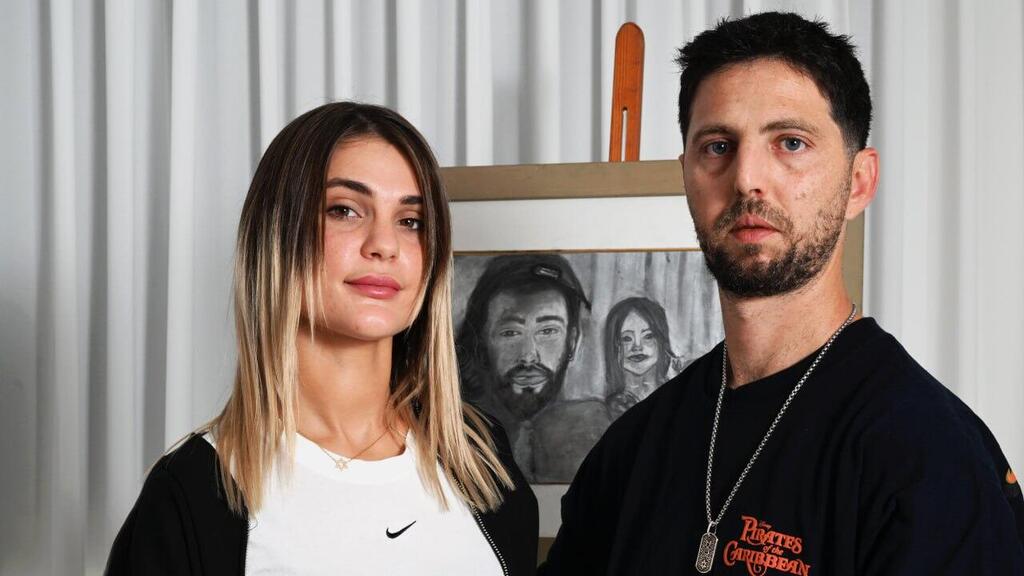
Sunny and Elkana Bohbot
(Photo: Kobi Koanks)
They took the infant seat and bags, soaked in blood, and continued to the Netivot police station. Sunny was exhausted, barely able to stand, unable to breathe or speak. Someone was assigned to hold her so she would not fall. “I begged them to tell me whose blood it was,” she says. After several hours, she was brought into a room and told: It was Osher’s blood. Osher was not alive.
“I lost it. My world collapsed. I looked at the police officer and didn’t believe it. I smashed equipment in the office, threw everything I saw. They tried to hug me and I kicked everyone away. I screamed, ‘Yesterday I was with him, how can that be?’ Then I fainted on the floor.” Sunny was the one who had to tell Rachel that one of her sons would not be coming home.
Fellow travelers
Elkana Bohbot had known Osher and Michael since age 16. “Since then, we experienced and went through so much together,” he says. “After the army we decided to start a production together, Mushroom. We partnered with Nova on October 7, at the party where, sadly, Osher and Michael were murdered and I was abducted. Osher and Michael were special people, twins in spirit. Osher was a warm, genuine person who loved to host, helped anyone who needed it, wanted to make people happy.”
On their shared work, Bohbot says, “They loved music and that connected all of us. The production was our baby. We wanted to bring the most unique things to Israel, we built a beautiful community. We were together day and night, so much together. I’m flooded with memories. Every year we were together in my sukkah during Sukkot, all the friends came, we laughed and drank. We went to festivals, went out in Mahane Yehuda and Tel Aviv, hung out in the neighborhood or cooked together at home. We worked on the Nova production for seven months, and that dream turned into a nightmare. I lost friends, I lost partners. My way of coping is to explain, to commemorate, to tell the world who they were. I dedicated the book I published to them. I want us to always remember them and all those who were murdered, all these young, pure souls. The war may be behind us, but the wound in the people must heal.”
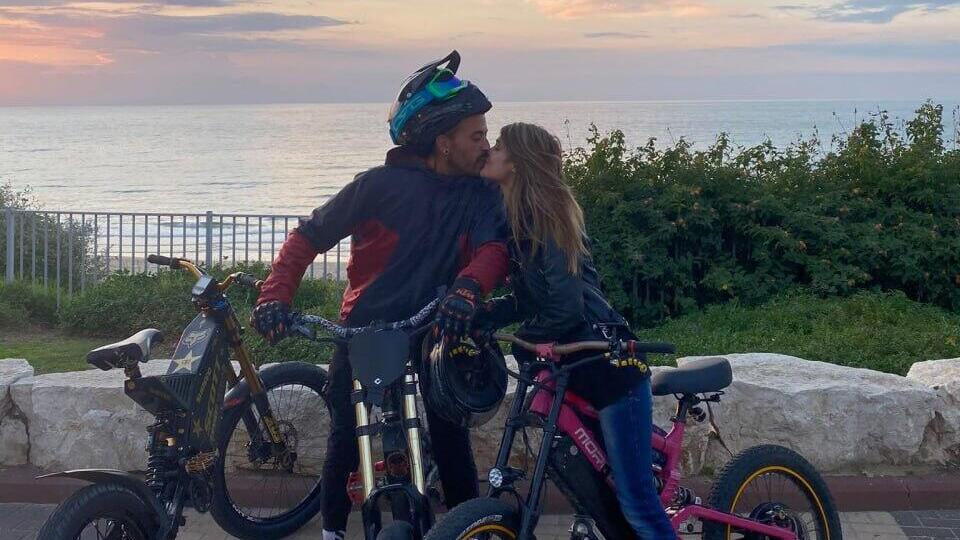
Sunny and Osher Vaknin
(Photo: Courtesy)
From a faraway childhood to a home of her own
Sunny immigrated to Israel at age 1 in 2000 with her family, Jewish parents and grandparents from Bulgaria. When she was 2, her parents divorced and her mother stayed in Israel. In first grade, most of the family returned to Bulgaria, while Sunny, her mother and sisters remained in Israel. They lived in the south until seventh grade, then, at age 12, returned to Bulgaria.
There she moved in with her grandparents, who raised her until age 16, when she returned to Israel. She relearned Bulgarian and started over. Despite wanting to integrate, the move from Israel was difficult socially and academically, and at one point she found herself outside any school framework. Determined to study, she called schools in Burgas one after another but was repeatedly told she could only enroll the following year. “I was like my own mother. I had no choice and decided to return to Israel,” she says. “I told myself I had to save myself, had to study. I didn’t have parental consent forms. I begged my mother to give me my passport and took the risk. I wore a gold Star of David necklace and had Psalms I once found, and I boarded the plane alone. I was shocked they even let me on.”
(Photo: Courtesy)
At the airport, her father, who had returned to Israel several years earlier, was waiting. She arrived expecting a better life, to be with her father and finish school, but reality was more complex. She later moved to a boarding school, which she says saved her. “The staff understood how important it was for me to study and graduate. They didn’t give up on me, and they didn’t go easy on me.”
After graduating, she enlisted as a lone soldier in the Israeli Air Force. She hoped to remain in the military but was forced to leave. At 20, she met Osher, then nearly 30. “Osher worked in event production. He messaged me on Facebook. I was living with roommates in Yad Eliyahu, and he lived nearby with his twin brother Michael,” Sunny says. “We met, and from the first day it was hypnotic. I had never known such pure, good people. We didn’t separate; we became addicted to each other. I called him ‘Maimuna,’ monkey in Bulgarian. I felt something with him I couldn’t feel anywhere else. True love. We moved to Jaffa, we were happy. Osher was an extraordinary person, loved by everyone, full of joy. Osher left me many gifts,” she says. “Lian, to keep me alive and not let me give up. Rachel, as a mother, to be with me.”
The collapse
Today, Sunny is living a life she did not choose: a widow at the beginning of her adult life, with a small child who will not know the father who loved her so much. But she is living it. Every morning she gets up, prepares food, cares for Lian and the dog Osher brought home three months before the festival, and maintains routine even with a broken heart.
“It’s not that I don’t break,” she says. “I just don’t have the privilege of falling. I have a child and I need to take care of her. From the outside it may look like normal functioning, but inside it’s daily work. Some days are very hard, endless crying. Then there’s a better day when I cry less and manage to open my eyes a bit. But I keep going. I take Lian to all her hospital treatments. Sometimes she breaks me, asking, ‘When will my dad come back? Will Dad pick me up from preschool? Why is it only you who comes?’”
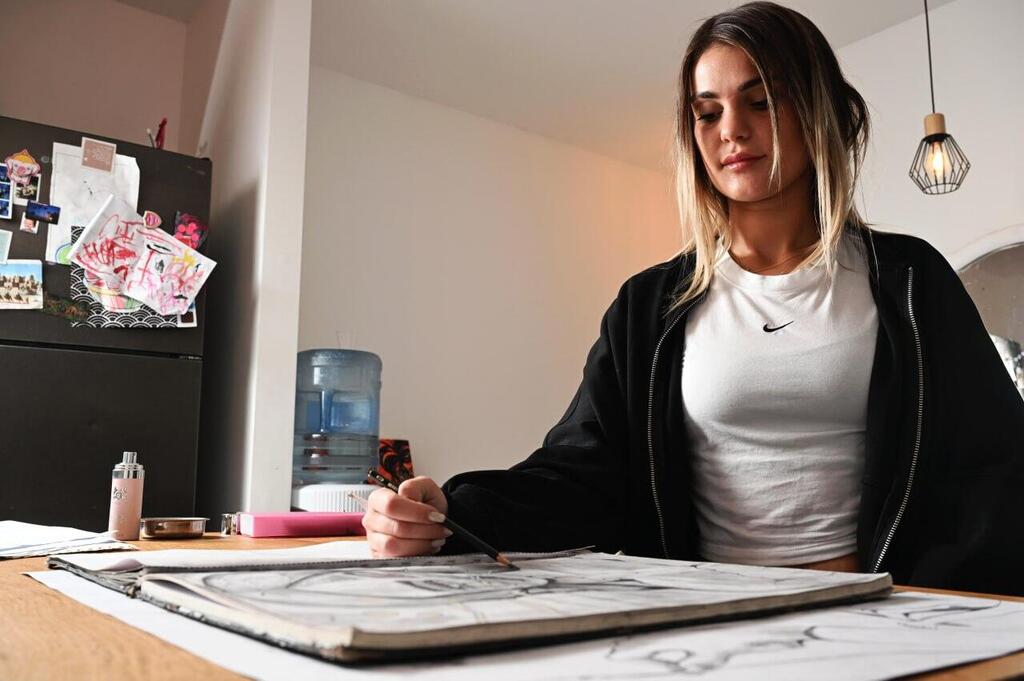
Since Osher’s death, she has struggled to draw. “That was our world. He designed graphics for parties and I sat and drew with him. He loved my drawings and made me love them too. I have to learn to create again, even without Osher, so I enrolled in a course at Bezalel Academy of Arts and Design. In 2024 I also fulfilled a dream and flew with Lian to Thailand using money I received from an accident when I was 19. It was Osher’s and my dream.”
“At night there’s no one to lean on. Sometimes there are terrible nightmares. But in the morning I get up again. The pain doesn’t disappear, it just walks with me. There are moments of quiet and moments of longing that tighten the chest. The house is sometimes upside down, life isn’t perfect, but I’m here for Lian, learning to continue my life without Osher.”
Lian was born with swallowing problems, a challenge that continues after the loss. “Hospitals, medications, treatments, it’s all on me. The state changed decisions, the bureaucracy is exhausting, but I don’t stop. I’m not asking for pity, just another hand to help. Osher always told me what a good mother I am, and that’s what holds me.”
(Photo: Kobi Koanks)
Another night comes. After a bath, medication and dinner, Sunny puts Lian to sleep and sits in the living room. Another evening with a TV series in the background, heavy silence, her phone beside her, waiting for Osher to call. For two years she has not gone to bed alone, afraid to face the memories, feeling Osher’s and Michael’s pain in nightmares. Sometimes she falls asleep on the couch and dreams Osher comes home, then wakes with a pounding heart and realizes it was only a dream. Sometimes she just sits, silent, listening to the night, stroking the dog, whispering to herself that she must go on, not give up. She dreams of Lian having brothers and sisters, a united family, like Osher and Michael were.
In the morning, Sunny wakes up, smiles for her child and continues to hold an entire world on her own. Life is hard, and there is no break from the pain, but she continues. She knows she must be here, with Lian, with the dog, with the memory of Osher.
“Even when everything is falling apart around me, I don’t allow myself to collapse,” she says. “I keep going, because that’s what holds my world together: faith, strength and endless love for my child. I continue even when it’s hard, even when it’s sad. Someone who keeps their heart open keeps living, keeps loving. That’s how I keep being a mother. The sun never stops shining. It hides behind the clouds, but it’s always there.”