

In one small moment, Sgt. H. realized that her battle had not ended when she put on a uniform. In fact, it had only begun.
H. is an Arab Muslim who decided to enlist in the IDF and become a combat soldier. It is a courageous and complicated step for a Muslim woman, and today there are only three Muslim female combat soldiers in the entire IDF. But on the eve of Simchat Torah this year, two years after October 7, H. realized that her struggle was not only with Arab society, most of which opposes enlistment.
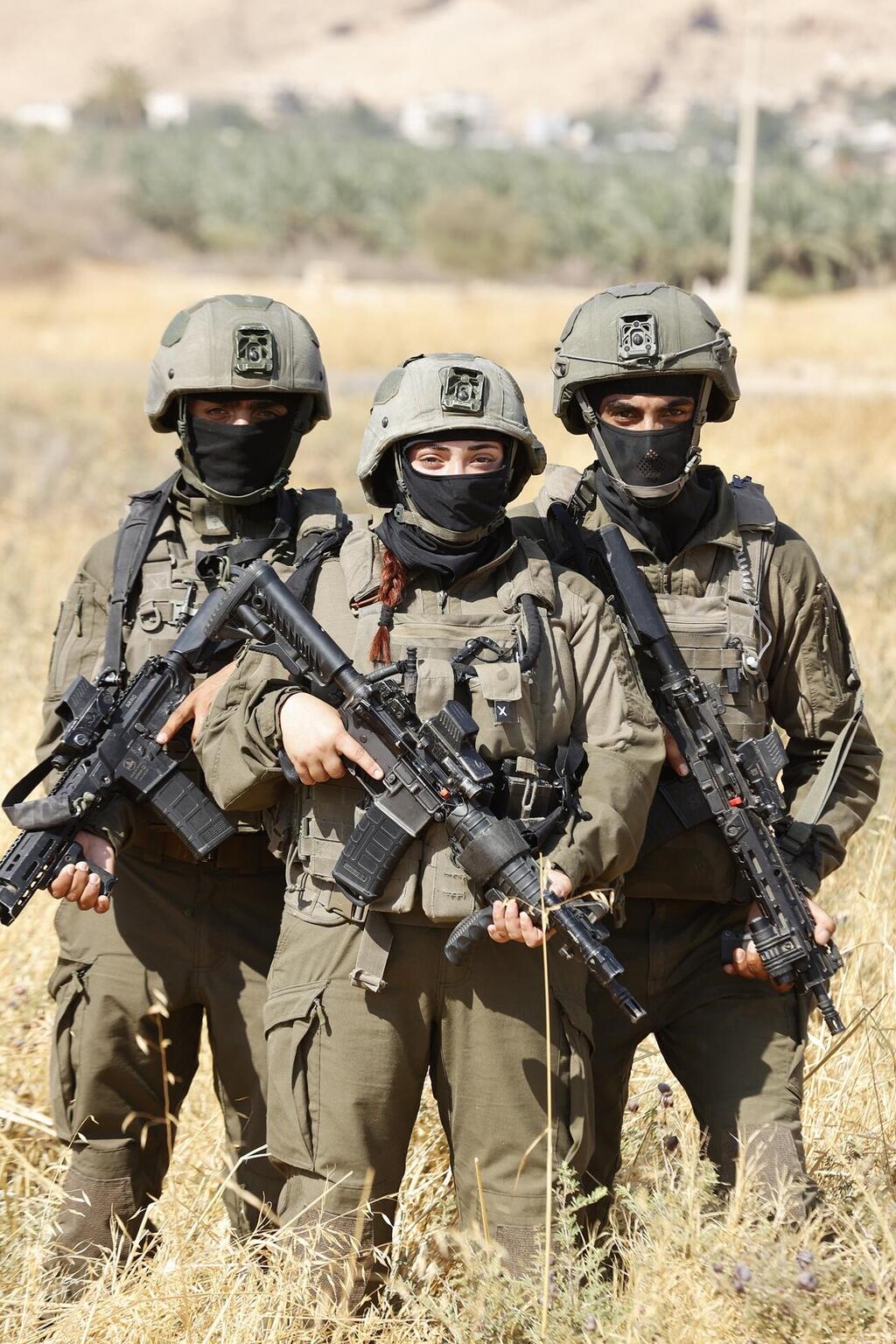
H. was undergoing basic training in the Border Defense Corps, and the entire company was staying on base for Shabbat.
“I’m sitting at the table laughing with my friends,” she recalls, “and then one of them says to me, ‘It’s like when you Arabs came in and murdered the Jews and raped the women.’”
How did you respond?
“I was shocked. I asked her, ‘Who is “you”?’ And she answered, ‘You, the Arabs.’ I told her, ‘Correct yourself. Those were terrorists.’ I was so angry that I got up from the table right then and walked out.”
What did you do?
“I went to my commanders and explained what happened. She faced disciplinary proceedings and the commander gave her a massive confinement to base. Who is she to compare us to terrorists?”
And what did it do to you?
“It motivated me to make a change. When I finished training and joined the company, I asked the company commander to gather everyone for a personal talk with me. I wanted them to hear it from me, not from the commander.
“There were at least 100 male and female combat soldiers there. I introduced myself and said, ‘I’m an Arab Muslim. I grew up in a Muslim village, this is who I am and I have no problem with that. Not all Arabs are terrorists and not all of them want Jews to burn. I enlisted to contribute to the country. And if you have questions, come and ask me.’”
How did they respond?
“Everyone applauded me.”
× × ×
The incident involving Sgt. H. at that holiday dinner is just one small example of the complexity of IDF service for Muslim male and female combat soldiers.
On one side, much of the Arab society around them opposes such a step, and they may even be viewed as “traitors.” On the other, Jewish soldiers serving alongside them, who come from different sectors of Israeli society, do not always find it easy to accept either.
And in the middle are the Muslim soldiers themselves, who want to integrate and contribute to the country while preserving their own identity and culture. Yes, even during wartime.
Take Sgt. M., for example.
The evening he told his family that he intended to enlist in the IDF and become a combat soldier, the entire family opposed him.
His paternal grandmother asked suspiciously, “What’s your motive?” His mother said anxiously, “War is frightening. It’s not for you. It’s too much.” His father scolded him: “Go get ahead in life, go work, do something with yourself.”
What did you tell your father?
“I told him, ‘Dad, I have to contribute to the country. The obligation to enlist applies to everyone.’ They were angry with me, but they didn’t really like getting into confrontations with me.
“Then my mother asked me nervously, ‘And what will you do if you encounter a relative there? How will you feel? Will you act against him?’”
What would you actually do in that situation?
M. looks at me in astonishment, as though the question itself makes no sense.
“I’ll do my job the way I was taught. If I see a suspect, or if there is a life-threatening situation for me or my team, I shoot without thinking twice. At the end of the day, I’m a combat soldier. There’s no hesitation.”
He is 19, the older of two sons. He attended a Muslim elementary school and a mixed high school.
In the Arab city where he grew up, he says, a teenage boy largely faced two options: go to work or join criminal organizations, as some of his neighborhood friends did. He might have chosen one of those paths himself if not for one day when he was in 10th grade.
“A coach from the Aharai movement came to our school. I had no idea what it was. At the time I was working and wasn’t thinking about the army, but he kept after me and convinced me.
“He said the movement offered combat fitness training and prepared young people for the military. He told me, ‘Come try it. What do you have to lose?’
“I came to one training session and ended up staying for three years. That coach brought young people from every part of society into the group — Ethiopians, Muslims and Christians. Eventually I realized that what I wanted was purely combat service.”
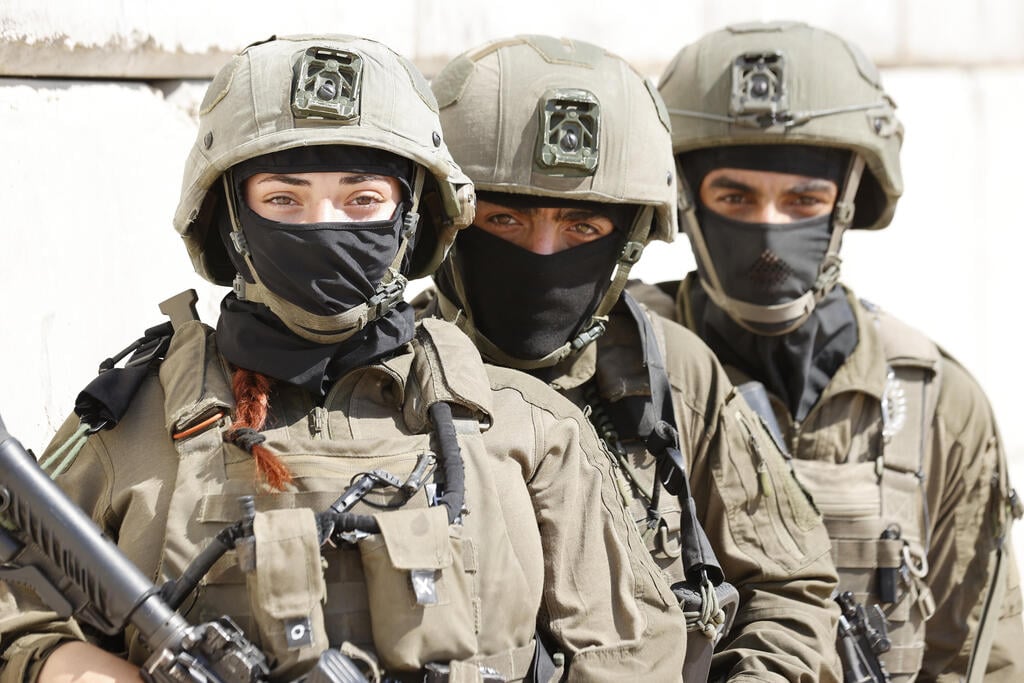
Muslim combat soldiers Sgt. H., Sgt. R. and Sgt. M.
(Photo: Gadi Kabalo)
At 18, M. enlisted in the Paratroopers Brigade’s 202nd Battalion. He has already completed four parachute jumps and now serves as an assistant Negev machine gunner in his company. He recently returned from operational activity in the Gaza Strip.
Sgt. R., by contrast, did not face such opposition at home.
R., 19, comes from a Muslim family with a tradition of service. His father previously served in the Border Police, his brother currently serves as a Border Police combat soldier and his sister works as a paramedic.
R. also grew up alongside the two sons of the late Omar Sawaed, who was abducted with the late Benny Avraham and the late Adi Avitan in the Mount Dov incident in 2000. All three were killed and their bodies were returned to Israel in January 2004.
That story was one of the factors that motivated R. to become a combat soldier himself.
He enlisted in the 47th Battalion, known as the Valley Lions, a mixed-gender border infantry battalion, and serves as a squad commander.
“I wasn’t even born when Omar was abducted, but people in the village talked about that story all the time, along with other stories of heroism involving Muslim soldiers from my area,” R. says.
“It was something I grew up with. At the Muslim school I attended, it was obvious that we would enlist too. The guys in my grade practically competed over who would enlist in the army first. Everyone aimed for the unit they most wanted to reach.”
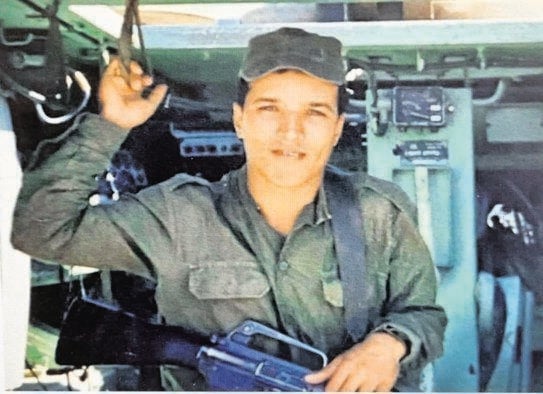
The late Staff Sgt. Omar Sawaed
(Photo: Courtesy of the family)
Everyone?
“There was one guy who said he wanted to go straight to school instead of enlisting and that we were wasting our time. We pressured him. Everyone around him told him, ‘You can enlist, sign on for career service and then go study.’”
And what happened?
“He enlisted in the Border Police.”
Sgt. H., 20, also serves in the Valley Lions Battalion, but her family story is more complicated.
She grew up in a mixed Arab-Jewish city in the western Galilee. “We lived in a village and moved to the city a year and a half ago,” she says.
She is one of 11 siblings from her father’s two marriages: seven children from his first marriage and four from her mother, his second wife. She is the eldest of those four.
Her mother was born in what H. describes as a hostile village near Nablus, and her entire extended family still lives in the West Bank.
“She wasn’t happy there and was always looking for a chance to escape,” H. says. “My father basically saved her.”
Are you in contact with them?
“When I was little, my mother still took me to visit them, but we lost contact a long time ago.”
H. herself grew up in a reality entirely different from her mother’s and attended Jewish schools.
The idea of enlisting came from her father, who worked in Israel’s security establishment.
“When I was little, my father would sit with us in the living room on Friday nights and tell stories about operations he and the army had carried out. I loved it. It really excited me and I wanted to do it too.
“I would sit in front of him, look at him in admiration and say, ‘Just tell me more.’ I wanted to do exactly what he did.
“Then something else happened that pushed me to enlist.”
What?
“A good friend of mine, the late Alina Weisberg, was murdered on October 7 at Zikim Beach together with her partner, the late Shahar Krayef.”
H. pauses for a moment to catch her breath.
“When I first heard that she was missing, everything went black. And when they found her body, it destroyed me.
“I didn’t go to the shiva. I couldn’t. It would have been like admitting that she really wasn’t alive anymore. I still haven’t gone to her grave. I couldn’t,” she says through tears.
“That’s why I enlisted. It was one of the reasons. I wanted to contribute to the country as much as I could. Soldiers protected me when I was a child, right? Soldiers died in Gaza and Lebanon so that I could live, right? So now it’s my turn to give back.”

The late Alina Weisberg
(Photo: Courtesy of the family)
How did your parents react to your decision?
“Obviously my father encouraged me to enlist, and so did my mother. She was very supportive.”
Do your mother’s Palestinian relatives in the West Bank know you enlisted?
“My mother’s sister and brother know, and they just told me, ‘Take care of yourself.’ The rest of her family doesn’t know.
“They have lived their entire lives around terrorism in the West Bank, and some of them have been arrested for security offenses. I have a cousin who was arrested for throwing stones and injuring a female soldier from the Jordan Lions Battalion, Battalion 41, in the eye.”
Aren’t you afraid they might try to hurt you too?
“We don’t visit there and we’re not in contact.”
In her battalion, Sgt. H. operates a MAG machine gun, meaning she moves around the Jordan Valley carrying a weapon that weighs nearly 11 kilograms, about 24 pounds, even before ammunition, her vest and other gear are added.
Heavy.
“You get used to it.”
And suppose you and the MAG had to enter the West Bank, perhaps even the area where your mother’s relatives live.
“I would carry out my mission with no problem. If there is a suspect endangering us, I’ll shoot.
“Besides, it already happened. There was a nighttime operation in Jericho, where some of my mother’s relatives live. Because I speak Arabic, I was paired with the platoon commander as part of the team entering the house. What the army calls an operational entry.”
Meaning?
“You arrive at night and enter a house as part of a mission to locate and document everything inside. You also have to search the people in the house.
“I did all the work there. You knock on the door, I speak Arabic, I’m considered the bridging force. I questioned everyone — women and men. Who are you? How many of you are there? Who lives in the house? And so on.”
Were you wearing a mask?
“No. My face was exposed. I have family in Jericho, so it was genuinely frightening that we might suddenly enter one of their homes or that someone might recognize me.”
And if that had happened?
“Even if it had, I would do my job. I have no relationship with them.
“We also have a lot of interaction here in our sector with the Arab population.”
How do you handle that?
“They don’t know who I am. It doesn’t say ‘Arab’ on my forehead, but they can see that I speak good Arabic.
“In any case, it’s clear to me that some Arabs in Israel consider me a traitor, as though I’m going against my own people. But I define myself as Israeli.”
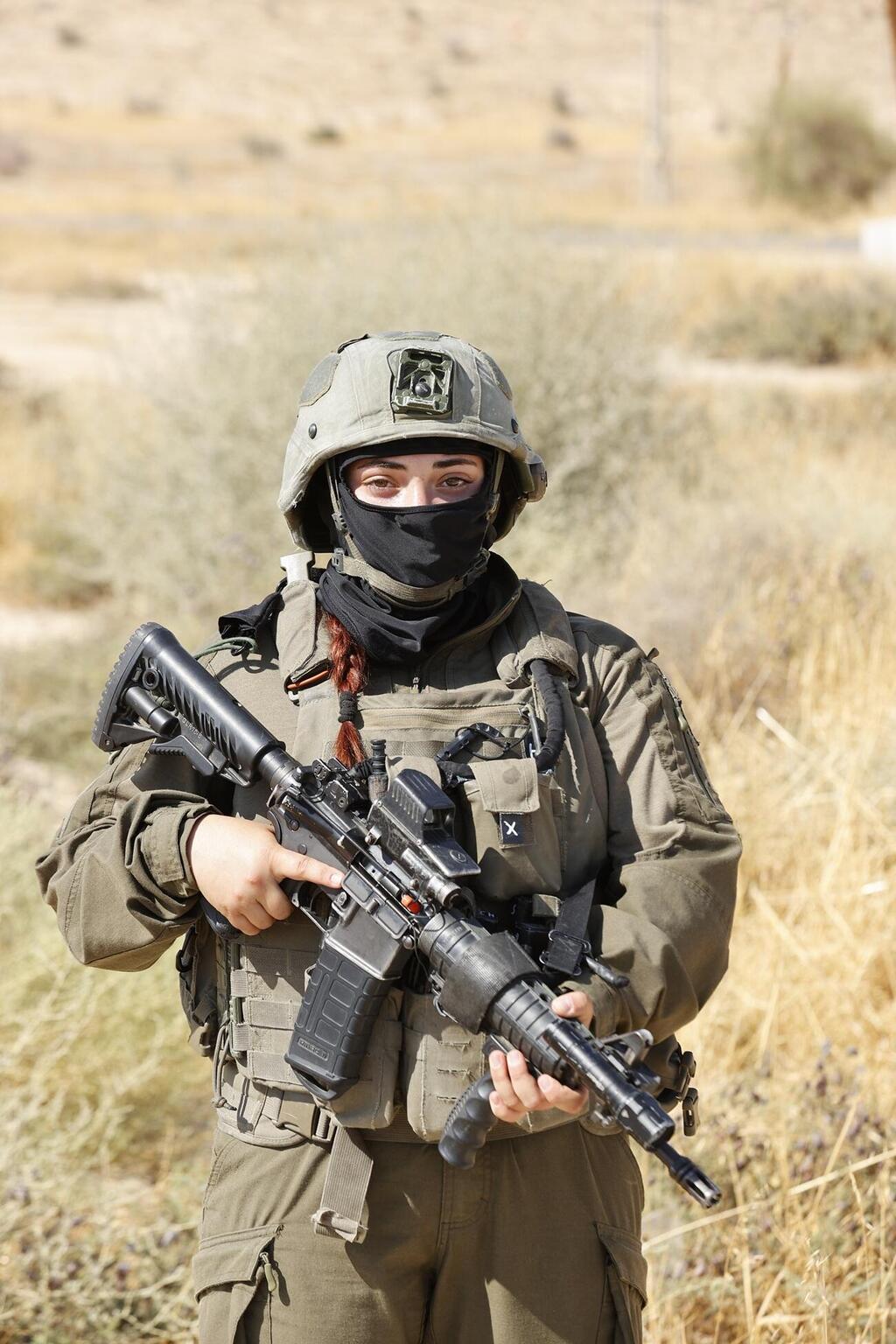
Sgt. H., one of only three Muslim female combat soldiers in the IDF
(Photo: Gadi Kabalo)
× × ×
Sgt. M., the only Muslim in the 202nd Battalion, came to the interview directly from operational activity in Gaza.
“We spent five months in Nahal Oz and after that went into Gaza,” he says.
“My advantage in the battalion is that I’m the only one who speaks Arabic, so whenever someone crosses the yellow line separating us from Hamas, I’m the one who questions the suspects.”
For example?
“A few weeks ago, on a Friday, we were in the northern Gaza Strip near Beit Hanoun. The night before, we had a routine patrol in the sector with no incidents and then went to sleep.
“At 9 a.m. Saturday, the observation post reported someone crossing the yellow line. I was immediately called there. The suspect was an older man who had crossed the line. He came toward me with his hands raised. We restrained him, I questioned him and then we transferred him for further interrogation.”
And if it had been a suspect you were ordered to shoot?
“In Gaza? I shoot.
“Sometimes, to test us, terrorists send children across the yellow line. They give them a banknote and tell them to cross so they can see whether they can do it too.”
Hand on your heart, doesn’t it bother you to detain or question a child like that? You might even have to shoot him if he throws an explosive device or endangers the troops.
“They already sent a 12-year-old boy across the yellow line and told me to go question him. He told me he had been given money, that he didn’t want to cross but Hamas terrorists grabbed him and forced him.”
Is there any order that, specifically because you are Muslim, you would have trouble carrying out?
“If there is a red line and an enemy is standing 50 meters in front of me, I’ll warn him. If he still comes toward me, I’ll kill him.
“But if I see innocent people, like a woman with a child or an old man trembling who hasn’t done anything, then no.”
And you, Sgt. H., is there an order you would refuse?
“I would never agree to enter a mosque with a weapon and shoes on. In that situation, I would refuse the order and go to prison, because with all due respect, I don’t forget who I am.”
And you, Sgt. R.?
“There’s no order I wouldn’t carry out,” he says, then pauses. “Except shooting a little girl for no justified reason.”
× × ×
Deciding to serve in the IDF as Muslim combat soldiers, with all the baggage that comes with it, was relatively speaking the easy part.
All three say it also took time for the soldiers serving alongside them to digest the idea.
“When I arrived at the battalion as the only Arab Muslim, I came under attack,” Sgt. M. says. “‘Who are you? What are you even doing here? Go home, you don’t have to serve.’”
And later?
“There’s a religious soldier with sidelocks who is a die-hard Beitar Jerusalem fan. At first he didn’t like the look of me. In his mind, all Arabs were terrorists.
“But when an Arab like me comes along and shows him my side, his mind opens up. Today he is my best friend.”
Are there political arguments in the battalion?
“There are political arguments, there are racist soldiers, there’s everything you can imagine.
“For example, I once shared a room with a soldier who didn’t exactly like Arabs and had a disgusting view of us. He would come at me and threaten me: ‘What are you doing here?’ He was always looking for friction and provoking me for no reason.
“One day I had enough. I didn’t confront him. I simply went to my commander and had a conversation, and that guy was gone.”
Sgt. H. says: “When I was in basic training, I was speaking Arabic with Sgt. R., who was there with me, and the commander came over and really scolded me: ‘H., enough! Not in Arabic.’”
What is harder: being a woman in Arab society or being a female combat soldier in the IDF?
“Being a woman in Arab society. She has almost no rights. You can clearly see the severe violence against women in the community and the number of women who are murdered. You see how a woman suffers there.
“She isn’t allowed to dress however she wants, she isn’t allowed to make independent decisions about her own life and she is always under the supervision and criticism of those around her.
“In the army, by contrast, I feel protected. I have a place. I am respected and I’m judged according to my abilities, not my gender.”
As a Muslim woman, isn’t serving in a mixed-gender battalion a problem?
“There’s separation in the living quarters. Yes, everyone sits together in the dining hall, but nobody touches you, and if someone says something out of line, the girls tear him apart.
“I’ve got a mouth nobody wants to mess with. I know how to defend myself and answer anyone who needs answering.”
Then you leave the base and there is racism outside too.
“Would I tell you it doesn’t eat me up that there’s racism and discrimination against Arabs? It absolutely does.
“On the other hand, I live in Arab society, I’m an Arab serving in the IDF and after October 7 there are Israeli Arabs who support the Palestinians, so I’m also considered ‘traitor No. 1’ as an Arab who goes and serves as a combat soldier.”
What is your greatest fear?
“That Palestinians might recognize me, God forbid, find out who I am and take it out on my family. That they would retaliate against them because of me.”
After October 7 and what happened to your friend Alina, are you afraid of being taken hostage?
“I’m afraid of being kidnapped. It’s a fear for my life, but also because I’m an Arab Muslim.
“What intensifies the fear for me is that I’m also a combat soldier, which could make me a prize for them.
“It isn’t something you think about while you’re busy with your everyday duties, although my mother always tells me that if I was already going to enlist, I could have chosen another role.”
What did you tell her?
“Combat only, or nothing.”
And you, Sgt. R., given the story of the late Omar that you grew up with, are you afraid of being taken hostage?
“First of all, putting on the uniform is a tremendous source of pride for me.
“On October 7, I was only in 10th grade and I begged my older brother to take me with him to the war because I really wanted to go out and fight them.
“Of course, I was terrified for him the whole time, that nothing would happen to him and that he would return home safely.
“But my greatest fear is that something might happen, God forbid, to one of my soldiers. First because he is my responsibility, and second because I would have to go to his parents and ask their forgiveness for not protecting him.
“That frightens me more than anything that could happen to me.”
And you, Sgt. M.?
“I’m afraid of being kidnapped, of course, and also that it could happen to someone on my team.
“Today we’re connected on another level. It’s beyond brothers. If something happened to one of my friends, it would burn my heart.
“One night we went out together to a club. Someone pushed me there and I lost it. You should have seen how all my friends from the army came over and stood behind me.
“If they decide to fly to Rhodes together, they get annoyed with me when I don’t go with them.”
Yes, but if you did fly with them, they might already be in duty-free while you were still being held up at security.
“You’re right. There are a lot of warped things and there’s still a lot that needs fixing.
“Even though we live in the same country, eat the same food and breathe the same air.
“And you know what I would consider a victory? When I can stand in the Knesset in IDF uniform in front of everyone and tell them what I think of them — and what needs to be fixed in this society too.”
× × ×
Within the pressures of military life, the three also try to preserve their Muslim culture and holidays. That is not simple either.
“Sometimes I go 20 straight days without speaking Arabic until I get home,” Sgt. M. says.
“I spend almost two consecutive Shabbats with my team speaking only Hebrew, and I miss it.
“And when it’s Friday night or a Jewish holiday, all my friends are singing around the table, reciting Kiddush and celebrating, while I don’t feel my own holiday. I have nobody to celebrate with. It’s terrible loneliness.”
The army, they say, does make accommodations for them.
During Ramadan, they receive exemptions or reduced duties, and the times of the five daily prayers are respected.
During the most recent Eid al-Adha, the Muslim Feast of the Sacrifice, M.’s battalion went on a march.
“I really wanted to join my friends,” he says, “but the army took my situation into consideration and sent me home.”
Sgt. H. says she has fasted during Ramadan since age 7, although this year she observed a reduced fast.
And on Yom Kippur, M. says, he does not eat or smoke in front of soldiers who are fasting.
“Because I respect them.”
What about singing ‘Hatikvah’?
All three say they sing it, word for word.
“I don’t like changing words,” M. says. “That’s the song, that’s the anthem, so you sing it. When everyone stands at attention, I stand at attention.”
H. sings it too, including the words “a Jewish soul.” She stands during memorial sirens and salutes the flag.
“I respect everyone,” she says. “I don’t have Arab female friends in my city. My whole life is Jews.”
None of the three, incidentally, rules out dating a Jewish partner. In H.’s case, the question has already come up at home.
“My father doesn’t care,” she says. “My mother, she’s the difficult one.”
Then comes Independence Day.
“Last Independence Day I wanted to go out with the guys,” Sgt. M. says, “and they told me, ‘It isn’t yours.’
“I was offended. Why are you telling me it isn’t mine? I live here. I live in this country. I serve in the army. This is my place too.
“The media constantly portrays most Arabs as involved in protection rackets and murders, and we’re trying to rehabilitate that image. People aren’t aware of Arabs who enlist.”
Meanwhile, there are also people in the Jewish sector who avoid military service.
“And that frustrates me,” Sgt. H. says, “Haredim or Arabs who live here and don’t enlist.
“We want to break barriers and break stereotypes.
“I think there should be a mandatory service law for everyone, and if not military service, then national service.”
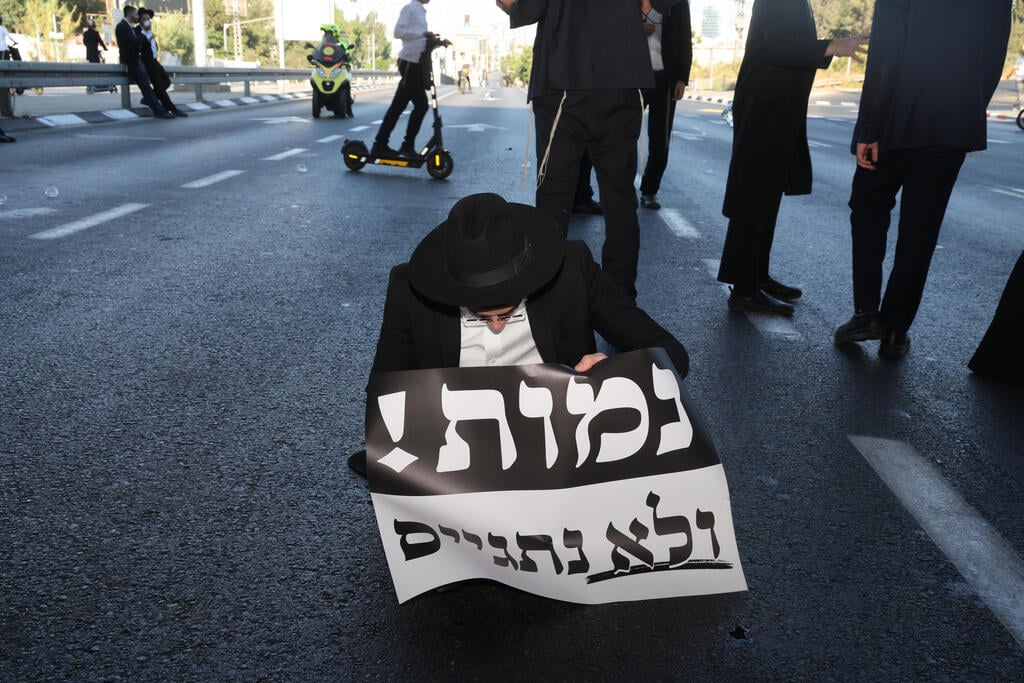
Haredi protester demonstrating against military conscription at the Coca-Cola Junction
(Photo: Yariv Katz)
What comes next?
Sgt. R.: “I’ll go to officers’ training and sign on for career service.”
Sgt. M.: “I think my life will be in civilian life rather than in the military.”
Sgt. H. is less certain than either of them.
“Everything is from God,” she says with a laugh. “I have time to think about it.”
Would you recommend that your younger sisters enlist?
“Of course I would recommend that my sisters enlist, and I’ll make my own daughter go to the army too.
“I pray that one day all Muslim girls will enlist because it would only do them good.
“They live here. They receive all the rights that every other citizen gets.
“You don’t want to enlist? Ma’a salama. Go in peace. If you don’t want to contribute, goodbye. You have nothing to do here.
“There is no such thing as not serving.”
First published: 14:15, 09.05.26