

The most direct military clash between the IDF and the Soviet Union unfolded gradually and largely out of public view, emerging during the final year of the War of Attrition as a dangerous escalation that brought a Cold War superpower into open combat with Israeli forces. What began as an Egyptian effort to recover from defeat in the 1967 Six-Day War evolved into a covert superpower deployment, direct aerial combat between IDF and Soviet pilots, and deadly missile engagements that reshaped the regional balance and hastened the war’s end.
After the 1967 Six-Day War, Egypt sought to challenge control of Sinai not through a decisive ground offensive but through prolonged pressure. Artillery duels along the Suez Canal intensified. Commando raids became routine. Air power assumed a central role. IDF aircraft struck Egyptian positions along the canal and increasingly deep inside Egypt, targeting air bases, radar installations, bridges, power stations and logistical hubs.
By 1969, the imbalance in the air was stark. Mirage III fighters and newly introduced F-4 Phantom jets gave the IDF the ability to operate hundreds of kilometers west of the canal. A series of deep-penetration raids, later known collectively as Operation Priha, exposed Egypt’s inability to defend its own heartland. Bombs fell near Cairo, Alexandria and the Aswan Dam. Egyptian fighter losses mounted, while air defenses struggled to intercept or survive.
President Gamal Abdel Nasser concluded that Egypt could not sustain the war alone. In the autumn of 1969 and again during a visit to Moscow on Jan. 24–25, 1970, he pressed Soviet leaders for expanded assistance. This time, the request went beyond weapons. Nasser asked the Soviet Union to defend Egyptian airspace directly.
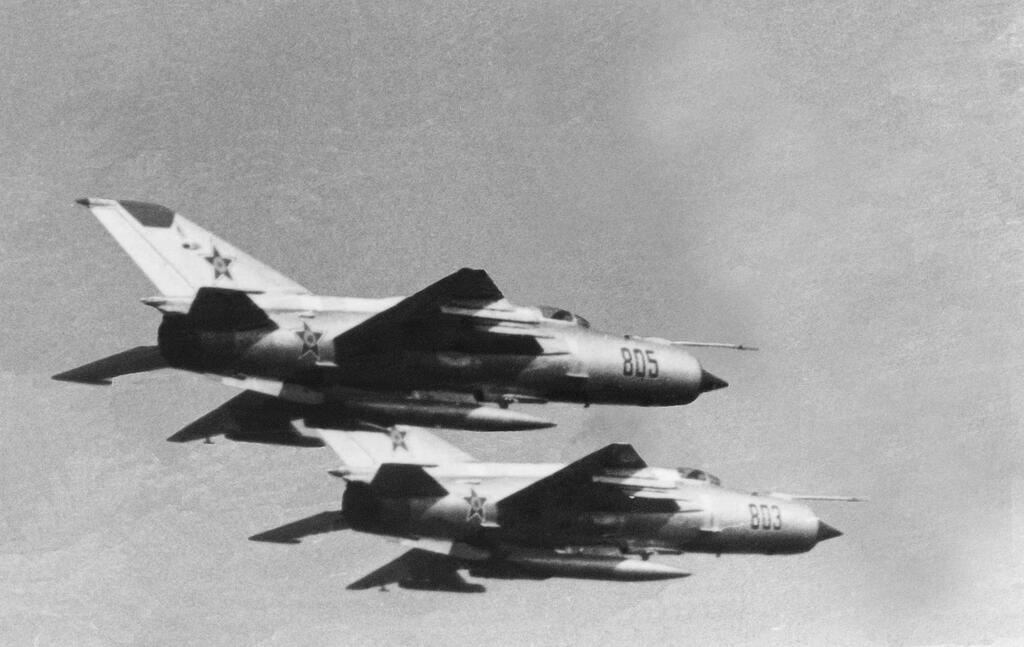
The Soviet response was unprecedented. Moscow approved a covert deployment code-named Operation Caucasus, involving a full expeditionary force, divisional in size. At its core was the 18th Special Anti-Aircraft Rocket Division of the Soviet Air Defence Forces, reinforced by fighter aviation regiments equipped with MiG-21MF aircraft, radar units, electronic warfare teams and thousands of personnel.
Beginning in March 1970, Soviet ships unloaded men and equipment at Egyptian ports. SA-2 and SA-3 surface-to-air missile batteries were deployed around Cairo, Alexandria and Aswan. Soviet pilots flew combat air patrols. Radar operators, missile crews, technicians and controllers took over entire sectors of the air defense network. Vehicles were painted in Egyptian colors. Soviet personnel wore desert uniforms resembling Egyptian dress. Officially, both Cairo and Moscow denied the deployment.
IDF intelligence detected the presence almost immediately. Unit 848 intercepted Russian-language communications. Radar signatures and operational behavior matched Soviet doctrine. The conclusion was unavoidable: Soviet forces were now actively engaged.
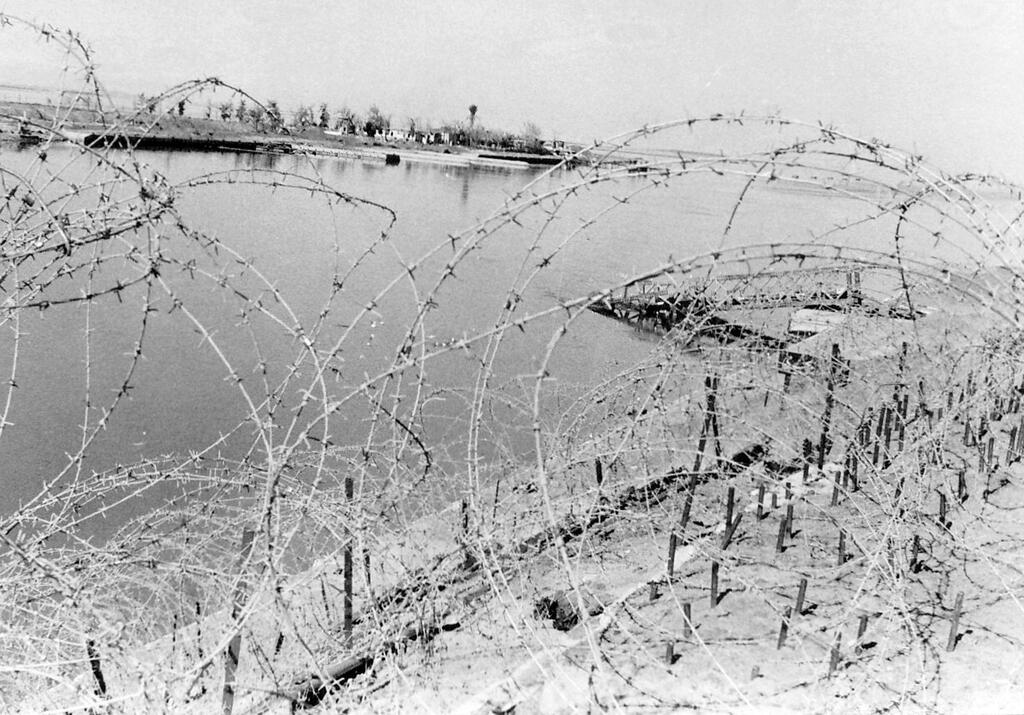
Suez Canal in 1970
(Photo: Meir Tzvi)
Despite this, political leaders sought to avoid escalation. The IDF was directed to avoid contact with Soviet-manned systems. Deep-penetration missions were curtailed and by April 1970 halted entirely, ending a year of successful strikes deep inside Egypt.
The restraint backfired. Soviet commanders used the pause to reshape the battlefield. Missile batteries advanced eastward toward the canal in carefully protected stages. Egyptian air defense units were freed to reinforce the front. The operating space for IDF aircraft narrowed steadily.
By early summer, the consequences were severe. Several Phantoms were shot down by surface-to-air missiles. Aircrew were killed, wounded or captured. Soviet confidence increased. MiG-21 patrols expanded their range, probing closer to the canal and beyond.
On July 25, Soviet-flown MiGs intercepted IDF A-4 Skyhawks during a ground-attack mission and pursued them into Sinai. An AA-2 Atoll missile struck one aircraft, forcing an emergency landing at Rephidim. For the first time, Soviet pilots had fired air-to-air missiles east of the canal.
Maj. Gen. Mordechai Hod, commander of the IDF Air Arm, and Lt. Gen. Haim Bar-Lev, chief of staff, concluded that restraint had failed. Air superiority, regarded as a strategic pillar since 1967, was under direct threat. Hod proposed a controlled confrontation in air-to-air combat, where IDF experience and training were believed to offer an advantage over Soviet pilots, rather than continued exposure to missile ambushes.
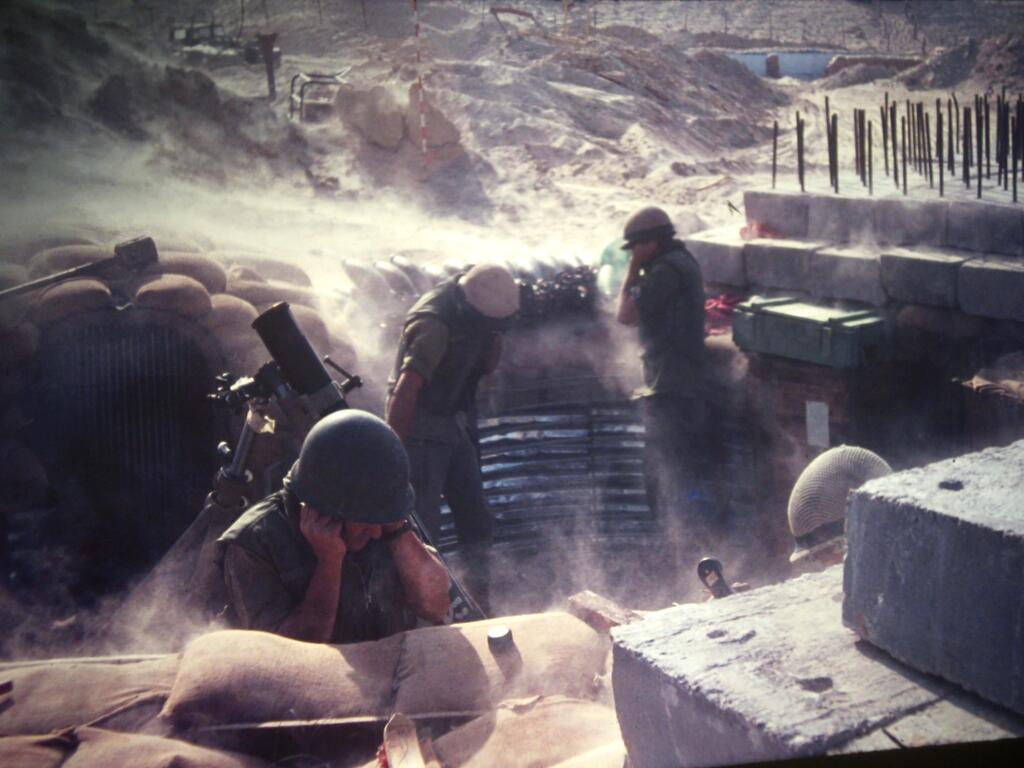
(Photo: Dudu Halevi)
The plan was presented to the cabinet on July 25 and approved by Prime Minister Golda Meir. The objective was deterrence, not escalation. The operation was code-named Rimon 20.
Planning relied on deception, timing and intelligence dominance. Unit 848 and other intelligence elements provided continuous monitoring of Egyptian and Soviet communications. IDF electronic warfare units prepared to disrupt radar coverage at key moments.
On the morning of July 30, routine-looking strike missions were flown along the canal to preserve normal patterns. Shortly after 14:00, four F-4 Phantoms from Squadron 69, led by Avihu Bin-Nun with navigator Shaul Levi, attacked an Egyptian radar station near Sokhna, flying profiles typical of Skyhawks to avoid drawing special attention.
At the same time, four Mirage IIIC fighters from Squadron 119 — flown by Amos Amir, Asher Snir, Avraham Salmon and Avi Gilad — crossed into Egyptian airspace near Hurghada. Flying in tight formation, they appeared on radar as a single reconnaissance aircraft and climbed to altitude on a steady northward track.
Soviet controllers responded as expected. The first quartet of MiG-21s lifted off from Kawm Ushim under Capt. Yevgeny Kamenev. Two additional formations followed from Beni Suef, led by Capt. Nikolai Yurchenko and Capt. Vitaliy Saranin. Further MiGs joined from al-Qatamiyah. In total, 24 Soviet fighters were committed.
Unseen, additional Mirages from Squadrons 117 and 101 loitered at low altitude over Sinai, beyond radar coverage, while another quartet waited on alert at Rephidim.
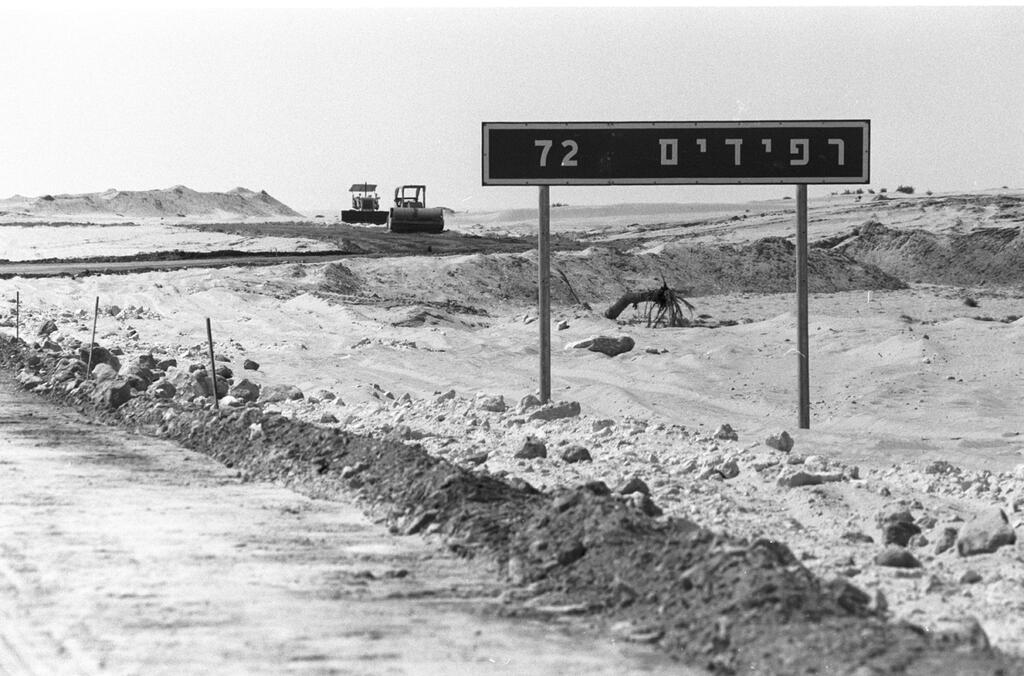
Rephidim
(Photo: David Rubinger)
As the MiGs closed to within 20 kilometers, Hod gave the order to attack. Fuel tanks were jettisoned. Formations broke apart. The engagement collapsed into a chaotic, close-range dogfight as Phantoms and Mirages converged from multiple directions.
Salmon scored the first kill, firing an AIM-9D Sidewinder at a MiG threatening a pair of Phantoms. The missile struck, killing Yurchenko. Moments later, Snir downed another MiG flown by Capt. Yevgeny Yakovlev, who ejected but later died. Snir was then hit by a missile fired by Capt. Vladimir Ivlev. His Mirage was badly damaged, its tail shredded, but he disengaged and landed safely at Rephidim.
Phantom pilot Aviem Sella, flying with navigator Reuven Reshef, engaged a MiG flown by Capt. Georgy Syrkin. After an initial missile appeared ineffective, a second hit destroyed the aircraft. Syrkin ejected and survived.
Another MiG, flown by Kamenev, attempted to escape at low altitude. Bin-Nun and Levi launched an AIM-7 Sparrow at extremely low height, destroying the aircraft.
The final loss was confirmed only years later. A MiG flown by Capt. Vladimir Zhuravlev, pursued by Salmon and Iftach Spector, managed to flee the immediate fight but later crashed. Salmon and Spector were credited with a shared kill.
The entire engagement lasted less than three minutes. Five Soviet MiGs were destroyed. Three pilots were killed. Two ejected. No IDF aircraft were lost.
Publicly, details were muted. Initial statements spoke only of enemy aircraft downed. Egypt denied losses. Moscow remained silent. Within days, foreign reports identified the pilots as Soviet. In October, Meir confirmed it openly.
Moscow responded quickly. Marshal Pavel Kutakhov, commander of the Soviet Air Force, flew to Egypt. Reinforcements followed. Additional MiG units arrived, along with Su-15 interceptors. Plans were drawn up for retaliation through surface-to-air missile ambushes rather than air combat.
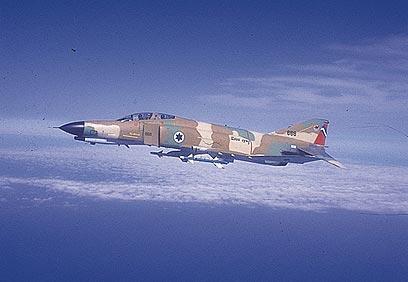
F-4 Phantom
(Photo: IDF)
That response came on Aug. 3.
IDF strike aircraft were dispatched to attack missile batteries deployed between Abu Suweir and Ismailia in an operation later known as Shayar 265. The mission aimed to blunt the expanding Soviet-built air defense network. Instead, the aircraft flew into a carefully prepared trap. Decoy missile sites had been erected. Operational SA-3 batteries were concealed and linked to coordinated fire plans.
A dense barrage of missiles followed. One Phantom was hit and went down. Pilot Yigal Shohat was severely wounded and later lost a leg. Navigator Moshe Goldwasser was captured by Egyptian forces, tortured and later died in captivity.
Another Phantom was badly damaged. Pilot Raanan Naaman was wounded by missile fragments that tore through the cockpit. Navigator Yoram Romem took control of the aircraft and flew it back to Rephidim despite extensive damage. Both men were later decorated by the IDF.
Shayar 265 underscored a grim conclusion for IDF planners: there was no tactical solution to the Soviet missile network then deployed in Egypt. Losses mounted. Strategic calculations shifted.
Within days, U.S.-brokered diplomacy produced a ceasefire. It took effect on Aug. 7, 1970, ending the War of Attrition. Although Egypt later violated the agreement by advancing missile batteries eastward, large-scale fighting ceased.
Soviet forces remained in Egypt after the ceasefire, continuing to operate air defenses. Only in 1972 did President Anwar Sadat expel most Soviet troops, retaining advisers.
Years later, memoirs, declassified documents and archival discoveries revealed the full scope of Operation Caucasus, Rimon 20 and Shayar 265. Together, they exposed a rare Cold War confrontation in which the IDF and Soviet forces met directly, tested one another’s limits and then stepped back from a conflict that threatened to draw in the world’s superpowers.