


For the better part of the past year, Israeli strategic discourse has been consumed by a single geographic obsession: the Litani River. How far back must Hezbollah be pushed? How wide should the buffer zone be? How many villages must the IDF clear before southern Lebanon is declared safe? These are legitimate questions, born of legitimate suffering. But they are also questions that miss the larger strategic picture entirely. Because while Israel's military and public are focused on a 30-kilometer strip of Lebanese territory, Iran is waging a different kind of war altogether, one measured not in villages but in tankers, not in kilometers but in nautical miles.
The Strait of Hormuz, that 21-mile chokepoint through which roughly 20 percent of the world's oil supply passes daily, has quietly become the real determinant of Israeli freedom of action. The 60-day Memorandum of Understanding currently framing U.S.-Iran back-channel negotiations is, at its structural core, a Gulf-first arrangement. Washington's overriding priority is not the disarmament of Hezbollah, not the preservation of Israeli deterrence along the northern border, and not even the rollback of Iranian proxies across the Levant. Washington's overriding priority is oil stability. It is the prevention of a scenario in which Iranian mining operations, drone swarms, or missile salvos close the Strait and send crude prices past $150 a barrel ahead of an election cycle or a fragile economic recovery. Every other consideration, including Israel's campaign objectives in Lebanon, is subordinate to that calculus.
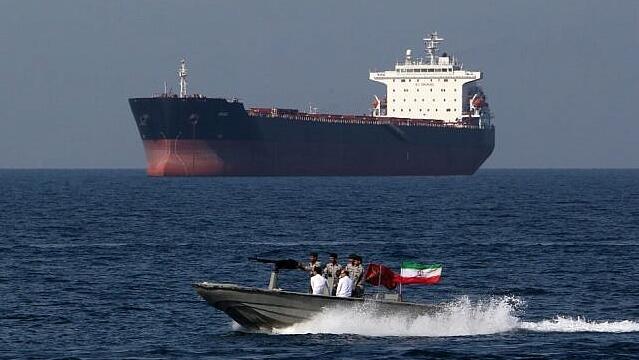
The United States and Israel are not operating from the same strategic map. They share threat perceptions about Iranian nuclear ambitions and, to a degree, about Hezbollah. But when it comes to sequencing, priorities, and acceptable trade-offs, the two allies are navigating from fundamentally different compasses.
Iran understood this asymmetry before Washington fully admitted it. The Revolutionary Guards' maritime doctrine, developed and refined over two decades, was never primarily about winning a naval battle. It was about threatening one. A credible Iranian capability to disrupt Hormuz traffic functions as a geopolitical insurance policy, a deterrent that forces any would-be coalition against Tehran to first calculate the economic cost of confrontation before committing to military escalation. The mere possibility of closure creates leverage. It does not require execution to be effective. Iran has turned ambiguity itself into a strategic weapon.
What makes this doctrine particularly effective is its cost asymmetry. Maintaining a credible Hormuz threat requires relatively modest investment from Tehran: fast attack boats, anti-ship missile batteries, naval mines stockpiled in forward positions, and periodic military exercises designed for maximum media visibility. The economic disruption that threat generates, in the form of elevated risk premiums, insurance costs, and diplomatic preoccupation in Western capitals, costs Iran virtually nothing. Every dollar added to the global oil price by Hormuz anxiety is a dollar that constrains Western policy options and buys Tehran additional negotiating room.
The consequence for Israel is structural. When administrations in Washington engage Tehran through intermediaries, the implicit bargain on the table is maritime stability in exchange for diplomatic space. That space is not indefinitely open-ended, but it is real enough to constrain Israeli operations in Lebanon and Syria during the negotiating window. The northern campaign does not occur in a vacuum. It occurs inside a diplomatic container shaped, in part, by Iranian pressure on the global energy system. Every week that U.S.-Iran talks remain active is a week in which Washington has an institutional incentive to discourage Israeli actions that might provoke Iranian escalation in the Gulf.
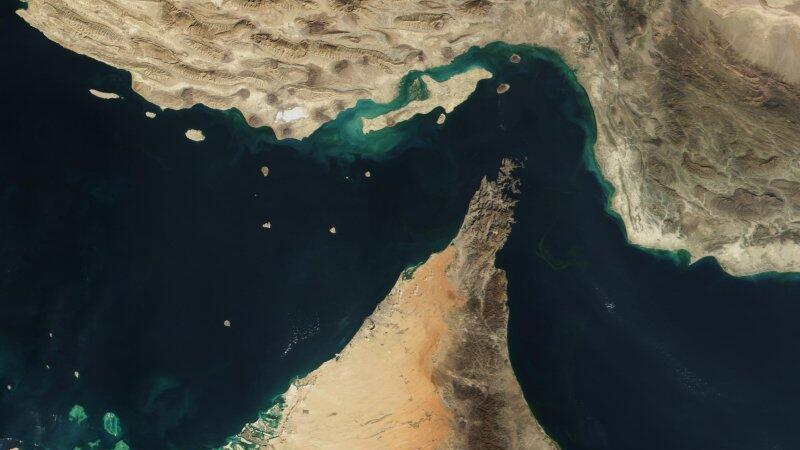
Satellite image of the strait
(Photo: Wikimedia, Strait of Hormuz and Musandam Peninsula)
This is what the "Hormuz-Litani disconnect" actually means. Israel is fighting a tactical campaign in physical terrain while Iran fights a strategic campaign in financial and diplomatic terrain. The IDF can clear a village. It cannot unilaterally reopen a strait. It can degrade a Hezbollah battalion. It cannot prevent crude prices from becoming the deciding variable in an American foreign policy calculus. The asymmetry is not in firepower but in the currency of leverage.
Arab states weaponized oil in 1973 to force American disengagement from Israeli resupply during the Yom Kippur War. The embargo did not win the war militarily, but it fractured the Western coalition at a critical moment and accelerated pressure on Israel to accept a ceasefire on terms far short of decisive victory. Iran has studied that playbook and updated it for the 21st century. Its version does not require a formal embargo or even a coordinated cartel decision. The threat architecture alone, maintained at persistent low cost, achieves the same diplomatic effect. Where Arab oil ministers once gathered in Kuwait City, the IRGC Navy now conducts exercises in the Strait. The instrument is different; the strategic logic is identical.
 Amine Ayoub
None of this means the Litani campaign is strategically irrelevant. Degrading Hezbollah's ground force infrastructure, disrupting rocket supply chains, and establishing defensible buffer depth in southern Lebanon all serve genuine Israeli security interests that exist independent of American diplomatic timelines. The IDF's work in the south is necessary. The question is whether it is sufficient, and whether it is being pursued with a full understanding of the diplomatic ceiling being constructed above it in real time.
Israel's strategic planners should be asking a question they have not yet asked loudly enough: what is our leverage over the Hormuz variable? What tools does Israel have to shape the American calculus before a U.S.-Iran interim agreement locks in parameters that effectively cap Israeli options in the north? This means engaging Gulf partners, particularly Saudi Arabia and the UAE, whose economic exposure to Hormuz disruption gives them both the motivation and the influence to complicate Iranian maritime brinkmanship. It means pressing Washington to tie any diplomatic progress with Tehran explicitly to Iranian restraint in Lebanon, rather than allowing the two files to be managed in separate diplomatic silos. And it means acknowledging, publicly and at the highest levels, that the current American approach risks rewarding Iran's maritime coercion with political cover for its proxy network.
Allowing the northern campaign to be subordinated to maritime diplomacy without contesting that subordination is itself a strategic choice, and not a favorable one. The Litani remains important. But it is no longer where Israel's security begins. That line, in the current strategic environment, runs through the Strait of Hormuz. And Israel, for all its tactical brilliance on the Lebanese frontier, currently has very little say over what happens there.
- Amine Ayoub, a fellow at the Middle East Forum, is a policy analyst and writer based in Morocco. Follow him on X: @amineayoubx