

A high‑level Syrian delegation of diplomats and senior Foreign Ministry officials landed in Bonn two days ago. On the agenda: the return of a million Syrian refugees in Germany to their homeland. However, the vast majority insist on staying.
Many openly criticize not only the Assad regime but also the new regime of Ahmad al-Sharaa (Al Jolani). A large number have even secured long‑term residence permits and integrated into Germany’s workforce. German authorities are attempting a repatriation agreement, but so far the numbers are disappointing.
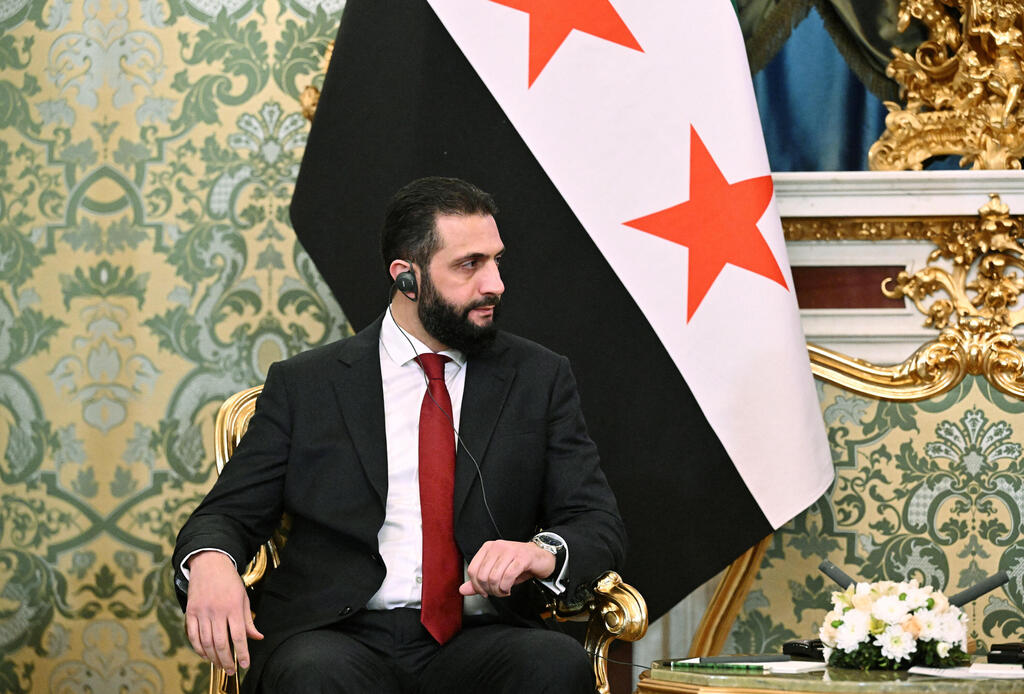
Syrian President Ahmed al-Sharaa
(Photo: Sputnik/Sergey Bobylyov/Pool via REUTERS)
Meanwhile, Syrian Consul Ziad Zahr al‑Din, from the Druze community, abruptly defected from his post in Dubai. Two years ago he was appointed to the prestigious position under former President Assad. Three months ago he sent his daughter to study in Germany and brought his wife and two children with her. On Sunday he announced via a prerecorded interview his resignation from Syria’s Foreign Ministry “because of the brutal actions of the new regime against the Druze community and residents of Suwayda province in southern Syria.” The announcement landed like a thunderclap. Damascus Foreign Ministry quickly produced a document claiming the consul had been summoned last month for “supporting the previous regime.” It remains unclear when the summons was issued or why no other diplomats appointed under the former regime were asked to resign. A Syrian lawyer living in Germany has filed a lawsuit claiming the consul stole valuable assets from the consulate building on his way to Germany.
How does this diplomatic uproar connect to Israel? In his media appearance the former consul declared support for the Druze religious leader Sheikh al-Hijri, who is calling for autonomous status for the Druze, especially following the horrific massacre carried out by the new Syrian regime three months ago. Hundreds dead, thousands wounded and thousands more displaced. Al-Hijri has strong ties to Israel. Hundreds of Syrian Druze visited Israel this year, and Israeli Druze have succeeded in entering Syria’s territory. “Our connection is tight,” al-Hijri told the Syrian press. Meanwhile, Israeli Prime Minister Benjamin Netanyahu surprised observers with statements that Israel would not tolerate any harm to the Druze community in Syria. Israel has transferred multi‑million‑dollar assistance to Druze in southern Syria while Israeli Tourism Minister Ron Dermer met four times in Europe with Syrian Foreign Minister Asaad Shibani.
For now, Dubai has refused to comment. Germany remains silent for the time being. It is unclear whether the dissenting consul will have to relinquish his refugee status and return to his home country. This unfolding affair, still unresolved, is of interest to us as well. Israel is operating on two tracks with Syria — on one hand through the ongoing ties between Minister Dermer (which will continue after his planned government departure) and Foreign Minister Shibani. On the parallel track, ties between our Druze community and their Syrian brethren have grown stronger in recent months with full Israeli encouragement. Al-Hijri is currently laying low. It is now important to monitor the unofficial, undeclared competition between Syria and Lebanon: which country will move closer to Israel first. Will Lebanon’s president and prime minister overcome the obstacles posed by Hezbollah? Or will al-Sharaa speed ahead by pursuing economic cooperation with Israel? The race is on. Syrian and Lebanese officials I met recently told me that “something fascinating is simmering on a low flame.”