

Something remarkable happened in Damascus last week, and almost no one treated it as remarkable. Mastercard completed its technical integration with Syria's banking system on May 8, allowing local banks to reconnect with global payment networks for the first time in fifteen years. One day later, Syria's Central Bank announced that the connection was live. By May 10, Qatar National Bank had already launched card acceptance services on the ground.
Meanwhile, the American energy giant Chevron signed a preliminary agreement with Syria's government and a Qatari partner to explore for oil and gas off the Syrian coast. Saudi Arabia confirmed a multi-billion-dollar investment package covering energy, aviation and telecommunications. The Dubai-based developer Eagle Hills is reportedly studying fifty billion dollars' worth of Syrian projects.
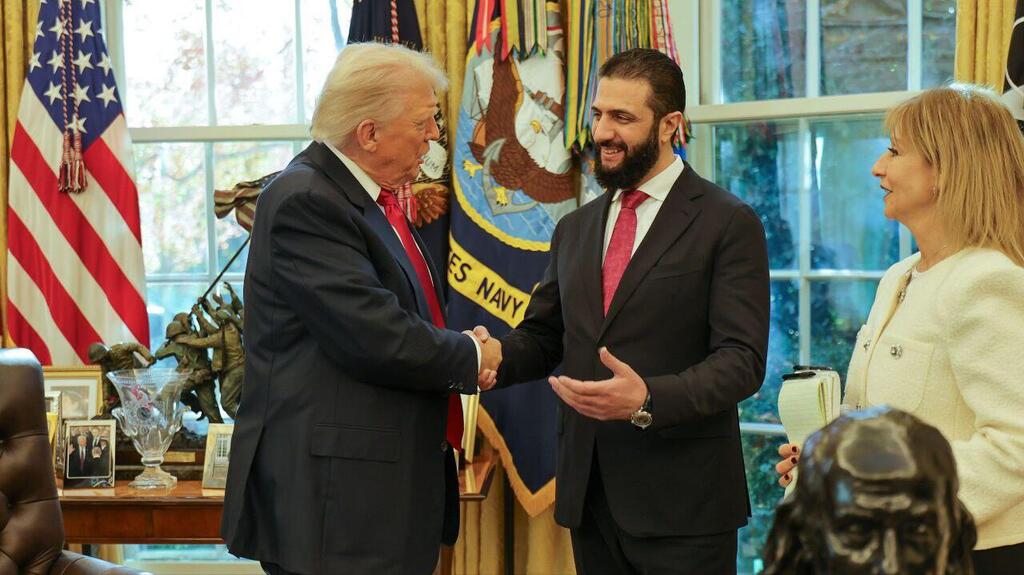
In the span of a single week, Syria went from an international pariah to a frontier investment destination. The man who made it happen was Ahmed al-Sharaa, who until eighteen months ago led Hayat Tahrir al-Sham, a militia that Washington had listed as a specially designated global terrorist organization and that traced its lineage directly to al-Qaeda in Iraq.
This is either the fastest rehabilitation of a former jihadist in modern diplomatic history, or it is the most expensive bet the West has ever made on a personality pivot. The evidence from last week suggests it may be both.
There is a version of the Sharaa story that is genuinely encouraging. He ousted Bashar Assad, ended five decades of a dynasty that murdered its own people by the hundreds of thousands, and has since invited international investment, restored credit card networks, arrested Assad-era war criminals and told Western audiences that Syria's diversity is a strength.
He has made overtures toward normalizing ties with Israel, reportedly telling U.S. President Donald Trump that Syria would not contest Israeli sovereignty over the Golan Heights. He stood in the White House as the first Syrian president ever to do so. He held a Saudi crown prince's ear long enough to unlock two billion dollars in committed investment.
But there is another version of the story that the flood of investment announcements last week is conspicuously obscuring.
Three weeks ago, Sharaa was filmed sitting stone-faced in a Damascus sports arena as dancers in leather outfits performed to Missy Elliott's "Work It," a song whose lyrics would not survive translation into any Friday sermon. The video went viral not because of the absurdity of the juxtaposition, though the absurdity was real, but because of what happened next.
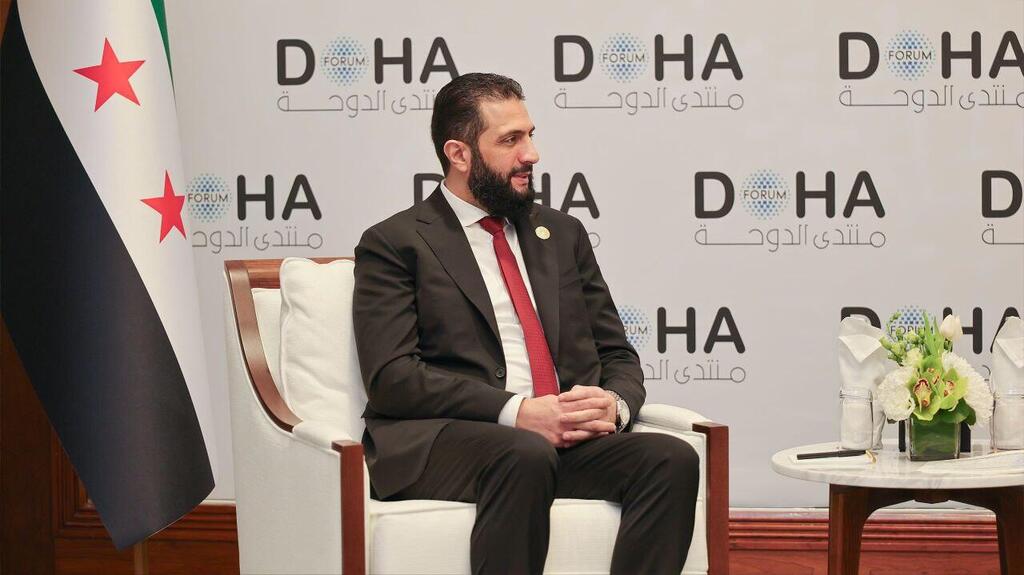
Sharaa
Sharaa did not laugh it off. He distanced himself. He told Syrian journalists that his attendance had been a last-minute decision, that he had not been aware of the program, and that future national events should be "linked to the customs and culture of Syria."
His government has already attempted to ban alcohol sales in parts of Damascus and tried to enforce restrictions on beachwear at public beaches, walking both back only after significant backlash. These are not the reflexes of a secular modernizer. They are the reflexes of a leader managing an Islamist base while performing moderation for a foreign audience.
The problem is not that Syria should remain in economic isolation forever. The Caesar Act sanctions were designed as pressure against Assad, and Assad is gone. The problem is the sequencing: the West and the Gulf have handed over reconstruction capital, energy deals, payment infrastructure and political legitimacy before Syria has demonstrated the conditions that were supposed to accompany them.
The Caesar Act was repealed at the end of 2025 without conditions, despite congressional efforts to attach minority protection requirements. The United States handed over its last military bases in Syria to Sharaa's government in April without extracting binding security commitments for the Kurdish-led forces that fought alongside American troops for a decade against the Islamic State.
Hezbollah and the Islamic Revolutionary Guard Corps have been cleared from Syrian territory, which is genuinely significant, but what has replaced them in the country's institutional fabric remains opaque.
The investment deals announced last week are entering a country that the World Bank estimates will cost upwards of $400 billion to reconstruct and that currently has a GDP of roughly $20 billion. The Syrian Development Fund, which Sharaa's government launched in September 2025, had collected $41 million in donations by the end of March. The arithmetic does not work without the Gulf and the West, which is precisely why Sharaa holds his leverage and his foreign backers are discovering they hold less than they think.
 Amine Ayoub
For Israel, the picture is more acute. The Israeli military has continued conducting raids in the Quneitra countryside and the Daraa buffer zone throughout May. Israeli forces shelled sites in southern Syria as recently as this week. The IDF has advanced into the Wadi al-Raqad area adjacent to the Golan. These operations are not the actions of a country that believes its northern frontier has been secured by Sharaa's diplomatic transformation.
Whatever Sharaa told Trump about the Golan in Riyadh a year ago, there is no binding agreement, no security architecture, and no Israeli presence at the negotiating table for Syria's future. Israel is managing its exposure kinetically because there is no other mechanism available to it.
The deeper issue is structural. The normalization of Sharaa's Syria is being driven by the Gulf states, Turkey and Washington, with the European Union trailing behind. Qatar is playing an outsized role in Syria's energy sector through its connections to the Chevron offshore deal. Turkey supplies Syria with natural gas through a pipeline into Aleppo. Saudi Arabia is funding a private airline. All of these actors have their own interests in Syria's trajectory, and those interests do not map neatly onto Western democratic standards or Israeli security concerns.
Mastercard is back in Damascus. Chevron is exploring Syria's coastline. Eagle Hills is drawing blueprints. The man who organized all of this used to run a designated terrorist organization. That may still turn out to be an acceptable trade. But the time to attach conditions to that trade was before the money moved. The West signed the check first and is writing the terms later. In the Middle East, that order of operations has a well-documented track record.
- Amine Ayoub, a fellow at the Middle East Forum, is a policy analyst and writer based in Morocco.