

When discussing the lessons of October 7, the focus is often on the collapse of the security conception that preceded that horrific day. That conception, which cost the lives of thousands of civilians and soldiers in the Gaza border communities, was built on two fundamental failures: the illusion of deterrence and insufficient preparedness for the threat. Was it arrogance, contempt for the enemy or denial that turned into outright rejection of reality? Whatever the answer, the flawed internal logic of Israel’s security establishment must be corrected immediately.
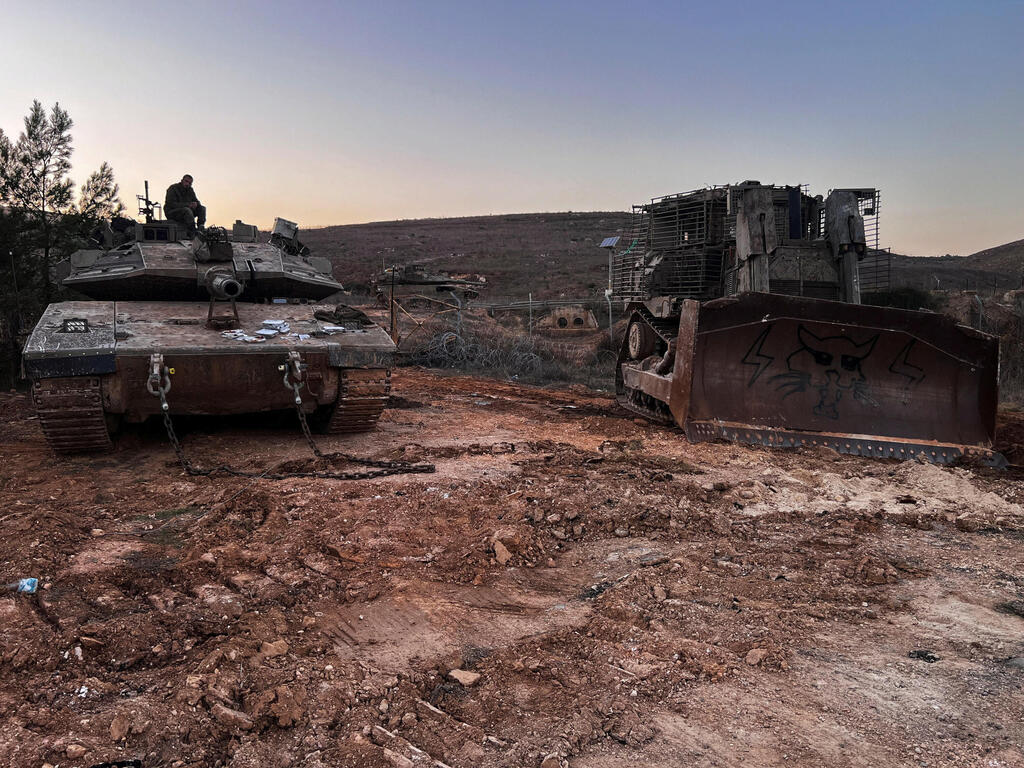
Lebanon border
(Photo: Reuters/Avi Ohayon)
Sadly, it is becoming clear that the failure that led to the murder of 1,200 people and the abduction of 251 others was not an isolated one. In the north as well, a terrorist organization was preparing for a massive invasion of border communities. There too, according to an illuminating investigation by Yair Kraus published in Yedioth Ahronoth, the military was unprepared, far from it.
In his book ‘We were the conception,’ Golan Krieger describes how, as a junior officer, he received explicit instructions to conceal the presence of IDF forces in the north. According to him, the former head of the IDF's Northern Command, who was later appointed director general of the Defense Ministry, told him: “Hide like mice so you can fight like lions.” If the army hid like a mouse, what should residents of the border communities say?
We seem to have grown accustomed to a reality in which border communities are under daily attack. In the south, this was once referred to as ‘rounds,’ but in the north, the reliance on a deceptive calm nearly led to another massacre.
More than two years after the slaughter, the proportion of young people in the north has not returned to pre-October 7 levels. The destruction left by Hezbollah missiles is visible everywhere, in physical infrastructure and in the fabric of communities themselves.
Under American pressure, IDF bulldozers are clearing debris in the Gaza border area. The north, meanwhile, is still waiting. The result is that even now, as Hezbollah rebuilds its capabilities and Syria moves away from normalization talks, some have once again become addicted to the illusion of calm in the north.
‘Never again’ is not just a slogan. It must become a work plan. Never again should children, women and men be murdered, abducted or left with post-traumatic stress under a constant security threat. Israel cannot afford to be swayed by external agendas that seek to influence its policy for foreign interests.
The violations experienced by border communities are the state’s pulse. Policy must be shaped accordingly, decisively and without an American lens clouded by ideology and interests.
The IDF spokesperson points to the addition of a brigade and the establishment of new positions in front of communities to “underscore the principle that IDF forces defend communities before residents come under threat.”
 Tira-El Cohen
But has this approach truly been internalized deeply enough within the system? Was the ‘miracle’ on the northern border, i.e., the fact that Hamas’ attack from the south was not coordinated with or preceded by a Hezbollah assault, enough to correct the distorted internal logic that took root over many years?
Does a conciliatory approach to recent violations along the Syrian and Lebanese borders risk pulling us back into the same conception?
The ‘miracle’ of the northern communities left them for more than a year as a defensive front, absorbing daily rocket fire that killed farmers trying to work their land and destroyed homes and infrastructure. Trust among residents of the northern border has also collapsed. The failure to publish a comprehensive investigation regarding the northern border failures and the absence of Knesset members from recent committee meetings in Kiryat Shmona and along the northern border do nothing to help rebuild that trust.
Israel’s security doctrine must change fundamentally. To restore the confidence of northern border residents in a system that failed them, it is not enough to take isolated actions or conduct a series of investigations. What is required is a new concept translated into a new method. In civilian terms, a clear work plan that does not rely on unarmed emergency squads and does not engage in denial or suppression of reality.
Tira-El Cohen is president and founder of ‘Kedma organization’