

The attention surrounding recent photographs of Prime Minister Benjamin Netanyahu and his wife, which were allegedly edited or digitally manipulated, is, under the circumstances, marginal, unimportant and disproportionate.
If the prime minister’s wife wants photographs to be altered using Photoshop, assuming that is what happened, it hardly justifies the attention the matter has received or the mountains of commentary written about it.
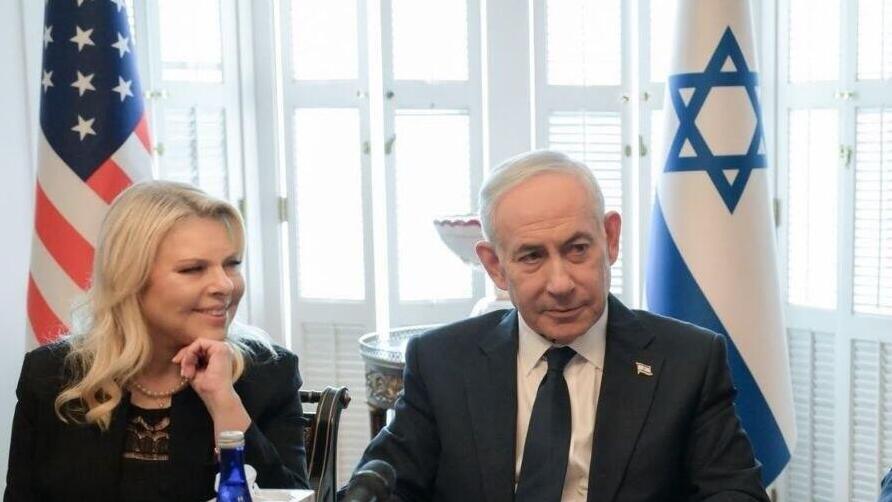
Prime Minister Benjamin Netanyahu and his wife Sara
(Photo: Maayan Toaf/GPO; image digitally altered on behalf of Sara Netanyahu)
There are far more important issues arising from the broader phenomenon of publishing images that are not authentic, assuming such images were indeed published.
Those photographs are not the story. They are merely a small illustration of a much larger problem.
The debate over them raises an issue of immense importance, particularly as Israel approaches what is expected to be a turbulent election period: the ability to fabricate images, videos and audio recordings using artificial intelligence, then use them to influence public opinion, win votes and even determine the outcome of an election.
Everyone understands that Israel’s next election will be fought not only in the familiar political arena, but also in a new and far more dangerous one: the arena of artificial intelligence.
In the past, producing deceptive propaganda required time, money and professional equipment. Today, almost anyone can create within minutes an image, video or recording that appears entirely authentic.
That is where the problem begins.
The greatest danger is not the existence of the technology itself, but the possibility of using it to alter reality in the eyes of voters.
An image placing a politician somewhere he never visited, a video showing that politician saying something never uttered, or a digitally manipulated photograph can spread online within hours and affect public opinion long before the truth has a chance to catch up.
The problem becomes particularly serious during an election campaign.
Democracy rests on a simple assumption: Citizens receive information, evaluate it and make a decision.
When people can no longer determine whether the information reaching them is authentic or artificially generated, the damage is not limited to one candidate or another. The democratic process itself is harmed.
The danger of disrupting the proper conduct of an election is clear and tangible.
That is why legislation restricting certain uses of AI during election periods can be justified.
But caution is required here as well.
The fight against fake news must not become a tool allowing the government or any political actor to decide what citizens may see or what they may say.
Any such legislation must be clear, equal and transparent. It must apply the same rules to everyone: coalition and opposition, leading candidate and marginal candidate alike.
Ultimately, technology should not be treated as the enemy.
AI can improve our lives, assist in content creation and expand freedom of expression.
But during an election campaign, when every photograph and every video can influence millions of citizens, boundaries must be established.
The real struggle is not against artificial intelligence. It is against using artificial intelligence to make us believe something that is untrue.
The goal should be for every person entering the voting booth to do so after seeing genuine photographs, encountering genuine facts and watching genuine videos. Only after processing authentic information should that person decide which candidate is most suitable.
The last thing any of us should want is for such a consequential election to be determined by voters relying on false facts, fabricated photographs or manipulated recordings.
We must not reach a situation in which, even during an election, we are incapable of agreeing on basic facts.
We all want to know that an image we are looking at is real.
If even that can no longer be trusted, democracy faces a profound problem.
Attorney Baruch “Buky” Katzman specializes in civil and commercial litigation at the AYR law firm, Amar Reiter Jeanne Shochatovitch & Co.