


As the 2025–2026 Africa Cup of Nations reaches its fever pitch in the packed stadiums of Rabat and Marrakech, a far more consequential game is being finalized in the corridors of power. While the global sporting community focuses on the pitch, the Kingdom of Morocco is quietly but firmly rewriting the regional security manual.
At the heart of this transformation is a concept we define as “Functional Sovereignty” — a pragmatic, cold-eyed prioritization of technological and military superiority over the traditional, often paralyzed ideological blocs of the Arab world. The cornerstone of this new manual is an “assumed alignment” with Israel that has matured from a diplomatic flirtation into a hard-power reconfiguration, positioning Morocco as the West’s primary security anchor in North Africa.
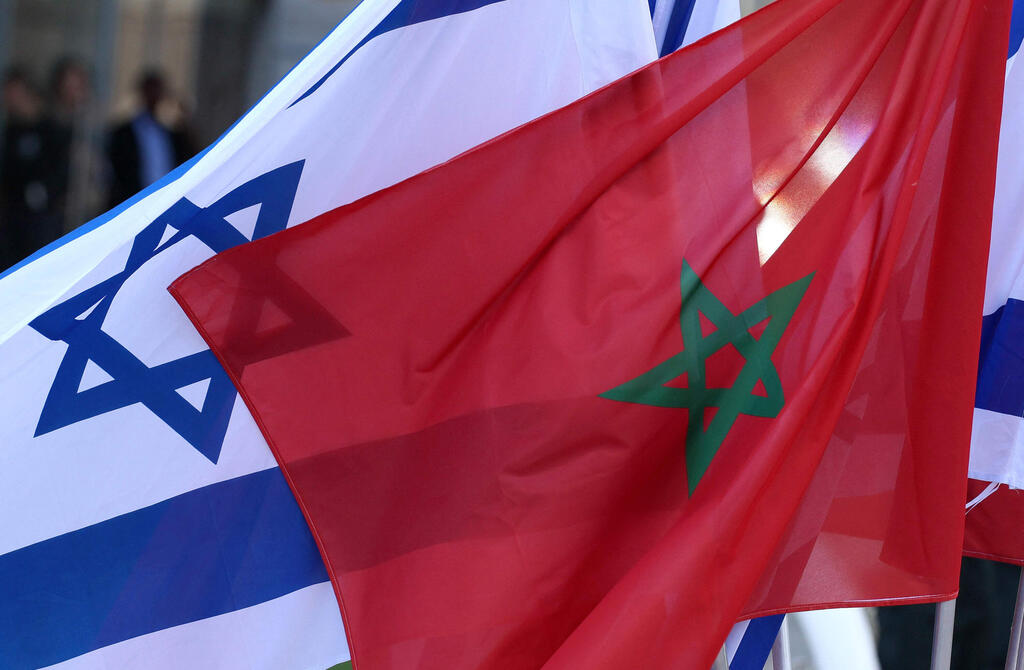
(Photo: AFP)
The definitive turning point came on Jan. 2, 2026, when a high-level delegation from the Royal Moroccan Armed Forces arrived in Tel Aviv to sign the 2026 Military Action Plan. Finalized during the third meeting of the Israel-Morocco Joint Military Committee, the agreement represents a fundamental shift from transactional arms deals to institutionalized, long-term force development.
Unlike the tactical purchases of the past, the plan structures military dialogue, joint industrial projects and strategic planning throughout the year, allowing both nations to align their defense architectures as regional risks evolve. Israel now views Morocco as its most vital security ally on the continent — a strategic gateway where Middle Eastern technology meets African security challenges.
The necessity of this strategic axis was underscored in early January 2026 by a major intelligence breakthrough in post-Assad Syria. The new leadership in Damascus, led by Ahmed al-Sharaa, reportedly rejected high-level requests from Algiers to release roughly 500 detainees captured during the collapse of the Tehran-backed regime.
The detainees — including a senior Algerian brigadier general and some 500 soldiers from the Algerian army and Polisario militias — were caught fighting on behalf of pro-Iranian forces near the Abu Zohour military airport. During investigations by the Syrian Transitional Justice Commission, the foreign fighters allegedly admitted to receiving training from Iran’s Revolutionary Guard Corps and Hezbollah.
This “Syrian smoking gun” has provided what Rabat sees as definitive evidence of the Iran-Hezbollah-Polisario axis it has long warned against, vindicating Morocco’s 2018 decision to sever ties with Tehran and accelerating the diplomatic marginalization of the separatist movement.
Morocco’s high-tech security framework has also drawn attention in Washington. In early January 2026, a senior delegation from the FBI, led by Douglas Olson and Kevin Kowalski, concluded a field study of the Moroccan model. Their primary focus was the African Security Cooperation Center in Salé — the first of its kind on the continent — which coordinates 23 African nations alongside Interpol.
For the FBI, the Salé center serves as a functional blueprint for the 2026 World Cup, demonstrating that Morocco has evolved into an architect of global security governance. To secure the AFCON tournament, Morocco deployed 6,000 mobile cameras, 16 drone intervention teams and high-definition surveillance across 75 sensitive sites. The collaboration reflects a mature transatlantic partnership aimed at securing the Atlantic flank against an encroaching storm of regional instability.
The most delicate component of this realignment, however, remains the internal tension of the “street variable.” The Moroccan public remains highly sensitive to the humanitarian crisis in Gaza, and a decentralized youth movement known as “Gen Z 212” has organized through encrypted platforms such as Discord to protest government spending priorities.
The movement, now numbering more than 250,000 members, uses the slogan “no justice there without justice here” to criticize billions invested in state-of-the-art sports infrastructure and defense while public health services lag. It was catalyzed by the deaths of eight pregnant women at an under-resourced hospital in Agadir, crystallizing perceptions of a “two-speed Morocco.”
Yet the monarchy has shown a deft ability to manage this friction by framing the Israeli partnership strictly through the lens of national security and the defense of the “sacred cause” of the Sahara. While protests continue in the streets, the state presses ahead with deep integration alongside Israeli contractors, viewing the 2026 Military Action Plan as an existential necessity in an increasingly volatile century.
The 2026 fiscal year highlights a stark divergence in defense philosophies between Rabat and Algiers. Morocco has embraced a “smart power” strategy, allocating $17.1 billion toward qualitative modernization and the creation of a domestic defense industry through joint ventures with Israeli firms such as BlueBird Aero Systems.
Algeria, by contrast, has doubled down on conventional attrition, committing a record $25 billion to its military — 20.6% of the national budget and nearly 9% of GDP. The spending exceeds Algeria’s combined education and health budgets and is financed through a central government deficit surpassing 10%.
As Algiers remains tethered to Cold War-era Russian hardware and Iranian-aligned proxies, Rabat is harvesting the dividends of its strategic pivot, consolidating its position as the emerging regional hegemon.