

U.S. Secretary of State and National Security Advisor Marco Rubio was tasked at Saturday’s Trump press conference with explaining to the world what “Trump 2.0” is really like and how to deal with him. “The 47th president of the United States doesn’t play games,” he said. “When he tells them he’s going to do something, he means it. He acts.”
Venezuelan President Nicolas Maduro, Rubio said, "could've been living somewhere else right now, very happy, but instead he wanted to play big boy, and so now he's got other sets of problems on his hands. This president isn’t looking for a fight. He’s willing to get along with anyone. But don’t play games. Don’t play with this president, because it will end badly.”
In international relations, what Rubio calls “playing games” is simply diplomacy: Party A meets with Party B. Each comes with needs, interests, its own power and its own sovereignty. Sometimes there’s agreement, sometimes there isn’t, but negotiators never deny the legitimacy of the process.
Gallery
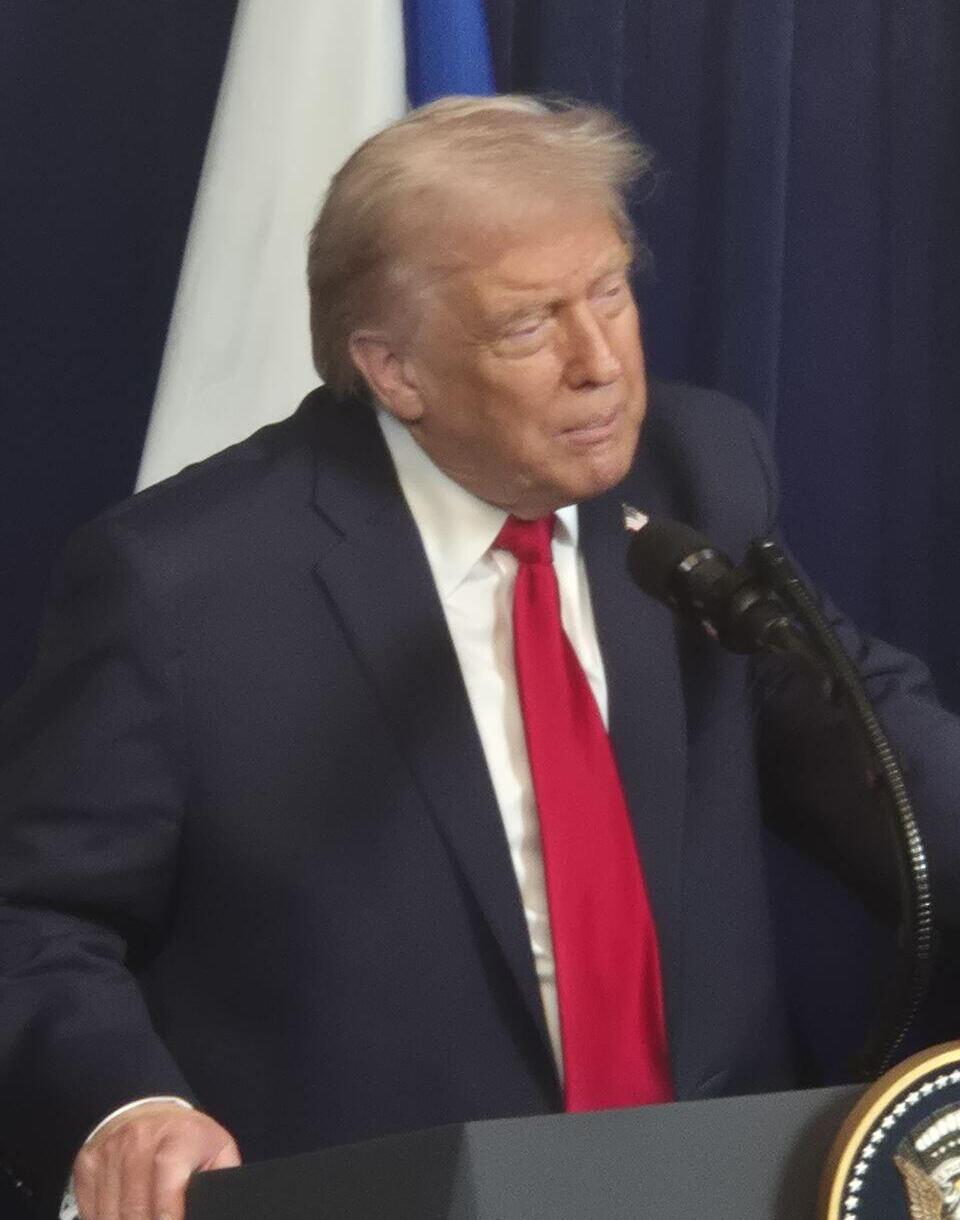
US President Donald Trump addresses reporters at Mar a-Lago after the capture of Nicolas Maduro
(Photo: Itamar Eichner)
Rubio says Trump sees it differently. In a Trump world, there is no room for sovereignty and little respect for diplomacy. Take someone like Maduro, until recently the president of Venezuela. He was a corrupt dictator whose regime turned one of Latin America’s richest countries into a dying state that saw its best citizens emigrate. But it wasn’t that alone that led the Trump administration to seize and imprison him in New York. His ultimate crime, in Trump’s eyes, was thinking he was big.
Rubio’s message to world leaders is simple: look and learn. He speaks from experience: during the Republican primary campaign a decade ago, Trump repeatedly mocked him as “Little Marco,” a thinly veiled jab at his height. Rubio was humiliated and learned a lesson: to Trump, size matters.
Why should this matter to the rest of us? Because in the world being shaped by Trump, Putin, and Xi—the president of China—no one is immune except those three and the power behind them. Sometimes the projection of their power works to our advantage. The capture in Caracas has potential deterrent effect on Iran, and perhaps even a direct blow to the Iran‑Hezbollah axis. That’s good. But there’s no guarantee that Trump’s display of force won’t turn against us.
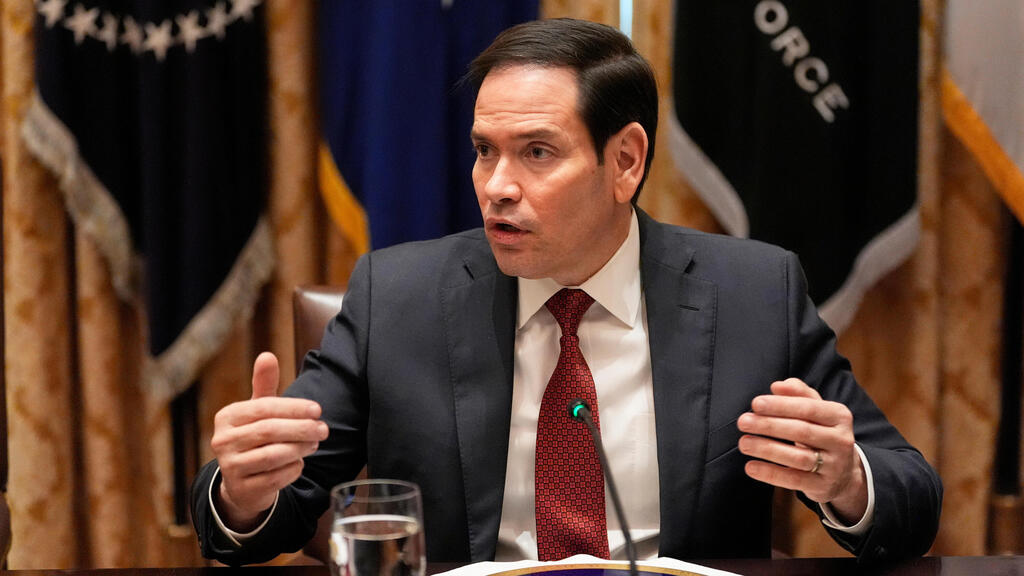
US Secretary of State Marco Rubio
(Photo: Alex Brandon/AP)
Netanyahu told Trump that others are “playing games” with him: Iran is, Hamas is, Hezbollah is. This is where his persuasive power faltered. Standing before cameras at Mar‑a‑Lago, Trump praised Netanyahu: “He’s tough.” That compliment resonated—every Israeli wants the U.S. president to praise its prime minister. But consider this: the gap between being “tough” in a positive sense and “he chose to be a big boy” in a negative one is terrifyingly small. One comment from Jared Kushner at a family dinner—that Netanyahu was “playing games” with Trump and risked becoming like Zelensky—shows just how fragile such compliments are. In Donald’s casino, only the house wins.
The world is changing before our eyes. After World War II, international relations aspired to be ideological. The United Nations boasted shared values, a collective pursuit of justice, human rights, the rule of law, a global community of good‑willed nations. That wasn’t entirely true—but rhetoric matters.
The United States invested enormous resources in teaching democracy to nations in Europe and Asia, assuming it would bring global support for the West. The Soviet Union spent lavishly promoting communism.
Trump, Putin, and Xi don’t care about that. They seek to divide the world among themselves—pure power and money. They don’t need ideological cover stories. Governments under their influence can do whatever they want—even kill masses—so long as it doesn’t threaten what each defines as their “national security interest.” That definition is broad: for Putin and Xi, it includes provocations unseen from neighboring states or minorities; for Trump, it includes kidnapping a sitting president, regime change by force, territorial demands of allied states—Greenland, even Canada—interference in elections and judicial systems of sovereign states, including Israel. No one has limits.
 Nahum BarneaPhoto: Avigail Uzi
The most common handgun of the Wild West, made by Colt and called the Peacemaker, was ironically named. That’s the image Trump wants to project.
Israel will have to contend with this reality in the years ahead. Power alone will determine outcomes, and therefore Israel needs a lot of power. But it must not be confused: in the eyes of its patron, it is little more than a protectorate, a banana republic.
One of the biggest hits by the Israeli band Green Onion was the song “Venezuela,” written by Dan Almagor and composed by Moshe Vilensky. Its catchy line was “There’s nothing like Venezuela—oh la.”
Well, there is someone like it: every small and medium‑sized state, from Ukraine to Taiwan, must now reckon with this reality. Including us.