


U.S. President Donald Trump ordered his military to attack and “behead the regime” in Venezuela for a range of economic, strategic and political reasons. While some of those reasons can be justified from the perspective of law and international law, Venezuela posed no existential strategic threat to the United States. Even the drugs and illegal migrants that Venezuela—and, according to Washington, the president and strongman Nicolás Maduro personally—sent to the U.S. in large numbers did not constitute a particularly dangerous threat, nor a new one.
Trump: 'We will run Venezuela until a safe transition of power'
(Video: Reuters)


Gallery
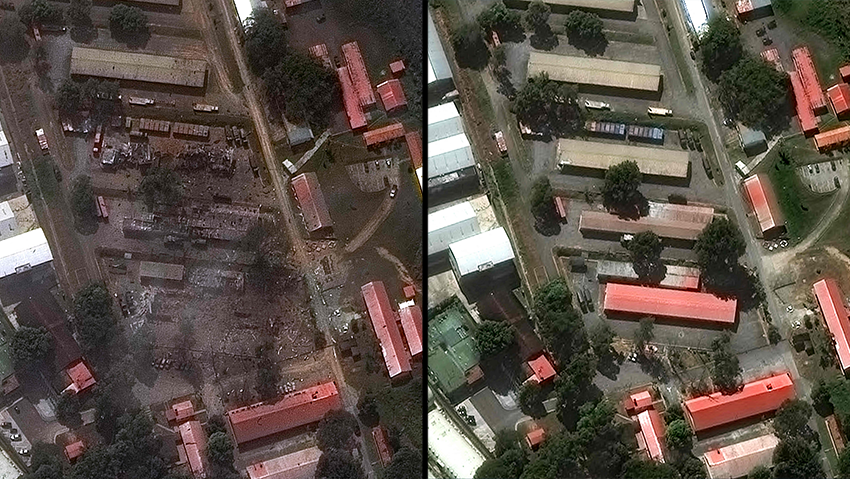
The base at Puerta Tione in the Venezuelan capital Caracas. Satellite photos before and after the operation
(Photos: Satellite Image ©2025 Vantor/AFP)
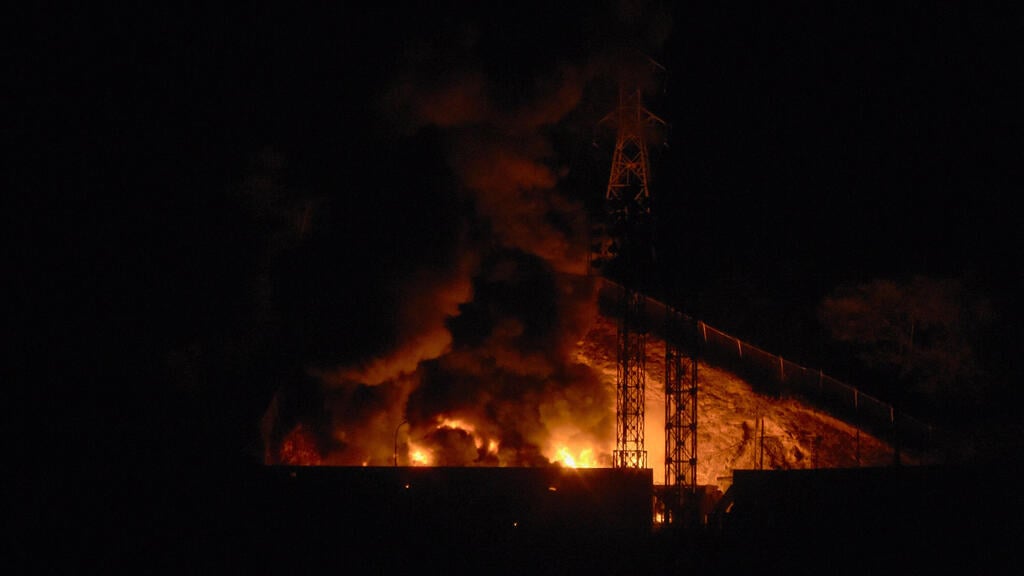
Fire burns at Puerta Tione base
(Photo: Luis Jaimes / AFP)
China’s growing grip on Caracas’ collapsing economy, which has effectively turned Venezuela into a Chinese client state, also did not, in itself, justify a U.S. takeover. From this, it is fairly clear that the real and primary reason Trump ordered the historic strike on Venezuela—during which Maduro was captured along with his wife—was his desire to prove to himself and his voters that he is delivering on his MAGA (Make America Great Again) agenda, and because Venezuela was “easy prey.” Its corrupt, internally decaying military, equipped with outdated and poorly maintained hardware, stood no chance against the U.S. war machine and intelligence community.
The American sphere of influence and economic interests
Maduro’s unpopular regime, which long ago lost both international and domestic legitimacy, was a perfect target for Trump—allowing him to demonstrate to South Americans, to Americans and to the world that the United States, under his leadership, is once again the master of the Western Hemisphere.
Through his actions, the U.S. president revived the Monroe Doctrine—and said so explicitly at a special press conference he held last night at Mar-a-Lago, his Florida resort. Formulated nearly 200 years ago in 1823 by President James Monroe, the doctrine holds that the Western Hemisphere is an “American sphere of influence.” Since returning to the White House, Trump has pursued a foreign policy focused on expanding U.S. influence in America’s “backyard” in Latin America.
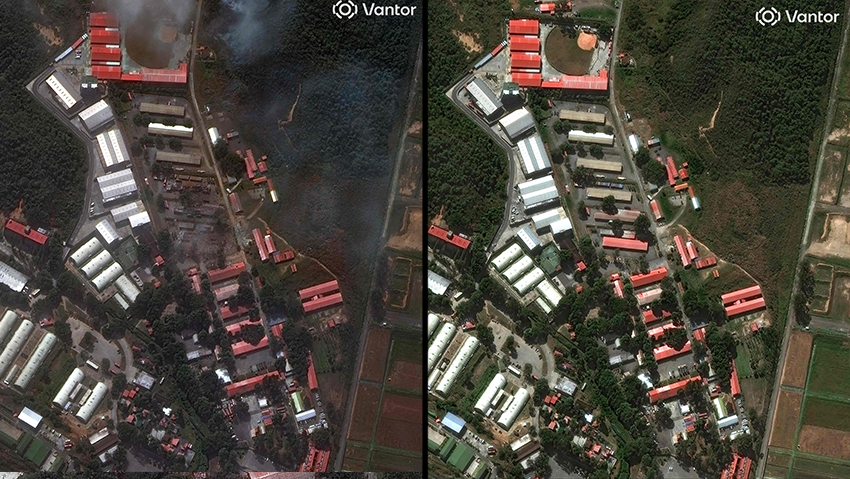
Satellite photos from the base in Caracas, before and after the operation to capture Maduro
(Photos: Satellite image ©2025 Vantor/AFP)
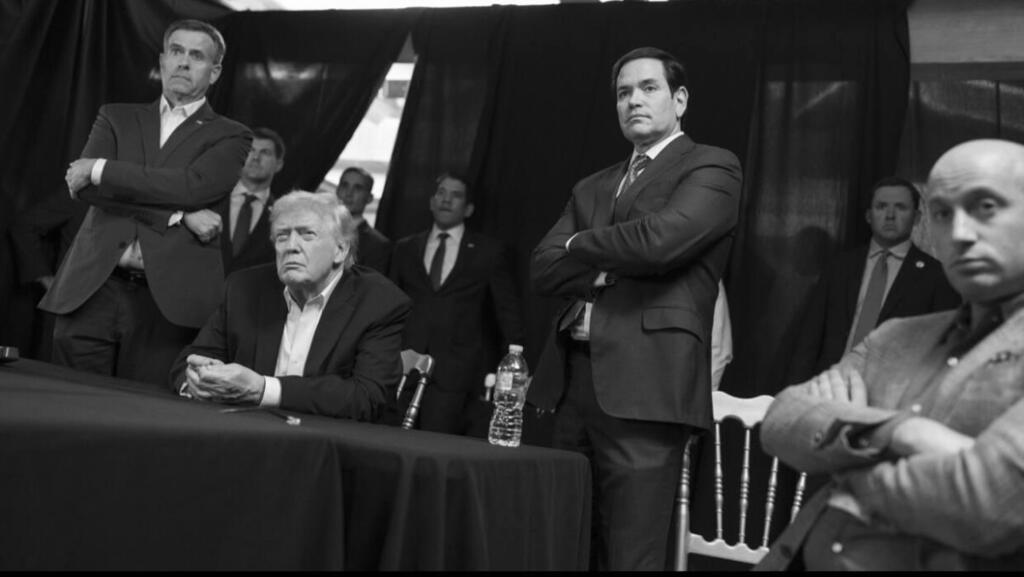
Trump watches Venezuela operation live from his Florida mansion
(Photo: The White House)
That is what Trump wants. But he also has economic interests: he wants back the oil production facilities nationalized by Venezuela’s former socialist ruler, Hugo Chávez, who also appointed Maduro before his death in 2013. Venezuela holds the world’s largest proven oil reserves—about 18% of global reserves—a lucrative share that U.S. companies are now set to regain and manage.
At the same time, Trump wants to deny China the cheap oil it receives from Caracas as debt repayment on massive loans—tens of billions of dollars through which China kept Venezuela’s collapsed economy afloat. Maduro, like his predecessor, pursued a hostile policy toward the United States and aligned himself with its chief rivals: Russia, China and Iran.
The 'day after' question in Venezuela
One particularly striking fact is Trump’s decision that the United States will “administer Venezuela” temporarily, until a regime aligned with Washington’s preferences is established. For now, it is unclear who will govern on behalf of the U.S.—whether a military administration or Venezuelan figures vetted in advance by Washington and identified by the CIA.
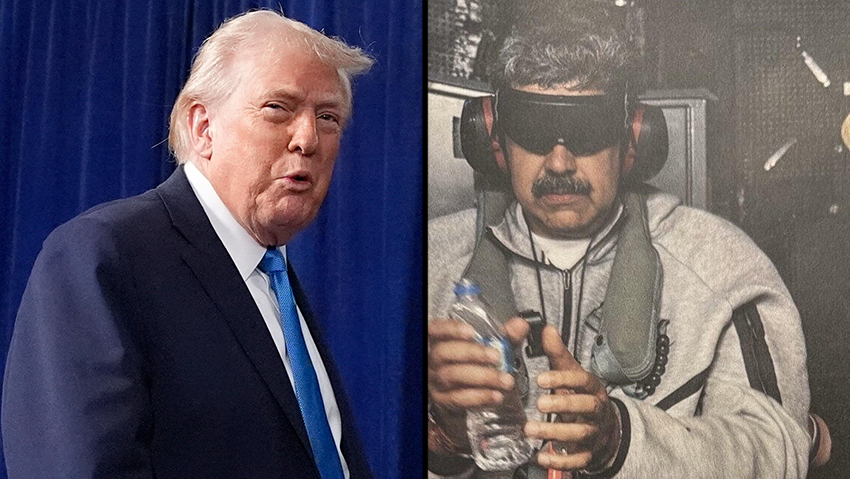
Maduro was 'easy prey' and a means of conveying a message: Trump and the captured dictator
(Photos: Alex Brandon/AP)
It is therefore clear that the United States has not only “beheaded the regime” in Venezuela, but has also occupied the country until a different political order is installed—one that will guarantee vital U.S. interests on the “day after.” And if that sounds familiar, it is no coincidence.
Prime Minister Benjamin Netanyahu refused to do precisely this when he sent the IDF to operate in Gaza during the first phase of the Swords of Iron war, and to this day has declined to establish an alternative authority to Hamas—because the two options, the Palestinian Authority or an Israeli military administration, are unacceptable to him. By contrast, Trump understands that without an alternative governing body, Maduro’s supporters would return to power—just as is happening now in Gaza with the terror organization.
The implications—and the possibility of Chinese 'imitation'
The implications of Trump’s surprise move in Venezuela are likely to affect Iran as well. Supreme Leader Ali Khamenei will now likely take more seriously Trump’s implicit threats to move against the regime in Tehran if it kills its protesting citizens, since Venezuela was a strategic ally of Iran and a partner in evading U.S. sanctions. From the Islamic Republic’s perspective, the overnight attack on Venezuela is bad news and another blow to the ayatollahs’ regime.
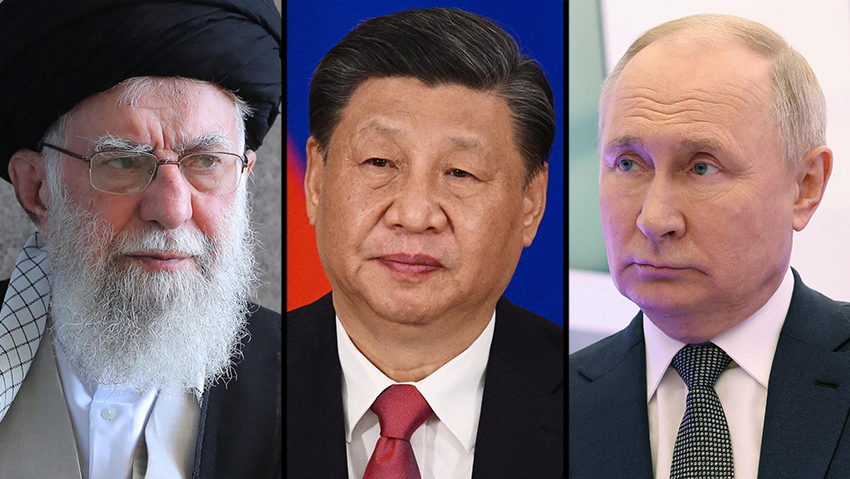
The blows to Khamenei and Putin, and the fear of Chinese 'imitation': The leaders of Russia, China and Iran
(Photos: Sputnik/Vladimir Astapkovich/Kremlin via Reuters, Getty images)
There may also be negative repercussions in East Asia. China could attempt to “imitate” the United States and attack Taiwan, which it views not only as part of its sphere of influence but as a breakaway province. Finally, the bold operation in Caracas is also a severe blow to Russian President Vladimir Putin. Russia was an ally of Venezuela and was supposed to provide it with security; Putin’s people were responsible for Venezuela’s security and air defense systems, which collapsed almost without a fight against the U.S. military.
In this context, it is worth recalling that in late February 2022, when Putin suddenly invaded Ukraine, he attempted to do to Ukrainian President Volodymyr Zelensky exactly what Trump did last night to Maduro. That fact underscores the weakness of the Russian regime and the inferiority of its security apparatus compared with that of the United States.
As for Israel, there are no immediate or direct implications for our security or international standing. But U.S. deterrence worldwide has once again been strengthened—and that, indirectly, serves us as well.