



There is likely a strategic military reason why the Houthis, at Iran’s request, chose to join the fighting now and launch a missile toward southern Israel. Their apparent aim is to hinder the movement of U.S. aircraft carriers through the Red Sea and the Bab el-Mandeb Strait, particularly if President Donald Trump decides to open the Strait of Hormuz or launch a large-scale air, naval and ground operation in the Persian Gulf.
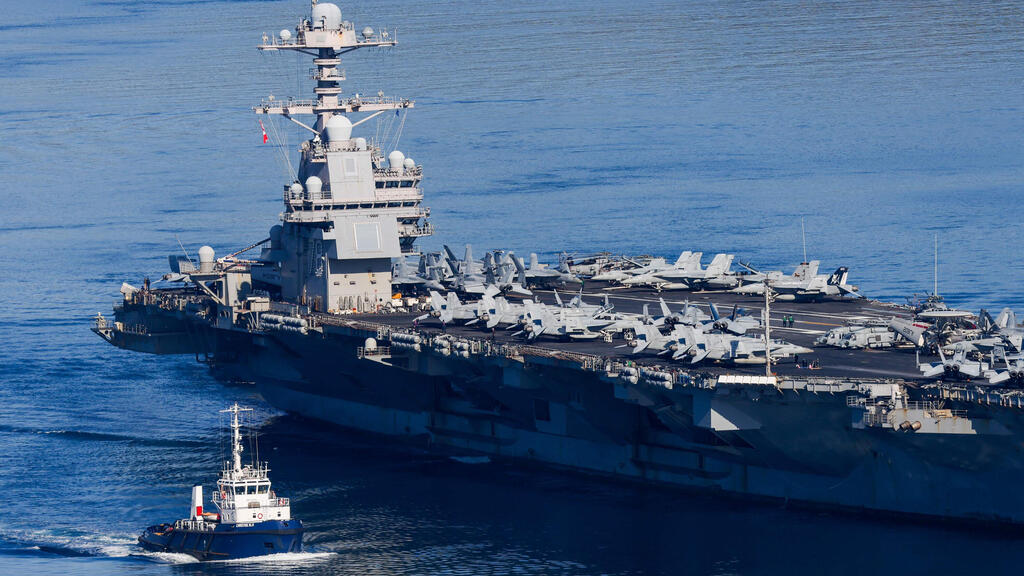
At present, the USS Gerald Ford is undergoing urgent maintenance at Souda Bay in Crete. The Pentagon has said another carrier, the USS George H.W. Bush, is en route to the Mediterranean with its strike group, including three destroyers.
USS Gerald Ford departs Crete, February
(Video: from X)


These carriers and their accompanying naval forces are expected to reach the operational arena off Iran’s coast via the Suez Canal, the Red Sea and the Bab el-Mandeb Strait. The Houthis have the capability to threaten large vessels with anti-ship missiles, drones and explosive-laden speedboats — and potentially to disrupt traffic in the Bab el-Mandeb using naval mines.
Such capabilities could complicate or even delay the passage of U.S. ships. While American carriers could operate from the northern Red Sea off Saudi Arabia’s coast, Houthi ballistic missiles can reach that area as well. The distance from Saudi shores to the Strait of Hormuz exceeds 1,000 kilometers.
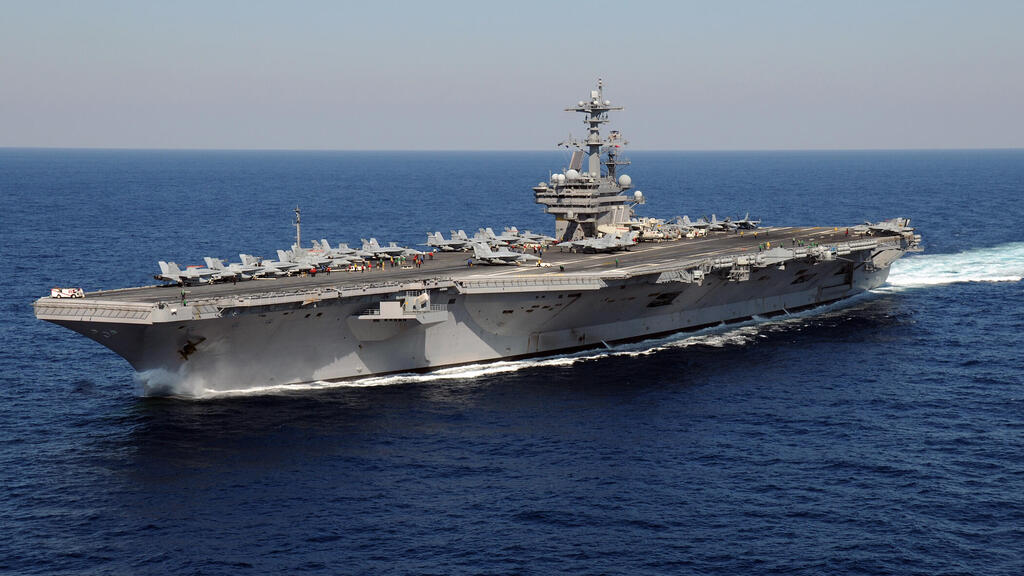
USS George H.W. Bush aircraft carrier
(Photo: MC3 (SW) Nicholas Hall/Wikipedia)
The missile launch — and the warning it conveyed — appears intended to deter the United States from concentrating forces in the Red Sea ahead of a potential major strike on Iran or an effort to secure the Strait of Hormuz by escorting shipping. Even if the U.S. military can intercept Houthi missiles and drones, as it has in the past, the threat could at least slow the buildup of forces for a large-scale operation, should Trump choose to proceed.
Another factor, according to a Yemeni source opposed to the Houthis who spoke to ynet, is Saudi Arabia’s east-west pipeline, which transports oil to the Red Sea port of Yanbu as an alternative route in case Iran blocks the Strait of Hormuz. The pipeline carries about 2 million barrels of oil per day, a significant volume for European supply.
In any case, Israel may be required to assist the United States in countering the Houthis and protecting aircraft carriers. This could involve strikes against Houthi targets, opening an additional front in the war — one the Israeli military has already prepared for.
First published: 11:26, 03.28.26