

On Hanukkah 5784, a holiday of light and hope, my light went out. My son, Yotam Haim, who was held captive in Gaza for seventy days, was mistakenly shot by an IDF force that identified him as a terrorist.
My beautiful son. The redhead. A musician with a sensitive and gentle soul. The child who came from my womb. The child I raised for 28 years, almost 29. He was killed two weeks before his birthday. Will that child never return? Will I never see him again? Never hug him? Never kiss him? Never hear his laughter again? How can this be understood? How can it be believed? How can it be grasped?
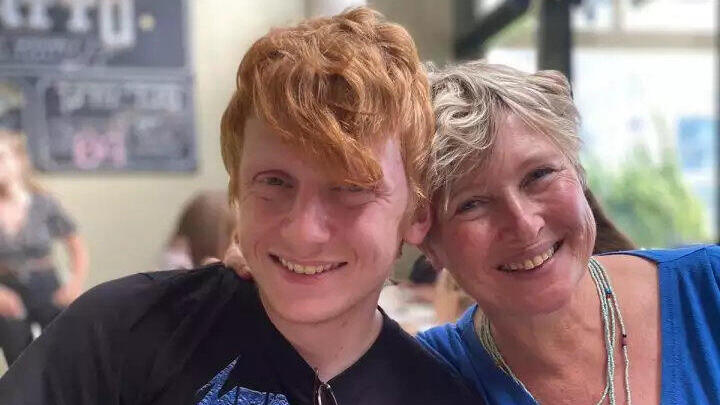
It happened on a Friday, during Hanukkah. The menorah was full of candles. We wanted something else. We wanted to hold him, to hear his stories from captivity, even if they were hard. We would treat him. We would do everything to help him heal. But instead, we received what we did not want. The horrifying news of his death.
Yotam himself struggled with mental challenges stemming from a genetic condition he was born with and suffered from during the early years of his life. He also had suicidal tendencies, thoughts about death. He spoke about death and even wrote a dialogue with the Angel of Death, asking to be released from his suffering, while at the same time doubting whether this was the right solution for him.
At the age of 26, in 2021, on his birthday, he tattooed on his body the well-known symbol that represents the choice between an end and continuation, the choice between life and death—a semicolon.
He struggled deeply, and there were also suicide attempts that did not endanger his life. He once said he wished the universe would arrange a “good death” for him.
How do you live with the knowledge that your child will never return? What helped, and still helps, me to continue? In the very first days, even before the shiva, I understood that I could think about the story differently. I turned the story from one of an ending into a story of continuation. Not a period, but a comma.
And how? Yotam has a grave in Kibbutz Gvulot, the place where he was born. I began to build a story that allowed me to keep living, because with the terrible knowledge itself, I could not.
I told myself that Yotam lives in another dimension. His body is in the cemetery, but he himself, his spiritual essence, is here with me. What helped me greatly were the many signs I received from Yotam. Through mediums who came and shared their communications with him, and also directly from him, through physical sensations where I felt him, through very meaningful dreams in which he sent me messages that he is in a good place, that everything was planned, and that he is happy.
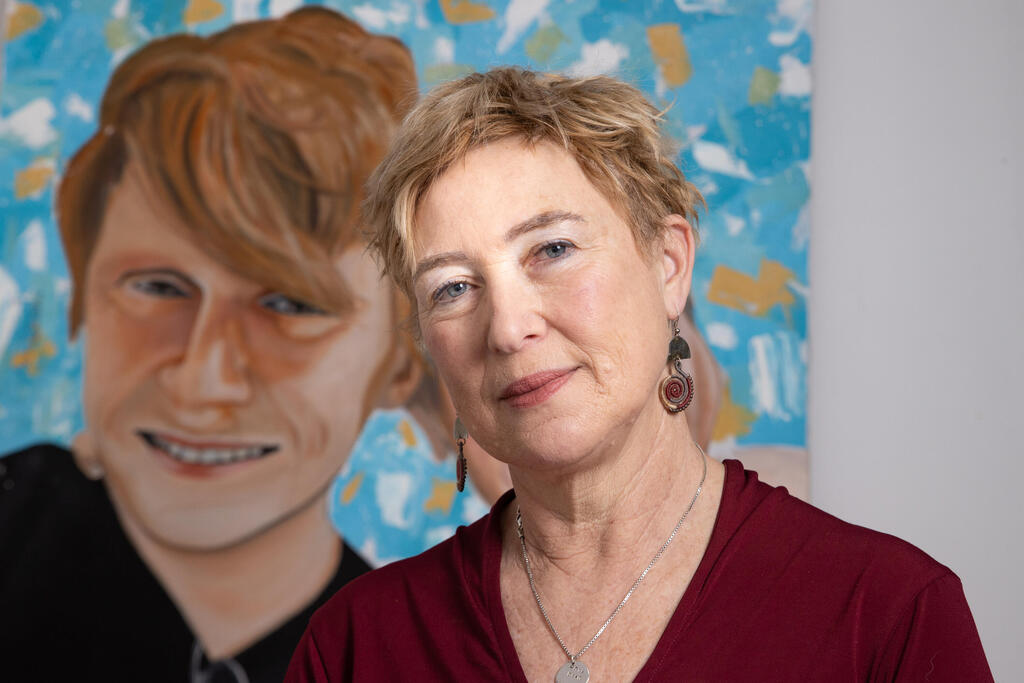
'I make Yotam present all the time'
(Photo: Alex Kolomoisky)
My greatest struggle, and the reason for my heaviest moods, was the days when I asked myself questions like: Why did this happen to us? To him? What did he do wrong that he died this way? So young? These questions pull me down and take me to a very victim-like place, as if someone did this to me on purpose. But the truth is, there is no real answer to the question “why.”
I choose to use words of encouragement. There are words that do not exist in my vocabulary, such as: tragedy, disaster, loss, why and if. I do not use the word “loss” because I make Yotam present all the time. I say that he is here. My mind is not yet developed enough to actually see him, and I allow myself to say that too. I still cannot see him, but he is definitely here.
In addition, I created meaning for the continuation of my own life here, alongside Yotam’s existence in another dimension. A meaning of passing on the messages that Yotam wanted to convey but did not manage to in his lifetime. Messages of love, non-judgment, connection between people, help and support.
During our shiva, masses of people came, most of whom we did not know. They came from all sectors of Israeli society. The most moving moments were hearing metal musicians say to me that five minutes of conversation with Yotam changed their lives. As long as existence has meaning, you can live on!
By Iris Haim, mother of Yotam Haim, a hero who was kidnapped and killed while escaping Hamas captivity.
We Came to Embrace the Darkness is an annual project of the MOSHE Movement – Words that Make a Difference, whose purpose is to raise awareness for suicide prevention through the community.