


On the surface, the chances that the American plan will produce a comprehensive deal for the release of hostages and a halt to the war appear slim to none. Hamas would lose its strongest bargaining chips on day one, in exchange for an open-ended ceasefire and vague assurances that the war won’t resume as long as talks continue. These promises have been made and broken before, leaving little reason for Hamas to trust them this time.
Israel, on the other hand, would secure the most critical payoff immediately: the release of hostages, both alive and fallen. Yet the U.S. proposal does not even address Israel’s second most important war aim: the disarmament of Gaza, the dismantling of Hamas’s weapons, and the removal of its leadership from the territory.
Donald Trump talks about Israeli hostages
(Video: Reuters)


Viewed coldly, this explains the widespread skepticism among Israeli officials and the justified pessimism in Jerusalem about positive developments.
But a deeper look at the U.S. plan reveals an element that offers reason for cautious optimism: Trump’s personal involvement. The plan clearly signals that former President Trump intends to take an active role in negotiating an end to the war. When a U.S. president applies the full weight of his diplomatic and economic influence across the Middle East, behind a mediation effort aimed at halting the war and securing the release of all hostages, it can be a true “game changer.”

Trump has so far failed to broker an end to the Russia-Ukraine war, but in other conflicts in Asia and the Middle East, his interventions produced frameworks that successfully ended hostilities.
That said, there is little cause for celebration in Jerusalem: Trump could pressure Israel into concessions the current government would find painful, potentially allowing Hamas to survive in Gaza in a weakened state.
Hamas' interests
Hamas also has reason to approach Trump’s direct involvement cautiously. Trump and Netanyahu are clearly aligned, and there is good reason to believe the plan originated in Jerusalem before being sent to Washington via David Darman, so that Trump and Secretary Witkoff could adopt it as a last-resort solution.
It is likely that, as negotiations progress, Trump will insist that Hamas disarm and that Gaza be cleared not just of rockets and anti-tank missiles, but of tunnels as well. Hamas’s caution is reflected in a statement its foreign leadership released last night.
IDF strikes in Gaza
(Video: IDF)
Yet the escalating military pressure works in Israel’s favor: Hamas urgently needs a pause, even if only for a few months. Another incentive for Hamas to accept the U.S. plan is that if Israel halts Operation “Gideon Chariots B” and does not enter Gaza, more than half of the city’s population remains under Hamas control, and the destruction would cease. With the other half also under Hamas control, the plan guarantees continued population control, at least temporarily, allowing the group to survive, prepare for guerrilla warfare, and hope that psychological and public pressure on the Israeli government will work in its favor.
For all these reasons, negotiations may now accelerate. The likelihood of success depends largely on Trump’s personal engagement. How much he wants or is capable—given his mercurial nature—of sustaining pressure on both sides remains unclear. Yet it appears this matter is important to him, perhaps to offset the colossal failure of his efforts to broker a ceasefire in Ukraine and enhance his chances for a Nobel Prize.
One thing is certain: even with a U.S. president involved, patience and steady nerves will be essential. The negotiations, which will ultimately determine the outcome of the war in Gaza, could take weeks or months.
During this time, the Israeli public, eager to see hostages freed quickly, must exercise patience and be selective in protests, as aggressive demonstrations risk hardening Hamas’s positions psychologically.
If Trump does commit to hands-on engagement, the talks could secure the release of all hostages and a cessation of hostilities on terms acceptable to the Israeli government.
Katz turns the military into a political pawn
While critical negotiations over hostages and southern security unfold, Israeli Defense Minister Israel Katz remains preoccupied with political maneuvering. He is supposed to focus on tracking the progress of Operation “Gideon Chariots II” in Gaza and the volatile situation in the West Bank.
Instead, Katz prioritizes demonstrating authority to Likud’s central committee by forcing the IDF chief of staff to approve politically driven appointments. He bargained over the post of coordinator of operations in the territories (COGAT), exchanging the approval of one senior officer for others, undermining military professionalism.
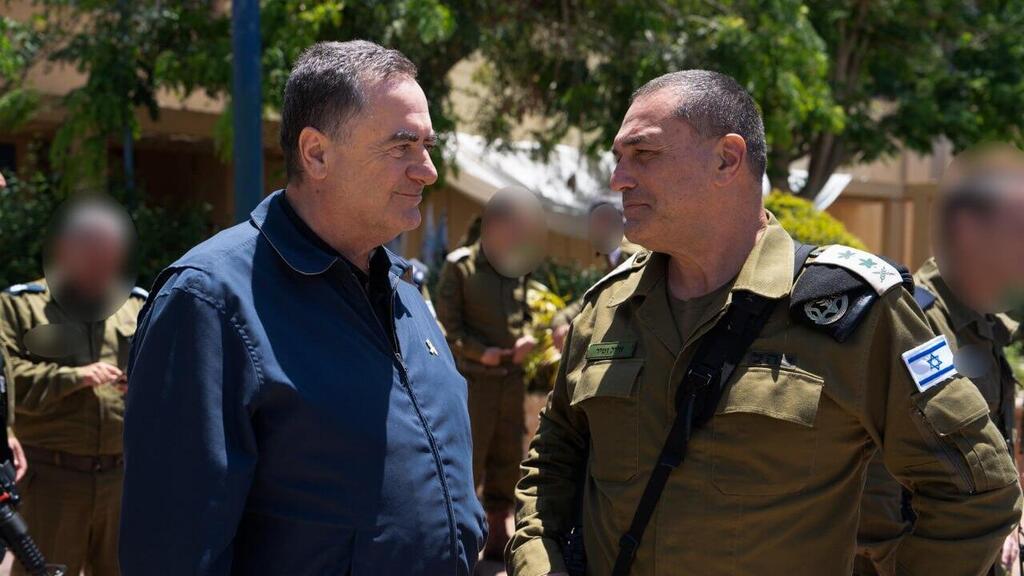
Defense Minister Israel Katz and IDF Chief Eyal Zamir
(Photo: Ariel Hermoni)
Katz’s actions systematically erode the chief of staff’s authority and the institutional integrity of the IDF. The army’s strength lies in its professionalism; once soldiers don uniforms, political differences are set aside and mission execution becomes the focus.
Katz’s politicization of the military turns it into another public service riddled with partisan manipulation, which will take years to correct. Rather than contributing to the IDF’s operational successes, Katz undermines morale and the ethos of service.
As for retired Major General Yoram Halevi, he has an impressive operational record in law enforcement and counterterrorism, but no experience managing humanitarian operations. Having followed such operations worldwide for 50 years, it is clear that professional competence in planning and managing humanitarian missions determines their success.
Until Yoram Cohen learns what COGAT head Ghassan Alian already knows, months could pass during which humanitarian aid for Gaza’s residents—a key factor in maintaining legitimacy and preventing Hamas control—will suffer. Katz, however, remains indifferent, even willing to spark unnecessary conflict with the Druze community, as he blocked the chief of staff’s plan to appoint Brig. Gen. Hesham Ibrahim, a capable civilian affairs officer, is in favor of a politically palatable but inexperienced candidate.
This episode underscores that Israel’s defense minister prioritizes Likud politics above national security and professional military management.