

The Kurdish question in Syria has undergone a fundamental transformation in the months following the January 2026 U.S.-brokered agreement between the Syrian government and the Kurdish-led Syrian Democratic Forces (SDF). What once appeared to be a breakthrough toward political reconciliation has instead revealed itself as a carefully calibrated strategy of containment, one that substitutes genuine political accommodation with performative recognition and military subordination.
The agreement that drew international attention and optimistic headlines has served as a strategic tool for Damascus to achieve what decades of denial politics could not: the systematic dismantling of Kurdish autonomous structures while simultaneously constructing a veneer of inclusivity and reform. This represents a shift in approach, but not, as some observers suggest, a shift toward pluralism. Rather, it signals the deployment of a more sophisticated method of domination, one that neutralizes international criticism while ensuring the subordination of Kurdish political aspirations to centralized state control.

The Syrian government under interim president Ahmad al-Sharaa appears to have recognized a critical reality: the Kurdish question cannot be ignored or suppressed through outright denial. Global attention, regional solidarity networks and the demonstrated resilience of Kurdish identity have made the old approach untenable. In response, Damascus has adopted a hybrid strategy that combines limited cultural recognition with firm political control, military integration and systematic fragmentation of Kurdish political unity.
The January 2026 agreement between the Syrian government and the SDF ostensibly aimed at de-escalation and mutual stabilization. In practice, however, it has functioned as an instrument of political subordination disguised as reconciliation. The agreement’s central mechanism, the gradual integration of Kurdish military forces into the Syrian Arab Army (SAA), represents the dismantling of the institutional foundations upon which Kurdish autonomy rested.
For more than a decade, the SDF maintained military independence that afforded Kurdish regions a degree of de facto autonomy. While this autonomy was never formally recognized by Damascus, it was operationally distinct and functionally autonomous. The SDF controlled its own command structures, made independent decisions regarding defense and security, and maintained internal governance systems that reflected Kurdish political preferences. This military independence was not merely a military matter; it was the bulwark protecting Kurdish political space from central state encroachment.
The 2026 agreement fundamentally altered this equation. Through mechanisms of gradual integration, the Syrian state has begun absorbing SDF units into the SAA command structure. This process strips Kurdish military institutions of their autonomy while creating the illusion of integration between equals. In reality, the process is asymmetrical: Kurdish units are being absorbed into Arab-dominated military hierarchies, command decisions are increasingly made in Damascus rather than in Kurdish-majority regions, and the strategic autonomy that once protected Kurdish political interests has been systematically surrendered.
This military integration represents far more than a technical reorganization of security forces. It is the structural underpinning of a broader political transformation. Without independent military capabilities, Kurdish political actors lose their principal leverage in negotiations with the central state. They become vulnerable to pressure, coercion and marginalization. The agreement’s framing as a “reconciliation” obscures this fundamental power asymmetry.
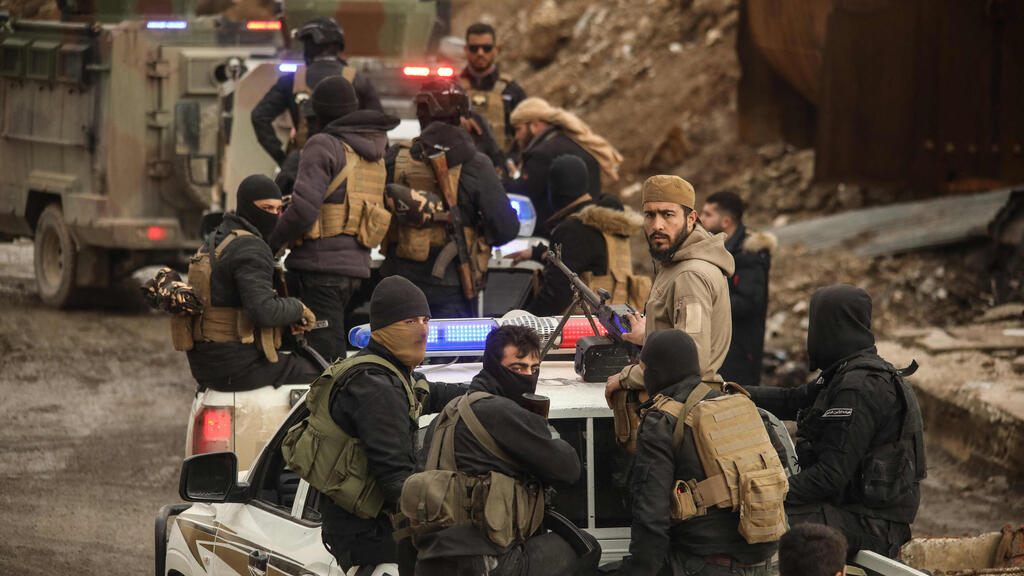
Forces loyal to Syrian President al-Sharaa entered the city of Hasakah, an area previously under Kurdish SDF control
(Photo: Delil Souleiman/ AFP)
Parallel to the military integration process, Damascus has pursued an equally consequential reframing of the Kurdish question itself. Rather than acknowledging it as a political matter requiring structural accommodation and power-sharing, the Syrian government has systematically attempted to redraw the boundaries of the debate.
In this reformulated narrative, the Kurdish question becomes primarily a matter of cultural rights rather than political autonomy. Language, holidays, cultural expression and symbolic recognition become the terrain upon which “Kurdish rights” are negotiated and addressed. This reframing is not incidental; it is foundational to Damascus’s broader containment strategy.
By reducing the Kurdish question to cultural dimensions, the Syrian state accomplishes multiple strategic objectives simultaneously. First, it creates space for symbolic gestures that appear responsive to Kurdish demands while fundamentally altering nothing about Kurdish political power or self-determination. Second, it provides Damascus with an international optics advantage. The government can point to recognition of Kurdish as a national language, the declaration of Newroz as a national holiday and public acknowledgment of Kurdish cultural identity as evidence of inclusivity and reform.
Third, and most critically, this reframing delegitimizes more expansive Kurdish political demands. Once the state has granted cultural recognition, demands for political autonomy or self-governance become easier to characterize as excessive, separatist or destabilizing. The government can argue that it has already addressed “the Kurdish question” through cultural measures, rendering further political demands unnecessary.
The sophistication of this approach lies in its plausibility. Cultural recognition is objectively valuable. The right to education, media and cultural expression in one’s native language represents a genuine achievement. Yet when these concessions are decoupled from meaningful political power, they become tools of subordination rather than instruments of empowerment. They allow the state to demonstrate responsiveness and pluralism while maintaining control over the levers of political authority.
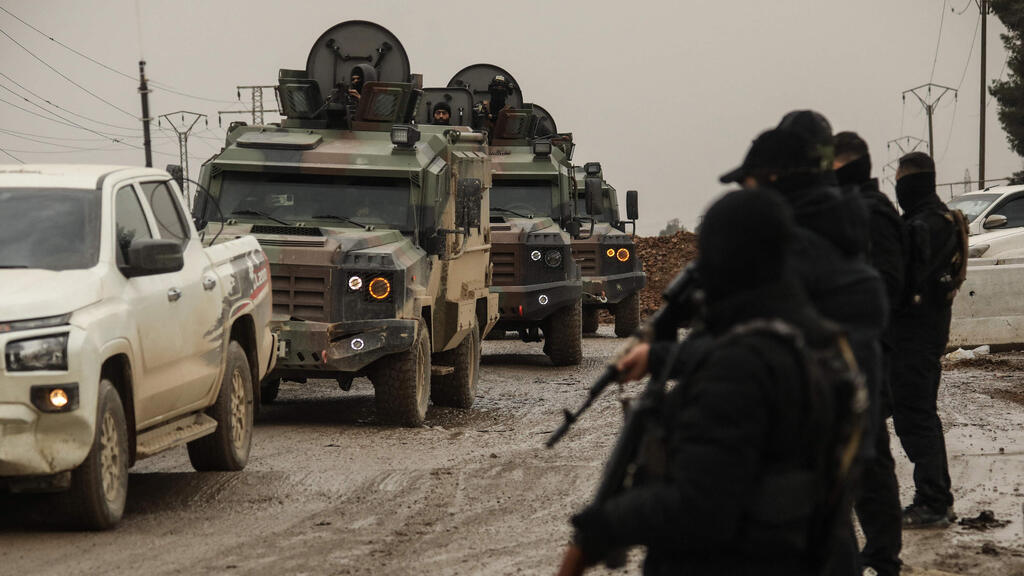
Kurdish SDF fighters watch as al-Sharaa’s forces enter the city of Hasakah, Syria
(Photo: Delil Souleiman/ AFP)
The strategy currently being implemented in Syria bears striking structural similarities to policies pursued in neighboring Turkey over the past two decades, suggesting either deliberate emulation or parallel recognition of effective containment mechanisms.
In Turkey, the trajectory is instructive. Beginning in the early 2000s, the Turkish state introduced reforms that expanded Kurdish cultural rights, including broadcasting, education and public recognition of Kurdish identity. For a period, these measures created an atmosphere of relative openness and suggested the possibility of pluralization.
However, this period of cultural recognition was strategic rather than transformative. Once Kurdish cultural nationalism had been partially accommodated, the Turkish state shifted course. Following the collapse of peace negotiations with the Kurdistan Workers’ Party (PKK), military operations intensified dramatically. Campaigns in Kurdish-majority areas resulted in casualties, displacement and destruction.
At the same time, the Turkish state moved to suppress Kurdish political representation. Elected officials were removed from office, political parties faced legal pressure, and activists and journalists were arrested. Media outlets were shut down. The earlier openness was replaced by systematic political repression.
The Turkish experience reveals the logic of the containment model: cultural recognition is allowed, but political empowerment is denied. Once this distinction is established, the state can pursue political repression while claiming to respect cultural rights. The narrative becomes clear: cultural identity is recognized, but political demands are framed as separatism.
The parallels with Syria are evident. Both states have shifted from denial to selective recognition. Both frame military actions as security measures rather than responses to political demands. Both maintain control over political authority while allowing limited cultural expression.
The Syrian government’s approach creates an apparent paradox that is, in fact, its central organizing principle: the simultaneous extension of cultural recognition and the application of military force in Kurdish regions.
This contradiction is deliberate. Damascus has taken steps to recognize Kurdish identity in ways not seen under previous regimes. At the same time, military operations have resulted in casualties, displacement and sustained pressure on Kurdish areas.
Cultural recognition helps deflect international criticism, while military force enforces compliance. Together, they create a system in which identity is permitted within defined limits, but political autonomy is not.
For Kurdish communities, the message is clear: cultural expression is allowed, but only within a framework of full political subordination to central authority.
Another key element of this strategy is the fragmentation of Kurdish political representation. In April 2025, Kurdish parties attempted to unify their positions and form a joint negotiating framework. A shared delegation was created to engage with Damascus.
The Syrian government moved to undermine this unity. It engaged selectively with some factions while excluding others, promoted alternative representatives with limited support and exploited internal divisions among Kurdish parties.
The result is a fragmented political landscape in which no single actor can claim broad representation. A unified Kurdish movement would pose a challenge to state authority. A divided one is easier to manage and negotiate with on unequal terms.
Geography further reinforces this fragmentation. Kurdish populations are spread across separate regions, including Hasaka, Kobani and Afrin. During the civil war, Kurdish forces managed to unify these areas politically despite their physical separation.
That unity is now being reversed. Damascus is negotiating with regions separately, applying policies unevenly and advancing military integration on a localized basis. This weakens the idea of a coherent Kurdish political entity and reinforces dependence on the central state.
Despite these developments, Damascus faces a limitation. Military dominance does not automatically produce political resolution. Events surrounding January 2026 showed that pressure on Kurdish regions generated broader reactions, including diaspora mobilization and renewed international attention.
This suggests that while the containment strategy may be effective in the short term, it does not resolve the underlying political question.
Syria is not ignoring the Kurdish issue. It is redefining it. By combining cultural recognition with political control, military integration and fragmentation, Damascus has constructed a strategy that manages the problem without resolving it. It allows the state to project reform while maintaining full authority.
Whether this approach can endure over time remains uncertain. For now, it represents a shift from denial to a more calculated form of control.
- Rami Al Dabbas is a writer and commentator on Middle East politics, known for his analysis of Islamist movements and advocacy of political realism.